Insurance website design examples
Sixteen insurance homepages our team designed for fictional companies, in four groups: local agencies, online life insurers, specialty programs and MGAs that sell through brokers. None is a client site.
What should an insurance website show first?
For buyers, what the cover does and does not do. For brokers, whether a risk fits before they build a submission. The consumer concepts explain cover in plain words, and three of the four life insurers show sample prices labeled as not quotes. The program and MGA concepts lead with an appetite check or a list of what to send.
Based on the 16 concepts below. Updated 17 November 2026.
The 16 concepts
Each card opens the full homepage, which you can scroll on desktop and phone.
Insurance agencies
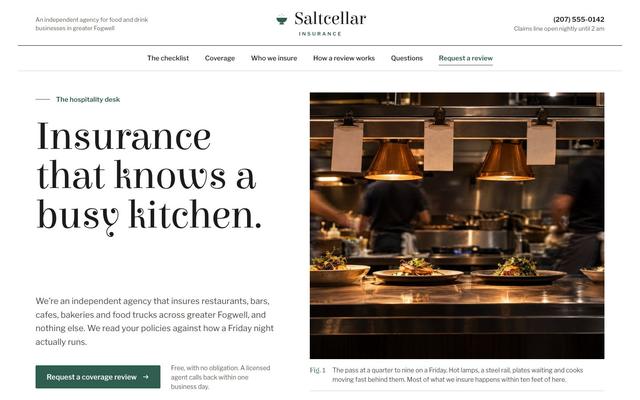
The brief: Restaurant owners often carry policies that leave out liquor liability or spoilage without saying so, and learn it after a walk-in fails. The page must show which covers fit their venue and get them to request a free review between services.
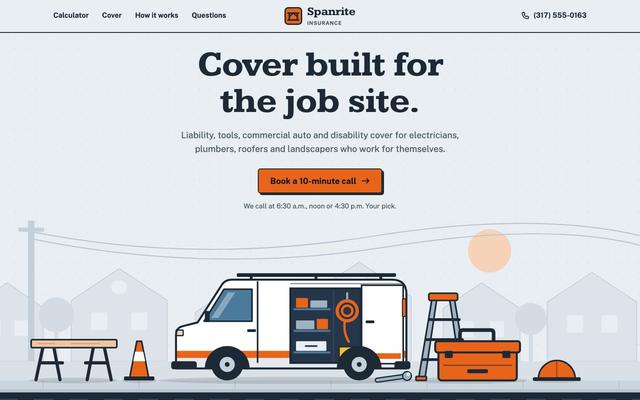
The brief: Self-employed tradespeople need a certificate fast to start a job, and few plan for the weeks an injury keeps them off the site. The page must show that income gap clearly and book a short call at a time that fits the workday.
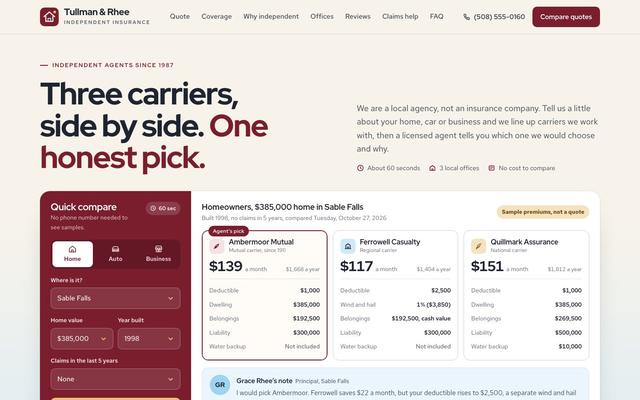
The brief: A local agency competes with direct insurers on price and with nothing on trust. Show the agent's real value: comparing carriers and saying which one they would choose.
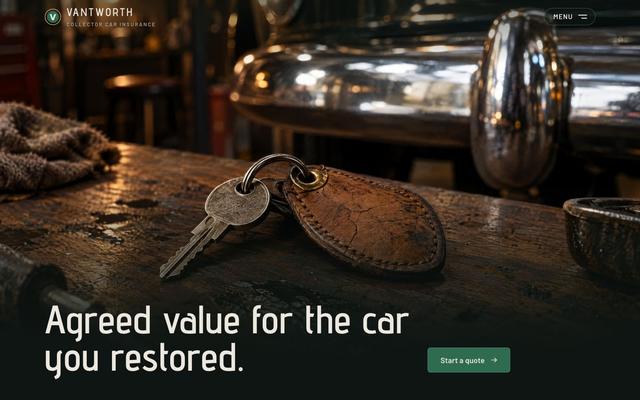
The brief: Owners who spent years restoring a car fear a standard policy will pay only what an average example is worth. The page has to explain agreed value, list the papers a carrier will want and start a quote request.
Online life insurance
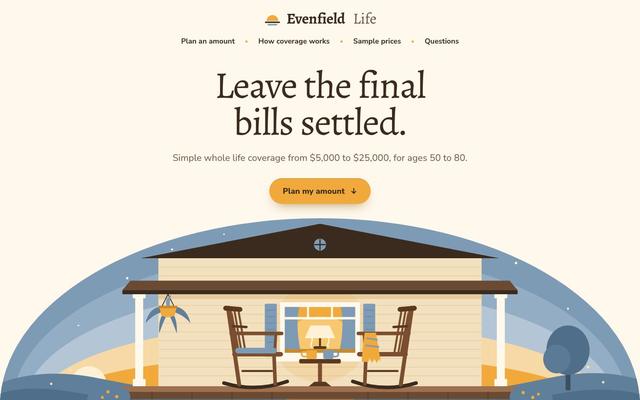
The brief: Older adults want to spare their family the funeral and last bills, but they do not know how much coverage that takes or how whole life works. The page has to explain the coverage in plain words and help them pick an amount before they apply.
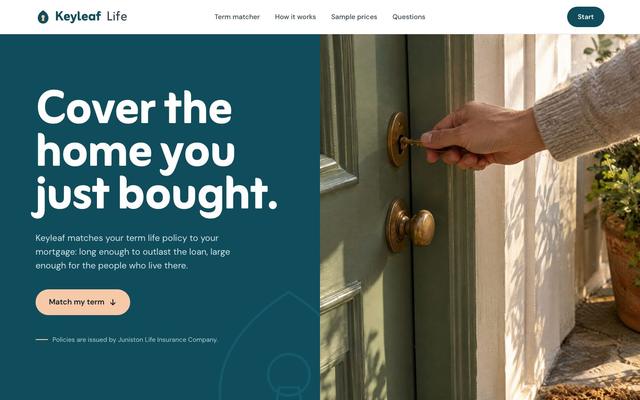
The brief: First-time buyers know their loan but not how long or how large a life policy should be to cover it and the people at home. The page must line the term up with the payoff year and start an application.
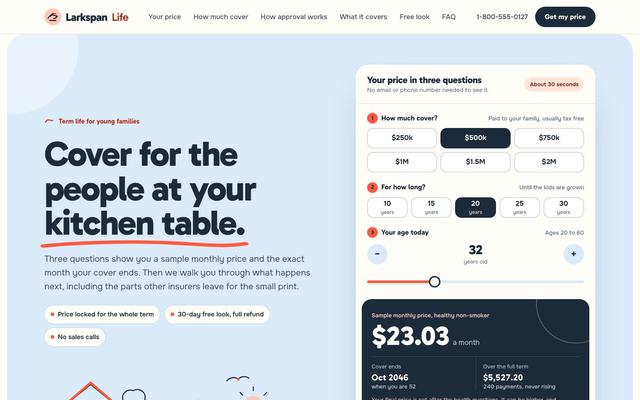
The brief: Young parents put off life insurance because it feels heavy and confusing. Make the price and the steps simple, and be honest about what can change.

The brief: People who invoice for a living have income that swings from month to month, so most life cover forms leave them guessing how much they need. The page has to size cover against their real earnings, slow years included, and start an online application.
Specialty insurance programs
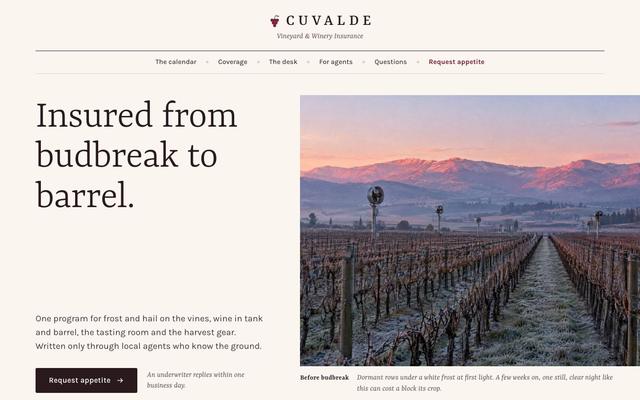
The brief: Growers often buy frost, cellar and tasting room cover from separate markets, and their agents fill in forms for risks a carrier may not write at all. The page must show what the program covers and passes on, and get agents to request appetite before they submit a grower.
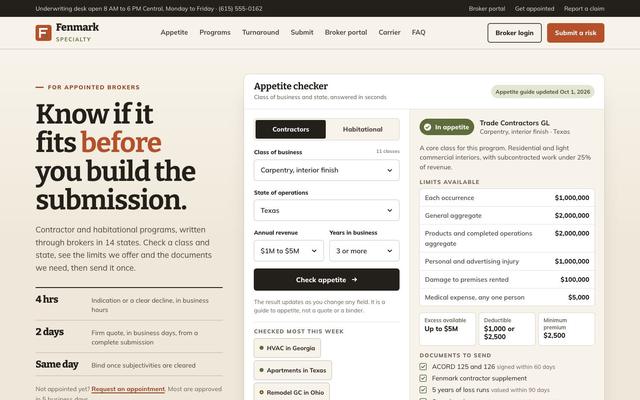
The brief: Brokers waste days building submissions that a program will decline. Answer the appetite question in seconds and say exactly what to send.
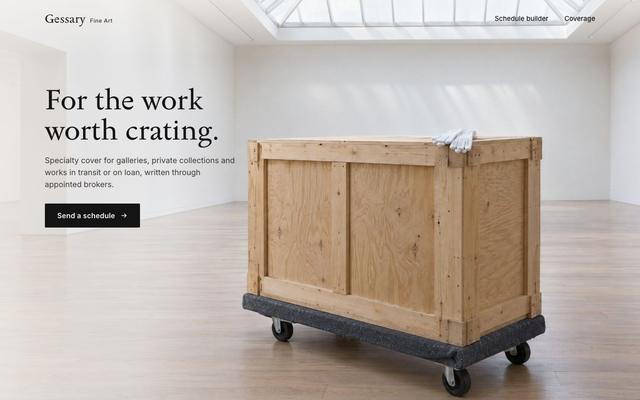
The brief: Brokers placing fine art cover lose time to rounds of underwriter questions about appraisals, condition reports and storage. The page must show what a complete schedule needs before they send it, then get the schedule to underwriting.

The brief: Brokers placing a drone business lose days when a submission comes back for a missing pilot log or falls outside the program. The page must let them check fit in a few clicks and send a complete account.
MGAs
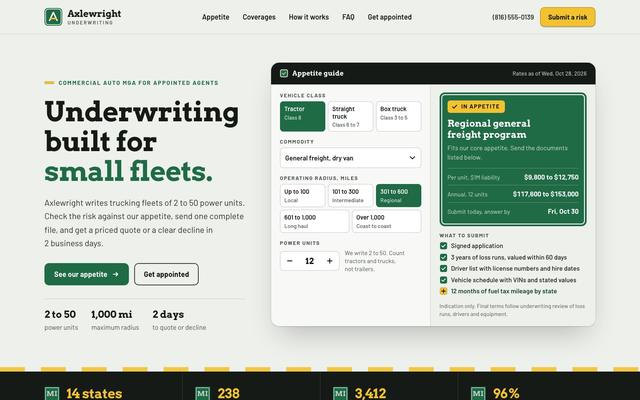
The brief: Agents waste days building trucking submissions that a market was never going to write. Show whether a fleet fits, what to send and how fast the answer comes in the first screen.
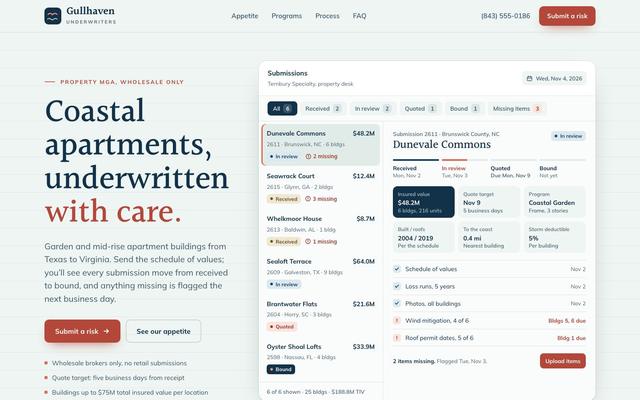
The brief: Wholesale brokers lose days finding out late that a coastal submission is short a roof date or a wind form. The first screen has to show where every submission stands, what is missing and when each quote is due.
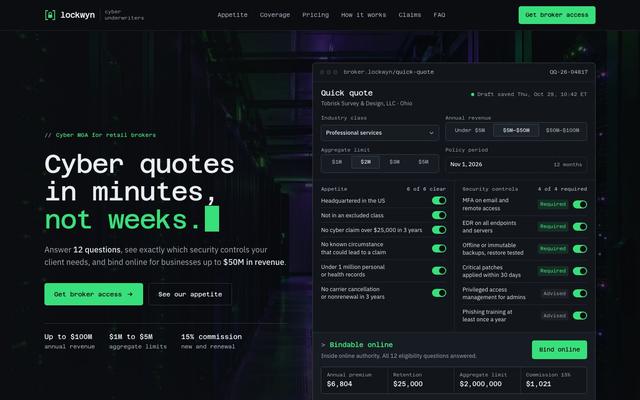
The brief: Brokers lose small cyber deals to long applications and weeks of back and forth with carriers. The first screen must show, while the client is still on the phone, whether a risk is in appetite, which controls it needs and what it costs.
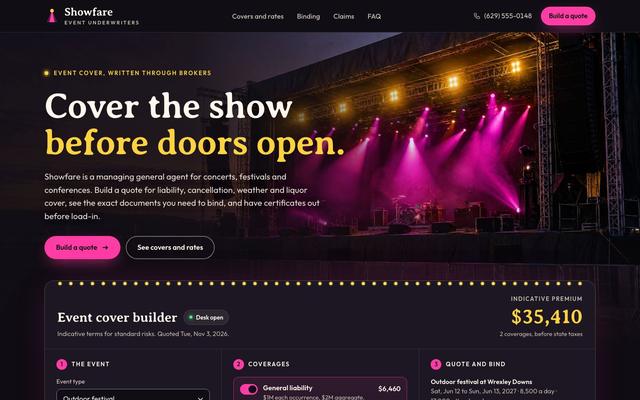
The brief: Brokers placing cover for a concert, festival or conference need a price and the exact documents to bind before load-in, not days of back and forth. Show the event details, each coverage with its premium and bind date, and the bind checklist in the first screen.
Questions, answered.
What should an MGA or program website show brokers?
Appetite first: which classes, states and sizes fit, and exactly what to send. All eight of our program and MGA concepts lead with one or both, so brokers stop building submissions that will be declined.
Can INSIDEA design a insurance website like these?
Yes. Book a strategy call and tell us which concept fits your company. We design around your customers or brokers, products and quote process.
Are these real insurance companies?
No. Each is a concept for a fictional company. The names, people and numbers are invented.
More ideas from our blog
Want a site like these?
30 minutes with our team. We look at your current site and what a rebuild would take.
Book a strategy callMore website design examples
- All local professionals concepts
- All consumer services online concepts
- All finance and capital concepts
- Dental website design examples
- Roofing website design examples
- Chiropractic website design examples
- Med spa website design examples
- Architecture website design examples
- Contractor website design examples
- Landscaping website design examples
- Wealth advisor website design examples
- Recruitment agency website design examples
- Manufacturer website design examples
- Executive search website design examples
- Car dealership website design examples
- Pest control website design examples
- Therapist website design examples
- Cleaning company website design examples
- Accounting firm website design examples
- Fashion brand website design examples
- Hair salon and barber website design examples
- Moving company website design examples
- Real estate brokerage website design examples
- Commercial leasing website design examples
- Plumbing website design examples
- Cafe and bakery website design examples
- Law firm website design examples
- Day spa website design examples
- Boutique clothing store website design examples
- Marketing agency website design examples
- Driving school website design examples
- Gym and fitness studio website design examples
 How INSIDEA works