Try this. Open ChatGPT and ask a question your audience would actually ask.
Now look at the answers. Are you there?
For most brands, the answer is no, even if they’ve invested in solid content and decent SEO. That’s because AI answers don’t work like search rankings. They draw on patterns, sources, and signals across the web, and most sites aren’t structured or positioned to make them easy to use.
This blog explores what changes that: how to create content AI systems can actually pull from, how to build the signals they rely on, and how to close the gap between publishing content and being referenced when it matters.
How ChatGPT Actually Decides What to Cite?
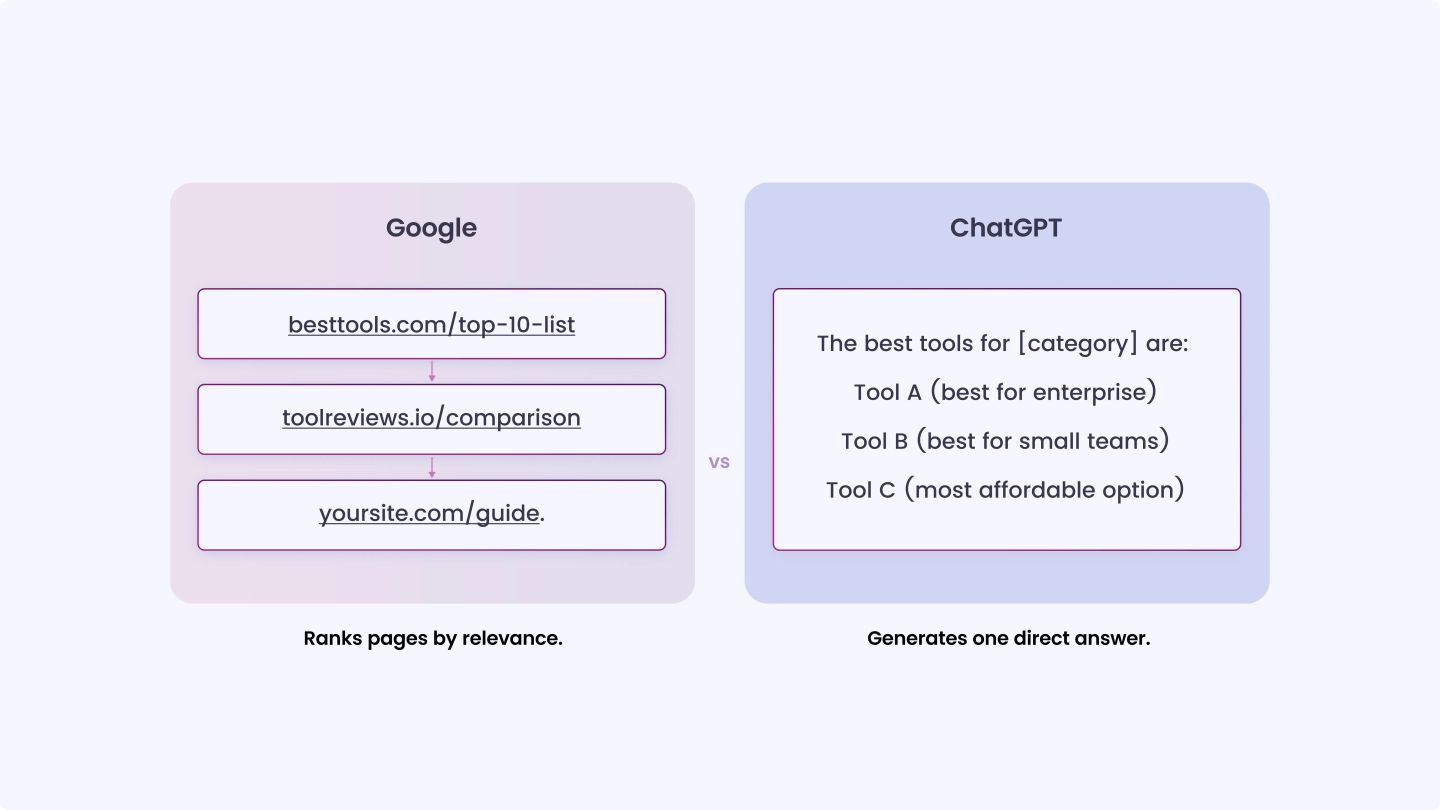
Before doing anything, it helps to understand how ChatGPT selects sources. It does not work like Google.
Google ranks pages. AI systems generate answers. That difference changes how visibility works.
ChatGPT pulls information from two places:
- What has it learned from the large-scale training data
- Live web results when browsing is enabled (often via Bing)
It then prioritizes content that is clear, consistent, and reinforced by strong signals across the web.
What ChatGPT Prioritizes vs Ignores
ChatGPT is more likely to use content that:
- Directly answers a question without extra setup
- Is structured in a way that is easy to extract
- Appears consistently across multiple credible sources
- Uses clear, factual language instead of vague positioning
It avoids content that is:
- Overly abstract or opinion-heavy without support
- Poorly structured or buried deep in text
- Difficult to interpret as a direct answer
AEO vs GEO (Two Layers of Visibility)
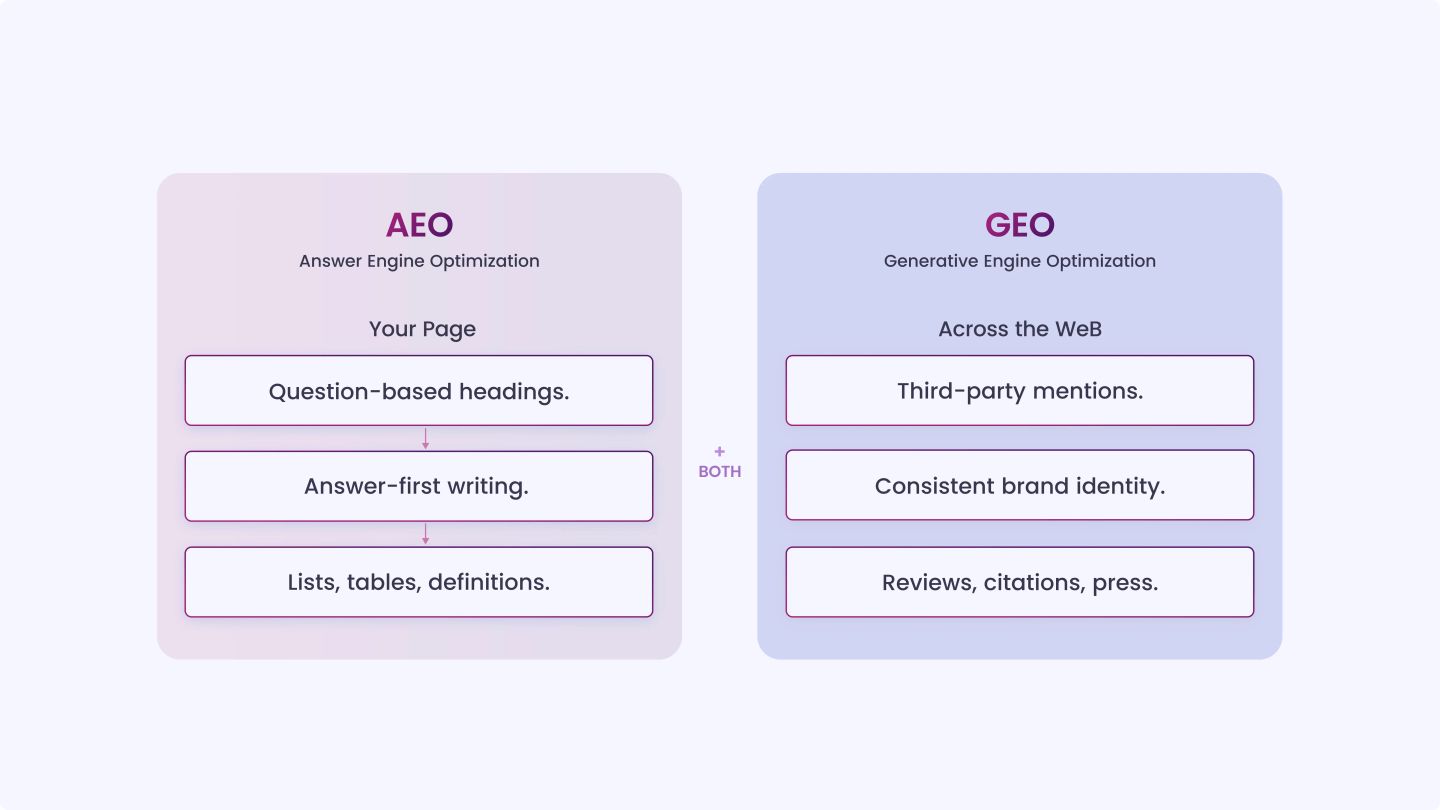
To understand how AI decides what to show, you need to look at two layers:
AEO (Answer Engine Optimization)
Focuses on making individual pages easy for AI systems to extract direct answers from.
- Question-based structure
- Clear definitions and explanations
- Answer-first writing style
- Extractable formats (lists, steps, tables)
GEO (Generative Engine Optimization)
Focuses on your broader online presence so AI systems trust your brand.
- Mentions across third-party platforms
- Consistent brand identity
- External validation (reviews, citations, references)
- Coverage across multiple sources, not just your site
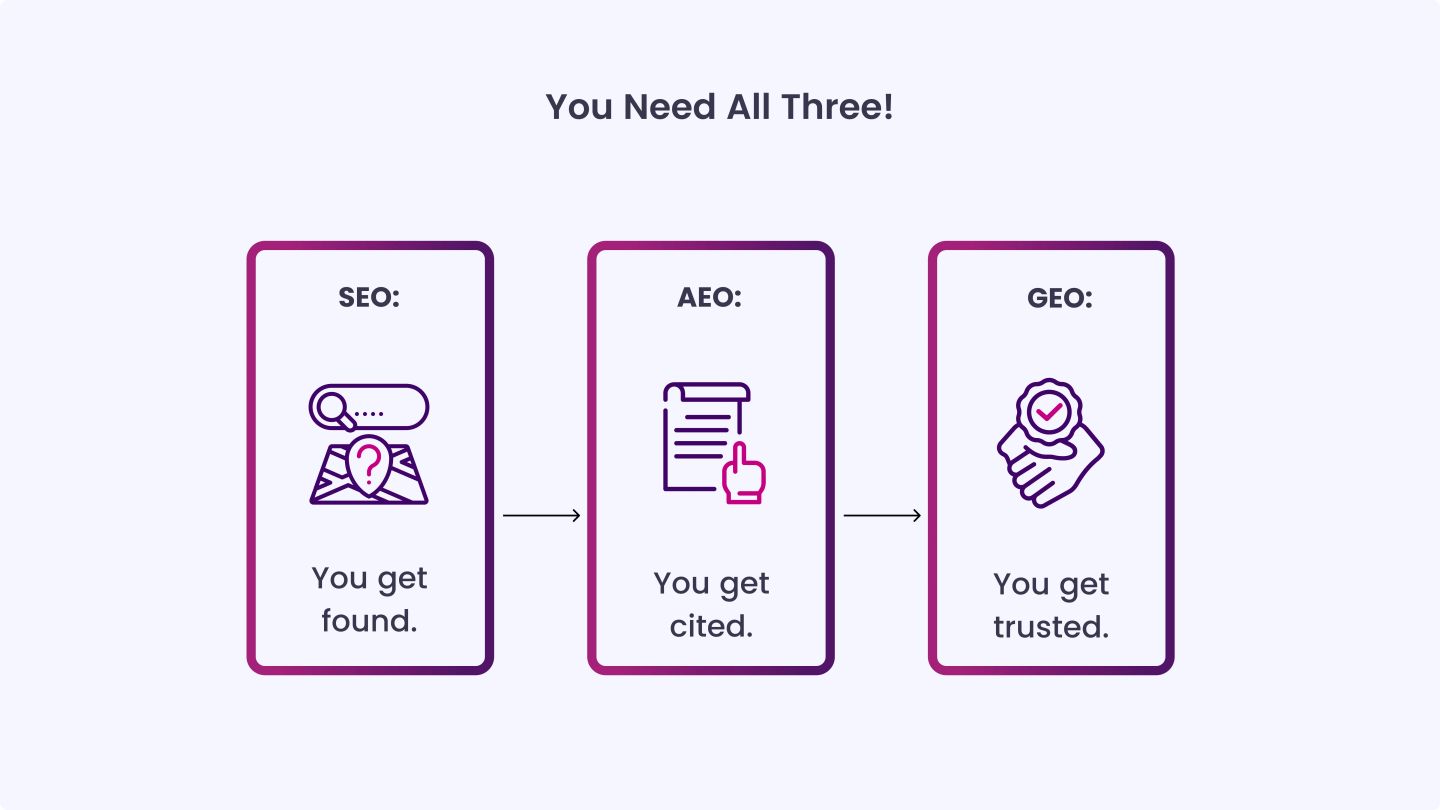
| AEO gets your content understood. GEO gets your content trusted.
You don’t need either; you need both working together. When AEO is strong but GEO is weak, content may be readable but ignored. |
The Step-by-Step Process to Get Featured by ChatGPT
Before we begin the six-step process, take 30 seconds to run this quick audit and see where you stand right now:
| 30-Second AI Visibility Audit Checklist:
Are you AI-visible right now? Check all that apply:
Tick what’s true and see where you stand. |
Step 1: Audit Where You Stand Right Now
Before making changes, find out what ChatGPT currently says about you, if anything.
Open ChatGPT and test queries your target audience would actually type:
- “What are the best tools for [your category]?”
- “Who are the top experts in [your field]?”
- “How do I solve [specific problem you address]?”
Document everything systematically. Create a simple spreadsheet tracking each prompt, which AI platform you tested, whether your brand appeared, and if so, how it was described.
Note the context of mentions: are you listed among competitors? Described as a leader or an alternative?
Do this across at least 15 to 20 different prompts. Also test on Perplexity since it cites sources with visible links, making it easier to see exactly which content pieces AI is pulling from.
Step 2: Write Content That Directly Answers Questions
This is the single biggest lever you have. AI models cite sources that provide clear, authoritative answers to specific questions. The content that gets featured in AI responses shares common characteristics: it’s fact-rich, well-structured, and definitively answers user queries without requiring additional context.
What this looks like in practice:
- Lead with the answer: Structure content with direct answers in the first 40 to 60 words. Don’t bury the point three paragraphs in.
- Use question-based headings: Instead of “ROI Metrics,” write “How to Calculate Marketing ROI.” This mirrors how users actually ask questions.
- Add data regularly: Maintain fact density by including statistics every 150 to 200 words, and cite authoritative sources throughout.
- Use numbered lists and steps: AI models excel at extracting sequential information. Comprehensive guides with numbered steps consistently appear more frequently in ChatGPT responses than unstructured text.
- Add comparison tables: ChatGPT frequently pulls from well-organized data presentations when users ask for comparisons or specific metrics.
One important note: AI prefers content that brings freshness and provides original data. Rehashing what’s already everywhere will not help you stand out.
Build Entity Clarity
AI systems don’t just rank content, they recognize entities. Before any content can be trusted, AI needs to know consistently who is publishing it.
To strengthen your entity: use one consistent brand name everywhere, maintain a strong About page with a clear description, link all official profiles (LinkedIn, website, directories), earn consistent mentions across third-party sites, and avoid name variations across platforms.
The goal is not just visibility, it is recognition as a single, trusted entity across the web.
Structure for Extraction (AI “Copy Zones”)
AI systems don’t read content evenly; they extract usable chunks. Every piece you publish should include: definitions (short, direct), comparison blocks, step-by-step sections, FAQ sections, and tables and structured lists. Each section should be able to stand alone without context, because AI often pulls only fragments, not full pages.
Step 3: Build Authority on Third-Party Platforms
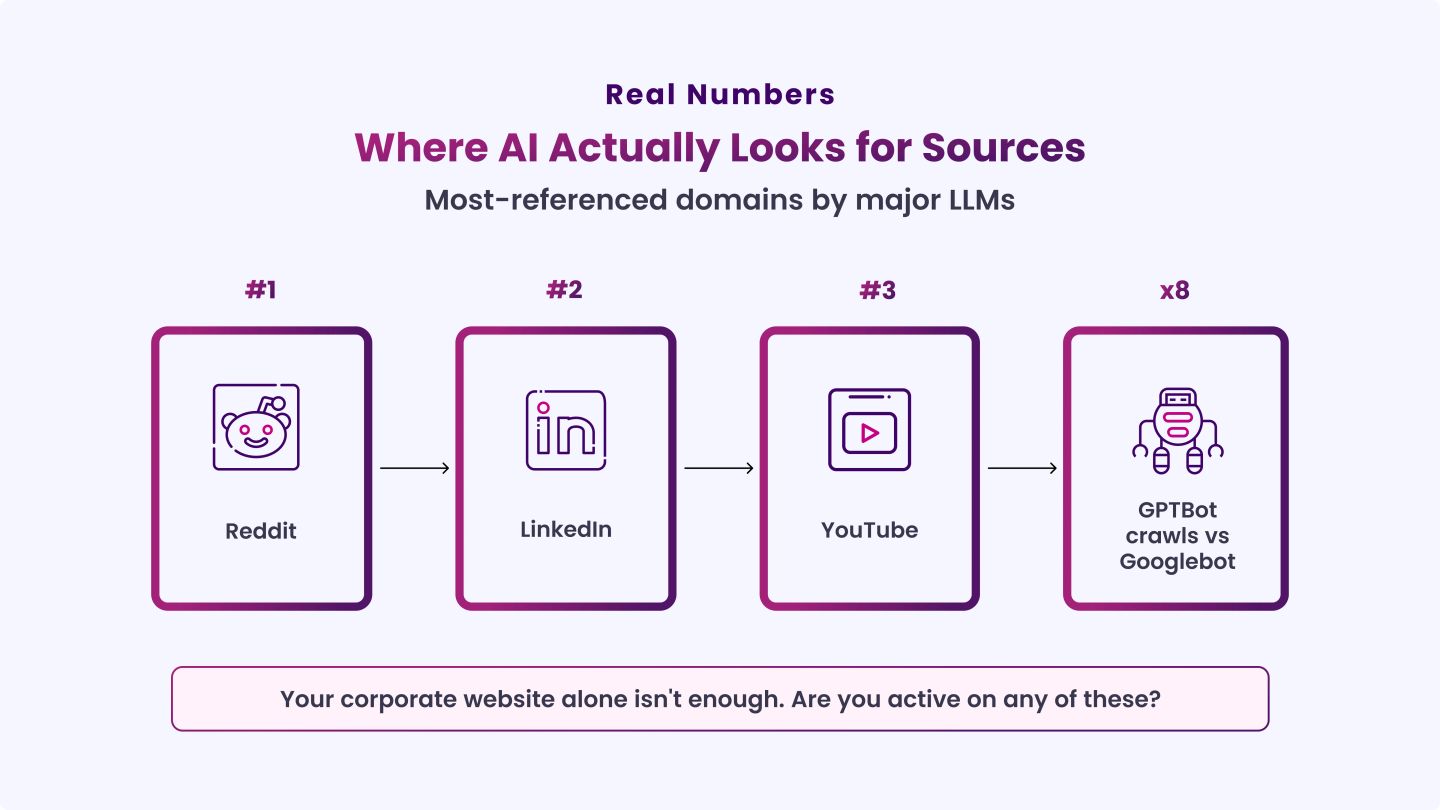
Your own website alone is not enough. ChatGPT looks for signals across the broader web.
Reddit, LinkedIn, and YouTube ranked among the most-referenced domains by major large language models in October 2025. That tells you something important: AI pays attention to community platforms, not just corporate websites.
Here’s where to focus:
- Get mentioned in listicles and roundups: ChatGPT loves to cite top lists. It also means reaching out to other sites, especially the biggest names, and trying to network your way into being featured in theirs.
- Publish on LinkedIn: Long-form posts and articles that get engagement send strong authority signals.
- Participate in Reddit threads related to your field: Genuine, helpful answers in relevant subreddits get referenced more than you’d expect.
- Earn press mentions: Industry publications, podcasts, and guest posts on credible sites all build the kind of third-party validation AI models weigh heavily.
- Build author profiles: Establish clear author profiles with verifiable expertise. Include detailed bio sections, links to professional credentials, and evidence of industry recognition. ChatGPT frequently references content from authors with demonstrable expertise in their fields.
Step 4: Fix Your Technical Foundation
Good content won’t get cited if AI crawlers can’t properly read your site.
Technical accessibility matters. Fast load times, mobile responsiveness, and clean HTML all contribute to how effectively AI models can crawl and parse your content. If your site is slow or relies heavily on JavaScript rendering, AI crawlers may miss critical information.
The most important technical steps:
- Add schema markup: Use the Organization schema to define your company name, logo, contact information, and social profiles. Add Product schema for individual offerings. The FAQ schema helps AI models directly extract question-answer pairs.
- Submit your site to Bing: Since ChatGPT’s browsing mode runs on Bing, being indexed there is non-negotiable. By implementing Bing indexing, structured markup, high-quality content, and entity mentions, you significantly increase the chances of being featured in AI responses.
- Update your XML sitemap: Keep it up to date and submit to search engines so new content is discovered faster.
| Important stat: According to Cloudflare’s 2025 report, GPTBot crawls 8x more frequently than Googlebot, so technical fixes like opening your robots.txt take effect faster than content changes. |
Step 5: Build Topical Depth
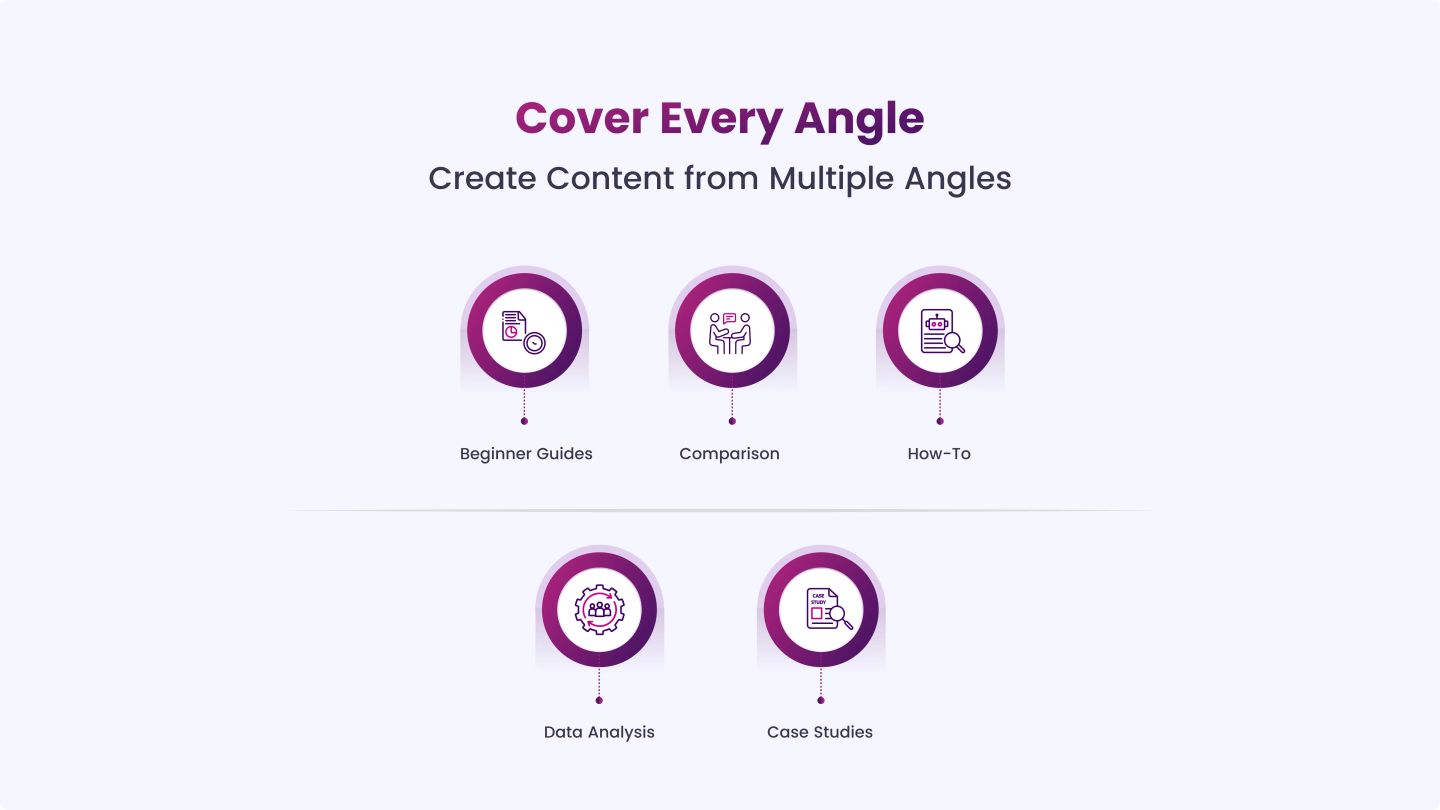
One good article is not enough. ChatGPT looks for sources that cover a topic thoroughly across multiple pieces of content.
Create content clusters around core topics. If you’re a project management tool, develop interconnected resources about project management methodologies, team collaboration best practices, and workflow optimization. This topical clustering signals depth of expertise, exactly what AI models look for when determining authoritative sources.
Also, prioritize evergreen content. AI training data has cutoff dates, which means news about your latest feature release might not make it into the model knowledge. But comprehensive guides to your product category, methodology, or approach have staying power across training cycles.
Step 6: Track Your Progress
You can’t improve what you don’t measure. Fortunately, tracking AI visibility doesn’t have to be expensive.
Free option: HubSpot’s AEO Grader scores your brand’s visibility across ChatGPT, Perplexity, and Gemini. No prerequisites; just enter your brand name and URL.
Manual tracking: Pick 3 keywords you most want to be cited for. Search each week on ChatGPT, Perplexity, and Google AI Overview. Track in a Google Sheet: date, platform, keyword, cited or not, citation position. It takes 5 minutes.
Paid tools: After 3 months, if you’re seeing traction, tools like Profound (which monitors 10+ AI engines automatically) can save significant time.
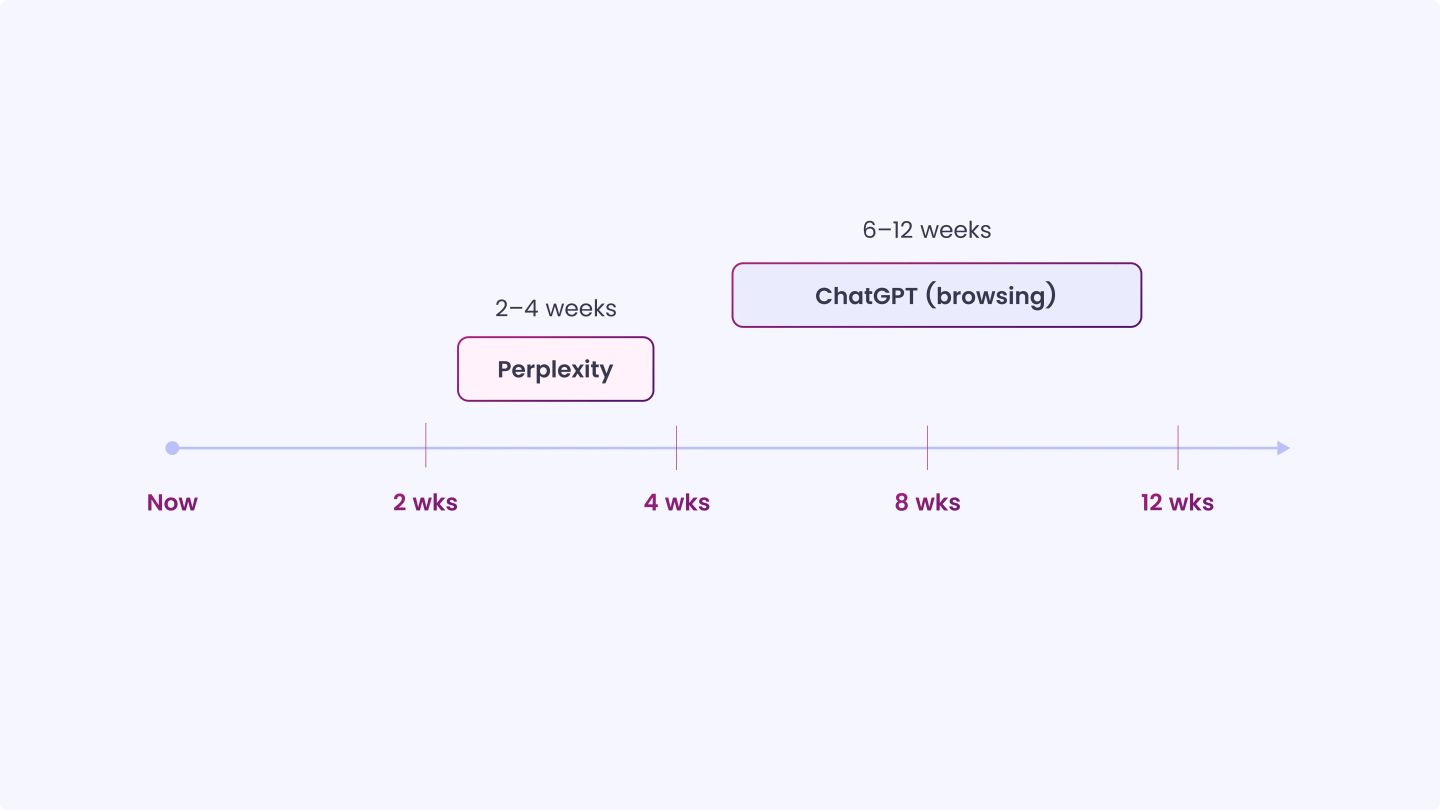
One realistic expectation on timelines: Perplexity uses real-time search, so you may see initial results in 2 to 4 weeks. ChatGPT relies on Bing’s index and typically takes 6 to 12 weeks. Patience is part of the process.
What To Focus On Next
Getting featured in ChatGPT responses comes down to one simple requirement: your content needs to be easy to interpret, easy to trust, and easy to connect back to your brand.
That happens when your content answers real questions without delay, your site structure stays clean, and your brand shows up consistently across external sources. When these parts work together, AI systems begin to associate your content with specific topics and return those topics in responses.
This is not a one-time adjustment. It builds over time as your content library grows and your brand signals become more consistent across the web.
Start with the audit in Step 1. Identify where you’re missing. Fix what blocks clarity first, then expand from there.
INSIDEA
Ready to get found by people and AI?
Search and answer-engine visibility that compounds, built to be cited.

 How INSIDEA works