A first-page position on Google no longer guarantees that your audience will see or engage with your content.
ChatGPT processes roughly 2.5 billion queries each day. Platforms such as Perplexity, Google AI Overviews, and Microsoft Copilot handle billions more. Instead of scanning links, users are served direct answers with cited sources. If your content is not referenced in those responses, it does not get surfaced in that interaction.
Recent analysis points to the scale of this change. In some cases, up to 60% of search traffic is retained within AI-generated answers, reducing the likelihood that users click through to external sites.
Standard rank tracking tools were not built for this shift. They show positions across search results but do not indicate whether your brand is cited in AI outputs, whether your pages are referenced, or which competitors are consistently included.
This blog reviews seven tools that track both traditional rankings and AI citations, covering what each tool does, who it is best suited for, and its cost.
The Current State of SEO and Rankings
Rank tracking used to be simple: where does a keyword appear on Google? Today, teams also need to ask: Does our content show up when someone queries ChatGPT or Perplexity?
The answers differ. Google favors authority, backlinks, and on-page signals.
AI favors clear, structured, well-sourced content that’s already cited. A page optimized for Google can be ignored by AI.
Gartner projects a 25% drop in traditional search volume by 2026 as AI chatbots handle more queries. Only 38% of AI-cited pages match Google’s top 10, so even top-ranking content can vanish from AI answers.
AI citation sources rotate 40-60% monthly. Weekly tracking is too slow to catch these drops.
This is why AI rank tracking is now treated separately from standard SEO and why modern marketing stacks include specialized tools for it.
What is ChatGPT SEO Rank Tracking?
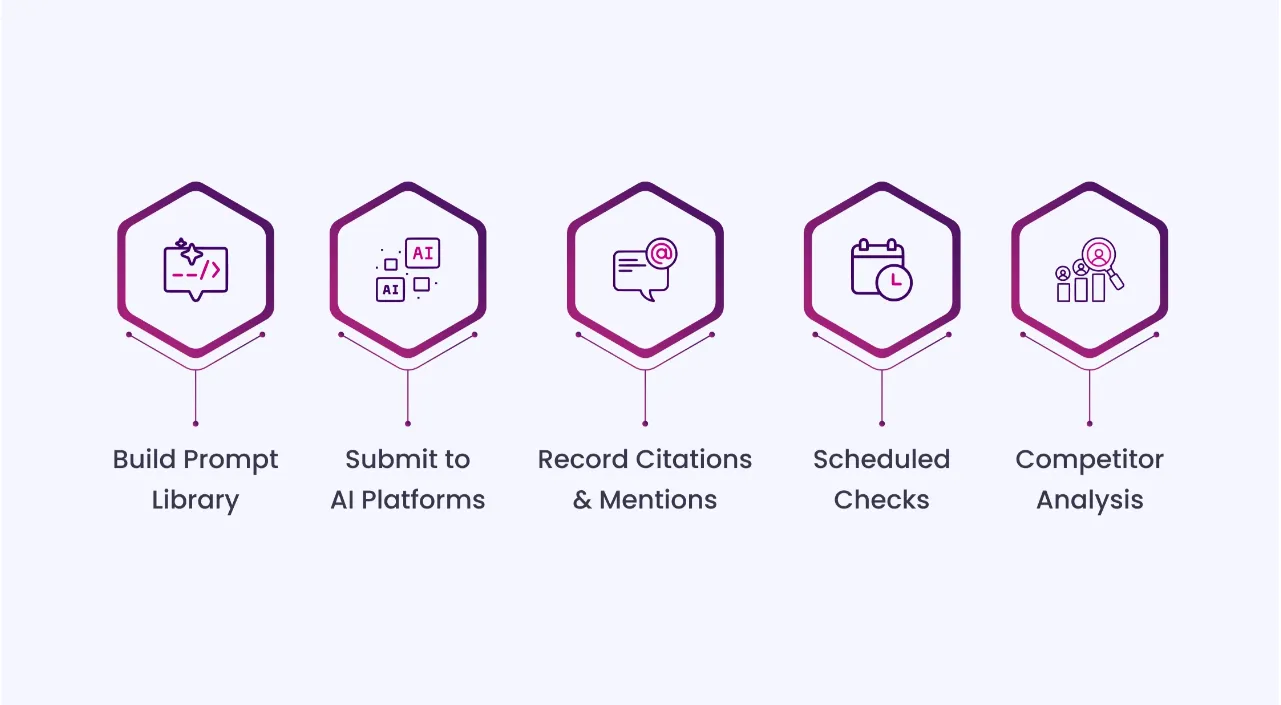
ChatGPT SEO rank tracking is the practice of monitoring where your content, brand, and URLs appear inside AI-generated answers, not just in traditional search results. Tools in this category simulate the questions your audience types into ChatGPT, Perplexity, or Google AI Mode, then record which sources get cited.
Over time, this data shows citation trends, competitor gaps, and where your content is gaining or losing AI visibility.
How These Tracking Tools Were Evaluated?
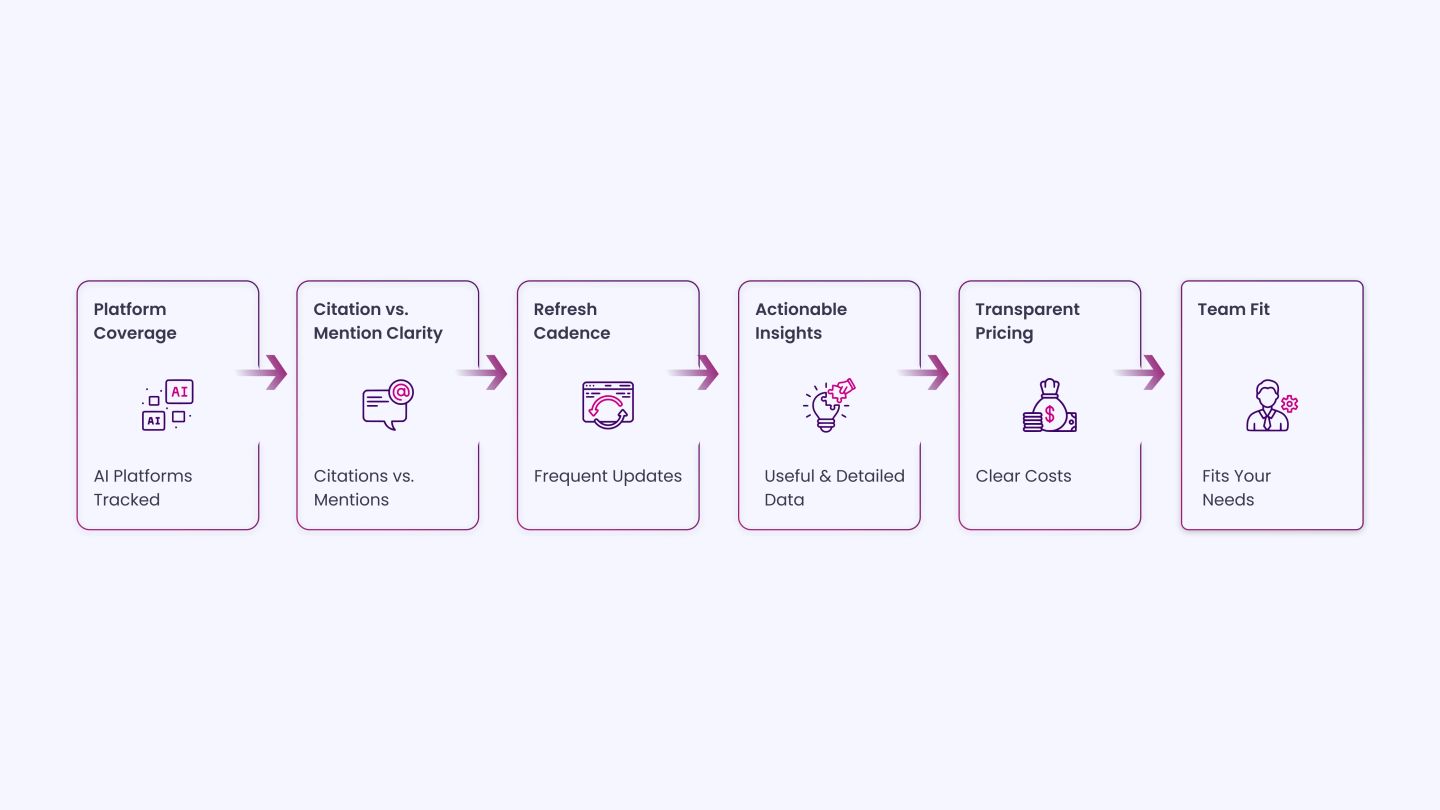
Each tool was assessed against the criteria that matter most for practical, day-to-day use, rather than just feature checklists.
- Platform Coverage: Tracks ChatGPT, Perplexity, Gemini, Google AI Overviews, and Copilot, or just a few? Broader coverage gives a more complete view of AI visibility.
- Citation vs. Mention Clarity: Tools that conflate brand mentions with linked citations provide incomplete insights.
- Refresh Cadence: Daily updates catch rapid shifts; slower refreshes risk missing drops that affect traffic.
- Actionability: Competitor citations are only useful if the tool shows which triggers them, which pages link to them, and where content gaps exist.
- Pricing Transparency: Base fees often exclude AI features, extra seats, or geographic coverage. Know the real monthly cost.
- Team Fit: Solo marketers need simplicity; agencies need multi-client dashboards and white-label reporting; enterprises need compliance, SSO, and deep competitive data.
7 Best ChatGPT SEO Rank Tracking Tools in 2026
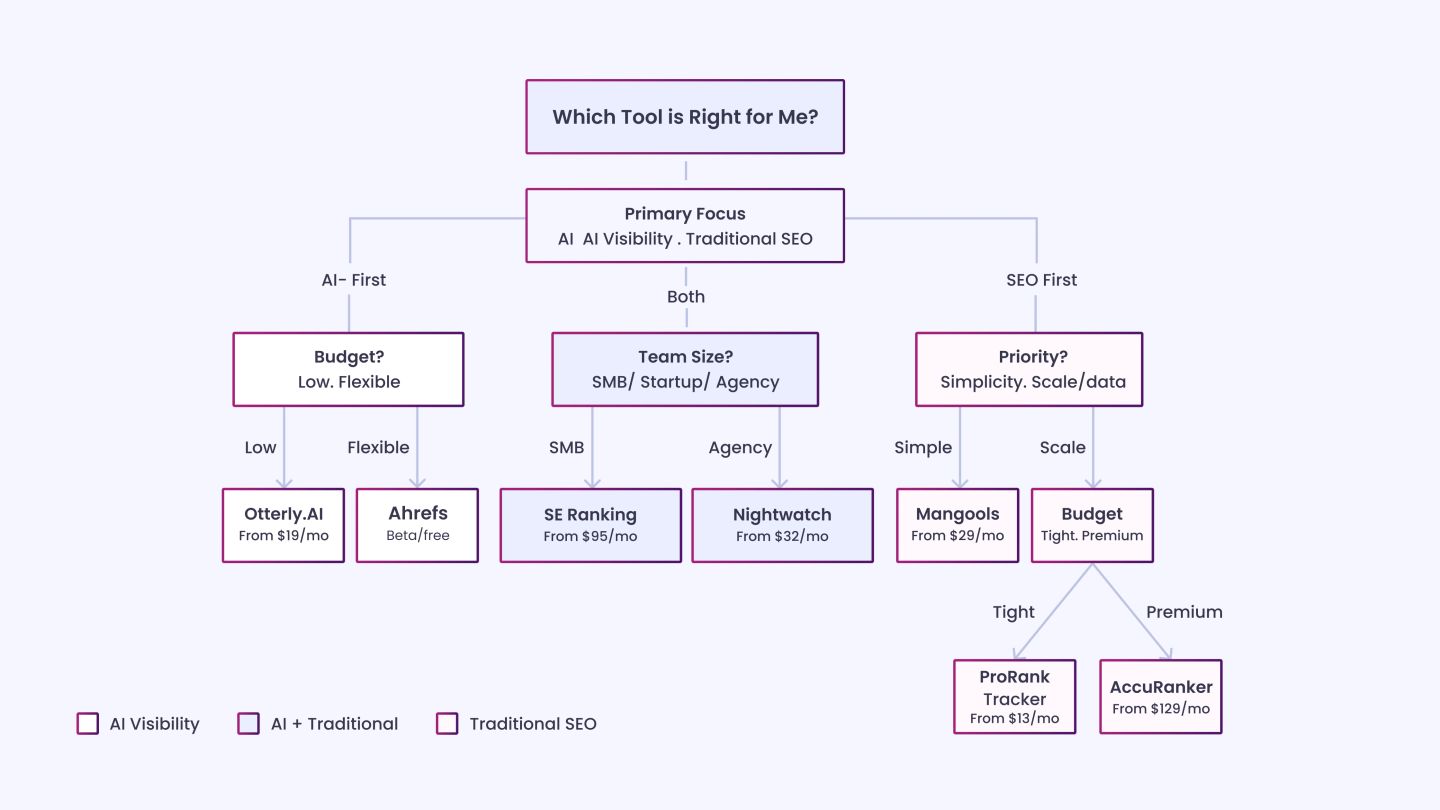
Before we get to the full list, here’s a quick decision guide to help you pick the tool that works best for your needs:
Let’s get started!
i) SE Ranking
Pricing: From ~$95.20/month, AI tracking included in the Pro plan, no add-on fee
Best for: Agencies and SMBs that want traditional rank tracking plus AI citation monitoring in one place, without paying extra for the AI layer
SE Ranking’s AI Results Tracker monitors brand mentions and linked citations across Google AI Overviews, Google AI Mode, ChatGPT, Gemini, and Perplexity. Its “No cited” feature flags every prompt where competitors appear in AI answers but your brand does not, turning a data point into a concrete content gap.
Daily data refresh and 188-country geographic coverage make it one of the most complete options at this price point. White-label reporting is built in, which matters for agencies presenting AI visibility data to clients alongside traditional rank reports.
Pros
|
Cons
|
ii) Otterly.AI
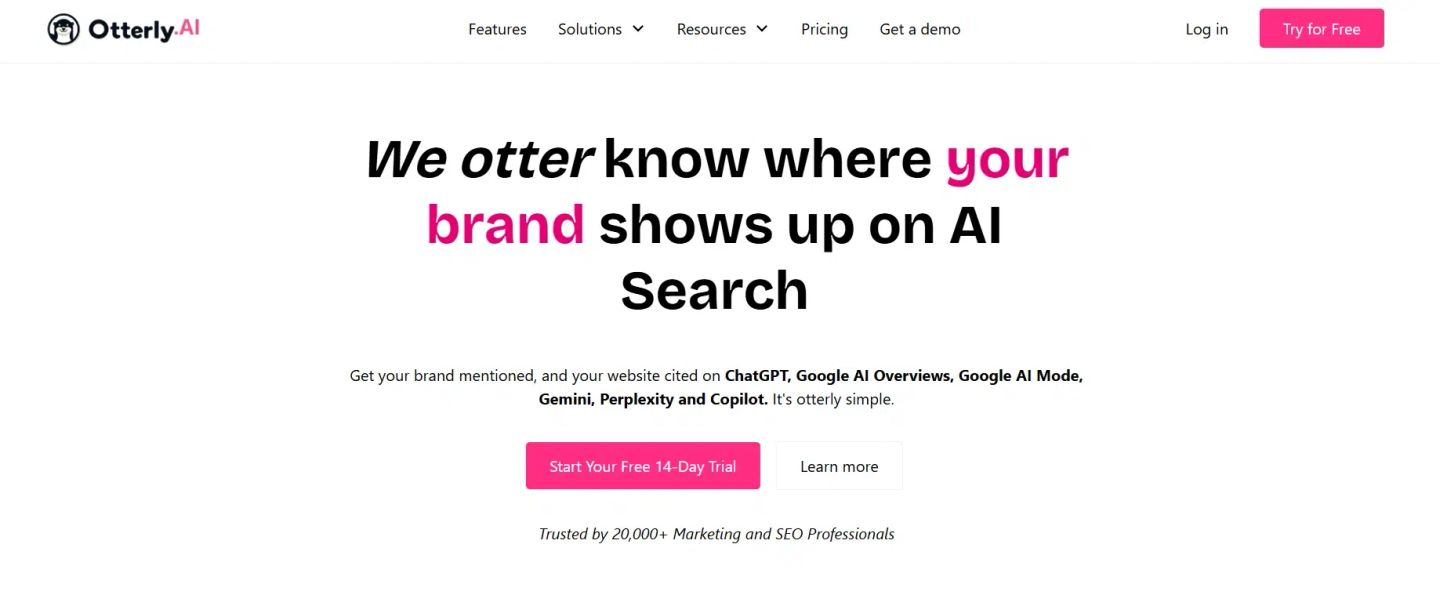
Pricing: Paid plans from ~$19/month, free trial available
Best for: Small teams, solo marketers, and startups that want to start tracking AI brand visibility without a large monthly commitment
Otterly.AI is purpose-built for AI search visibility. It focuses on tracking brand mentions and citations across ChatGPT, Perplexity, Gemini, and Google AI Overviews, with a clean interface that requires no technical setup to get started.
The tool monitors how your brand appears in AI-generated answers and surfaces competitor mentions in the same queries. For teams with limited budgets or those testing AI visibility tracking for the first time, it is the most accessible starting point in this list.
Pros
|
Cons
|
iii) AccuRanker
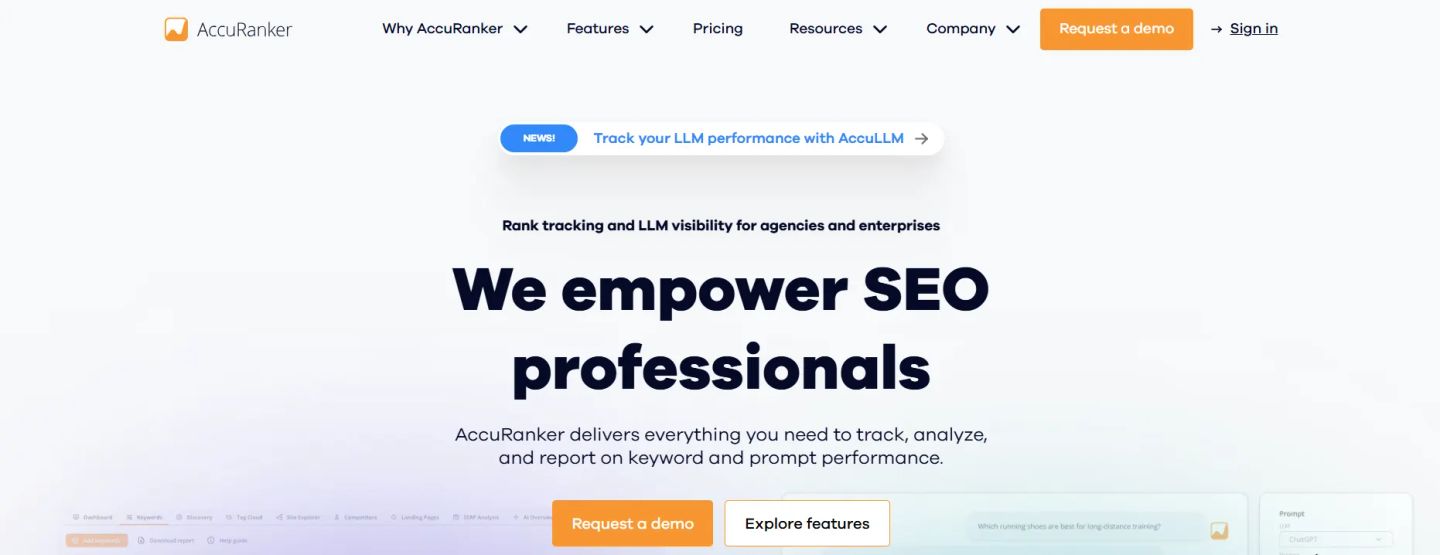
Pricing: From ~$129/month for 1,000 keywords, scales by keyword volume
Best for: Data-driven SEO teams and agencies that need fast, accurate daily keyword rank updates with reliable reporting at scale
AccuRanker built its reputation on speed and accuracy in traditional rank tracking, daily updates, on-demand rank refreshes, and precise position data across devices and locations. In 2026, it expanded into AI visibility with Share of Voice metrics that include AI answer surfaces alongside organic results.
Its reporting infrastructure is strong. The SERP analysis tools provide context on rank changes, and API access allows data to flow into custom dashboards and BI tools. For teams where rank data feeds reporting at scale, AccuRanker’s reliability justifies the price.
Pros
|
Cons
|
iv) Ahrefs (with Brand Radar)
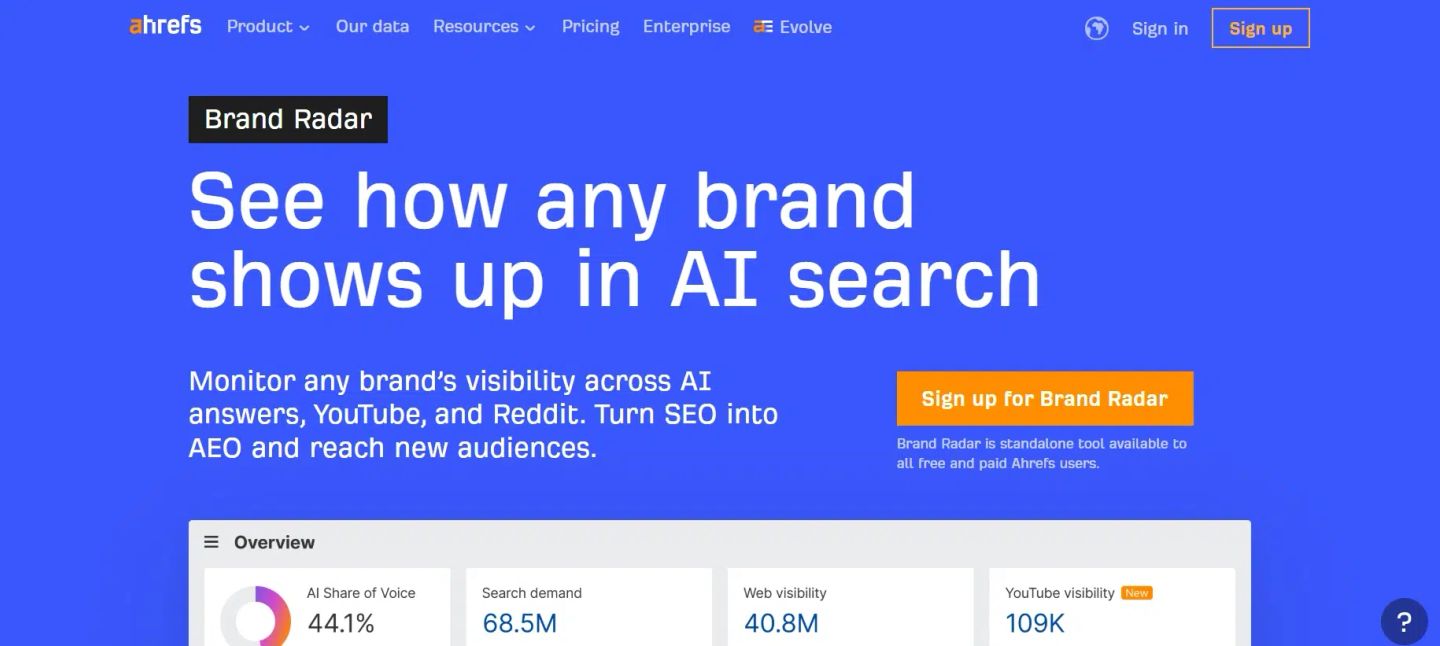
Pricing: From ~$129/month (Lite), Brand Radar is currently in beta for Ahrefs users
Best for: SEO teams already inside the Ahrefs ecosystem that want AI visibility data integrated with their existing backlink and keyword workflows
Ahrefs is one of the most trusted platforms in SEO for competitor research, backlink analysis, and keyword tracking. Its Brand Radar feature adds AI visibility monitoring, tracking where your brand appears in AI-generated answers, and allows reverse prompt lookup to see which queries trigger citations.
Because Brand Radar integrates directly into Site Explorer, teams gain AI visibility and organic performance data in a single interface. The feature is currently in beta and is included free for Ahrefs subscribers, which makes this the strongest value proposition for existing users.
Pros
|
Cons
|
v) Nightwatch
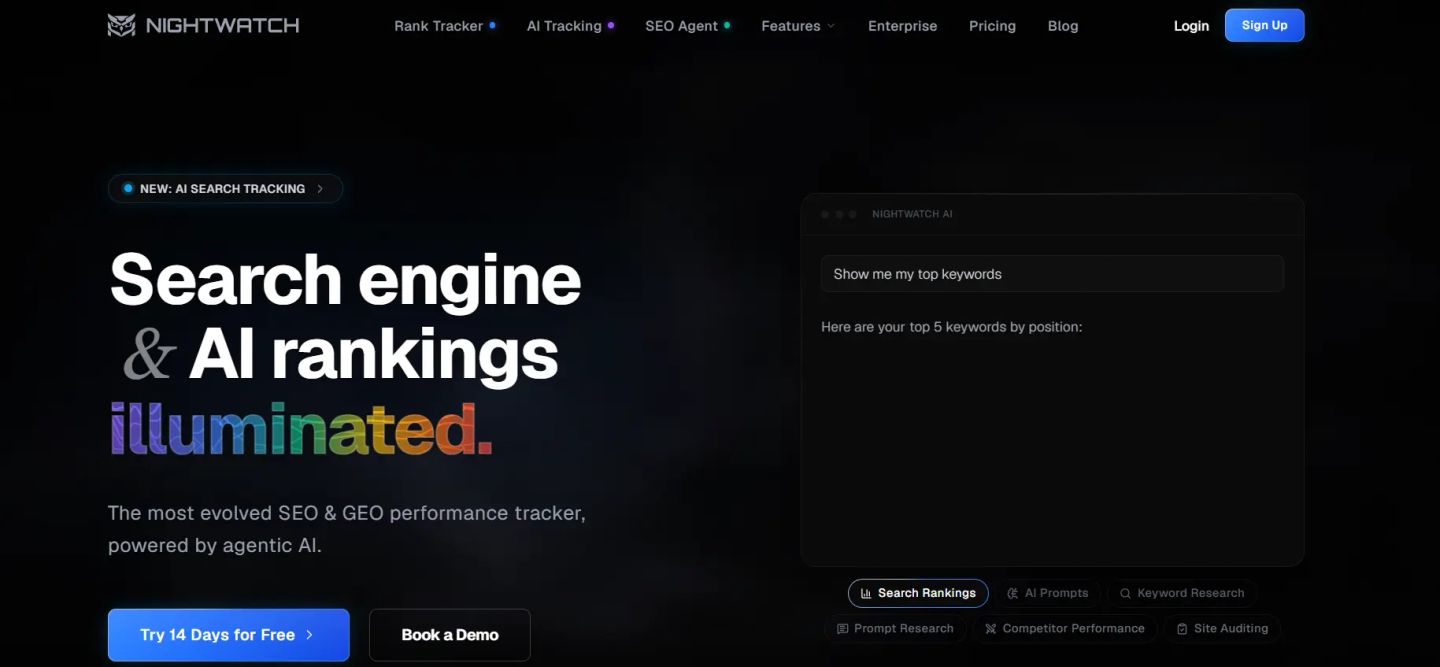
Pricing: From ~$32/month, scales by tracked keywords and locations
Best for: Agencies that need agency-level local rank tracking, white-label reporting, and scalable plans across multiple client accounts
Nightwatch focuses on delivering precise rank tracking across search engines with strong local SEO capabilities. It supports tracking across multiple devices, locations, and languages, making it the go-to for agencies managing clients with location-specific visibility needs.
AI visibility features are still in development, but the core rank-tracking infrastructure is solid. The white-label reporting suite is among the most polished in this category, allowing agencies to send branded reports to clients without additional configuration.
Pros
|
Cons
|
vi) Mangools (SERPWatcher)
Pricing: From ~$29/month, all features included, no add-ons
Best for: Beginners, small business owners, and content marketers who want an easy-to-use rank tracker with clear data visualizations and no learning curve
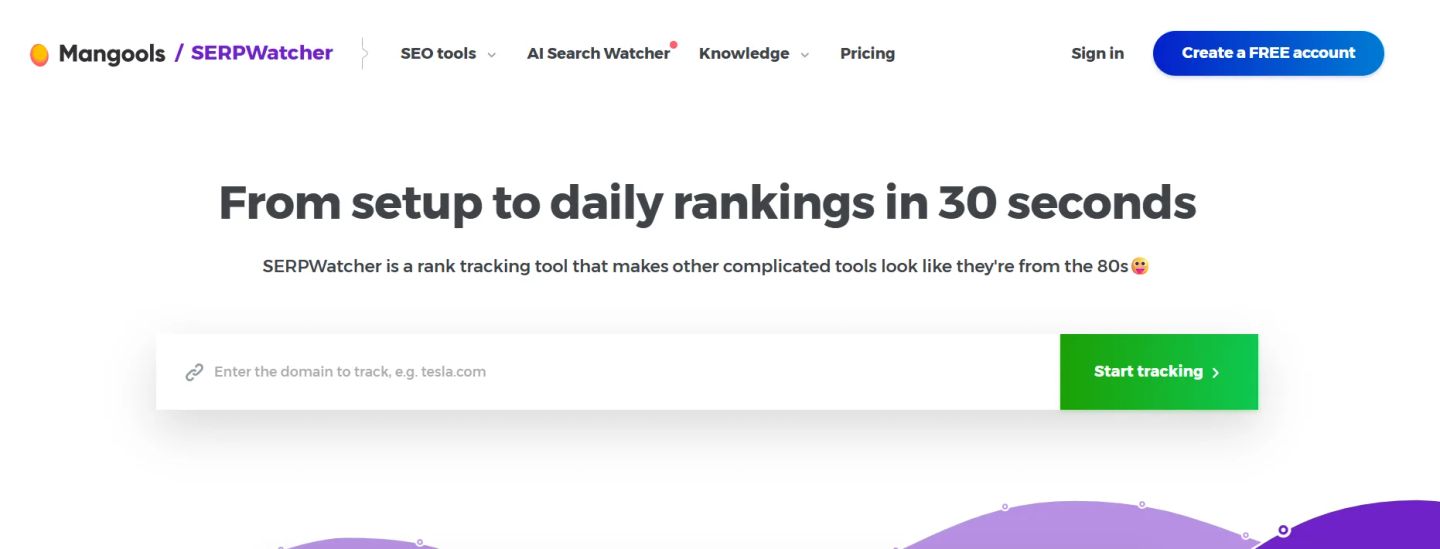
Mangools is the most approachable tool on this list. SERPWatcher tracks keyword positions daily, presents rank trends in clean charts, and sends automated alerts when positions change. The Dominance Index, Mangools’ proprietary metric, gives a quick read on overall search visibility without requiring a deep dive into raw data.
AI-specific tracking is limited, but for users who are just starting to measure SEO performance and want a tool they will actually use daily, Mangools removes all friction.
Pros
|
Cons
|
vii) ProRankTracker
Pricing: From ~$13.50/month for 100 keywords, scales by keyword volume
Best for: Agencies and freelancers managing large keyword sets across multiple clients who need reliable tracking at the lowest per-keyword cost in the market
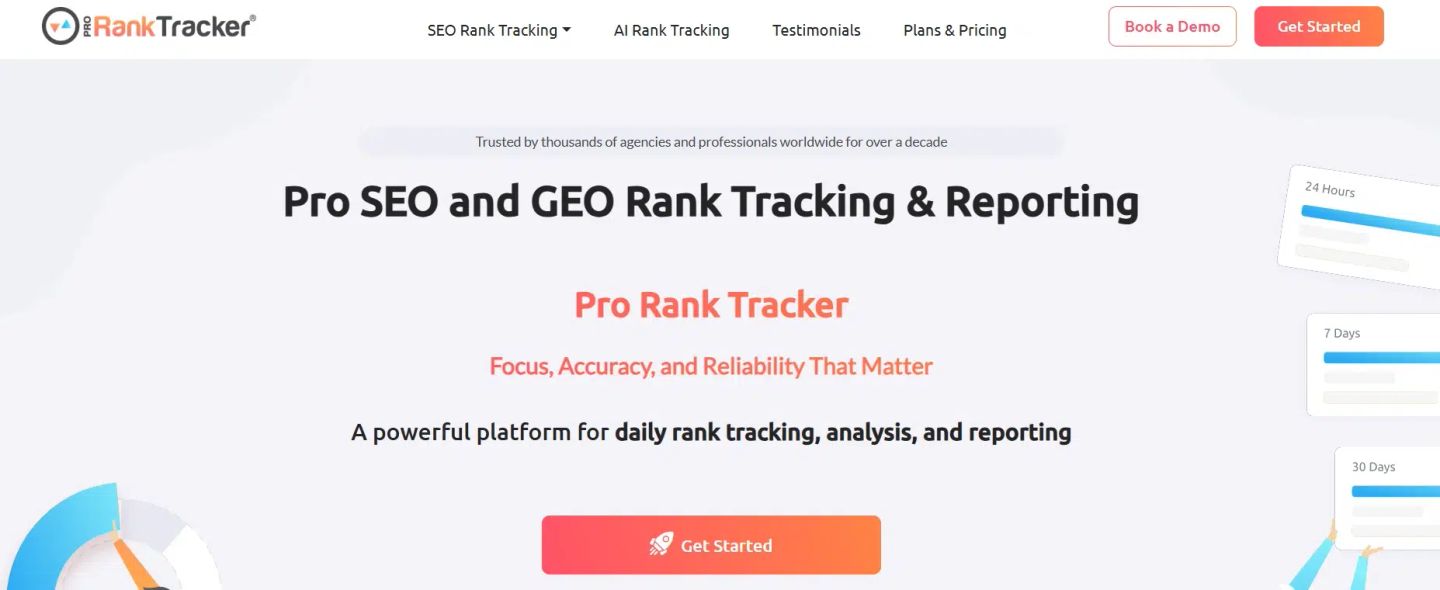
ProRankTracker covers Google, YouTube, Bing, Yahoo, and Amazon rank tracking with daily updates and detailed reporting. Its agency features include white-label dashboards, client access portals, and automated email reports, all at a significantly lower price per keyword than most competitors.
AI visibility is not the platform’s focus, but for teams whose primary need is affordable, reliable SERP tracking at scale, ProRankTracker consistently delivers.
Pros
|
Cons
|
Your Visibility Depends on Seeing the Whole Picture
Rank tracking in 2026 is no longer a single metric. There are two: where you appear in traditional search results, and where you appear, or do not appear, in AI-generated answers. Tools that cover only half of that picture leave you with an incomplete view of your actual visibility.
The seven tools above cover the full range of team sizes, budgets, and use cases. None of them is the right answer for everyone. The best starting point is to pick one that matches your current team size, run it against the 10 to 20 prompts your audience actually uses, and build from there.
AI citation visibility remains a gap for most brands across most industries. The ones closing that gap now are building an advantage that will compound as AI search use continues to grow.
INSIDEA
Ready to get found by people and AI?
Search and answer-engine visibility that compounds, built to be cited.

 How INSIDEA works