

The real estate market in 2026 presents more challenges than ever. Even with great listings, strong negotiation skills, and recognizable branding, agents and brokerages can struggle to maintain a steady flow of leads.
Buyers and sellers now start their search online, often connecting with agents before making a call or visiting a property. Relying only on referrals or cold outreach leaves opportunities on the table. Agents need a reliable system that consistently generates leads across multiple channels and keeps deals moving.
This guide provides 22 practical strategies for generating real estate leads. You’ll learn how to attract prospects, convert them into clients, and maintain long-term relationships. From targeted online campaigns and AI tools to community engagement and content marketing, each idea is actionable and scalable for agents, teams, and brokerages.
Foundations of a Strong Real Estate Lead System
These are the foundational elements that ensure every lead is properly targeted, nurtured, and tracked for consistent conversion:
Define and Segment Your Ideal Client Personas
Before diving into tactics, start with clarity. Identify your most profitable audiences: first-time buyers, downsizers, luxury clients, or investors. Define what motivates them: speed, value growth, and convenience, and tailor your outreach accordingly.
A first-time buyer may respond to educational content like “Understanding Down Payments,” while investors prefer ROI projections and neighborhood performance data.
To personalize lead generation, use CRM segmentation. Tag clients based on location, transaction stage, or property type. Automation platforms like HubSpot or Zoho CRM let you create customized follow-up flows that nurture each segment with the right message at the right time.
The Marketing Stack Every Agent Needs
Every top-performing agent runs on a marketing stack combining CRM, analytics, automation, and content distribution.
- CRM Platform: Centralize all conversations and track leads from inquiry to closing.
- Email/SMS Automation: Schedule nurturing sequences that educate and engage.
- Analytics Dashboard: Measure website conversions, ad ROI, and response rates.
Integrate AI assistants, similar to those discussed in INSIDEA’s exploration of AI tools for career guidance, to forecast lead quality and automate repetitive communication. Smart tech doesn’t replace your human touch; it amplifies it.
Building Local Presence and Reputation
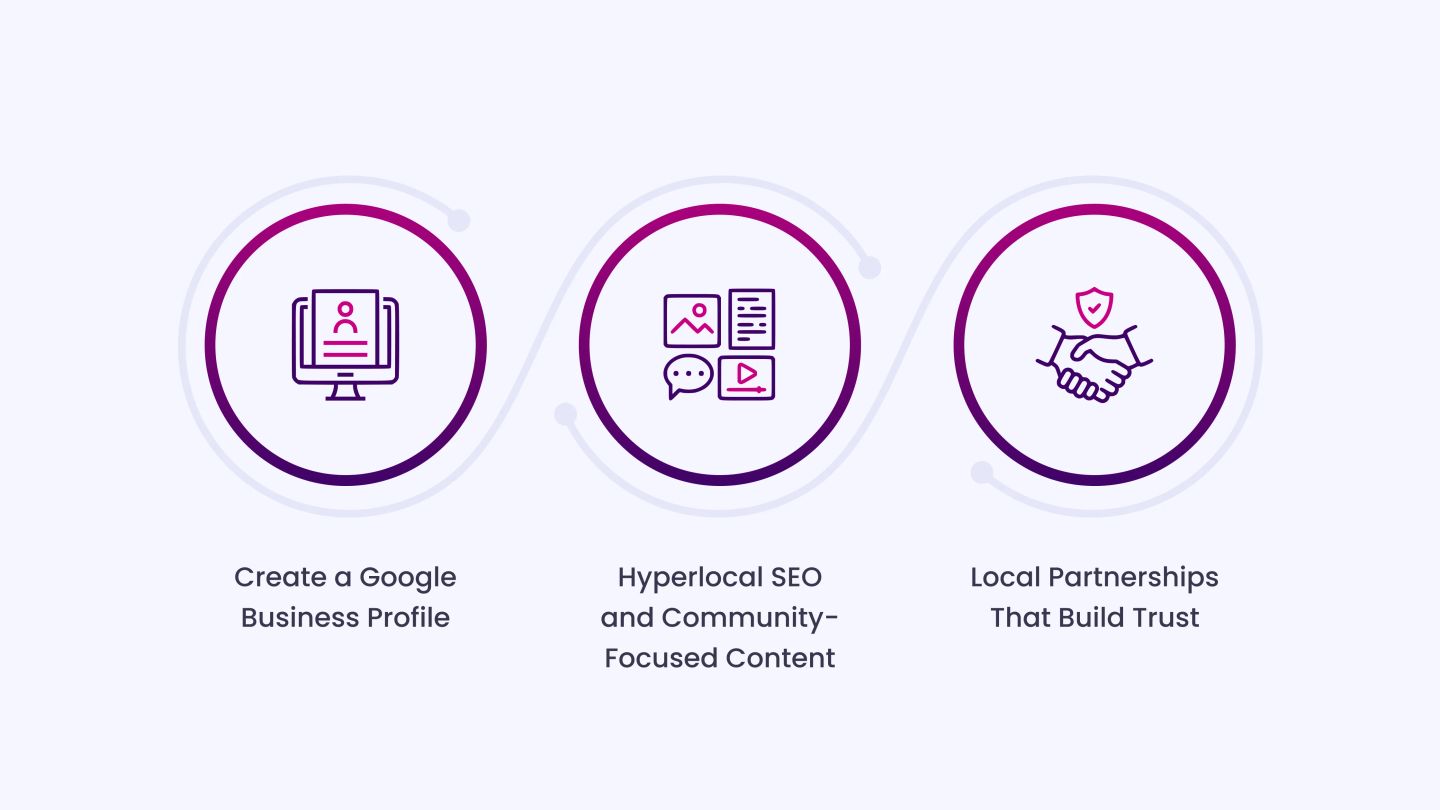
These strategies work together to strengthen your local presence, showcase expertise, and build trust with potential clients in the neighborhoods you serve.
Create a Google Business Profile
A fully optimized Google Business Profile is the foundation of real estate visibility. Update your name, address, and phone number consistently across directories to strengthen local search ranking. Upload authentic photos,your team, listings, and client events,to make your profile relatable.
Encourage satisfied clients to leave detailed reviews and reply thoughtfully to each one. Google’s Q&A section can become a mini knowledge hub: pre-populate questions like “How do I buy my first home in [City]?” and provide clear, helpful answers. Consistent monthly activity, new posts, announcements, or client spotlights signal credibility to both buyers and search engines.
Hyperlocal SEO and Community-Focused Content
Hyperlocal content connects you to specific neighborhoods rather than entire cities. Create area pages for each community you serve and include local market stats, schools, and amenities. Blog titles such as “Top Neighborhoods for Families in [City]” or “What $600,000 Buys in [Neighborhood]” attract searchers in buying mode.
Integrate internal linking naturally; for instance, when creating social content based on these blogs, draw inspiration from INSIDEA’s content ideas for fashion brands on Instagram to maintain variety and engagement.
Local Partnerships That Build Trust
Partnering with local coffee shops, home service providers, and gyms allows real-world visibility while strengthening community ties. Offer curated guides featuring local businesses and include your branding subtly at the end. Sponsor community events or co-host real estate Q&A sessions with mortgage brokers or interior designers.
These partnerships expand your referral pipeline organically. When locals think of real estate, they’ll think of you first.
Owned Digital Assets That Convert
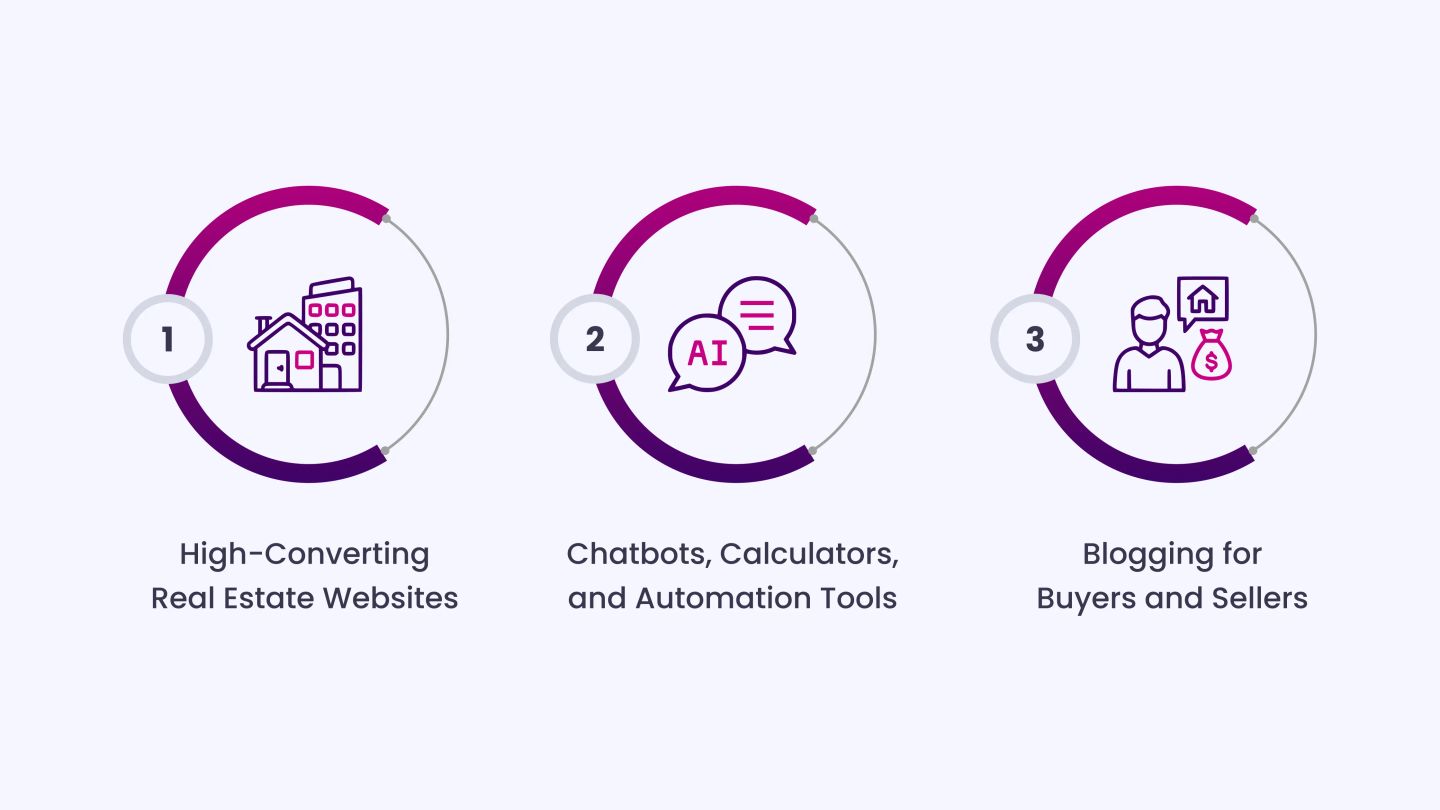
These digital assets work together to turn casual visitors into qualified leads by offering value, guiding decisions, and creating multiple points of engagement on your site.
High-Converting Real Estate Websites
Your website is your digital storefront. A modern real estate site should load quickly (under three seconds), display beautifully on mobile, and make CTAs prominent. Use a simple navigation structure that guides visitors to actions such as “Book a Consultation” or “Find Your Home Value.”
Interactive tools, valuation widgets, mortgage calculators, and saved-search alerts,turn browsing into engagement. Agents who embed instant home valuation tools often convert up to 30% more seller leads.
Ensure striking visual consistency across your website and social profiles; for inspiration, review INSIDEA’s guide on dental clinic branding and logo inspiration to understand how cohesive branding elevates trust.
Chatbots, Calculators, and Automation Tools
Integrating live chat and lead-capture chatbots ensures 24/7 engagement. Even after hours, AI-powered bots can answer FAQs, schedule showings, and collect visitor details. Automate follow-ups by syncing captured data with your CRM so human agents can take over once the lead warms up.
Mortgage calculators and “What’s My Home Worth?” tools deliver immediate value, positioning your site as a resource hub rather than just a portfolio page. Combine automation with personalization to create a seamless experience where prospects feel supported, not sold to.
Blogging for Buyers and Sellers
Regular blogging strengthens both SEO and trust. Cover step-by-step guides (“How to Purchase a Home in [City]”), market analysis, and lifestyle content about local amenities. Each article should target a keyword cluster, for example, “real estate lead generation in [City]” or “buying your first home.”
End every post with a soft conversion point such as “Schedule a Free Consultation” or “Download the 2026 Buyer’s Checklist.” Consistency matters more than frequency; two high-quality posts a month can outperform frequent shallow updates.
Paid and Data-Driven Lead Generation
These paid, data-driven strategies reinforce your presence by reaching potential buyers at the right moment and encouraging engagement through repeated, personalized interactions.
Social Ads That Actually Convert
Facebook, Instagram, and Google Ads allow laser-focused targeting by zip code, behavior, and intent. Instead of generic campaigns, design unique sets for specific objectives, such as listing promotion, home valuation, or buyer consultation. Use compelling hooks (“Average homes in [Neighborhood] now sell 9% above list price, see what yours is worth!”).
When crafting visuals and captions for property ads, check INSIDEA’s resource on mastering Instagram captions across industries. It offers inspiration for writing scroll-stopping copy that resonates with your housing market buyers.
Retargeting Campaigns for High-Intent Visitors
Most prospects need multiple touchpoints before contacting you. Retargeting reintroduces your brand to those who previously visited your site or interacted with an ad. Use dynamic visuals, carousel ads of listings they viewed, or value-offer banners such as “Still searching in [City]? Get updated listings delivered to your inbox.”
By appearing consistently over time, you gently guide warm leads back into your funnel without being intrusive.
Predictive Analytics and Smart Targeting
Predictive analytics software analyzes ownership duration, online search behavior, and property status to forecast who might list soon. Platforms like SmartZip and Revaluate help agents prospect intelligently rather than blindly cold-call.
Combine predictive data with local campaigns; for instance, send a personalized postcard to homeowners showing rising equity trends in their ZIP code, then follow up with a digital ad offering a free valuation report. When connected to your CRM, these scores also prioritize your outreach list for maximum efficiency.
Influencer and Creator Collaborations
Local influencers, interior designers, lifestyle vloggers, or financial educators can introduce you to audiences that already trust them. Collaborate on short videos discussing home-buying tips or host a live “Real Estate Myths” Q&A.
Luxury or resort-area agents can draw inspiration from INSIDEA’s jewelry-store caption ideas to craft elegant, aspirational campaign messaging that highlights exclusivity and lifestyle.
Relationship and Referral Marketing
These relationship and referral strategies strengthen your local reputation and client trust, turning satisfied customers into repeat clients and active promoters of your services.
Community Campaigns and Direct Mail
Offline visibility supports your digital strategy. Launch micro direct-mail campaigns aimed at fewer than 500 homeowners per neighborhood. Feature personalized statistics,“Last month, three homes sold within two weeks in your area.” Add a QR code linking directly to your valuation tool for seamless offline-to-online conversion.
Host a local newsletter, not just about listings, but also about stories that matter: new restaurants, school highlights, and market updates. Becoming the local information hub enhances recall and credibility.
Maximizing Referrals and Testimonials
Client trust remains the strongest driver of conversion. Display written and video testimonials prominently on your website, emails, and open house screens. Share success stories as narratives, how you helped families upgrade, or investors find their first rental.
For improved relationship-building, revisit INSIDEA’s insights on customer service qualities that win client loyalty. Apply those principles to post-sale communication, anniversary messages, and referral requests.
Creative Engagement Campaigns
Offer memorable experiences that stand out, such as “Moving Day Survival Kits” or community appreciation events. Host homeownership workshops explaining mortgage processes or equity-building strategies.
Monthly “Home Equity Check-Up” sessions provide homeowners with tangible data on their property values, prompting many to consider selling sooner. Record these moments and repurpose snippets into authentic testimonials or social clips.
Advanced Content and Media Strategies
These advanced content strategies extend your reach across platforms, build credibility with targeted audiences, and position your brand as a trusted resource for buyers and sellers alike.
YouTube and Podcast Marketing
Video content drives deep engagement. A YouTube channel optimized for local keywords (“Homes for Sale in [City]”) remains one of the most sustainable long-term lead sources. Post neighborhood tours, Q&As, and listing walk-throughs.
Podcasts allow you to connect with commuters and investors. Feature weekly discussions about the real estate climate, tax benefits, or homeowner success stories. Guest appearances from loan officers or interior designers create variety and authority.
Mastering Short-Form Videos
Short-form content, Reels, TikToks, and YouTube Shorts, offer exponential reach. Post quick market updates, “before and after” renovations, or “Day in the Life” behind-the-scenes moments. Use local hashtags (#[YourCity]HomesForSale) to ensure proximity reach.
For emotional life-event angles, check INSIDEA’s Instagram caption ideas for wedding planners to craft story-driven captions that connect buying homes with new family beginnings.
Guest Posting and Collaborative Content
Publishing expert pieces on authoritative industry sites like Inman or Realty Times increases exposure and backlinks. Focus on unique market insights or case studies demonstrating how digital marketing has improved your listings’ performance. Always include a call-to-action that links back to your resource page or lead capture form.
LinkedIn is another platform worth attention. Learn from INSIDEA’s roundup of examples of outstanding company pages on LinkedIn to refine your professional profile for B2B opportunities.
Automation and Lead Nurture
These automation and lead-nurturing tactics ensure every inquiry receives timely attention, moving prospects through the buying journey while efficiently prioritizing high-potential leads.
Email & SMS Drip Campaigns
Automated email sequences effectively nurture cold leads. Map your campaign to the customer journey, for example:
- Week 1: Welcome + resource guide.
- Week 2: Market update snapshot.
- Week 3: Client case study (“How we sold X% over asking”).
- Week 4: Podcast or video invite.
Blend drip emails with thoughtful SMS reminders. Quick text messages like “New 3BHK listing near [Neighborhood], want details?” maintain responsiveness and personal touch.
CRM Integration and Lead Scoring
Integrated CRMs unify interaction data across ads, website forms, and calls. Use lead scoring models that assign numerical values to engagement metrics, email opens, site visits, and chats, so sales efforts focus on prospects with the highest intent.
Reporting Dashboards
Track every channel’s performance using a single dashboard that monitors cost per lead (CPL), conversion percentile, and campaign ROI. Evaluate which patterns deliver predictably, then scale what works.
Quick Start Checklist: 90-Day Real Estate Lead Plan
- Tier 1 (Weeks 1-4): Optimize your Google Business Profile, update website CTAs, and publish two hyperlocal blog posts.
- Tier 2 (Weeks 5-8): Launch one Facebook ad set, enable chatbot automation, and build an email drip sequence.
- Tier 3 (Weeks 9-12): Record three short-form videos, host one community workshop, and create your first market-focused podcast.
This cyclical plan ensures consistent visibility and compounding lead growth.
When to Partner with a Marketing Expert
Running full-scale campaigns internally can quickly drain your time. Partnering with a specialist agency like INSIDEA allows you to focus on client-facing work while professionals handle the heavy lifting, SEO, content marketing, paid ads, email nurturing, and social media management.
With INSIDEA’s all-in-one digital marketing subscription, real estate agents and brokerages gain access to an integrated system that attracts qualified leads, automates engagement, and delivers measurable ROI. Instead of juggling vendors or freelancers, you get a single growth partner optimizing your marketing engine end to end.
INSIDEA
Ready to put this into practice?
INSIDEA is an Elite HubSpot Partner rated 4.99 across 450+ verified reviews. Let's map it to your goals.


 How INSIDEA works




