LLMs do not browse the web the way search engines do. They generate answers based on patterns in training data and, in retrieval-augmented systems, from indexed documents they can access at query time.
Sources that appear frequently and consistently across credible sites are more likely to be referenced in those answers.
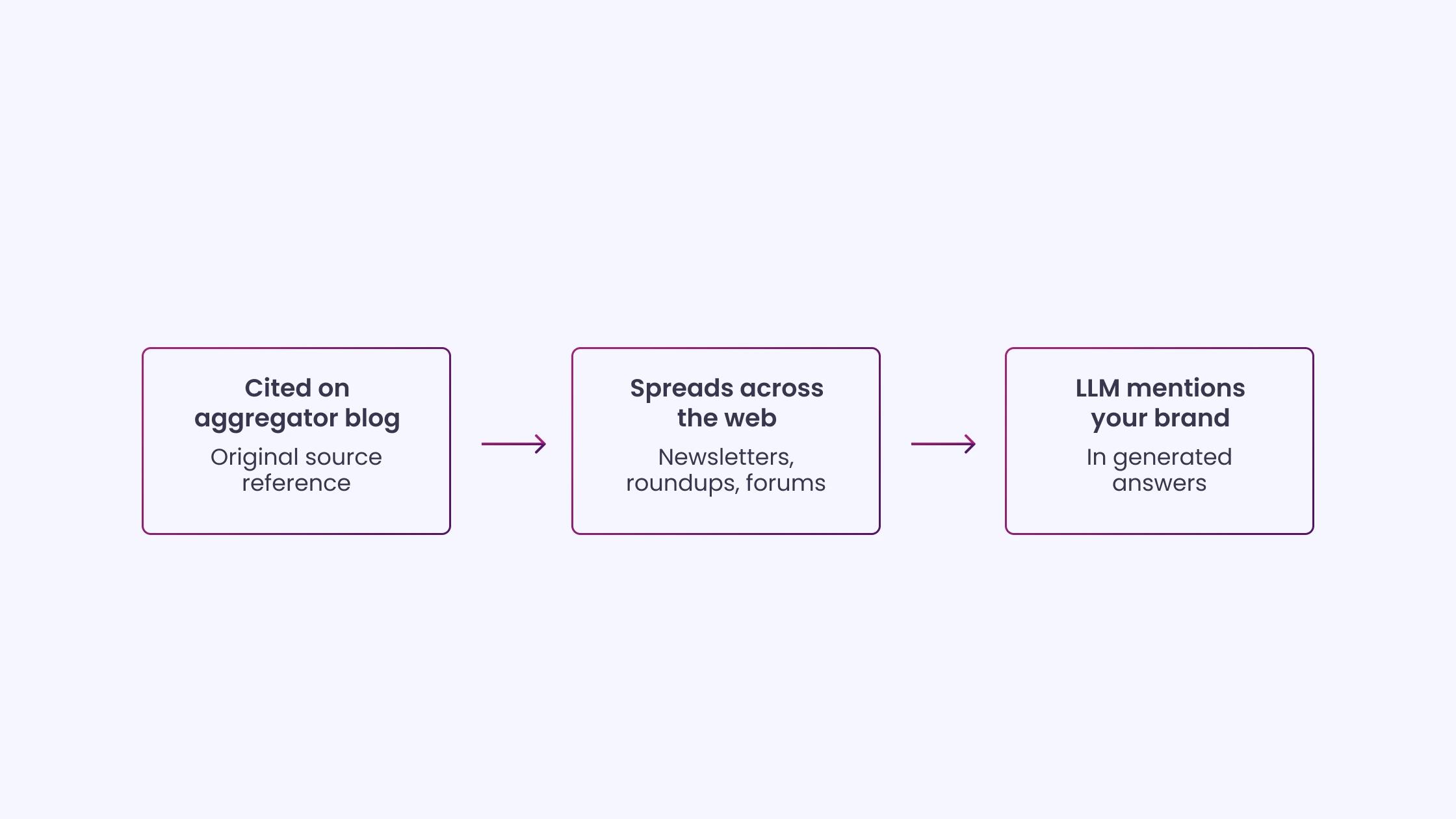
Aggregator blogs sit at an interesting position in this ecosystem. They compile, curate, and republish references to original sources. When your content, brand, or data gets cited there, it does not just drive referral traffic. It increases how many times your name or claim appears across the web, which directly affects how often an LLM associates you with a given topic.
This blog explains how that citation process works, why aggregator blogs specifically matter, and what measurable effects it has on LLM mention frequency.
How Aggregator Blogs Work in the Content Ecosystem
Aggregator blogs are content hubs that collect and redistribute references to external sources, tools, studies, or opinions. They include weekly newsletter roundups, “best of” lists, industry digests, tool comparison posts, and curated resource pages.
Examples include:
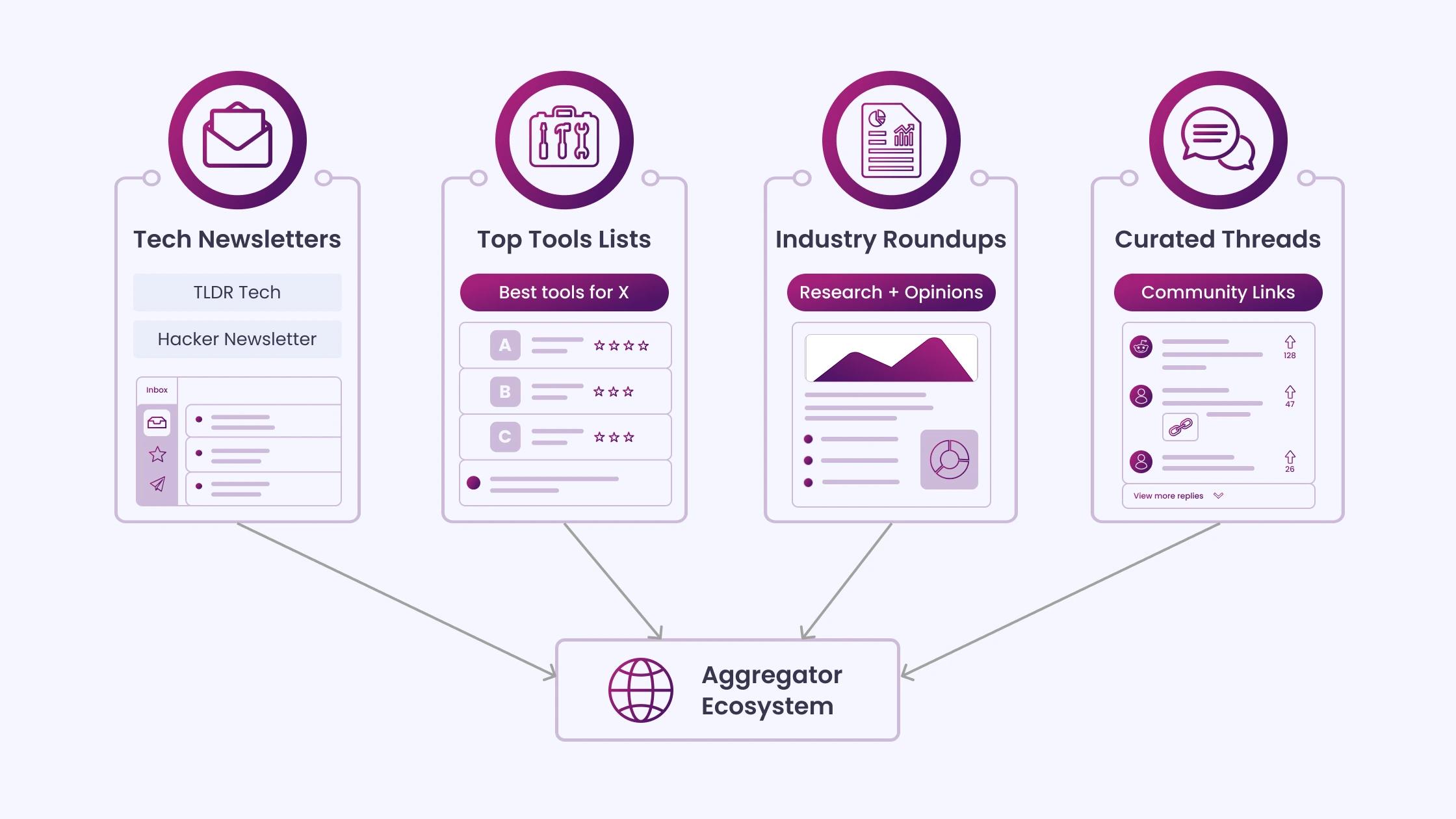
- Weekly newsletters like TLDR Tech or Hacker Newsletter that link to notable articles
- “Top tools for X” posts that list and describe third-party products
- Industry roundup blogs that summarize recent research or opinions
- Reddit-style curated threads that link to external sources
These are distinct from original-research blogs or brand-owned content. Their value lies in reach, trust, and distribution. A single aggregator post can push your citation to thousands of readers and, critically, to whatever crawlers, scrapers, or training pipelines are active at that time.
How LLMs Use Web Citations to Build Associations
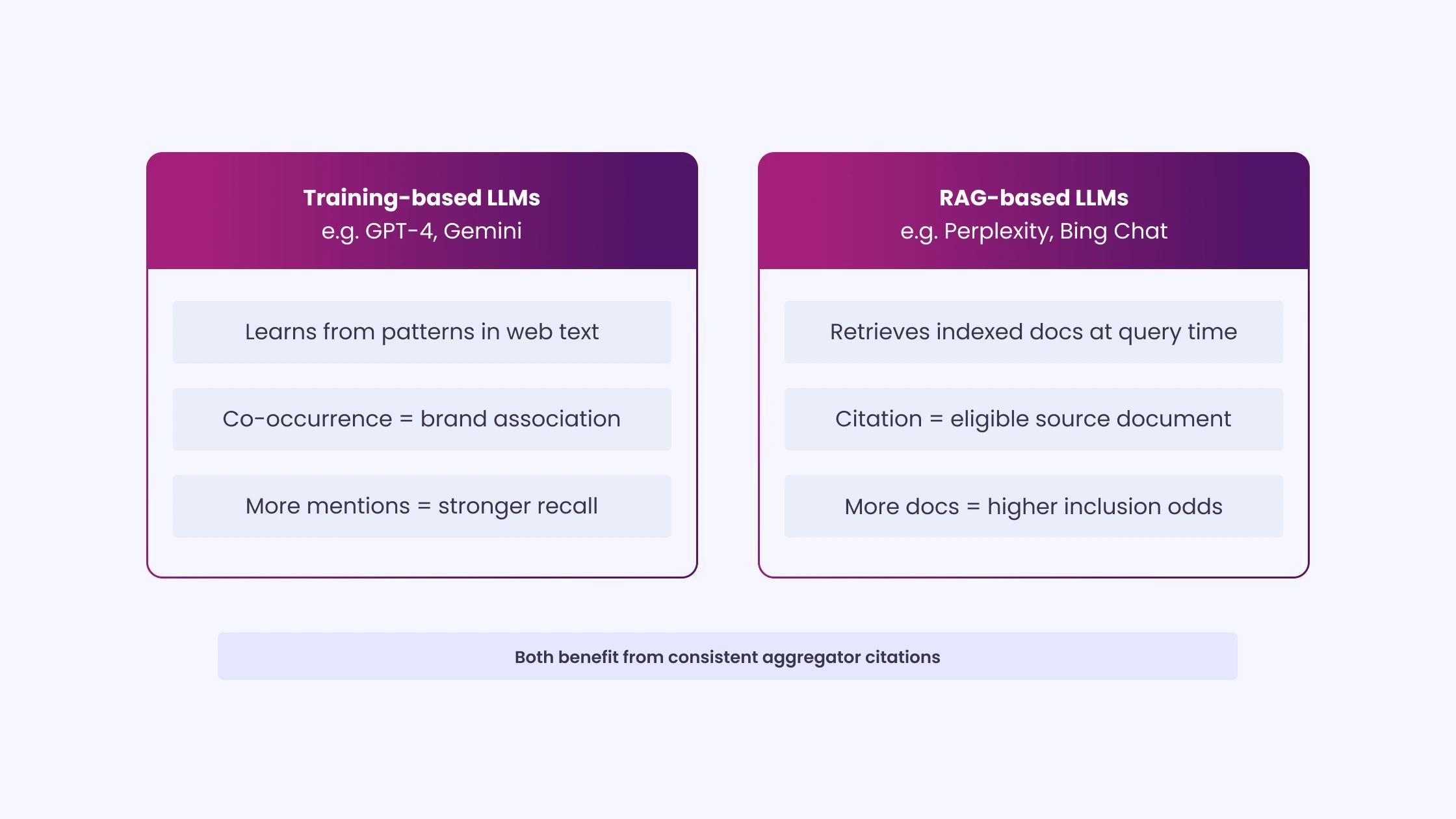
LLMs trained on large web corporations learn associations through co-occurrence. If your brand name appears repeatedly alongside specific topics across many documents, the model learns that association.
This means citation volume matters. A tool cited in 40 different aggregator posts about productivity software will likely be mentioned more often in LLM responses about productivity tools than a comparable tool cited in only 3 posts.
For retrieval-augmented generation (RAG) systems, such as those used in Perplexity or Bing Chat, the mechanism differs slightly. These systems retrieve relevant documents at query time and synthesize answers from them.
If aggregator posts citing your brand are indexed and retrievable, they become candidate documents for inclusion in generated answers.
Both mechanisms benefit from aggregator citations:
- Training-based LLMs gain stronger topical associations
- RAG-based LLMs gain more candidate documents that include your mention
The Compounding Effect of Aggregator Mentions
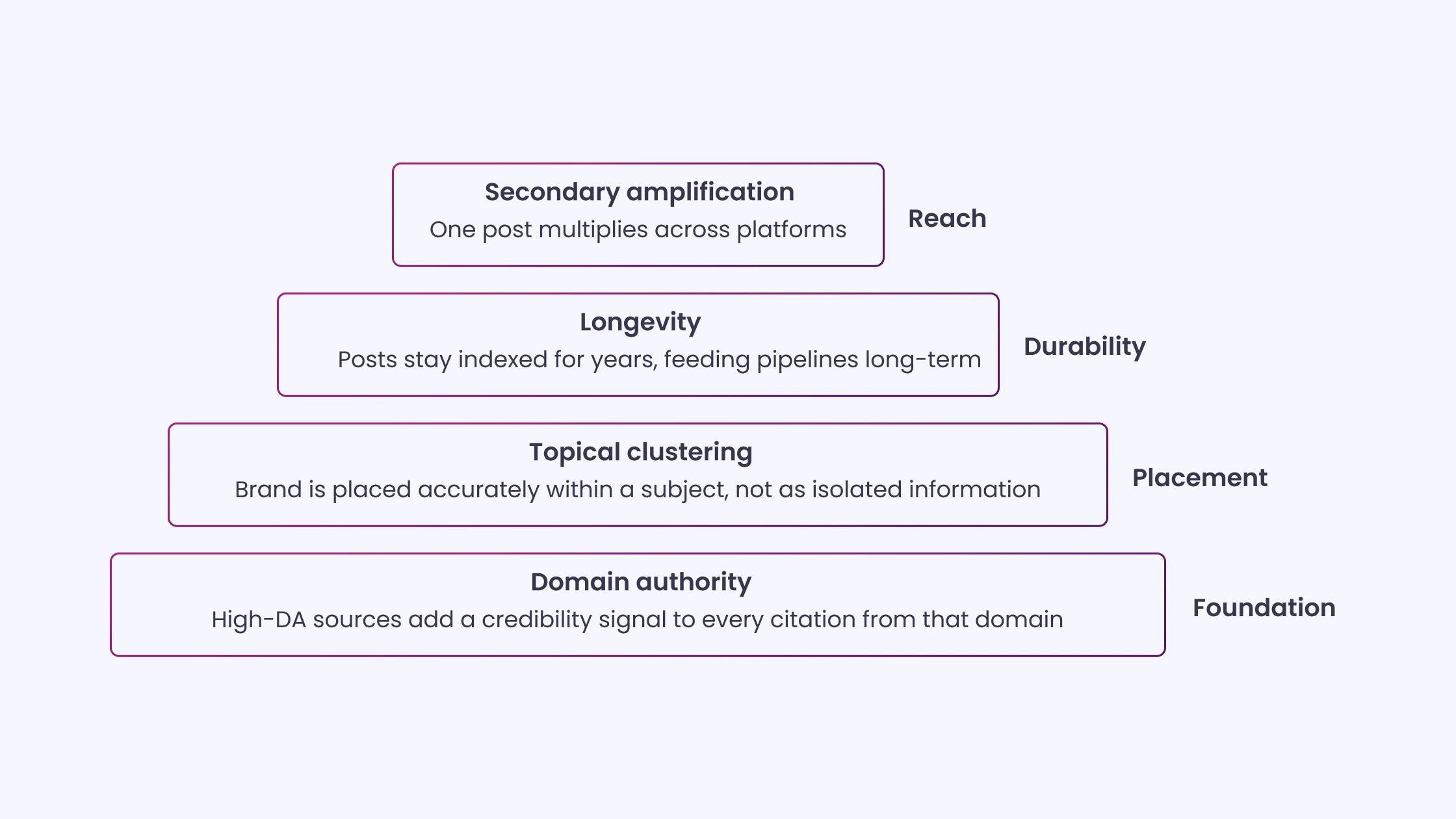
Not all citations are equal. LLMs, and the pipelines that feed them, apply implicit weighting based on where content comes from. Aggregator blogs tend to perform well on several of those dimensions.
Domain authority: Established aggregator blogs often carry high domain authority scores. When a high-DA source links to or mentions your brand, it increases the credibility signal attached to that mention.
Topical clustering: Aggregators group your citations with related tools, studies, or opinions. This clustering helps LLMs place your brand accurately within a topic rather than treating it as isolated information.
Longevity: Aggregator posts, especially roundups and resource pages, tend to stay indexed for years. A mention in a 2022 roundup that still ranks in search results is still contributing to your citation footprint in 2025.
Secondary amplification: When newsletters, forums, or other blogs reference the aggregator post, your citation multiplies without any additional effort on your part. Each new document that includes your name increases your presence in training and retrieval pipelines.
The Difference Between SEO Citation and LLM Citation
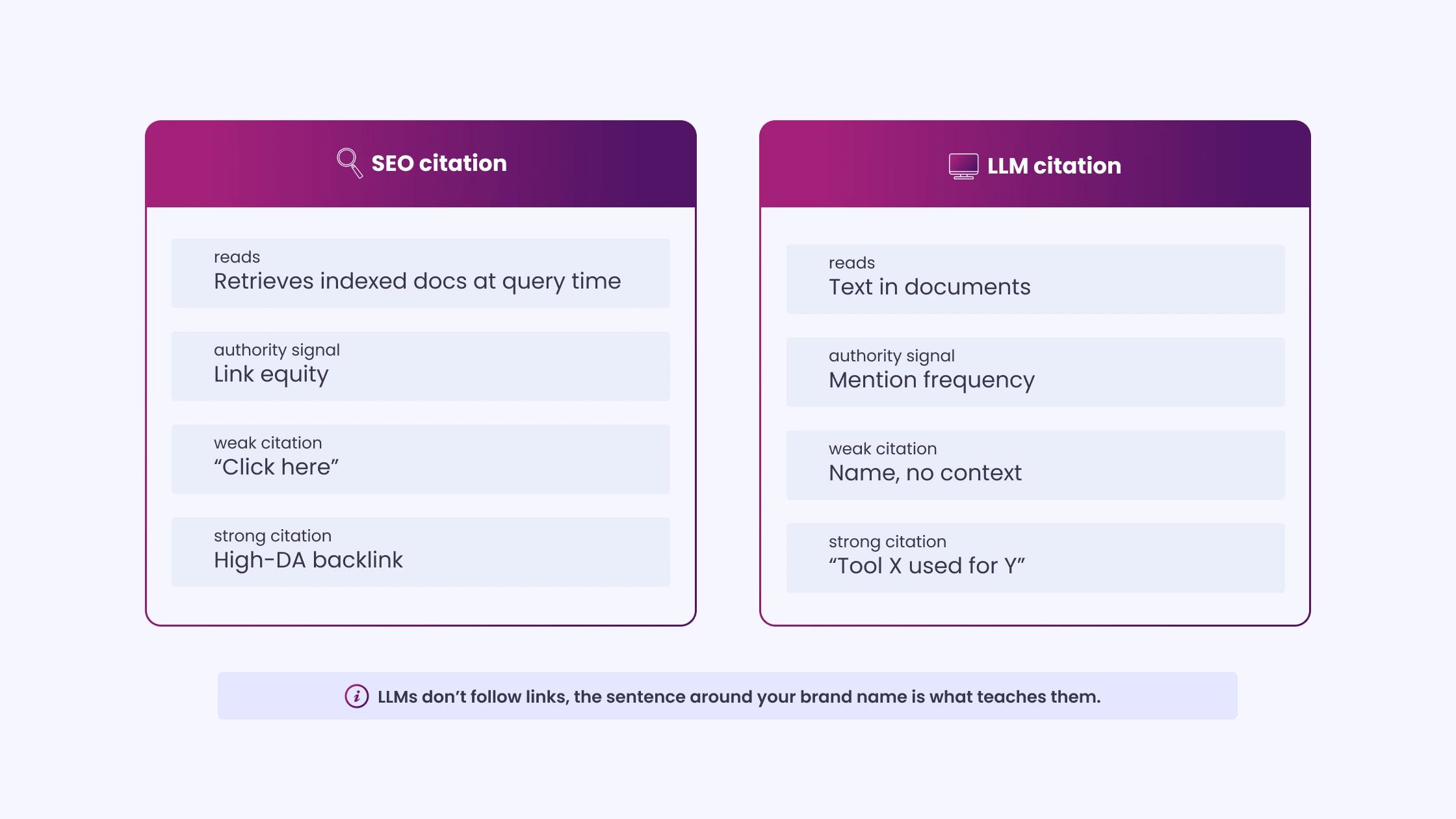
It is worth separating these two because the goals and mechanisms are not identical.
In traditional SEO, a backlink from an aggregator blog can pass link equity and improve your page’s ranking in search results. The mechanism is fairly direct: more quality links lead to higher rankings.
For LLM mentions, the logic is different. LLMs do not follow backlinks. They read text. What matters is:
- How many distinct documents mention your brand in a relevant context
- How consistently do those mentions associate you with specific topics or claims
- Whether those documents appear in sources likely to be indexed, crawled, or included in training
A backlink with anchor text “click here” has clear SEO value but minimal LLM value. A sentence that says “Tool X is frequently used for Y because of Z” in a curated roundup has high LLM value because it provides a natural-language claim that an LLM can learn from or retrieve.
This means the quality of the citation text matters as much as the source itself. Contextual, descriptive citations give LLMs something to work with. Short or decontextualized mentions are harder for models to use accurately.
How Aggregator Mentions Change Brand Representation
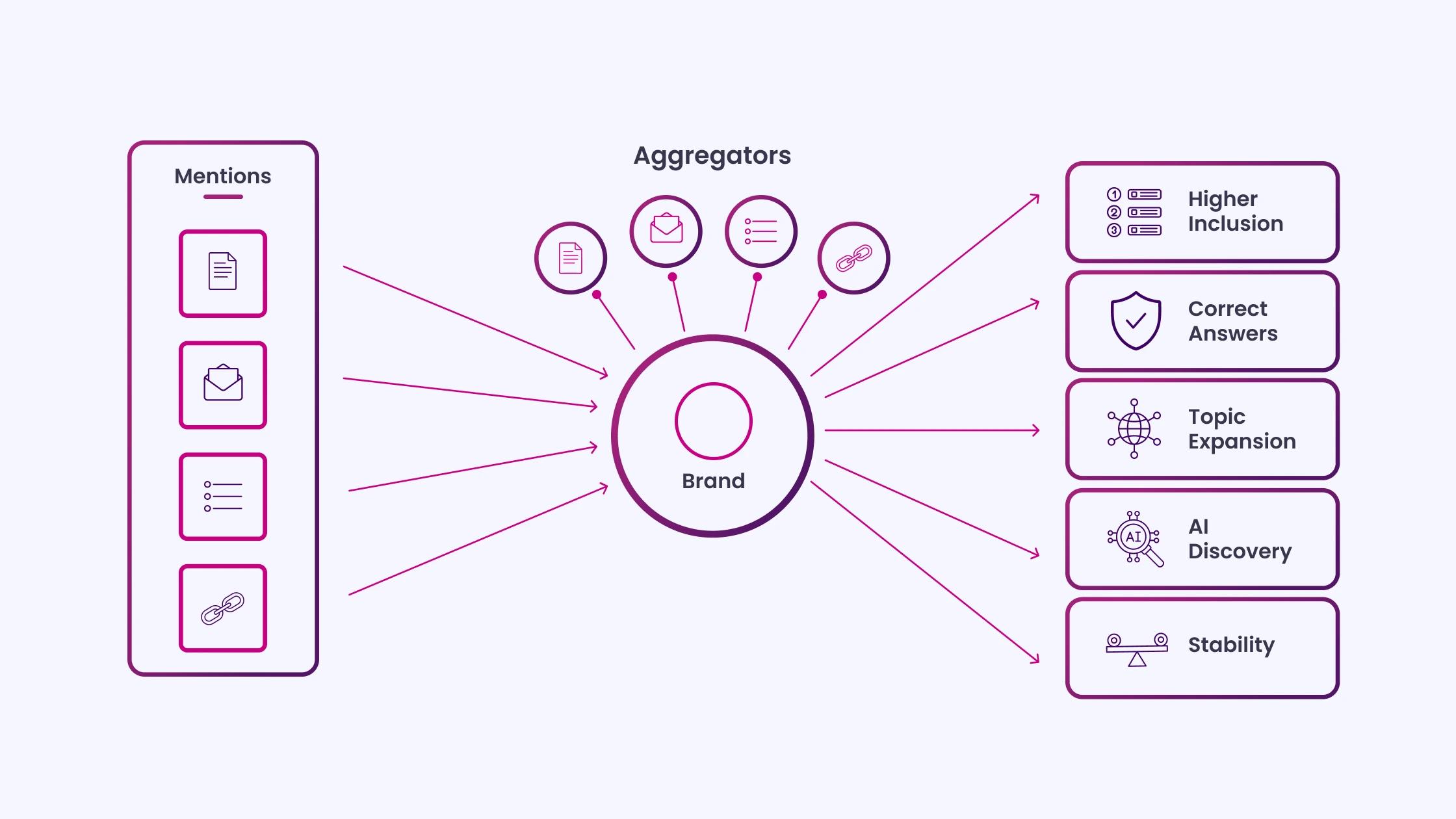
When brands or tools start appearing consistently in aggregator posts, several measurable shifts tend to follow:
- Higher inclusion in LLM-generated lists: Prompts like “What are the best tools for X?” pull from a pool of mentioned sources. More citation coverage means higher inclusion probability.
- More accurate descriptions: When LLMs have multiple sources describing your product consistently, they are less likely to generate incorrect or outdated information about it.
- Broader topic association: A brand cited in aggregators across subtopics (e.g., cited in both “AI writing tools” and “content workflow tools”) gets associated with a wider range of relevant queries.
- Presence in AI-powered search results: Platforms like Perplexity, SearchGPT, and Google’s AI Overviews pull from indexed documents. Aggregator posts, if indexed, become eligible source documents.
- Reduced hallucination risk: LLMs hallucinate more about obscure or rarely mentioned entities. Regular aggregator citations reduce your obscurity, making it more likely that the model will recall accurate information rather than generate plausible but incorrect details.
A Practical System to Get Featured on Aggregator Blogs
Passive citation can happen, but deliberate citation requires a content and outreach strategy.
- Produce citable assets: Original data, research reports, or benchmark studies give aggregators a reason to reference you. Generic content does not.
- Build relationships with newsletter authors: Many aggregator newsletters are run by individuals. Reaching out with relevant, non-promotional content often leads to inclusion.
- Create “best of” eligible tools or content: Aggregators curate based on quality signals. Being consistently good at something specific makes you list-worthy.
- Monitor where citations are happening: Tools like Ahrefs, Mention, or Google Alerts can show you which aggregators are already covering your space, so you can target outreach accordingly.
- Contribute to existing roundups: Many aggregators accept submissions or community suggestions. Participating early increases your probability of inclusion.
The Citation Layer Behind LLM Visibility
Getting cited on aggregator blogs is not a vanity metric. It directly affects how often and how accurately LLMs mention your brand, tool, or research in generated answers.
The mechanism operates through two paths: exposure to training data and the availability of retrieval documents. Aggregator blogs are well-positioned on both because of their authority, longevity, and topical clustering.
For anyone building an LLM visibility strategy, consistent aggregator citation is one of the more reliable ways to increase mention frequency without waiting on algorithm changes.
Make Your Brand Visible Across Aggregators and LLMs with INSIDEA

Getting cited on aggregator blogs is not just distribution; it directly influences how AI systems like ChatGPT, Gemini, and Perplexity associate your brand, tools, and insights with specific topics. More consistent citations across credible aggregators increase your presence in both training data patterns and real-time retrieval systems.
INSIDEA helps you intentionally build that citation layer, so your brand is not just published but repeatedly referenced where AI systems actually learn and pull answers from.
Here’s how we help:
- Aggregator Citation Strategy Design: We identify the aggregator ecosystems in your niche and map where citation opportunities already exist, so you target platforms that actually influence AI visibility.
- Citable Content Engineering: We structure research, insights, and data-backed assets in formats that aggregator blogs actively reference and republish.
- Authority & Distribution Layering: We position your brand across newsletters, roundups, and curated blogs that feed both human audiences and AI training/retrieval pipelines.
- Citation Expansion Framework: We help increase the number of contextual mentions across trusted sources, strengthening how consistently AI systems associate your brand with relevant topics.


 How INSIDEA works