You’ve trained for years, built your practice with care, and helped people through some of their most challenging chapters. But staying relevant can feel like you’re expected to become a part-time content creator just to keep up.
Referrals still matter. They always will. But they’re not enough on their own. People scroll first, decide second, and book thirdand much of that scrolling happens on Facebook and Instagram, where conversations about mental health, burnout, anxiety, and boundaries are already part of the daily social feed.
That’s where Facebook ads for therapists come in. They give you a way to show up with clarity and purpose right in the spaces where your potential clients are already looking.
The best part is that you don’t need to be a marketing expert; just clear, consistent, and visible. With over 4.2 billion users across Facebook and Instagram and lower ad costs than Google PPC, the return on attention is hard to ignore.
In this blog, I’ll provide a step-by-step guide to using Facebook ads for therapists so you can grow your practice without burning out or selling out.
The Best Types of Facebook Ads for Therapists in Private Practice
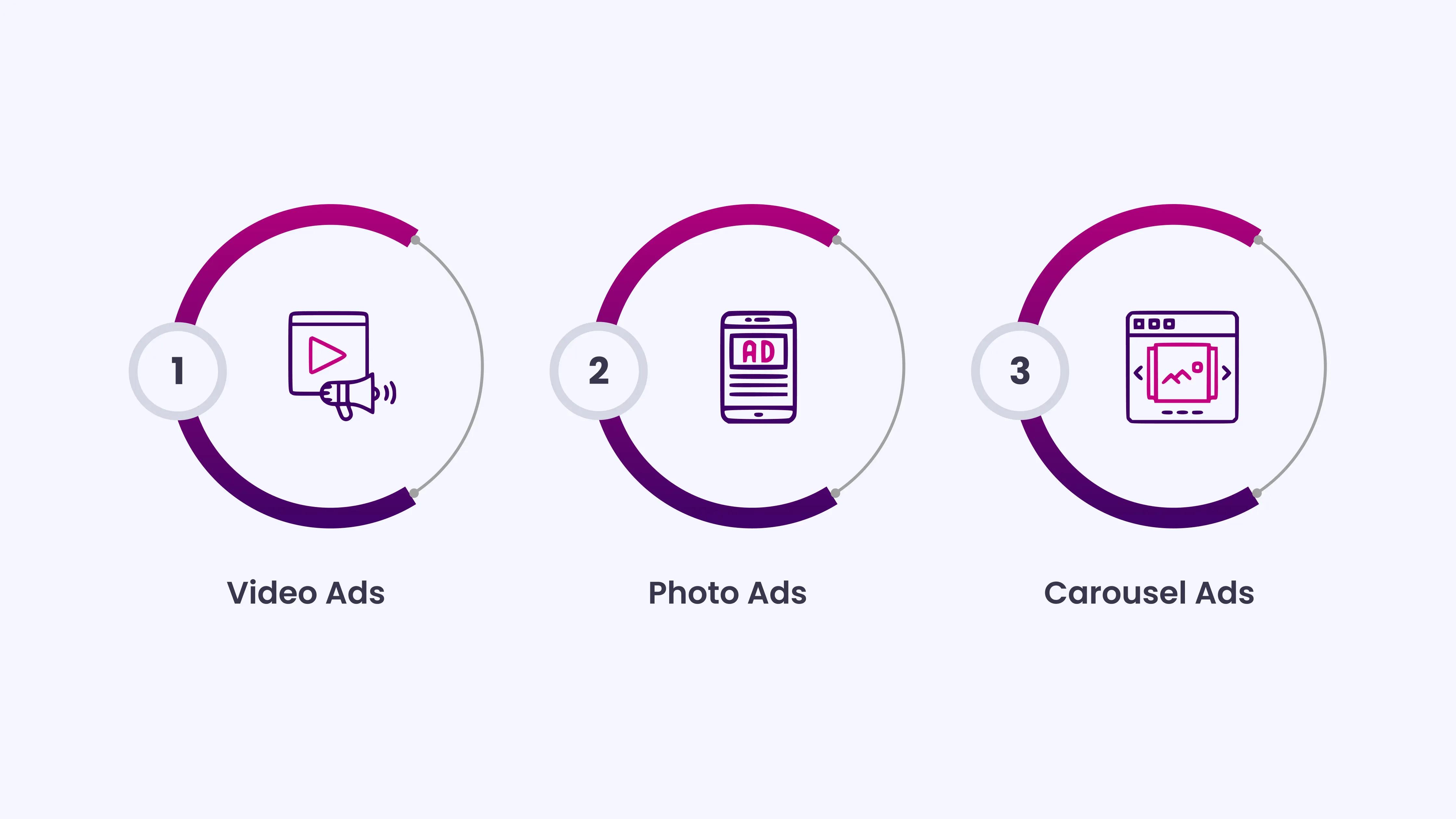
Technically, therapists (and most businesses) can use six types of Facebook ad formats to support different goals, such as awareness, engagement, or lead generation.
However, when generating maximum ROI, just three format types consistently deliver the desired results for private practices.
Here’s what works regarding Facebook ads for therapists and why.
1. Video Ads
Therapy is personal. Most people want to know who they’re opening up tolong before they book the first session. That’s where video ads come in. They give potential clients a glimpse of what it’s like to interact with you, how your space feels, and the energy you bring into the room.
And no, you don’t need fancy gear. A short, selfie-style video shot on your phone often works better than a polished production. It feels more real. More human. Even something as simple as a 30-second clip of you explaining your approach or walking through your office can go a long way.
2. Photo Ads
Sometimes, a single image says enough. A calm space, a moment of connection, a photo of your therapy room, or a relatable message in clean typographywhen done right, these quiet visuals hit the right nerve.
Think about how your ideal client feels when they see your ad. Are they overwhelmed? Lonely? Stuck? Your image and caption should meet them therewith empathy, not polish.
Pair your image with a line that sounds like something your clients would say or need to hear. Make it feel like the start of a conversation, not a pitch.
Photo Ad Examples:
- Toledo Counseling & Mental Health
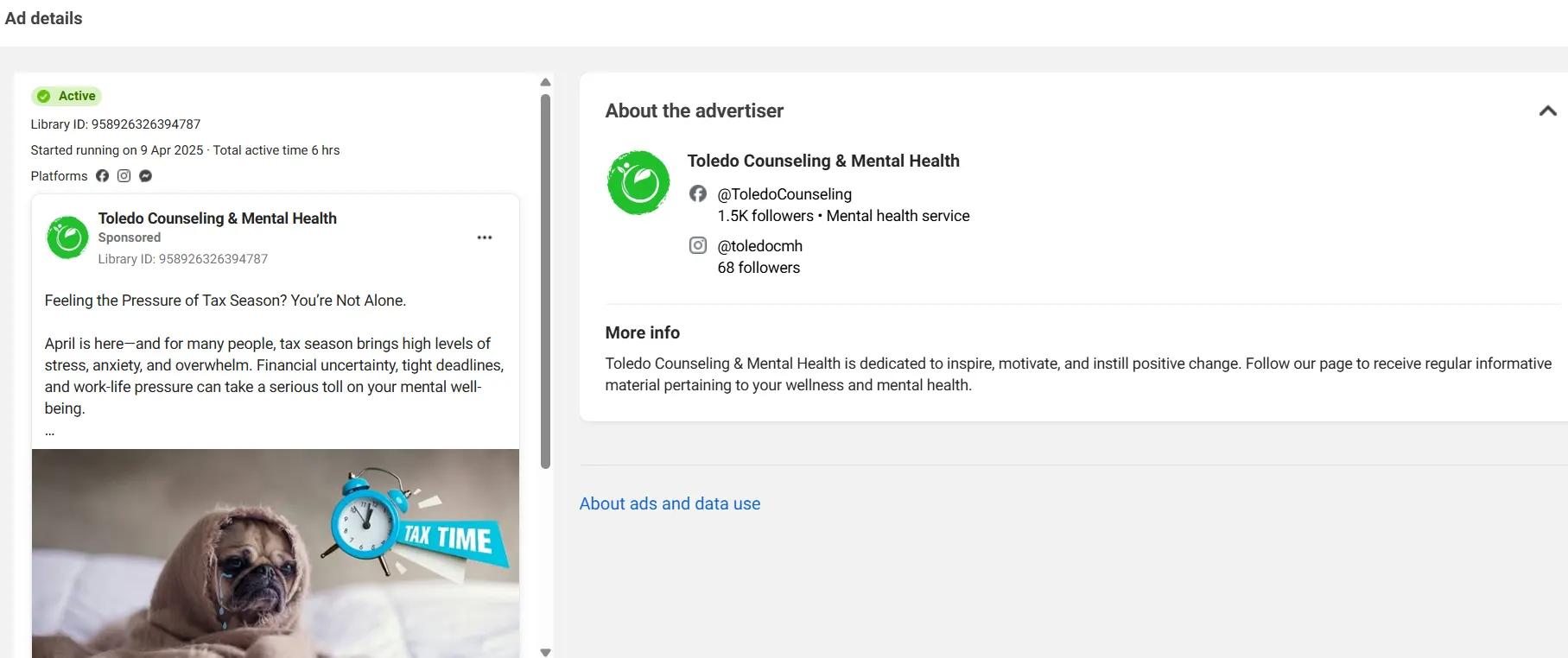
- Health Boost
3. Carousel Ads
Carousel ads let you use multiple images or short clips in a single ad, letting people swipe through your content. This format works great if you want to show different parts of your practicelike services offered, specialties, or even a “before therapy / after therapy” transformation story told visually.
You can also use it to walk through the client journey:
- Feeling stuck
- Reaching out
- What therapy looks like
- A sense of progress
- How to book a session
Carousel Ad Examples:
Slide 1: “Feeling emotionally drained?”
Slide 2: “Therapy helps unpack what’s weighing you down.”Slide 3: “Here’s what a first session with me looks like…”Slide 4: “You deserve support.”Slide 5: “Book your free consultation today.”
The Complete 2026 Guide to Facebook Ads for Therapists
Facebook ads for therapists are straight to the point. You choose who sees them. You write the message. You set the budget. No waiting around for the algorithm to do its thing. With internet users spending an average of 143 minutes daily on social media, it’s where your future clients already are.
Now, let’s explore the complete guide to Facebook ads for therapists:
Use Facebook’s Ad Library to Do Competitor Research
You don’t have to start from scratch. One of the easiest ways to learn what connects with potential clients is to look at what other therapists or wellness professionals are already doing.
And yes, Facebook lets you do that.
With the Facebook Ad Library, you can search any business page and see exactly what ads they’re running. It could be a local therapy practice, a national mental health brand, or a clinic offering services similar to yours.
Set Up the Facebook Ad Account Essentials
Before spending a single dollar on ads, it’s essential to set up the core tools to make your campaign effective. Facebook ads for therapists deliver results when your setup is clear, connected, and ready to track what matters.
Here’s exactly what you need to start the right way.
- i) Create a Facebook Business Page
This is your public profilethe page potential clients will see if they click your ad. It’s where they can learn who you are, what you offer, and how to reach you.
How to do it:
- Go to facebook.com/pages/create
- Choose “Business or Brand”
- Add your clinic name, logo, contact info, and a short, clear description of your services
- Add your location (or note if sessions are virtual only)
You don’t need to post daily, but having a few updates, testimonials, or blog links pinned shows you’re active and credible.
- ii) Set Up Meta Business Manager
This is the control panel where you’ll manage your ad account, payment info, assets, and access.
How to do it:
- Go to business.facebook.com
- Click “Create Account”
- Add your business name, your name, and your business email
- From there, link your Facebook Page and ad account
If someone else will manage your ads laterlike an assistant or an agencythis setup keeps everything organized and secure.
iii) Set Up Ads Manager (inside Business Manager)
Ads Manager is where you’ll create and monitor your ads.
Here’s what you’ll do in Ads Manager:
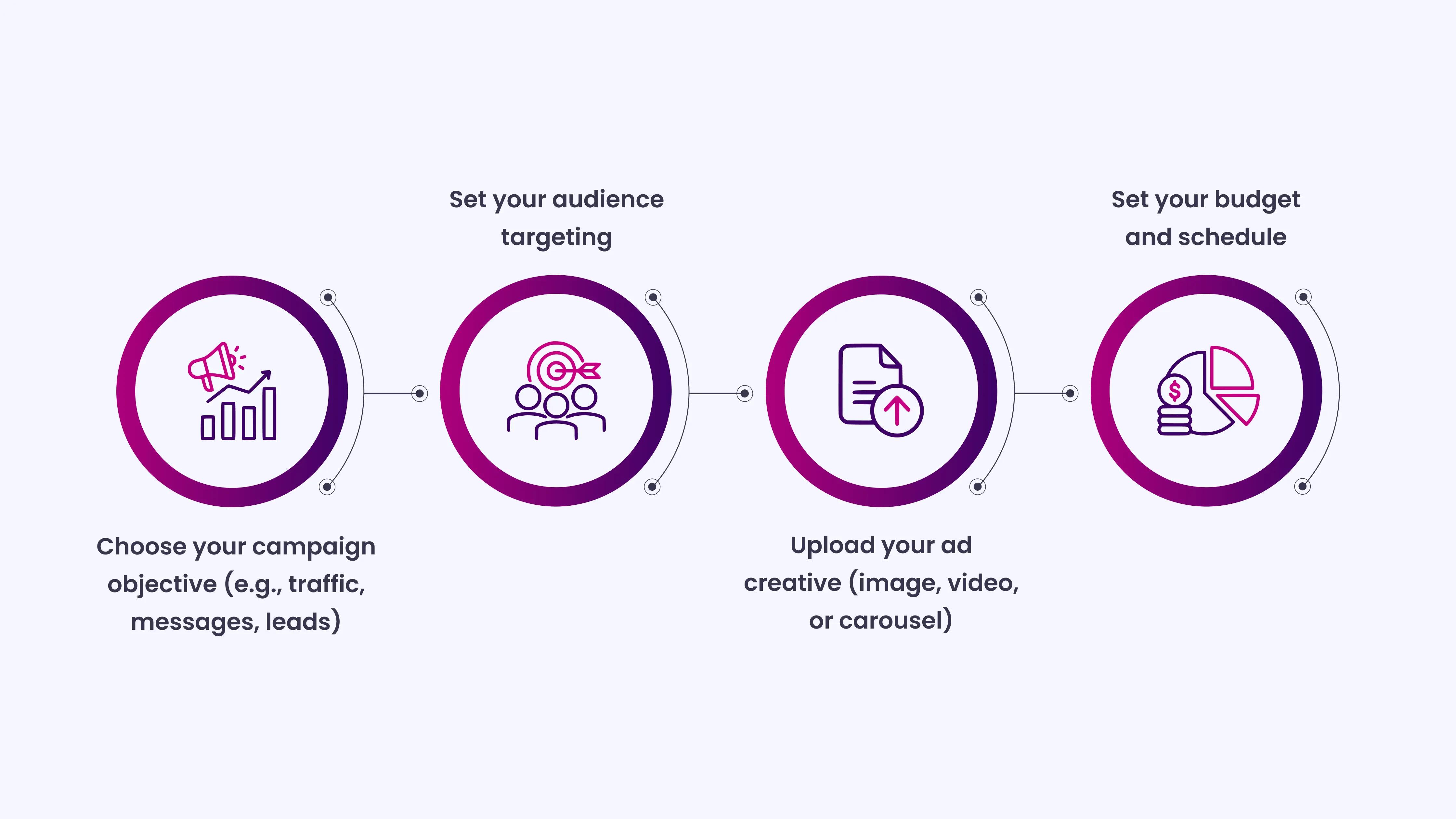
- Choose your campaign objective (e.g., traffic, messages, leads)
- Set your audience targeting
- Upload your ad creative (image, video, or carousel)
- Set your budget and schedule
You’ll use this tool to track what’s performing well and make adjustments as needed.
- iv) Install the Meta Pixel on Your Website
This might sound technical, but it’s simpleand essential. The Meta Pixel helps track people’s actions after they click your ad, such as booking a call or visiting your site. It gives you actual data to understand what’s working.
How to install:
- From Business Manager, go to “Events Manager.”
- Click “Add Data Source” → “Meta Pixel.”
- Name it, enter your website URL, and follow the guided steps
- Use Google Tag Manager (or ask your web developer) if needed
The Pixel will collect data in the background and help Facebook improve how your ads are shown to future potential clients.
- v) Connect Your Instagram Account
Running ads on both Facebook and Instagram increases reach and gives your brand a consistent presence across both platforms.
How to connect:
- In Business Manager Settings
- Under “Accounts,” select “Instagram Accounts.”
- Log in to your Instagram account and confirm the connection
This ensures your ads automatically run on both platforms.
- vi) Create a Landing Page
A landing page is where someone ends up after clicking your ad. It should align with your ad’s message and give them one clear next step, such as booking a consultation or messaging you.
What works best:
- Simple layout, mobile-friendly
- Headline that reflects your client’s concern
- Brief explanation of what you offer
- A call to action: Book a call / schedule a session / send a message
Avoid sending people to your homepageit’s too general. One focused page works better.
Structure Your Facebook Ad Campaign for Maximum Impact
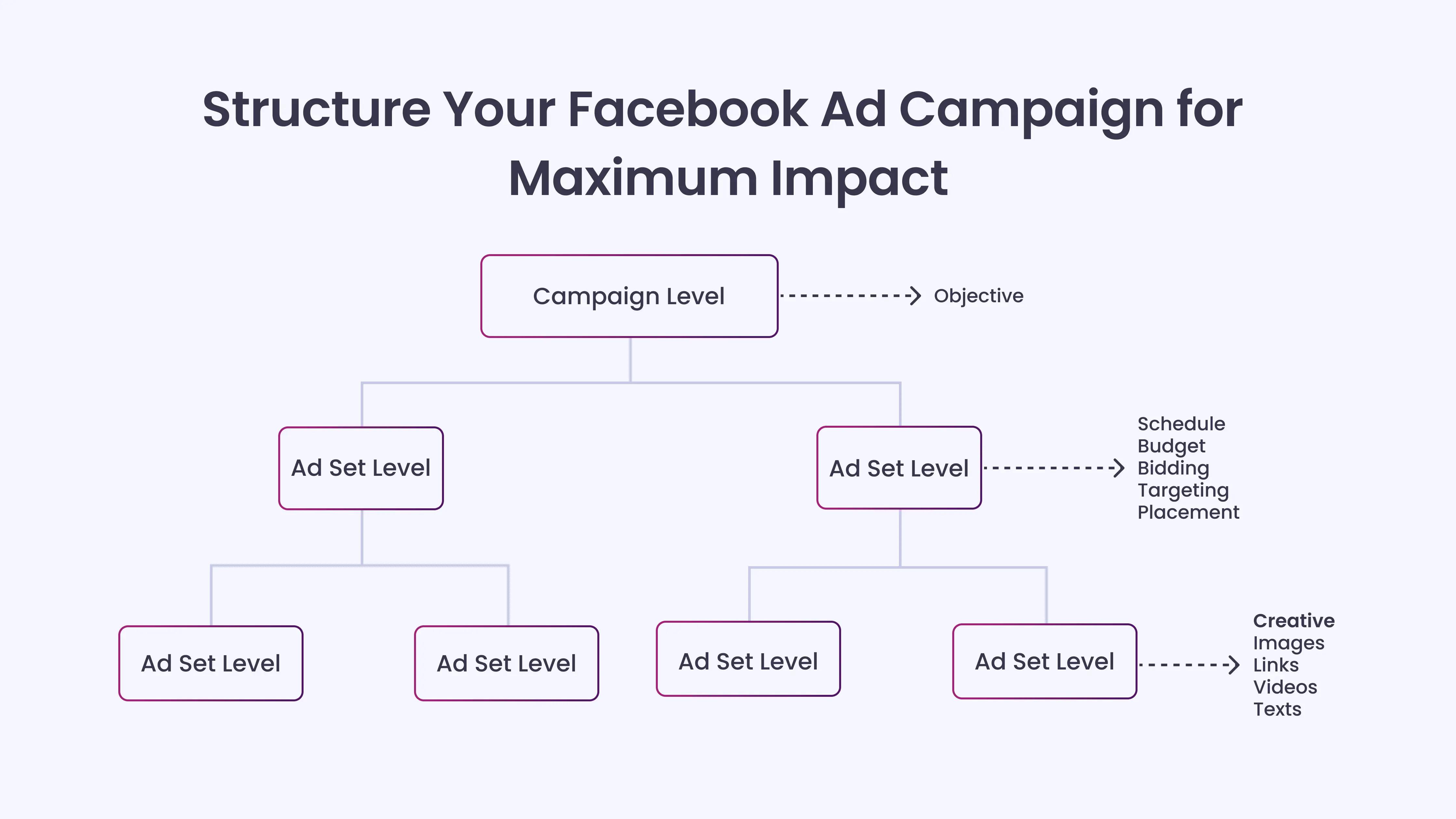
Before you create ads, start with a clear campaign structure. It keeps things organized, helps you target the right people, and improves your chances of getting more inquiries, bookings, or website visits. Facebook ads for therapists perform best when your setup matches your goals.
Facebook’s advertising system operates on three hierarchical levels: Campaign, Ad Set, and Ad:
1. Campaign Level: Defining Your Objective
At the top of the hierarchy is the Campaign. You choose your objective at this levelwhat you want your ad to achieve. Facebook offers several options, but they’re grouped into three categories:
- Awareness - Get your name and practice in front of more people.
- Consideration - Drive interest, engagement, or website visits.
- Conversion - Encourage actions like booking a session or filling out a form.
Within these, you’ll see more specific options:
- Brand Awareness - Introduce yourself and what you do.
- Reach - Show your ad to as many people as possible in your area.
- Traffic - Drive clicks to your site or landing page.
- Engagement - Get likes, comments, or shares on your posts.
- Lead Generation - Collect contact info using a built-in form (great for offering free consultations).
- Conversions - Track and encourage real actions like bookings or form completions.
- Store Traffic - Drive foot traffic if you run an in-person clinic.
Your objective shapes everything that followsfrom how your ads are delivered to how you’re charged (CPC, CPM, CPA, etc.). For example:
- If you want more eyes on your website, choose ’Traffic under Consideration. ’
- If you want people to book a consultation, then proceed with ’Conversions. ’
If you’re just starting with Facebook ads for therapists, begin with Traffic to collect audience data, then shift to Conversions once you’ve identified who’s responding.
2. Ad Set Level: Targeting and Budgeting
Each campaign can have multiple ad sets. Here’s where you define who sees your ads, where they’ll see them, how much you’ll spend, and when the ads will run.
Audience Targeting
Once you know your objective, it’s time to set the audience, budget, schedule, and placements. This is where things get more specificand strategic.
There are three main types of audiences you can create in Facebook Ads:
Saved Audience: This lets you target based on demographics, interests, behaviors, location, etc.
Example: You want to target women aged 30-45 who live within 25 miles of your office and are interested in wellness, parenting, or anxiety support. Saved Audiences lets you do exactly that.
You can also exclude people outside your region or who’ve already booked.
Try creating variations like:
Women 25-35
Women 35-45
Men 30-50
Once you have some data, you can double down on what works.
Custom Audience: People who have interacted with your brand via your website, social media, or email list.
Example: Someone clicked your ad but didn’t book? You can retarget them with a gentle reminder ad 3-5 days later.
Custom audience types:
Website visitors - People who viewed a specific page (like your contact or pricing page).
Engagement - People who liked/commented on your Instagram or Facebook posts.
Customer list - Upload emails from your newsletter list or past consults.
App activity- If you use a therapy or booking app, you can be retargeted based on your actions.
Lookalike Audience- One of the most powerful tools in Meta Ads.
Facebook takes your best-performing audience (like a Custom Audience of people who booked sessions) and finds similar people based on behavior, interests, and demographics.
Example: You create a Lookalike based on your website visitors or past clients. Facebook finds new people like them in your area. These are usually much more likely to engage or convert.
Start broad. Later, narrow down based on the datasplit audiences by age, for example, and compare which group engages more.
Placement
Decide where your ads will appear.
- Automatic Placements: Allow Facebook to optimize ad delivery across various platforms, including Facebook, Instagram, Messenger, and the Audience Network.
- Manual Placements: Select specific platforms and positions based on where your audience is most engaged.
Automatic placements are recommended when starting. Facebook’s algorithm will test and learn where your ad performs best.
Budget & Schedule
You can choose between:
- Daily budget - Spend a fixed amount each day.
- Lifetime budget - Spend a set total amount across your whole campaign duration.
Start small: $5-10/day is enough to test and gain early insights. Once you see what’s working, you can always scale up.
You’ll also set:
- Start and end dates (or run continuously)
- Ad delivery (standard or accelerated; standard is recommended).
Facebook won’t exceed your budget, even with automatic bidding enabled. So don’t stress about overspending by mistake.
3. Ad Level: Composing Your Message
The Ad is the final level, where you create the content that your audience will see. This includes the format, visuals, copy, and call to action (CTA).
Ad Formats:
- Image Ads: Utilize compelling visuals to convey your message.
- Video Ads: Engage users with dynamic content showcasing your practice or client testimonials.
- Carousel Ads: These ads display multiple images or videos in a single frame, highlighting various services or aspects of your practice.
Creating Effective Ads:
- Visuals: Use high-quality, relevant images or videos that resonate with your target audience.
- Copy: Write clear, empathetic, and concise text that addresses potential clients’ needs and encourages them to take action.
- CTA: Include a strong call to action, such as “Schedule a Free Consultation” or “Learn More About Our Services.”
Absolutely, here’s the revised closing line without using “break down” or “avoid” language. It keeps the flow smooth and natural:
Creating Impactful Ad Copy
You don’t need to be a copywriter to create powerful ads. You just need to speak the way your clients think and feel. The most effective Facebook ads for therapists sound less like ads and more like someone gently showing up with the right message at the right time.
Here are some simple, practical copy formats:
AIDA: A Copy Formula That Works
- Attention - Call out the feeling or situation your client is in
- Interest - Share what you offer in response
- Desire - Show how this can help or support them
- Action - Tell them what to do next (clear CTA)
Example:
| “Tired of feeling exhaustedeven when everything looks fine on the outside?”
I work with professionals who are burned out, anxious, and overwhelmed but still pushing through. Therapy can help you stop surviving and start feeling like yourself again. Book a free 15-minute consultation. |
PAS: Problem - Agitation - Solution
Problem - Call out what they’re dealing with
Agitation - Show how it’s affecting them emotionally or mentally
Solution - Explain how therapy helps ease or resolve that pain
Example:
| You’re constantly second-guessing yourself.
The most minor decisions feel overwhelming, and your mind doesn’t know how to slow down. Therapy can help you break that loop, set boundaries with your thoughts, and finally feel peace. Book a free consultation. Let’s talk it through. |
4C: Clear - Concise - Compelling - Credible
Clear - Say what you do in plain terms
Concise - Keep it focused
Compelling - Speak directly to what your audience needs
Credible - Add trust through tone or simple proof
Example:
| Anxiety. Stress. Burnout.
I help adults make sense of what they’re feelingand how to manage it. Virtual and in-person sessions available. Schedule a no-pressure intro call today. |
Before-After-Bridge
Before - Describe what life looks or feels like right now
After - Give a glimpse of how things could be different
Bridge - Share how you help them move from one to the other
Example:
| Right now, every day feels like you’re just getting through it.
What if it didn’t have to feel that way? I help people build emotional balance so they can feel more presentand less like they’re constantly running on empty. Let’s talk. Free consults available. |
Reconnect with Potential Clients Using Remarketing Ads
Most people don’t book a therapy session the first time they visit your websiteand that’s normal. They’re thinking it through, checking if they feel a connection, and maybe even saving your page to return to later.
But they often forget.
That’s where remarketing ads come in.
If you’ve installed the Meta Pixel (remember that from earlier?), you can show ads specifically to people who’ve already visited your site or landing page. These are people who’ve shown interest; they just need a nudge.
| Example: Still thinking about starting therapy? When you’re ready, I’m here. You visited my site recently. Thank you for considering working with us. Let’s talk if you’re still exploring your options or have questions. Book a free 15-minute consultation today.
This kind of ad doesn’t push. It reminds me, gently. It keeps the door open without pressureand that’s precisely what most people need when they’re on the edge of making a decision. Set your Pixel to track visits to high-intent pages, such as your “Contact,” “Book Now,” or “About Me” page. Then, run remarketing ads just to that group. |
Use Your Ad Data to Make Smarter Decisions
Data gives you answers. It tells you what’s working, what’s not, and what to adjust without wasting money.
Here are the metrics that matter when it comes to Facebook ads for therapists:
Click-Through Rate (CTR): This shows how many people saw your ad and clicked it.
A healthy CTR means your headline, message, and creativity are catching the right eyes.
If your CTR is low, your ad might need a stronger hook or more relatable language.
Cost Per Result: Are you paying $1 for someone to clickor $10? This metric tells you how efficiently your ad is performing.
If it’s too high, revisit your audience targeting. Maybe it’s too narrow or too broad. You can also test different ad formats or images.
Conversions: This is the real goal: Did someone book a call, fill out your form, or message you?
Clicks but no conversions?
Don’t assume the ad is the problem. Sometimes, the landing page needs work.
- Is your contact form too long?
- Does your site feel impersonal or hard to navigate?
- Is the booking CTA buried?
Sometimes, a minor fix on your website leads to a big jump in bookings.
Running a private practice isn’t precisely a part-time gig. Between sessions, notes, admin, and your own life, do you have time to figure out Meta’s ad manager, test five headline versions, tweak pixels, track conversions, and write copy that gets clicks?
Probably not.
Facebook ads for therapists workwhen they’re set up right. But getting them right takes more than guesswork and a free weekend you don’t have.
The good news? You don’t have to do it all yourself.
You focus on helping people heal. Let the marketing pros consistently handle the targeting, testing, writing, and tracking that get the right people to your door.
Grow Faster and Smarter with INSIDEA’s Digital Marketing Subscription

At INSIDEA, we deliver powerful digital marketing strategies that elevate your brand’s presence, attract the right audience, and drive measurable growth. Our expert team is dedicated to creating top-tier marketing solutions to meet your unique business needs. With in-depth industry knowledge, we craft customized strategies that align perfectly with your goals, all within our all-in-one digital marketing subscription.
Our comprehensive subscription includes everything you need to succeed in the digital space.
From Search Engine Optimization (SEO) that boosts your search rankings and drives organic traffic to WordPress Management, ensuring your website is visually appealing, highly functional, and optimized for conversions.
Our content marketing services establish your authority with engaging, insightful content. Social media marketing builds your presence across platforms with interactive and authentic strategies. Our email marketing solutions connect directly with your audience, driving engagement and conversions.
With INSIDEA’s all-in-one subscription, you can access these services seamlessly, supported by our dedicated digital marketing experts committed to delivering measurable results for your business.
Book a meeting with our experts to explore how we can support your business goals.



 How INSIDEA works