No one becomes a therapist to learn about SEO, ad budgets, or content calendars. But everything changed in 2020.
The world went online during the pandemic, and therapy went with it. Virtual sessions kept people afloat when isolation, anxiety, and burnout hit hard. And even now, years later, people are still searching for therapists the same way they order dinner: on their phones, in between scrolling and stress-eating. If you’re still trying to grow your practice like in 2015, that explains why your phone’s not ringing.
Researchers looked at more than 60 studies and found that seeing a therapist virtually is just as effective as face-to-face sessions for most people with anxiety, depression, and post-traumatic stress disorder (PTSD). This shift confirms that teletherapy is here to stay, and being digital is non-negotiable.
You could be an incredible clinician with years of experience and life-changing impact, but if your practice isn’t showing up where people are looking, they’ll never find you. This is where digital marketing for therapists ensures your expertise reaches the people most in need.
This blog is an all-in-one resource packed with practical tips on digital marketing for therapists who want to show up online with clarity, confidence, and purpose.
Importance of Digital Marketing for Therapists
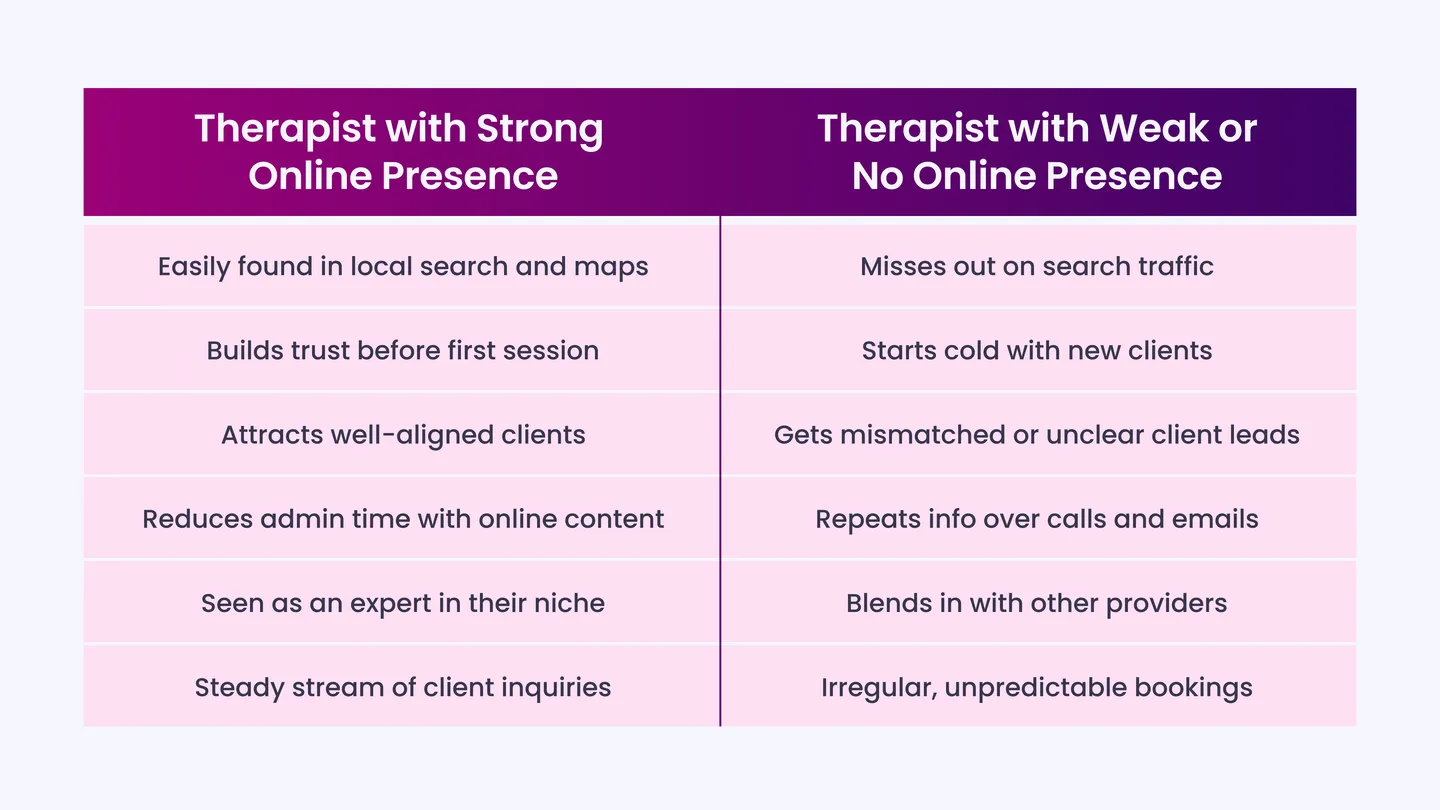
To prove this further, I’ve quickly compared therapists with a strong online presence and those without. The differences are often bigger than most realize, and they directly impact your practice’s growth, reach, and stability:
Digital Marketing for Therapists: The Ultimate Guide to Building Trust and Finding Clients
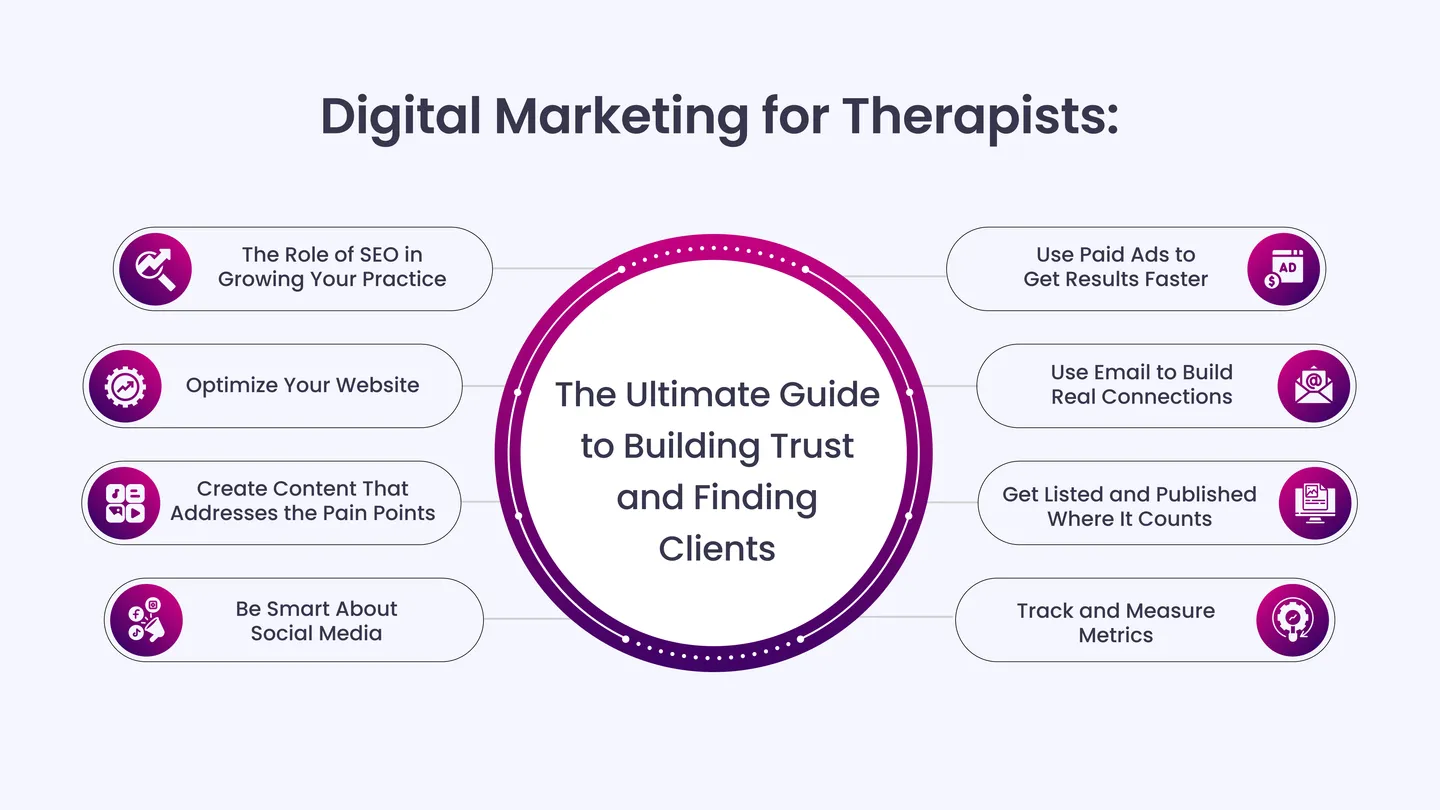
Now that you understand why visibility matters, let’s walk through the practical tools and steps that make digital marketing for therapists effective and doable:
1. The Role of SEO in Growing Your Practice
Being a great therapist isn’t enough if no one can find you. If your website is buried on page four of Google, chances are you’re losing clients to therapists who figured out SEO earlier, even if their clinical skills aren’t better.
SEO (Search Engine Optimization) is how your practice gets discovered by people who are already searching for someone like you. It’s one of the core pillars of digital marketing for therapists and continues to be one of the most effective long-term resources for visibility.
Here’s how to make SEO effective for your therapy practice, broken down into four practical, non-intimidating parts:
Local SEO
Most people start their search with “therapist near me” or “grief counselor in [your city].”
Start with your Google Business Profile (formerly Google My Business):
- Add your full name, address, phone number (NAP), hours, and website link.
- Upload a warm, professional photo and list your specialties.
- Turn on messaging so clients can reach out directly if they’re not ready to call.
Keep your NAP consistent across your site and any directories, no variations, no typos.
Encourage reviews from satisfied clients. A handful of 4- or 5-star reviews can boost your credibility and ranking.
Pro tip: Create a short message with a direct link to make asking easier.
Also, get listed on relevant local directories like:
- Psychology Today
- TherapyDen
- GoodTherapy
- Zencare
- Healthgrades
Google uses these listings to cross-check your legitimacy.
On-Page SEO
This is about what’son your website. It’s how Google decides if your site is worth showing to someone searching for therapy:
- Use actual, specific phrases your clients would search for, like “online therapy for anxiety in Austin” or “EMDR trauma therapist in Seattle”
- Write service pages for each focus area (grief, couples therapy, postpartum support, etc.)
- Make a separate page for each location if you serve more than one area (don’t just list cities on one generic page)
- Keep your contact info on every page, especially for mobile users
- Use proper headings (H1, H2) to organize your content; don’t waste titles on “Welcome” or “Home.”
Don’t overdo the keywords. You’re not writing for Google, you’re writing for people, and Google knows the difference.
Off-Page SEO
This is where your reputation gets built in the eyes of search engines, based on who’s talking about you and linking back to your site.
Here’s how to build absolute authority without being spammy:
- Get featured on mental health blogs, wellness sites, or local podcasts
- Guest post for allied professionals (life coaches, nutritionists, etc.)
- Ask partners (like clinics, community centers, or yoga studios) to link to your site if you refer to each other
- Stay active on your Google Business Profile, add photos, short updates, or even posts every month or so
The more high-quality sites that point to yours, the more Google trusts you.
Technical SEO
This isn’t about coding, it’s about ensuring your site runs smoothly and doesn’t frustrate visitors (or search engines).
Here’s what to check:
- Make sure your site is secure (it should say https:// in the URL, not just http://)
- Your website must look good and work well on mobile devices, most visitors will be on their phones
- Submit your site to Google Search Console with an XML sitemap so Google can crawl all your pages
- Fix broken links or error pages, both hurt your search rankings and user experience
- Use basic schema markup to help Google understand who you are and what services you offer (your developer or site builder likely has an option for this)
2. Optimize Your Website
A website isn’t just there to “look professional”, it should build trust, answer questions, and invite action. For many clients, it’s their first accurate impression of you. If the experience feels cold, confusing, or generic, they’ll move on, no matter how skilled you are in the session.
That’s why your website is more than just a homepage in the world of digital marketing for therapists. It’s your practice’s online heartbeat.
Here’s what matters:
- A focused landing page that speaks to a specific audience could be new moms navigating anxiety, couples looking for connection, or young professionals battling burnout. Don’t try to be everything to everyone. A clear message creates a stronger connection.
- A warm, authentic About page. This isn’t your CV. It’s a chance to humanize your practice. Share your philosophy, approach, and just enough personal detail to help someone say, “I could talk to this person.”
- Clean, mobile-friendly design. If a potential client finds your site on their phone (which most will) and it takes too long to load or feels clunky, they’ll bounce. Prioritize simplicity, speed, and a layout that makes sense without needing a map.
- Make the next step obvious. Whether booking a session, filling out a contact form, or scheduling a consultation, whatever action you want them to take, it should be easy to follow.
In short, your website doesn’t need to be fancy. It needs to be functional, human, and specific. A well-built site brings in qualified leads. In the bigger picture of digital marketing for therapists, it’s one of the few platforms you fully control.
3. Create Content That Addresses the Pain Points
You don’t need to be a content machine to stand out online. You just need to be helpful.
The best content answers the questions your future clients are already typing into Google at 2 a.m. That’s how trust starts, before they ever hit “contact.”
Think less “what should I post?” and more “what do people keep asking me in sessions, emails, or DMs?”
Here are the kinds of content that connect:
- “How does therapy work?”- Break it down simply. Address the unknowns that make people hesitate.
- “How to know if therapy is right for you”- Help people self-identify with everyday situations or symptoms.
- “What happens in the first session?”- Ease anxiety before they sit down.
- Weekly mental health check-ins or journal prompts- Small, valuable tools that create value upfront.
- Downloadable guidesthink “Coping with Burnout,” “Managing Anxiety at Work,” or “How to Talk to Your Partner About Therapy.”
- Video answers to common concerns- 30-60 seconds is enough. You can even film it on your phone.
- Q&A or myth-busting posts- Use Instagram carousels, blog posts, or newsletters to tackle things like “Does therapy mean I’m broken?” or “How long will it take to feel better?”
This content doesn’t need to be perfect, it needs to be relatable. In the context of digital marketing for therapists, it builds trust while helping search engines understand your value.
Feeling overwhelmed by where to start?
Use AI tools like ChatGPT to brainstorm blog titles, write outlines, generate FAQs, or draft captions. You’re still the expert, it helps you get the words out faster.
In a world full of static, helpful content leaves a mark. It shows potential clients that you get them, and that reaching out might be easier than they thought.
That’s the power of digital marketing for therapists done right.
4. Be Smart About Social Media
You don’t need to be a social media person to use social media well.
You don’t need to go viral, post daily, or record perfectly edited Reels while balancing a ring light on your therapy chair. What matters is showing up with intention, consistently,, and sustainably.
Social media can feel like a headache, but it’s also one of the easiest ways to stay visible without burning yourself out. People are already scrolling. You showing up with something useful, something real, can be the thing that makes them stop and think, “I feel like I could talk to this person.”
That’s the magic. And it doesn’t take much.
Start with where your ideal clients are. For most therapists, that’s usually:
- Instagram, where carousels, Reels, and stories give you space to share thoughts in small, digestible ways.
- LinkedIn, primarily if you work with professionals, offers corporate mental health support or leans into psychoeducation.
Here’s what works (no gimmicks required):
- Quick insights on things your clients ask all the time, those “this comes up a lot” topics
- Bite-sized mental health reminders or reframes people can save or share
- Gentle myth-busting: the quiet truths people need to hear about therapy, mental health, boundaries, or burnout
- A look behind the scenes, your office setup, the book you’re reading, a quiet moment before a session
- Thoughtful takes on things happening in the world, especially when it intersects with emotional health or relationships
Keep the vibe simple, and keep the tone human.
Social media isn’t about selling in the bigger picture of digital marketing for therapists. It’s about showing up in the spaces where your future clients already are and giving them something that makes them feel seen, not sold to.
5. Use Paid Ads to Get Results Faster
Sometimes, you don’t have months to wait for SEO or content to start giving results. If you’re looking for quicker traction, more eyes on your practice, more inquiries, more bookings, paid ads can help move things along.
The good news is that you don’t need a big budget or a marketing degree to start.
Google Ads
Most people go to Google when they’ve already decided to look for help. If someone types “trauma therapist near me” or “online therapy for anxiety,” and your ad is one of the first results they see, you’re already ahead.
Here’s what matters:
- Start small, and keep it local. Focus on your area and your niche.
- Use specific keywords such as “grief counseling in Austin” or “couples therapy online California.”
- Make sure the landing page they click through to matches the ad. If your ad is about anxiety therapy, don’t send them to a generic homepage. Send them straight to your anxiety services page.
- Track what’s working. Google Ads has simple tools that show which keywords and clicks are being converted.
Meta Ads (Facebook & Instagram)
While Google catches people already searching, Meta Ads help you reach people who may need support but aren’t actively Googling it yet. You can target based on interests, age groups, behaviors, etc.
These platforms work well for:
- Promoting workshops, webinars, or open slots
- Reaching a specific audience (e.g. new parents, students, professionals)
- Boosting content that’s already getting good engagement
When paired with a strong website and clear messaging, paid ads become one of the most efficient ways to increase visibility and fill those slow weeks, without waiting and hoping referrals trickle in. Digital marketing for therapists is less about chasing clicks and more about creating real access.
6. Use Email to Build Real Connections
Email marketing is often dismissed as outdated, but for therapists, it’s one of the most personal, low-pressure ways to stay in touch with people who already trust your voice.
You don’t need a huge list or to send something every week. But if someone visits your site, connects with your message, and isn’t quite ready to book, a thoughtful email can bring them back.
Start simple:
- Offer something helpful in exchange for their email, a short guide, a checklist, or a journaling prompt. It doesn’t have to be fancy, just useful.
- Set up a basic email system (Mailerlite, ConvertKit, or even Substack) so you don’t have to send emails manually.
- Write like you speak. No need for overly polished “newsletter voice.” Just be real.
Here’s what kind of emails work well:
- A monthly note with a tip, insight, or reflection on something you’ve been noticing in your work or the world
- Announcements when you publish a new blog, release a resource, or open up new session slots.
- Seasonal reminders or supportive content during high-stress times (holidays, back-to-school, new year, etc.)
Even if they’re not ready to book today, a thoughtful presence in their inbox keeps you in the picture when they are. That makes email a valuable layer in digital marketing for therapists, you’re not competing for attention in a feed but building quiet trust over time.
7. Get Listed and Published Where It Counts
You don’t need to be everywhere, but being visible in the right places can quietly build your credibility and attract more aligned clients. Guest posts and listings are quiet but powerful tools in digital marketing for therapists, helping you show up in places that already carry authority.
Start with business listing sites. These help people find your practice even if they’re not searching on Google. They also boost your local SEO and create another path for someone to land on your website.
Relevant business listing platforms for therapists:
- Yelp- Still a go-to for local service searches
- Healthgrades- Especially useful if you take insurance or serve medically referred clients
- Zocdoc- Ideal for therapists offering in-network services or those open to video sessions
- CareDash- Great for building visibility among health-focused users
Next, think about guest posting, not for fame but for trust.
When you write for sites outside your own (even smaller ones), you’re expanding your reach to new audiences and building backlinks that support your SEO. And you don’t need to aim for massive publications to see value.
Places to consider:
- Mental health blogsor nonprofit sites (NAMI, Mental Health America)
- Local wellness blogs or media outletsin your area
- Partnership pieceswith adjacent professionals, like a trauma therapist guesting on a yoga teacher’s blog or a couples therapist writing for a relationship coach’s site.
8. Track and Measure Metrics
It’s easy to feel like you’re doing everything right, posting, writing, and tweaking your site, but still wonder what’s helping your practice grow.
That’s why tracking matters.
You don’t need to become a data analyst, but if you’re spending time and effort on digital marketing for therapists, it’s worth knowing what’s working, and what’s not.
Here are a few things to keep an eye on:
- Website traffic- Use Google Analytics to see how many people visit your site, where they’re coming from, and what pages they’re looking at.
- Bounce rates If people land on your site and immediately leave, something’s off, maybe your homepage isn’t clear, or your copy isn’t connecting.
- Form submissions or inquiries- Track how many people reach out through your website or booking page.
- Social media engagement- Instead of focusing on likes, see saves, shares, comments, and DMs. These show a more profound interest.
- Ad performance- For paid campaigns, monitor click-through rates and conversions. Are people clicking? More importantly, are they booking?
- Email metrics, such as Open rates and link clicks, can tell you whether your emails are being read or ignored.
Don’t underestimate the value of asking, “How did you find me?”
That one question can often give you more clarity than a dozen reports. Tracking allows you to stop doing what isn’t helping and double down on what is. Regarding digital marketing for therapists, being intentional is more valuable than being everywhere.
Focus on Therapy, Not Algorithms
You didn’t become a therapist to write blog posts or learn how to run ad campaigns. You got into this to help people heal, grow, and find clarity. That’s where your energy should go.
But just because you’re doing important work doesn’t mean the marketing takes care of itself. Maintaining SEO, content, email, and social media is a job.
That’s where working with marketing experts who understand digital marketing for therapists makes all the difference.
They know how to speak to your audience, highlight your strengths, and ensure the right people find you without wasting your time or budget.
A solid marketing system built by pros means:
- More aligned clients are finding your practice
- No more staring at a blank screen, wondering what to post
- Fewer awkward first calls, because people already feel connected to your work
- And no more weekends pretending to be your copywriter
Stick to what you’re brilliant at, holding space, creating change, and doing the work. Let the marketing side be handled by the pros who get it so your practice grows while you focus on what matters most.
INSIDEA
Ready to put this into practice?
INSIDEA is an Elite HubSpot Partner rated 4.99 across 450+ verified reviews. Let's map it to your goals.

 How INSIDEA works