Manufacturing companies have been slow to invest in social media, and for understandable reasons. The sales cycle is long, the audience is technical, and the product is rarely photogenic.
But that hesitation has a cost. According to a 2023 survey by the Content Marketing Institute, 84% of B2B buyers use social media to research vendors before making purchase decisions. The question is no longer whether manufacturers should use social media, but how to use it without wasting time and budget on the wrong approach.
Most guides treat manufacturing like any other industry. That does not work. The buyer profile, content expectations, and platform behavior in manufacturing differ from those in consumer goods or SaaS.
This blog explains how manufacturing companies can build a social media presence that generates real business outcomes.
Marketing for manufacturers
Rather have this done for you?
Book a 30-minute call with INSIDEA. We look at how customers find you today and send a proposal within 48 hours if we are a fit.
Book a strategy callThe Fundamental Errors in Manufacturing Social Strategy
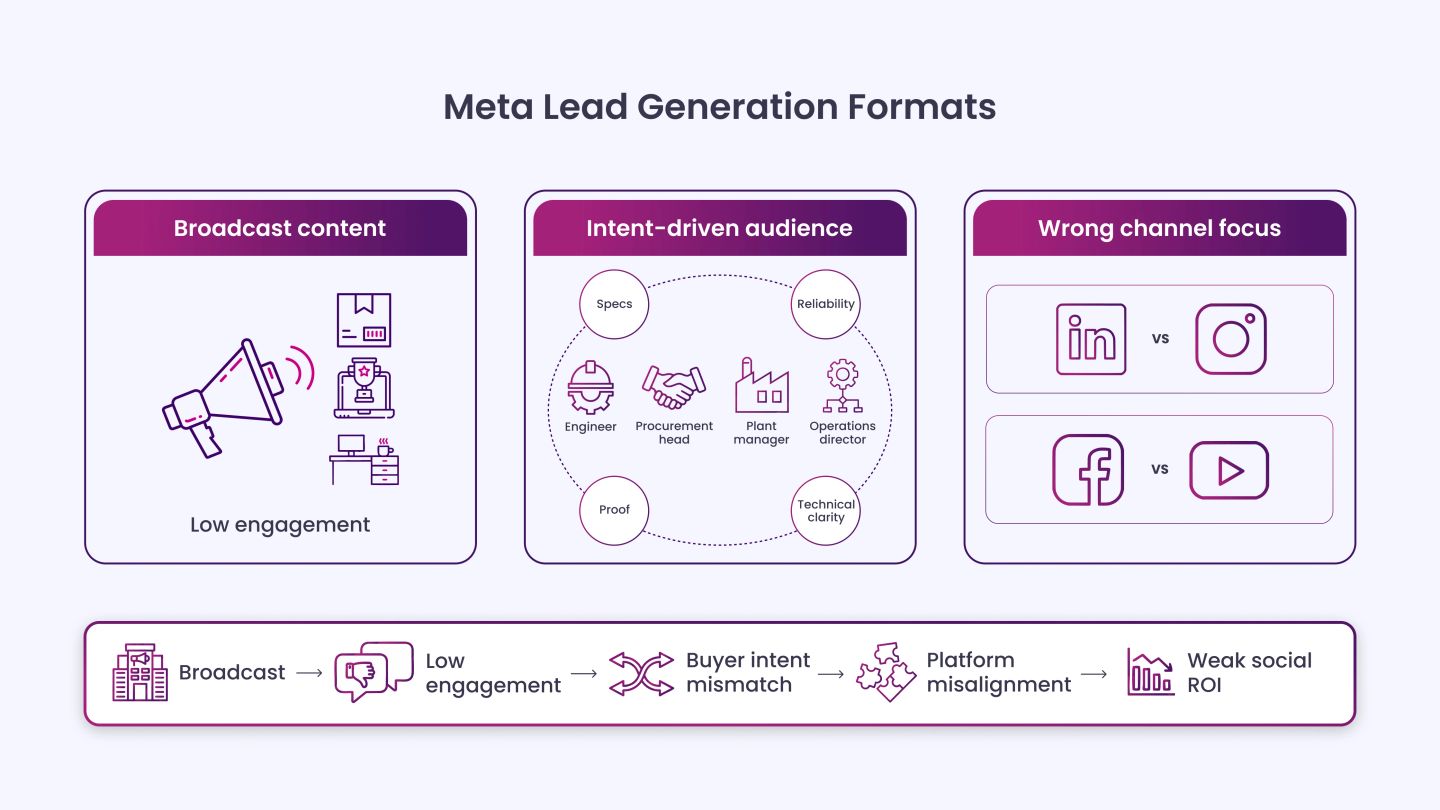
The most common mistake is treating social media as a broadcast channel. Companies post product images, award announcements, and trade show schedules, then wonder why engagement is low. The problem is not the industry. It is the content strategy.
Manufacturing buyers are engineers, procurement heads, plant managers, and operations directors. They are not scrolling social feeds looking for a sale. They are looking for answers, specifications, reliability signals, and proof that a vendor understands their problem. Content that speaks to these needs will always outperform generic promotional posts.
A secondary mistake is choosing platforms based on popularity rather than audience fit. A B2B industrial equipment manufacturer has no reason to prioritize Instagram Reels over a well-maintained LinkedIn presence. Platform selection should follow your buyer, not general usage statistics.
Which Platforms Work for Manufacturers?
LinkedIn is the primary platform for B2B manufacturing. It is where procurement, engineering, and plant management professionals are active. Company pages, employee posts, and sponsored content on LinkedIn reach decision-makers in ways no other social platform currently matches. For manufacturers selling to other businesses, this is non-negotiable.
YouTube is the second most important channel. Manufacturing products often requires demonstration. A three-minute video showing how a CNC machine processes a specific material or how a filtration system performs under load sells more than a brochure ever could. YouTube content also has long-term discoverability through search, making it a compounding asset.
Facebook has limited value for B2B manufacturing. However, it remains useful for companies that sell industrial products directly to small business owners or tradespeople, particularly through Facebook Groups relevant to specific trades.
Instagram works only if the product is visually interesting and the company has someone who can consistently produce high-quality photo or video content. Niche manufacturers, custom metalwork, architectural fabrication, and specialty packaging have found genuine traction here.
Twitter/X is not a priority for most manufacturers. A small segment of technical professionals and industry journalists is active here, but the platform’s declining reliability makes it a low-priority investment.
Content Types That Perform in Manufacturing
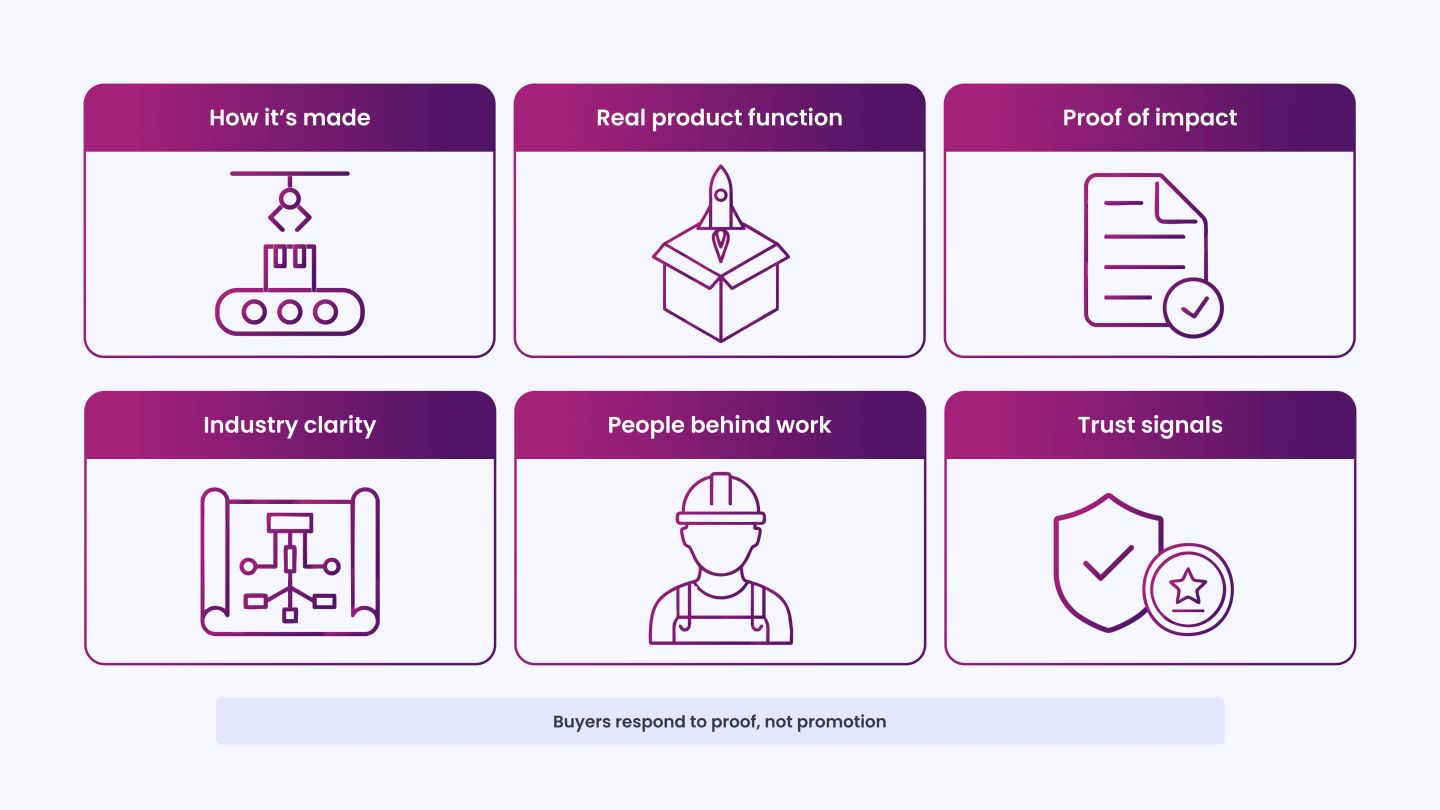
The content formats with the highest engagement and conversion value in manufacturing are:
Process and production videos: Showing how something is made builds credibility and answers the unspoken question every buyer has: Can this company actually deliver? Short clips of the production floor, machining sequences, or quality control steps consistently draw strong engagement on LinkedIn and YouTube.
Product demonstrations: Not a sales pitch. A clear, factual demonstration of what the product does, under what conditions, and to what extent. This replaces the role of a physical trade show demonstration for buyers who cannot visit your facility.
Case studies and application stories: A specific example of how your product solved a real problem for a real client carries more weight than ten general claims about quality. Keep these factual and specific. Include materials, tolerances, timelines, or measurable outcomes wherever possible.
Technical explainers: Blog posts, carousel posts, or short videos that explain an industry concept, a material property, or a manufacturing process educate the buyer and position your company as a reliable reference. These posts tend to get shared within professional networks.
Employee and team content: Posts featuring engineers, operators, or QA staff, explaining their work in plain terms, humanize a company that might otherwise feel anonymous. These posts consistently outperform branded content on LinkedIn in both reach and engagement.
Certifications, compliance, and standards updates: Posting about ISO certifications, OSHA compliance measures, or relevant industry standard changes signals reliability to procurement teams. It answers a due diligence question before the buyer even asks.
How to Build a Posting Strategy That Holds Up
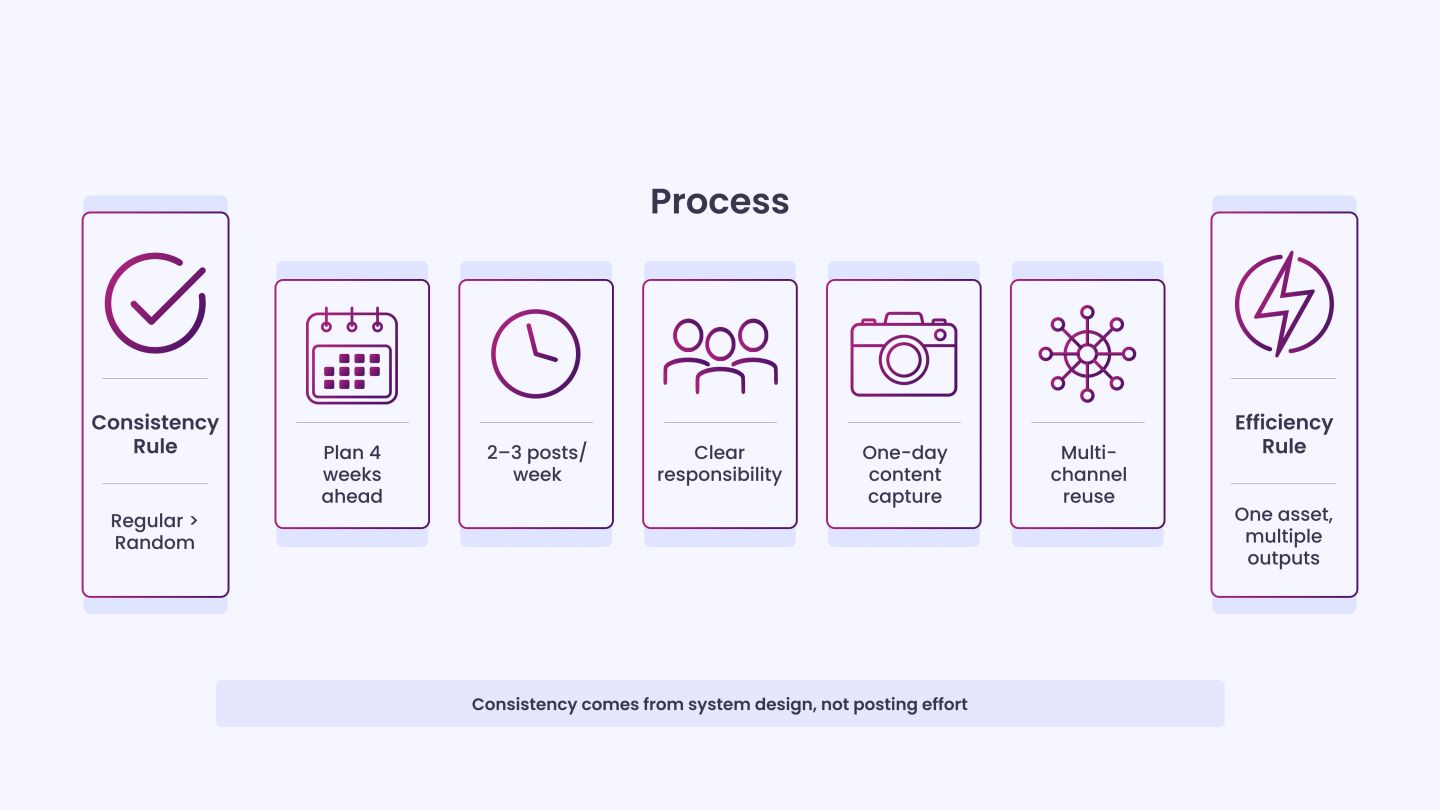
Posting randomly when there is spare time produces predictable results. A simple, consistent framework works better.
Start with a content calendar: Map out posts four weeks in advance. Assign content types to specific days: for example, a process video on Tuesday, a case study on Thursday. Consistency signals reliability, which matters to a professional audience.
Set a realistic frequency: Two to three posts per week on LinkedIn is sufficient for most manufacturers. Quality drops when volume is pushed without adequate support for content production. A single strong post per week is better than five weak ones.
Assign ownership clearly: Social media fails in manufacturing companies when nobody owns it. Assign one person or a small team to content creation and scheduling, with a clear approval process for technical accuracy.
Batch content production: Schedule 1 day per month for facility walkthroughs, team interviews, and video captures. That single session can produce eight to twelve pieces of content for the following weeks.
Repurpose across platforms: A YouTube video can become a LinkedIn post, a series of short clips, a written summary, and a quote image. The same content investment scales across multiple channels without additional production effort.
Measuring Results in Manufacturing Social Media
Vanity metrics, likes, follower counts, and impressions are not useful measures of success for manufacturing companies. The metrics that connect to business results are:
Profile visits and website click-through: Track how many people move from your social post to your website. This indicates content relevance to your audience.
Inquiry and lead attribution: Ask new inquiries how they found you. A simple field in your contact form can reveal which content or platform drove the contact.
Content engagement by type: Track which content formats generate the most saves, shares, and comments. This tells you what your audience values, not just what they passively scroll past.
LinkedIn follower demographics: LinkedIn provides follower data, including job titles and industries. Use this to confirm you are reaching decision-makers, not just general audiences.
Video watch time: On YouTube and LinkedIn, watch time is more informative than view count. A video watched to 80% completion is doing its job. One with 5,000 views and a 12% completion rate is not.
Set a 90-day review cycle: Assess what is working, cut what is not, and adjust content mix accordingly. Social media in manufacturing is not set-and-forget. It requires periodic recalibration based on actual performance data.
Working With Distributors and Partners on Social Media
Manufacturers who sell through distributors often overlook a significant opportunity: coordinated content. When your distributors share your product content with their own audiences, reach expands without additional ad spend.
Create a shared asset library for distributors, including formatted images, short product videos, and spec sheets, and encourage them to post on their own channels with proper attribution. Some manufacturers go further and co-create content with distributors, featuring their team in case studies or joint announcements.
Similarly, tagging clients or partners in posts (with permission) significantly increases organic reach on LinkedIn, since their networks see the content without paid promotion.
A Practical Way Forward for Manufacturing Social Media
Social media is not a shortcut for manufacturing companies, and it should not be treated as one. The results come from consistent, technically credible content posted to the right platforms, aimed at the right professional audience.
LinkedIn and YouTube are where most manufacturers will see the strongest returns. The content that works is honest, specific, and useful to the buyer. The metrics that matter are those tied to business inquiries and client trust, not surface engagement.
A manufacturing company that commits to two to three quality posts per week, tracks what drives actual inquiries, and adjusts over time will build a presence that supports its sales operation. That is a reasonable goal, and it is achievable without a large marketing team or a significant ad budget.
INSIDEA
Ready to put this into practice?
INSIDEA is an Elite HubSpot Partner rated 4.99 across 500+ verified reviews. Let's map it to your goals.



 How INSIDEA works