Is your company struggling to attract the right buyers?
You manufacture high-quality products. Your processes are efficient. Your capabilities are top-tier. But none of that matters if potential clients can’t find you online.
Think about it: When was the last time your ideal customers contacted a supplier without first researching? Almost never.
They start with search engines, looking for solutions, comparing options, and seeking trusted industry leaders. If your website isn’t showing up in those searches, you’re losing business before the conversation even begins.
This could be a sign that your business needs an SEO strategy built for growth. SEO isn’t just about ranking high on Google; it’s about ensuring the right buyers find you at the right moment in their decision-making process.
But don’t fret. We’ve put together 20+ proven SEO tips to help you boost visibility, attract high-value leads, and position your manufacturing company for success in 2026 and ahead.
Best SEO Tips for Manufacturing Companies in 2026
Here are 20+ actionable SEO tips to help your manufacturing business rank higher, attract qualified leads, and increase conversions in 2026.
1. Optimize Your Website for Buyers, Not Just Search Engines
Many manufacturing websites are overly focused on listing products and services, neglecting buyer concerns. SEO isn’t just about stuffing keywords into your pages. It’s about creating content that helps potential customers make informed decisions.
If someone is searching for “precision CNC machining for aerospace,” they’re not just looking for a supplier; they want to know about tolerances, certifications, and turnaround times.
Your website should provide clear answers:
- What industries do you specialize in?
- What makes your process or materials superior?
- How quickly can you fulfill an order?
Think like your customers. Make your content detailed, clear, and structured so users and search engines understand precisely what you offer.
2. Target the Right Keywords (And Use Them Naturally)
Manufacturers often target broad, high-volume keywords like “metal fabrication” or “injection molding,” but these terms are too competitive and often don’t reflect buyer intent. Instead, focus on long-tail keywords that mirror how potential customers search.
For example:
✅“Custom stainless steel welding for food processing”(high intent, industry-specific)❌“Metal welding services”(too broad, high competition)
Use tools like Google Keyword Planner, SEMrush, or Ahrefs to find keywords that align with your niche. Once you have them, integrate them naturally into headings, product descriptions, FAQs, and blog content. Google rewards well-structured, user-friendly content over forced keyword stuffing.
3. Optimize Every Page for Search Engines (Beyond Just the Homepage)
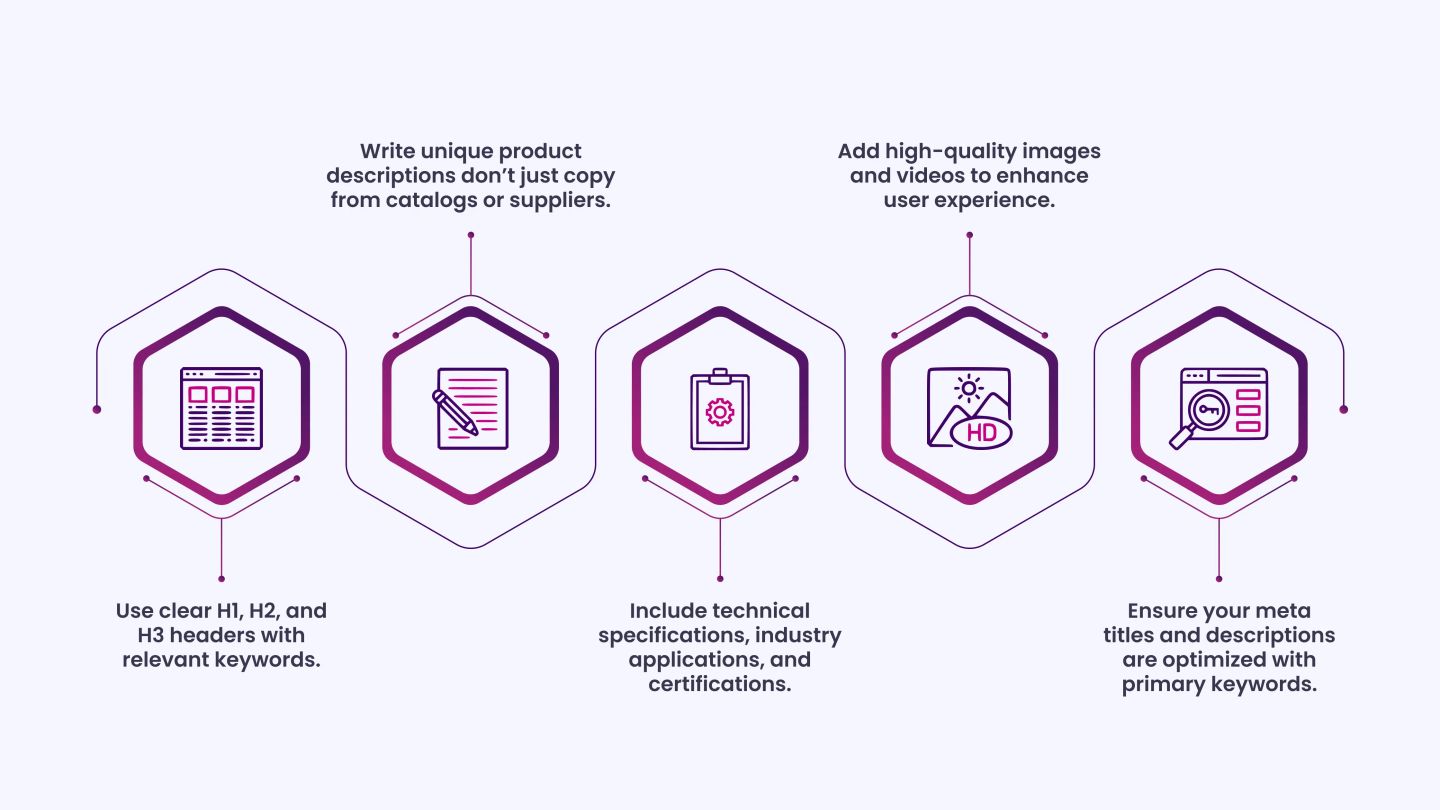
Many manufacturing sites focus their SEO efforts on the homepage, neglecting their product and service pages. Each page represents an opportunity to rank for highly targeted search queries.
Here’s how to optimize them:
- Use clear H1, H2, and H3 headers with relevant keywords.
- Write unique product descriptionsdon’t just copy from catalogs or suppliers.
- Include technical specifications, industry applications, and certifications.
- Add high-quality images and videos to enhance user experience.
- Ensure your meta titles and descriptions are optimized with primary keywords.
4. Create Content That Addresses Common Buyer Questions
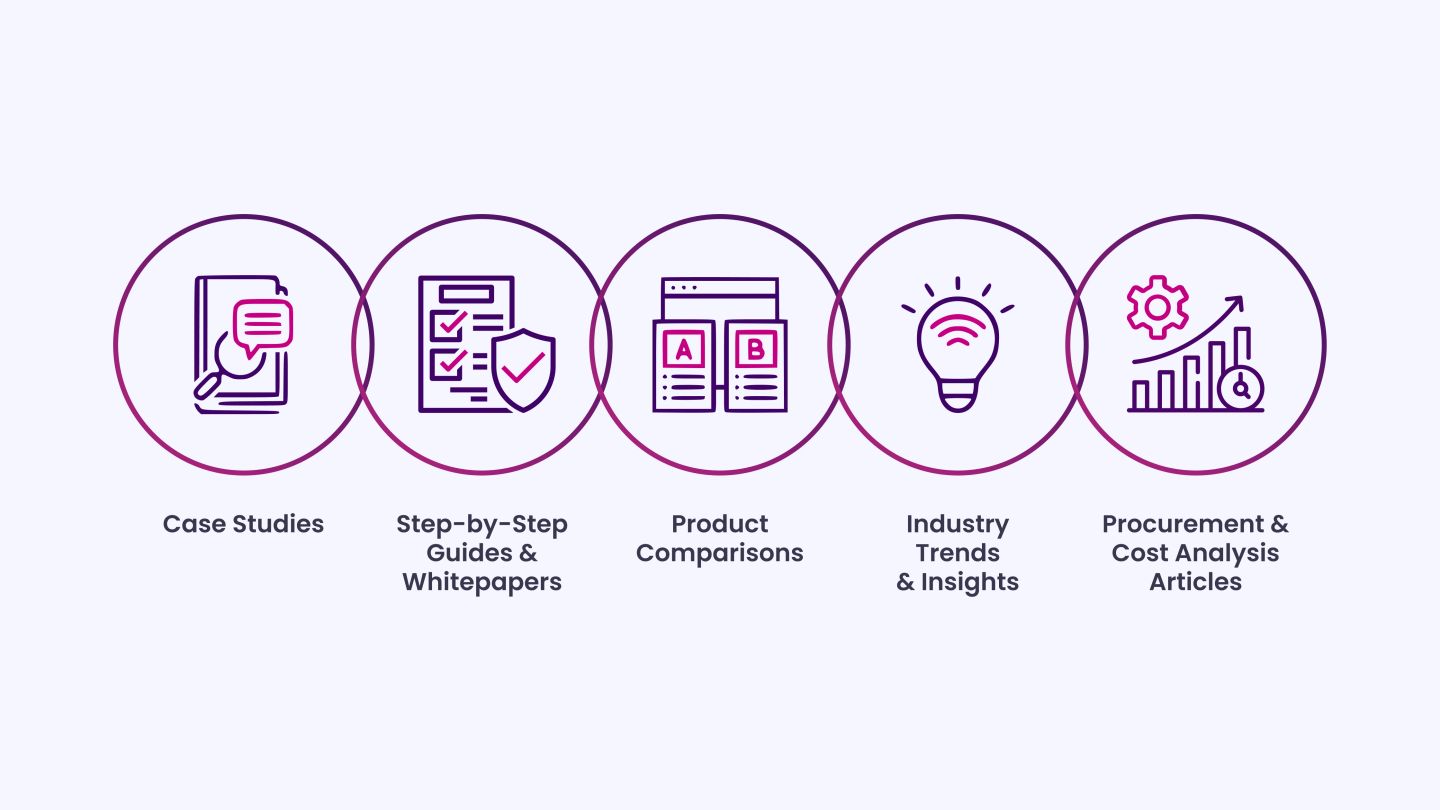
Potential customers don’t just search for products; they search for solutions to problems they face. If your content doesn’t provide answers, they’ll find a competitor who does.
A strong blog, resource center, or FAQ section can help position your manufacturing business as a go-to expert in the industry.
What to focus on:
- Case Studies: Show how your solutions solve real-world problems with measurable results.
- Step-by-Step Guides & Whitepapers: Break down technical processes so decision-makers and engineers can understand them.
- Product Comparisons: Help buyers choose between materials, manufacturing methods, or technologies.
- Industry Trends & Insights: Stay ahead of competitors by discussing innovations, regulatory changes, or market shifts.
- Procurement & Cost Analysis Articles: Help buyers understand pricing structures and long-term savings.
Instead of just pushing sales, educate your audience. The more value you provide, the more trust you buildand trust translates to conversions.
A strong blog or resource section can do wonders for SEO. Potential customers don’t just search for products; they look for solutions to their problems.
Writing educational, problem-solving content helps build trust and improve search rankings.
5. Use Internal Linking to Improve SEO
Internal linking does more than just help with SEO. It guides visitors to important pages, keeps them engaged longer, and increases conversion rates. A well-structured internal linking strategy ensures that search engines can easily crawl and index your content while providing a smooth user experience.
How to implement an effective internal linking strategy:
- Link from high-traffic blog posts to relevant product or service pages to drive conversions.
- Use descriptive anchor text instead of generic phrases like “click here” (e.g., “Learn more about precision CNC machining” instead of “click here to read more”).
- Create comprehensive, in-depth pillar pages that link to related subtopics (e.g., a “Metal Fabrication Guide” that links to CNC machining, laser cutting, and finishing pages).
- Regularly audit your site for broken or outdated links that might negatively impact user experience and SEO.
When done right, internal linking not only improves rankings but also ensures potential customers find exactly what they’re looking for without frustration.
6. Speed Up Your Website (Because Every Second Counts)
Your website’s load time can make or break a sale. A one-second delay in page speed can reduce conversions by 7%. Google prioritizes fast websites, as do buyersespecially those researching complex manufacturing solutions on mobile devices or in fast-paced industries.
Steps to improve speed:
- Compress Images: Use tools like TinyPNG or Squoosh to reduce file sizes without losing quality.
- Use a CDN (Content Delivery Network): A CDN distributes your content across multiple servers worldwide, reducing load times.
- Enable Lazy Loading: This ensures images and videos only load when they’re about to be viewed, improving performance.
- Reduce HTTP Requests: Minimize the number of elements loaded on a page by combining CSS and JavaScript files.
- Optimize Server Response Time: Ensure your hosting provider can handle high traffic loads efficiently.
- Utilize Browser Caching: Allow returning visitors to load your site faster by storing static files locally.
A fast website leads to better rankings, lower bounce rates, and higher engagement. Potential buyers may not wait if your competitors’ sites load faster than yours.
7. Make Your Website Mobile-Friendly (Because Buyers Expect It)
Google now uses mobile-first indexing, meaning your site’s mobile experience directly impacts your rankingseven for desktop searches. Many manufacturers assume their buyers browse on desktops, but decision-makers and procurement teams often research suppliers on mobile devices during meetings or factory visits.
How to optimize for mobile:
- Ensure a responsive design, so your site adjusts to different screen sizes.
- Make buttons and menus touch-friendly. Small text links frustrate mobile users.
- Use mobile-friendly fonts and avoid long paragraphs. Break text into short, scannable sections.
- Avoid PDFs as primary content. Many manufacturing websites rely on downloadable PDFs rather than creating web pages, which harms SEO and mobile usability.
- Test your site with Google’s Mobile-Friendly Test and address any flagged issues.
A mobile-optimized site boosts rankings, improves user experience, and increases conversions. However, you risk losing valuable leads if your competitors have a better mobile experience.
8. Build High-Quality Backlinks from Trusted Industry Websites
Backlinks from other reputable websites pointing to yoursare one of Google’s strongest ranking signals. But not all backlinks are created equal. A handful of links from respected industry sites is worth far more than dozens from low-quality directories.
Where to get high-quality backlinks:
- Manufacturing Directories: Get listed on platforms like ThomasNet, Engineering360, IndustryNet, and Kompass.
- Industry Blogs & Trade Publications: Contribute guest posts, case studies, or expert interviews.
- Supplier & Distributor Websites: Ask partners to feature your business and link to your website.
- University & Research Institutions: If your company collaborates with academic institutions, request backlinks from their research pages.
- Trade Associations: Join manufacturing groups and associations offering link member directories.
However, not all backlinks are equal. Here is a breakdown of various link types and their impact:
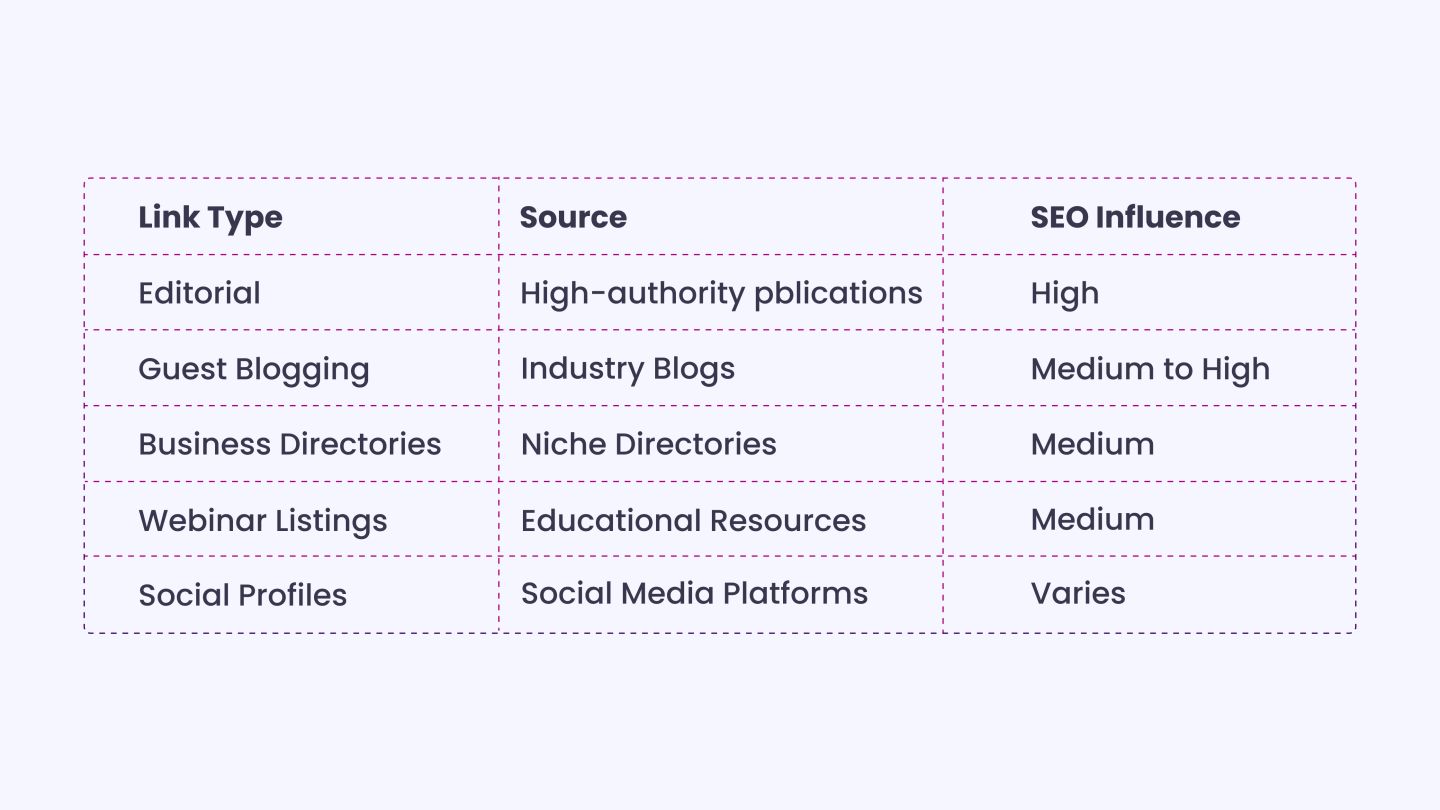
Lastly, avoid spammy link-building tactics. Google penalizes sites that use black hat techniques. Instead, build genuine industry relationships that lead to organic, authoritative backlinks.
9. Optimize for Local SEO (If Location Matters to Your Business)
Many manufacturers serve regional markets through local distribution centers or service-based offerings. Optimizing for local SEO is critical if your company relies on local customers.
How to improve local search rankings:
- Claim and fully optimize your Google Business Profile (formerly Google My Business) with accurate details, images, and service descriptions.
- Use location-based keywords (e.g., “custom injection molding in Chicago” or “precision machining in Ohio”).
- Get listed in local business directories and manufacturing-specific directories.
- Encourage customer reviews. Positive reviews improve rankings and credibility.
- Ensure your NAP (Name, Address, Phone Number) is consistent across all listings.
Local SEO helps your business appear in Google’s map pack, attract regional buyers, and, if applicable, increase foot traffic.
10. Use Video to Showcase Expertise
Video content is one of the most engaging and effective ways to improve SEO and connect with potential buyers. A well-produced video can help explain complex manufacturing processes, demonstrate product capabilities, and build trust.
Types of videos that perform well:
- Factory Tours: Give buyers a behind-the-scenes look at your production capabilities.
- Product Demonstrations: Show how your products work in real-world applications.
- Technical How-To Guides: Provide step-by-step solutions for common industry problems.
- Customer Testimonials: Showcase real success stories to build credibility.
SEO tip: Optimize your videos for search by including keyword-rich titles, detailed descriptions, and transcripts. For maximum reach, embed videos on your website, share them on LinkedIn, and upload them to YouTube.
Well-optimized videos can drive higher engagement, increase time on site, and improve overall search rankings.
11. Implement Internal SEO to Strengthen Your Website’s Structure
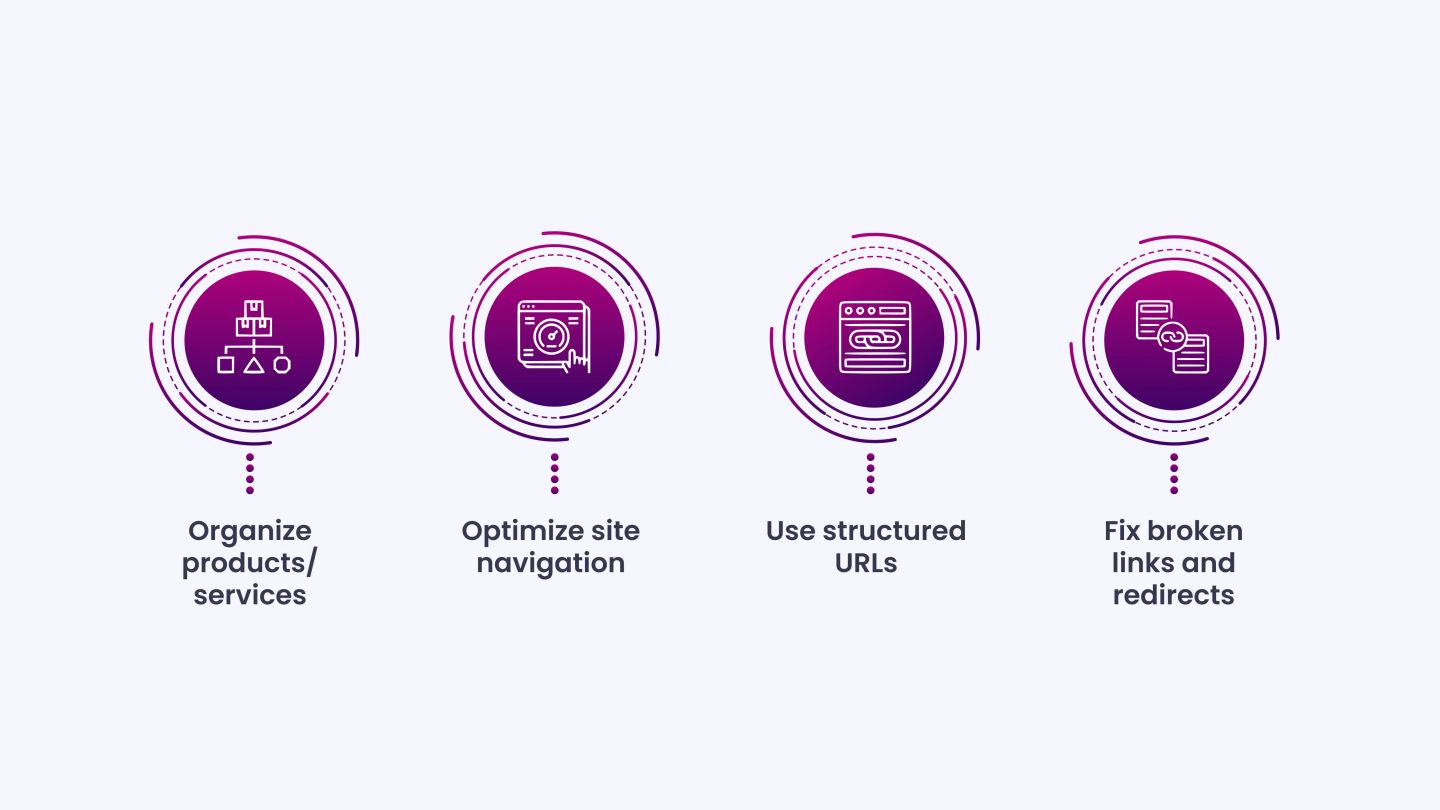
Internal SEO refers to how well your website is structured and interconnected, ensuring search engines and users can navigate it effectively. A well-organized site is crucial to SEO success for manufacturers with large product and service catalogs.
Critical internal SEO strategies:
- Organize products/servicesinto clear categories and subcategories to help search engines understand relationships between pages.
- Optimize site navigationby keeping menus clean and ensuring essential pages are accessible within a few clicks.
- Use structured URLs, for example, use yoursite.com/custom-cnc-machining/aerospace-parts/ instead of yoursite.com/page123.
- Fix broken links and redirectsto maintain site health and prevent lost traffic.
A strong internal SEO strategy ensures your site performs better in search rankings and provides a better user experience, leading to more conversions.
12. Optimize for Featured Snippets to Capture More Visibility
Google often highlights content in a unique “featured snippet” box at the top of search results. This is prime real estate. You get significantly more visibility if your content ranks here. Here is an example of a featured snippet:

How to optimize for featured snippets:
- Identify common industry-related questions (e.g., “What is the best metal for high-heat environments?”).
- Format answers using clear, concise language in bullet points or numbered lists.
- Use FAQ sections on service and product pages.
- Include definitions, comparisons, and quick summaries in your content.
Manufacturers with technical expertise and detailed content have an excellent opportunity to rank for featured snippets, driving more clicks and industry authority.
13. Improve Technical SEO for Better Indexing and Ranking
Technical SEO refers to backend optimizations that help search engines crawl and index your site more efficiently. Manufacturing sites often have complex product catalogs, large images, and downloadable PDFs, making technical SEO even more critical.
Key technical SEO improvements:
- Create an XML sitemapand submit it to Google Search Console to ensure all pages are indexed.
- Use structured data (schema markup)on product pages to help Google display important details, such as pricing and specifications, in search results.
- Ensure HTTPS security. Googleranks secure websites higher.
- Improve site speedby optimizing images, reducing server response times, and enabling caching.
Poor technical SEO can prevent even excellent content from ranking. Regular SEO audits help keep your site in top shape.
14. Optimize for International SEO to Reach Global Buyers
If your manufacturing company serves international markets, you must optimize for different regions, languages, and cultural expectations. Simply translating your website isn’t enough. Your global audience has unique search behaviors, regulations, and preferences.
How to improve international SEO:
- Use Hreflang tagsto tell Google which version of a page to show users based on their language and location. This prevents duplicate content issues and ensures the right audience sees the correct version of your content.
- Consider cultural nuances. Certain terms, product descriptions, and colors may have different meanings across regions. Adapt messaging to fit local business practices.
- Creating region-specific contentrather than direct translations and localizing case studies, testimonials, and industry applications helps improve engagement.
- Host country-specific domains(e.g., .de for Germany or .cn for China) if you have a strong presence in those regions.
- Optimize for local search enginessuch as Baidu (China), Yandex (Russia), and Naver (South Korea) rather than relying solely on Google.
Manufacturers with a global SEO strategy see higher engagement, better rankings in international search engines, and increased trust from regional buyers.
15. Optimize for Image Search to Drive Product Inquiries
Many manufacturing buyers use Google Image Search to find specific parts, designs, or machinery. If your images aren’t optimized, you’re missing out on potential leads actively searching for solutions.
How to optimize images for search:
- Use descriptive filenames(e.g., custom-cnc-machined-aluminum-part.jpg instead of IMG123.jpg).
- Write keyword-rich alt textthat describes the product (e.g., “Precision CNC-machined aluminum aerospace component”).
- Compress imagesto ensure fast loading without sacrificing quality.
- Use structured data (schema markup)to help Google recognize product images and display them in rich results.
Manufacturers that invest in image optimization often see higher organic traffic and increased product inquiries.
16. Repurpose Existing Content to Expand Your Reach
Manufacturers invest significant time creating technical content, product pages, and case studies, but most companies don’t fully leverage their existing content. Instead of constantly creating new content, repurpose what you already have.
Ways to repurpose content effectively:
- Turn a blog post into a LinkedIn article or downloadable whitepaper.
- Convert case studies into short video testimonials or infographic summaries.
- Adapt product FAQs into a structured How-To guide for your website.
- Create slide decks or industry presentations from in-depth reports.
Google values updated and refreshed content, and repurposing also helps engage potential buyers who prefer different content formats.
17. Use AI-Generated Content Strategically (Without Sacrificing Authenticity)
AI tools like ChatGPT and Jasper can assist with content creation, but they should never replace expert-written content in the manufacturing industry. Buyers expect technical accuracy, detailed specifications, and authoritative insights.
How to use AI effectively in manufacturing SEO:
- Generate content outlines and brainstorm ideas.
- Summarize complex technical details into digestible explanations.
- Speed up FAQ generation based on common customer inquiries.
- Automate the creation of meta descriptions and title tags for large catalogs.
However, never publish AI-generated content without expert review. Manufacturing requires precision, and inaccurate content can hurt credibility and customer trust.
18. Monitor SEO Performance with the Right Tools
SEO success doesn’t happen overnightit requires continuous tracking and adjustments based on actual data. Manufacturers should regularly monitor their websites’ SEO performance to stay competitive.
Essential SEO tools for manufacturers:
- Google Search Console- Tracks search rankings, crawl errors, and indexing issues.
- Google Analytics- Measures traffic, conversion rates, and user behavior.
- SEMrush or Ahrefs- Provides keyword analysis, backlink tracking, and competitor insights.
- PageSpeed Insights- Identifies website speed issues that may impact rankings.
By regularly reviewing SEO data, manufacturers can fine-tune their strategy, identify weak areas, and adjust content to improve rankings and lead generation.
19. Focus on Long-Tail Keywords for Niche Search Intent
Manufacturing buyers often search with particular queries. If your website isn’t optimized for long-tail keywords, you could miss out on high-intent leads. Why long-tail keywords matter for manufacturing:
- They attract highly qualified buyers(e.g., “custom plastic injection molding for aerospace applications” instead of “plastic molding”).
- Lower competitioncompared to broad keywords.
- Higher conversion ratesbecause they align with detailed product needs.
For example:
- Instead of“metal stamping,”target“custom precision metal stamping for electronics.”
- Instead of“plastic molding,”target“injection molding for FDA-compliant medical devices.”
Use Google’s People Also Ask, AnswerThePublic, and keyword research tools like SEMrush to find the best long-tail keywords. Then, incorporate them naturally into product pages, FAQs, and blog content. By focusing on high-intent keywords, manufacturers attract buyers who are ready to engage.
20. Encourage Customer Reviews to Build Credibility
Manufacturers often overlook the power of customer reviews in SEO. Positive reviews boost trust, improve rankings, and influence buying decisions.
How to generate more customer reviews:
- Encourage satisfied clientsto leave reviews on Google, ThomasNet, and industry directories.
- Send follow-up emailsafter the sale with a review request.
- Showcase testimonialson product and service pages to increase conversions.
- Respond to reviews professionally, whether they are positive or negative.
Google rewards businesses with frequent, high-quality reviews, making them a crucial SEO factor for manufacturing companies.21. Use FAQ Sections to Capture Voice Search and Featured Snippets
More manufacturing buyers are using voice search to find solutions, and Google’s featured snippets highlight answers directly in search results. Including FAQ sections on your site increases the chances of ranking for these high-visibility spots.
How to make FAQs SEO-friendly:
- Focus on questions buyers actually ask (e.g., “What’s the best material for high-temperature applications?”).
- Provide clear, concise answers. Google favors direct responses.
- Use structured data (schema markup) to help Google recognize and highlight FAQs.
- Place FAQs on product and service pages to enhance the user experience while boosting rankings.
A well-structured FAQ section improves user engagement, captures more organic traffic, and builds authority.
22. Nurture B2B Leads with Clear CTAs
SEO isn’t just about traffic; it’s about converting visitors into qualified leads. Many manufacturers struggle with low conversion rates because their sites lack clear calls to action (CTAs).
How to optimize for lead generation:
- Place contact forms and RFQ (Request for Quote) buttons prominently on product pages.
- Use action-driven CTA language (e.g., “Get a Free Quote” instead of “Learn More”).
- Offer downloadable resources, such as spec sheets or whitepapers, in exchange for contact details.
- Ensure your contact forms are simple; too many fields discourage potential leads.
A website optimized for lead capture ensures that your SEO efforts translate into real business opportunities.
23. Improve E-E-A-T (Experience, Expertise, Authoritativeness, Trustworthiness)
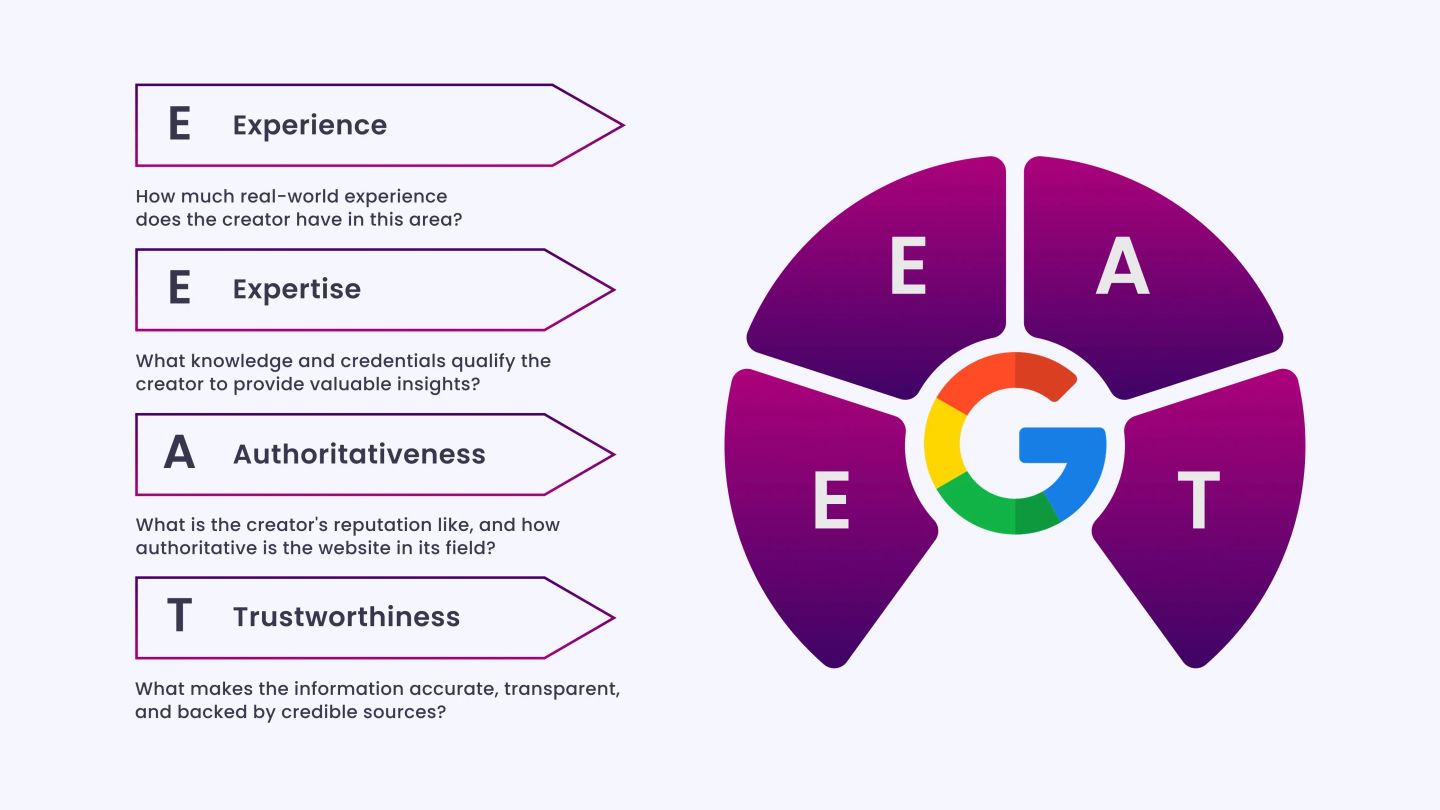
Google prioritizes websites that demonstrate authority and trust, especially in technical industries like manufacturing. Enhancing E-E-A-T (Experience, Expertise, Authoritativeness, Trustworthiness) improves your rankings and credibility.
How to build E-E-A-T for manufacturing SEO:
- Showcase industry experience. Highlightcertifications, years in business, and past projects.
- Publish expert-driven content. Featurearticles from engineers, technical leads, and industry specialists.
- Link to reputable sources. Citeindustry reports, research studies, and compliance standards.
- Secure backlinks from trusted industry websites. Guestpost on manufacturing blogs, contribute to trade publications, and get listed in industry directories.
Demonstrating real-world expertise sets you apart from competitors and boosts rankings for technical search queries.
24. Adapt to AI and Machine Learning in Search
Google’s search algorithms are increasingly driven by AI and machine learning, meaning manufacturers must adapt their SEO strategies accordingly. Search engines now prioritize context, user intent, and semantic search over keywords alone, making it essential to optimize for how people search today.
How to optimize for AI-driven search:
- Write naturally and focus on user intent. Contentshould answer real buyer questions, not just contain keywords.
- Optimize for conversational search, align your content with AI-powered assistants, and stay up to date on voice search trends.
- Ensure a seamless user experience. Google’s AI prioritizes pages with fast load times, mobile optimization, and clear navigation.
- Continuously update and refine content. AI-drivensearch rewards fresh, relevant information over static web pages.
25. Stay Ahead of Algorithm Updates and Industry Trends
SEO isn’t static; Google constantly updates its ranking algorithms, and search trends evolve as new technologies emerge. Manufacturers that adapt quickly maintain their competitive edge.
How to stay ahead:
- Monitor Google’s Search Central Blog for algorithm updates.
- Keep up with manufacturing SEO trends on platforms like Moz, Search Engine Journal, and SEMrush.
- Regularly audit your SEO strategy to update outdated content and optimize for new ranking factors.
- Track competitor websites to see what’s working in your industry and adjust your approach accordingly.
By staying informed, manufacturers can prevent ranking drops, capitalize on new opportunities, and maintain long-term SEO success.
INSIDEA
Ready to put this into practice?
INSIDEA is an Elite HubSpot Partner rated 4.99 across 450+ verified reviews. Let's map it to your goals.

 How INSIDEA works