Think about the last time you made a major purchase or trusted someone with a critical task.
What influenced your decision? Likely, it wasn’t just the service or product but the trust you felt toward the person or company behind it. The same principle applies to financial advising. Your clients are putting their financial futures in your hands and need to trust you. Personal branding is the bridge that makes that connection.
It’s about defining what makes you different and why clients should choose you over the next advisor.
And it works.74% of American consumers trust someone with an established personal brand. A strong personal brand helps you cut through the noise, grab attention, and make lasting connections. It shows potential clients who you are across just numbers and methodologies.
In this blog, I will explain why personal branding is crucial for financial advisors and provide practical ways to build a brand that attracts the right clients and grows your business.
Importance of Personal Branding for Financial Advisors
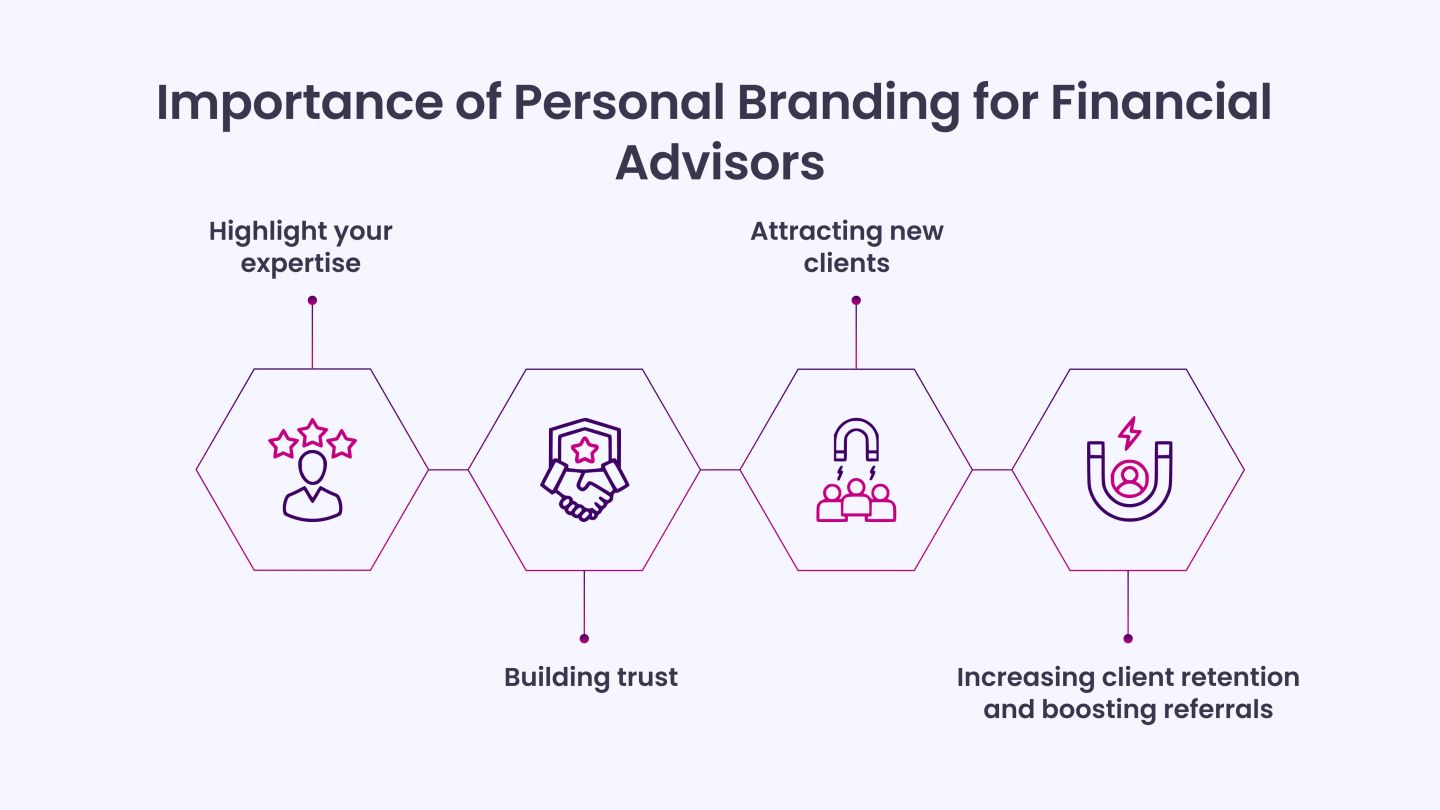
When I talk about personal branding, it means showcasing you as an individual advisor, separate from your firm’s brand. Your brand reflects your values, expertise, and approach, helping you stand out and gain clients’ trust.
A strong personal brand is essential for:
- Highlight your expertise: Show potential clients what you specialize in and why you’re the right advisor.
- Building trust: A solid personal brand helps create connections and makes clients more comfortable working with you.
- Attracting new clients: It makes you more visible and opens new business opportunities.
- Increasing client retention and boosting referrals: Clients who trust your brand are more likely to stay and recommend you.
Mastering Personal Branding to Attract Clients as a Financial Advisor
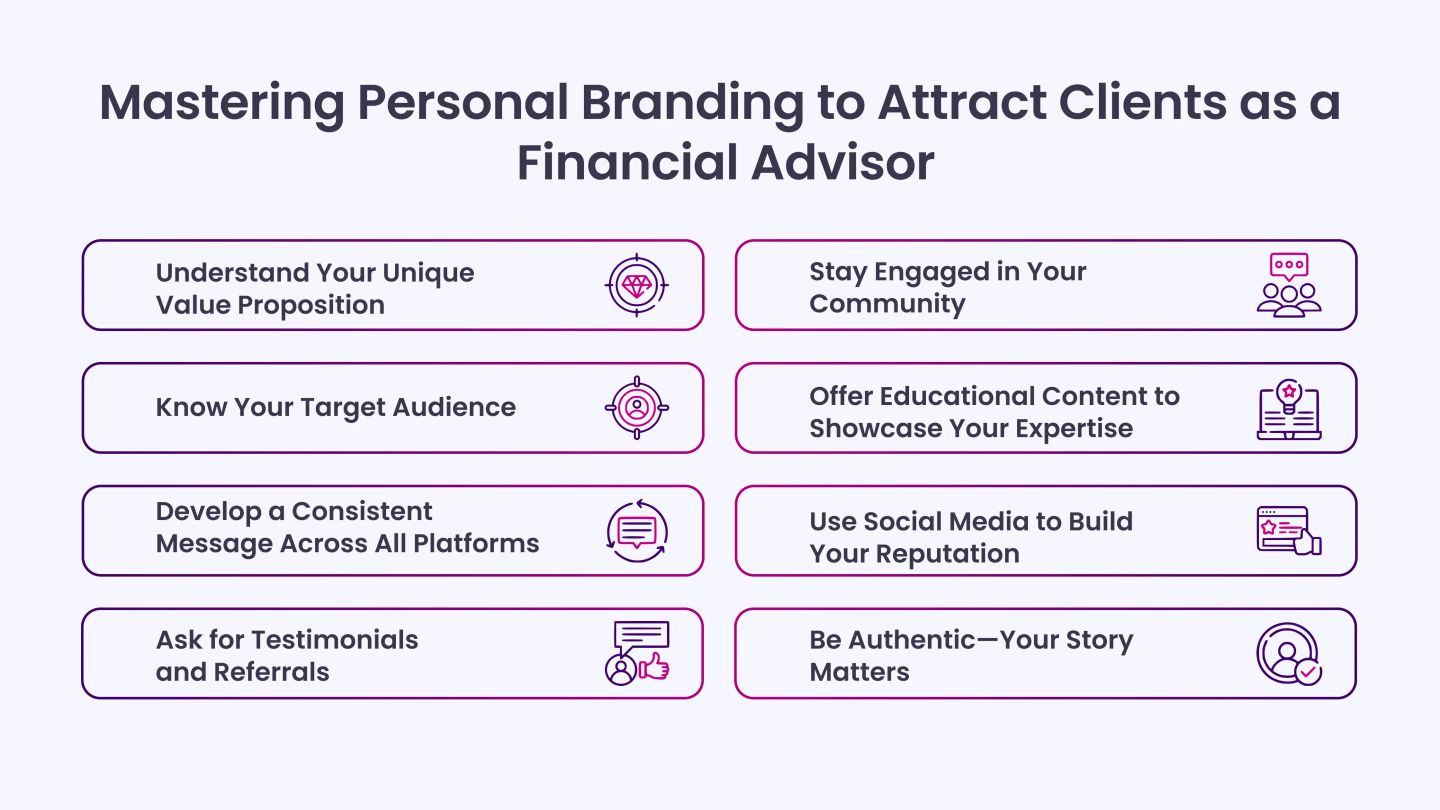
Building your personal brand as a financial advisor doesn’t have to be complicated, but it does take thought and intention. It’s about showing the world who you are, what you stand for, and how you can make a difference in your clients’ lives.
Creating a brand that resonates with people requires focusing on both the obvious things, like how you communicate and present yourself, and the less obvious things, like the emotional connection you create.
Alright, let’s get started:
1. Understand Your Unique Value Proposition
Before you start building your personal brand, you need to step back and ask yourself: What makes you different from other financial advisors? What do you offer that stands out in your area or niche? Your value proposition is about how you approach client needs and the unique way you deliver value.
Are you great at helping retirees secure their income? Do you work with business owners to provide holistic wealth management? Or do you know how to simplify complex financial concepts for young professionals?
Once you understand what sets you apart, you can create a personal brand that speaks directly to the clients who need your expertise.
2. Know Your Target Audience
Building a personal brand that truly resonates starts with one simple but crucial step: knowing who your ideal client is. The most successful financial advisors don’t just market to anyone; they focus on the people they can help the most.
To create a brand that speaks directly to your target audience, you need to understand who they are, what they care about, and how they communicate. The more specific you can be about these details, the easier it will be to customize your message to grab their attention. Knowing your target audience helps you determine where to focus your marketing efforts.
A detailed, ideal client profile is the best way to start. It helps you paint a clear picture of the people you want to connect with. Your profile should include:
- Age, gender, income, and net worth
- Marital status and occupation
- Geographic location
- Values, interests, challenges, and goals
3. Develop a Consistent Message Across All Platforms
Your personal brand is shaped by how you appear everywhere, not just by what you say. Your message must be clear across all touchpoints, your website, social media, emails, and client interactions.
Here’s how to keep things aligned:
- Website: This is usually the first place potential clients see you, so ensure it reflects your services, values, and personality. It should be easy to navigate and align with the rest of your brand.
- Social Media: Platforms like LinkedIn, Facebook, and Instagram are perfect for showing your expertise and personality. Share content that’s useful and gives people a sense of who you are, not just what you do. Let your personality shine through, whether you’re giving tips or offering insights.
- Content: Regularly post content that showcases your experience in the financial sector. The more you share, the more your expertise becomes evident to your audience.
- Messaging: Your communication style, whether via email, on the phone, or in person, should match the tone of your brand. Keep your style consistent so clients know exactly what to expect from you.
4. Ask for Testimonials and Referrals
One of the most effective ways to build your personal brand is by letting your clients do the talking. Testimonials and referrals are powerful resources that add authenticity to your brand and help build trust with potential clients.
After working with clients, ask for feedback. It can be a short review, a more detailed case study, or even a video testimonial. Real stories from satisfied clients about how you’ve helped them with their financial needs speak volumes and can create a strong emotional connection with prospects.
Referrals naturally follow when you provide exceptional service. Clients who feel they’ve received great value from you are often more than willing to recommend you to others. A referral-based approach helps you build a network of clients who already trust you, and as you know, word-of-mouth is one of the strongest endorsements you can get.
5. Stay Engaged in Your Community
Your personal brand isn’t just about what you do online; it’s about how you show up in your community. People are more likely to work with someone they know personally, and community engagement is a powerful way to build those relationships.
Attending local networking events, speaking at seminars or workshops, and participating in charity events are all great ways to increase your presence and connect with potential clients face-to-face. When you try to be seen and heard, you show that you’re invested in more than just your business; you care about the community.
Consider sponsoring local events or offering free workshops on financial topics such as budgeting and investing. These actions position you as a brand expert while providing value to the people around you.
6. Offer Educational Content to Showcase Your Expertise
In the financial advisory world, clients seek knowledge and solutions. Position yourself as a thought leader by providing valuable educational content. This doesn’t mean posting overly technical jargon or content that’s hard to digest. Instead, create content that’s practical, relevant, and easy for your audience to understand.
- Blog Posts: Write about common financial concerns or popular trends, retirement planning, tax-saving strategies, or financial planning for specific life stages (e.g., new parents, college students). Your blog can become a go-to resource for potential clients.
- Videos and Webinars: Hosting short, informative videos or live webinars lets you connect directly with your audience. Whether explaining the basics of investing or breaking down complicated financial topics, video content humanizes your brand and makes complex issues more accessible.
- Newsletters: Regular email newsletters allow you to keep potential and current clients informed about industry updates, tips, and strategies. This helps keep your name in front of them and shows you’re active and engaged.
7. Use Social Media to Build Your Reputation
Social media is more than just having an online profile; it’s a chance to show who you are as a financial advisor. It’s a platform to share your story, showcase your expertise, and demonstrate the value you and straightforwardly bring.
On LinkedIn, connect with other professionals, share valuable insights, and engage in conversations. By posting practical financial tips, answering questions, and participating in discussions, you’ll show that you know your stuff and are willing to help others.
Platforms like Instagram and Facebook help you reach a broader audience. Share tips, client stories, or behind-the-scenes moments to let your followers see the real you. Social media allows you to build trust by showing that you’re not just another advisor but someone who cares about your client’s success.
Success on social media comes down to consistency. It’s not about posting occasionally; it’s about adding value regularly and engaging with your audience.
8. Be Authentic
Being yourself can make all the difference in a field built on trust. People want to work with financial advisors they can connect with, someone who doesn’t just offer generic advice but shows real understanding and care.
Sharing your personal story, why you became an advisor, what drives you, and the challenges you’ve faced gives potential clients a glimpse of your identity. You don’t have to share everything, but showing the “why” behind your actions can make you more approachable and trustworthy.
Your Brand Is Your Superpower
We get it, your personal brand isn’t just a logo or tagline. It’s the emotional connection that shows people who you are and why they should trust you. A polished website and social media presence are essential, but they won’t succeed without consistently building trust and authenticity.
But with your busy schedule, where’s the time to enhance your brand while also managing client needs? The answer: hand it over to the marketing experts. Let them refine your brand reputation, so you can focus on what you do best, advising your clients and growing your practice. Trust me, it’s worth the investment.
INSIDEA
Ready to put this into practice?
INSIDEA is an Elite HubSpot Partner rated 4.99 across 450+ verified reviews. Let's map it to your goals.



 How INSIDEA works