

Major Action by The U.S. Securities and Exchange Commission (SEC): Nine Firms Fined $1.24 Million for Regulatory Violations
Shocking? Maybe.
Avoidable? Absolutely.
These violations included making unsupported claims and failing to include necessary disclosures in their marketing materials, basic oversights that could have easily been avoided with the proper compliance knowledge.
If compliance missteps can cost investment firms millions, isn’t a solid understanding of marketing regulations necessary for your business?
The message is clear: marketing compliance is not just a regulatory obligation, it is essential for maintaining trust, protecting your firm’s reputation, and ensuring sustainable growth. However, the complexity of regulations and the ambiguity in certain areas can create challenges, even for the most conscientious advisors.
This blog breaks it down. There is no legal jargon, no guesswork, just clear, actionable strategies for marketing your services confidently, without the risk.
Short on Time? Key Marketing Compliance Rules for Financial Advisors at a Glance
|
Financial Marketing Compliance: The Rules Advisors Cannot Afford to Ignore
Marketing in the financial industry is about precision. Every word, every claim, and every advertisement must align with strict regulations designed to protect consumers and maintain market integrity. Failing to comply is a liability that can cost your firm financially and reputationally.
Several agencies oversee marketing practices to ensure fair and ethical communication with clients. Understanding the rules helps build credibility with clients. Some of the most critical regulations include:
The SEC Marketing Rule: This rule dictates how advisors can use testimonials, performance metrics, and endorsements in their advertising. It requires full disclosure of any conflicts of interest and prohibits misleading statements.
Major rules within the Act that advisors must familiarize themselves include:
| Rule | Requirement |
| Rule 275.204A-1 (Code of Ethics) | Registered financial advisor firms must adopt and enforce a written code of ethics. |
| Rule 206(4)-7 (Policies and Procedures) | Registered investment advisor firms must implement written policies and procedures designed to prevent, detect, and correct violations of the Act. |
| Rule 206(4)-7 (Chief Compliance Officer) | Requires registered investment advisor firms to designate a Chief Compliance Officer to administer compliance policies and procedures. |
| Rule 206(4)-7 (Annual Compliance Review / Annual Certifications) | Specifies that each registered adviser must review their firm’s policies and procedures annually to verify their adequacy and the effectiveness of their implementation. |
FINRA Rule 2210: For broker-dealers, this rule mandates that all communications must be fair, balanced, and not misleading. It also requires recordkeeping and approval processes for certain types of marketing materials. The rules include:
| Rule | Requirement |
| Rule 3220 (Influencing or Rewarding Employees of Others) | Known as the “Gifts Rule,” this rule forbids registered financial firms from giving anything of value to employees of another firm to influence business decisions. |
| Rule 3270 (Outside Business Activities of Registered Persons) | Prohibits registered advisors from receiving compensation from another firm outside the scope of normal business activities. |
| Rule 3280 (Private Securities Transactions of an Associated Person) | Limits private securities transactions by associated persons of a registered firm. |
Truth in Advertising Laws: Financial advisors must ensure all claims in advertisements, websites, and social media posts are accurate, substantiated, and not exaggerated.
Privacy and Data Protection Regulations: Laws like the Gramm-Leach-Bliley Act (GLBA) and the General Data Protection Regulation (GDPR) impose strict guidelines on how client information can be used in marketing efforts.
Staying compliant ensures that every message you put out builds trust instead of creating legal exposure.
The Biggest 8 Marketing Compliance Risks Financial Advisors Face
The complexity of financial products, changing regulations, and aggressive marketing strategies create a minefield of risks. Here are the most significant compliance pitfalls advisors must deal with:
1. Misleading Claims
Every word matters. Overstating returns, downplaying risks, or using vague, feel-good language can mislead clients and invite regulatory scrutiny. The Unfair, Deceptive, or Abusive Acts or Practices (UDAAP) rule exists for a reason: to ensure marketing materials don’t promise what cannot be delivered. Even an innocent exaggeration can cross the line.
2. Inadequate Disclosures
Financial products come with fine print for a reason. Regulators demand clear, accurate disclosures, whether about an investment service, a loan, or a credit card. Missing or burying major details can trigger compliance violations and shake client confidence.
3. Misrepresentation of FDIC Insurance
Trust is everything and misleading claims about FDIC insurance can destroy it. If a firm implies that non-deposit products are insured or suggests full coverage where it does not exist, the consequences go beyond regulatory fines, clients may feel deceived when they need protection most. Transparency is not optional; it is essential.
4. Fair Lending and Unintentional Discrimination
Marketing is about targeting, but it can be unfair if done carelessly. Campaigns should attract a specific audience without shutting others out. Fair lending laws prevent discrimination, so marketing must follow these rules.
5. Third-Party and Affiliate Marketing Risks
An advisor’s reputation is only as strong as the partners they trust. Referral programs, affiliates, and external marketers can introduce compliance risks if they bend the rules. Regulators hold firms accountable for misleading claims made on their behalf. Due diligence, oversight, and regular audits are non-negotiable.
6. Social Media Pitfalls
A single post can go viral for all the wrong reasons. Unlike conventional marketing, social media’s informal tone and real-time nature make it easy to slip up. A misleading claim, an exaggerated testimonial, or an unclear investment promise can spread fast, and so can the penalties. Advisors must strike a balance between engagement and compliance.
7. Email Marketing Compliance
Email remains a powerful tool, but ignoring CAN-SPAM regulations can be costly. Common missteps include misleading subject lines, missing sender details, and failing to provide an opt-out option. Each violation can lead to fines of up to $53,088 per email a high price for poor compliance.
8. Telephone Consumer Protection Act (TCPA) Violations
Cold calling and SMS campaigns may be effective but have strict rules. The TCPA restricts telemarketing calls, automated messages, and unsolicited texts, protecting consumers from aggressive solicitation. Failing to comply can mean massive fines and damaged trust.
Financial Advisor Marketing Compliance Mistakes to Avoid
Marketing compliance covers many responsibilities, but the most significant risks often arise from a few major missteps. Avoiding these issues can protect both your reputation and your business. Some of the most common compliance mistakes include:
- Overlooking third-party sources: Failing to fact-check external links can spread inaccurate or misleading information.
- One-sided marketing: Promoting only the benefits of a product or service without addressing potential risks creates an unbalanced and non-compliant message.
- Undisclosed compensation for testimonials: Paying clients for endorsements without proper disclosure violates SEC guidelines and erodes trust.
- Improper use of hypothetical performance data: If you present hypothetical results, your firm must have documented policies ensuring relevance and accuracy.
- Inadequate record-keeping: SEC rules require advisors to maintain detailed records of all marketing communications.
- Ignoring compliance red flags: Failing to address potential violations promptly can lead to regulatory scrutiny and costly penalties.
Best Practices to Maintain Compliance for Financial Advisors
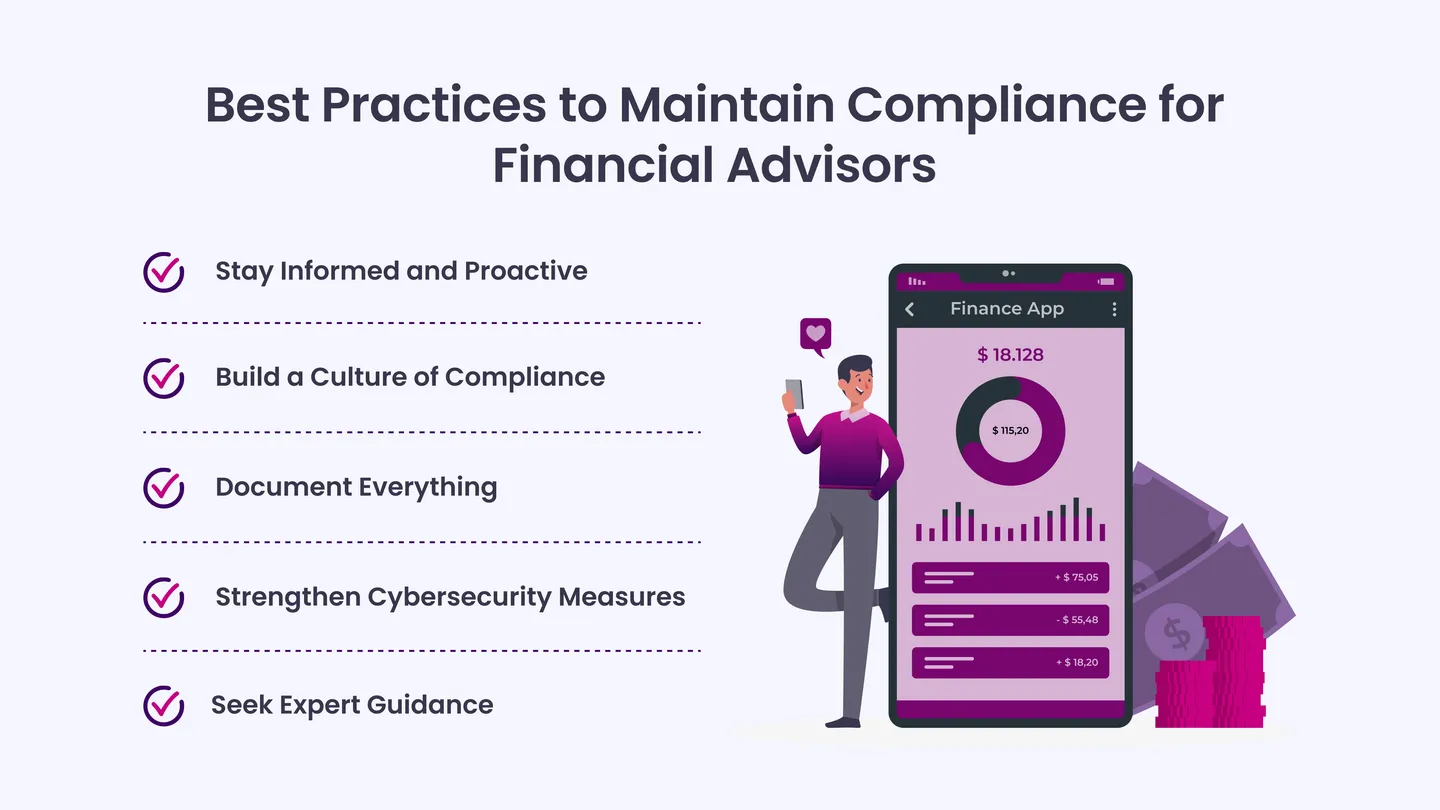
Regulations shift, guidelines keep updating, and compliance is not a one-time task but a continuous process. Financial advisors who integrate compliance into their daily operations protect their clients and reputations. Here is how to stay ahead.
1. Stay Informed and Proactive
Regulatory requirements change frequently. Keeping up with new rules ensures you are never caught off guard.
- Subscribe to regulatory updates: SEC, FINRA, and other industry bodies regularly release changes. Their newsletters, alerts, and enforcement actions provide critical insights.
- Engage in ongoing education: Conferences, webinars, and training sessions keep you informed and allow you to learn from industry experts.
- Utilize technology: Compliance platforms can automate tracking regulatory changes, making it easier to adjust marketing materials and client communications in real time.
2. Build a Culture of Compliance
Compliance is not just about rules, it is about mindset. When everyone in your firm understands its importance, risk is minimized.
- Establish clear policies: A well-documented compliance framework keeps expectations aligned.
- Train consistently: Regular workshops ensure your team understands regulations, ethical considerations, and potential risks.
- Monitor internal controls: Frequent audits help catch issues before they become liabilities.
- Encourage transparency: A confidential reporting system allows employees to flag compliance concerns without fear of retaliation.
3. Document Everything
Regulators expect thorough records. Proper documentation not only meets compliance requirements but also protects against potential disputes.
- Client interactions: Keep records of all communications, including emails, calls, and meetings.
- Suitability assessments: Maintain documentation of how investment recommendations align with client profiles.
- Disclosures: Ensure clients receive all necessary disclaimers and keep copies for reference.
- Trade confirmations and statements: Regularly reconcile transactions to maintain transparency.
4. Strengthen Cybersecurity Measures
Regulatory compliance extends beyond marketing, it includes data security. A lapse in cybersecurity can lead to fines, reputational damage, and legal action.
- Encrypt sensitive data: Protect client information with strong encryption protocols.
- Conduct regular security audits: Identify and address vulnerabilities before they become threats.
- Train employees on cybersecurity: Phishing scams, weak passwords, and unsecured networks are among the most significant risks. Keep your team informed.
- Have an incident response plan: A well-defined strategy ensures swift action if a breach occurs.
5. Seek Expert Guidance
Compliance can be complex. Working with legal and compliance experts ensures your firm meets industry standards while minimizing risk.
- Periodic audits: A fresh perspective from an external consultant can uncover gaps you may have missed.
- Customized compliance strategies: Every firm is different. An expert can tailor compliance practices to your business model.
Financial Advisors Already Have Enough on Their Plate, Why Add Marketing Stress?
Let’s be honest, financial advisors juggle a lot. Between managing client portfolios, staying on top of market trends, handling compliance paperwork, and growing your business, there’s barely any time left. Now, throw in marketing, SEO, content creation, ad campaigns, and social media management, and it quickly becomes overwhelming.
And let’s not forget compliance. Every blog post, ad, and social media update must align with SEC and FINRA rules, properly document, and go through approvals. A simple marketing mistake can lead to fines, legal trouble, or damage to your firm’s reputation.
That’s where a digital marketing agency comes in. Instead of stretching yourself thin trying to master compliance-friendly marketing, you can focus on what you do best: advising clients and building relationships. A team that understands financial services and marketing regulations can handle everything from creating compelling, compliant content to running ad campaigns that get results, without putting your firm at risk.
Marketing should support your business, not add to your stress. By partnering with experts, you ensure that every message is strategic, effective, and 100% compliant.
And that’s where INSIDEA comes in!
INSIDEA
Ready to put this into practice?
INSIDEA is an Elite HubSpot Partner rated 4.99 across 450+ verified reviews. Let's map it to your goals.



 How INSIDEA works




