When LinkedIn first introduced the Gold Community Top Voice badge, it created quite a buzz. People were excited to be recognized for their contributions, and it became a symbol of status and expertise for many.
However, over time, the value of the badge began to decline, resulting in LinkedIn’s announcement to retire the gold badge as of October 8, 2024.
While this change may leave some contributors wondering what comes next, it also offers an opportunity to reflect on why the badge was so popular, how it added value, why it lost its significance, and what LinkedIn could do to bring it back more meaningfully.
Why Did the Gold Top Voice Badge Spark So Much Excitement?
I’ll admit, I was all in when thegold Community Top Voicebadge first appeared. Like many others, I saw it as a symbol of recognition. Who wouldn’t want to be seen as a “Top Voice” on LinkedIn, the world’s largest professional network?
There was an excitement about being part of a select group, and people were eager to share their newly earned badges across their profiles and posts.
Here’s why it caused such a stir:
1. Recognition and Status
Being awarded a badge made you feel like you were officially acknowledged as a thought leader. It positioned you as an authoritative voice and cultivated a sense of prestige that appealed to our desire for validation in the professional world.
2. Relatively Easy to Achieve
Unlike LinkedIn’sblue Top Voicebadge, which is manually awarded, thegold badgecould be earned automatically by adding insights to collaborative articles. It seemed like a shortcut to credibility, and some people took full advantage, contributing frequently and stacking up badges.
3. Ongoing Motivation
Since the badges were temporary, expiring after 60 days, there was always a sense of urgency. This cycle kept the excitement alive, as users were motivated to contribute and renew their badge status continually. It created a gamified experience, where maintaining recognition became a recurring goal.
4. Boosted Visibility
Having thegold badgedidn’t just feel good, it got you noticed. Contributors with the badge were often seen as experts, which helped them gain more visibility across LinkedIn. It gave users a reason to stay active and engage with collaborative articles, knowing that the badge could help expand their network and open new opportunities.
How the Gold Badge Added Real Value?
The gold Community Top Voice badge wasn’t just a status symbol, it offered tangible benefits to contributors and LinkedIn as a platform. While it lasted, the badge created incentives that encouraged meaningful engagement and facilitated active participation in collaborative articles. Here’s how the badge brought value:
1. Amplified Credibility
For many, the badge acted as a stamp of approval, showcasing their expertise and industry knowledge. It helped contributors gain credibility faster, especially for those looking to establish themselves as thought leaders without a huge following. Being recognized as a Community Top Voicemade it easier for others to trust your insights, which could lead to stronger professional relationships and authority in your field.
2. Driving Engagement and Content Creation
The badge was a powerful motivator to keep users actively contributing to collaborative articles. The continuous flow of contributions benefited individual users and enriched LinkedIn’s knowledge base with fresh, diverse perspectives. The more people engaged, the more valuable LinkedIn became as a content-driven platform.
3. Encouraging Thought Leadership
Participating in collaborative articles allowed users to share unique perspectives on industry topics, helping them develop their brand as thought leaders. The badge incentivized deeper engagement, pushing users to deliver high-quality insights that could set them apart. For those looking to become recognized voices in their field, the badge was a stepping stone toward building lasting influence.
If you’re focused on building your presence as a thought leader on LinkedIn, utilizing features like Creator Mode can make a significant difference.
4. Unlocking Opportunities Beyond Your Network
Thegold badgedidn’t just offer visibility, it helped contributors extend their reach far beyond their immediate network. Since badge holders were more likely to appear in searches and recommendations, they gained access to new audiences and professional opportunities, including partnerships, speaking engagements, or career growth.
5. Enhanced LinkedIn’s Ecosystem
The badge system created a steady stream of user-generated content for LinkedIn, making the platform more dynamic and relevant. Thegold badgehelped fuel a culture of knowledge sharing, increasing LinkedIn’s value as a go-to hub for professional insights and discussions.
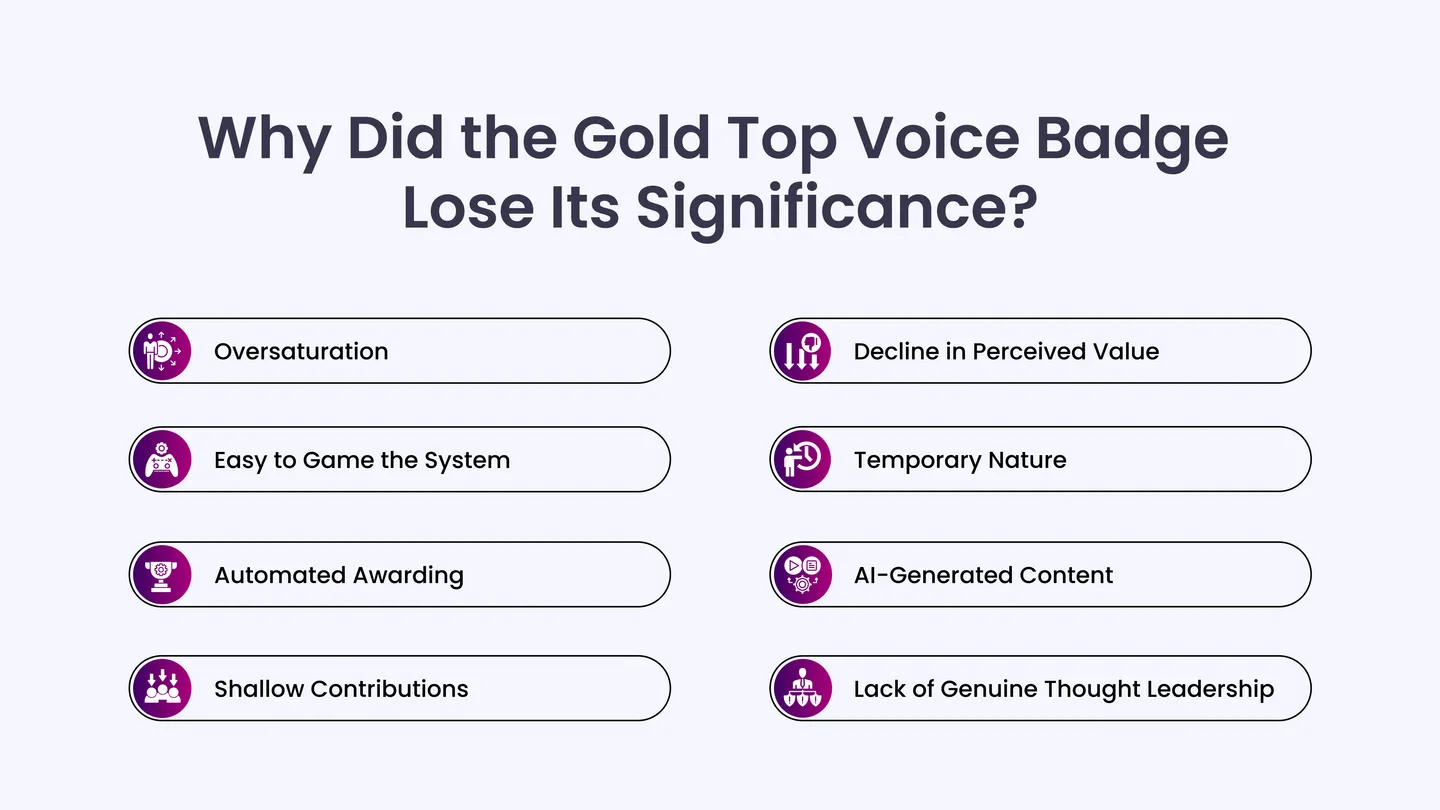
Why Did the Gold Top Voice Badge Lose Its Significance?
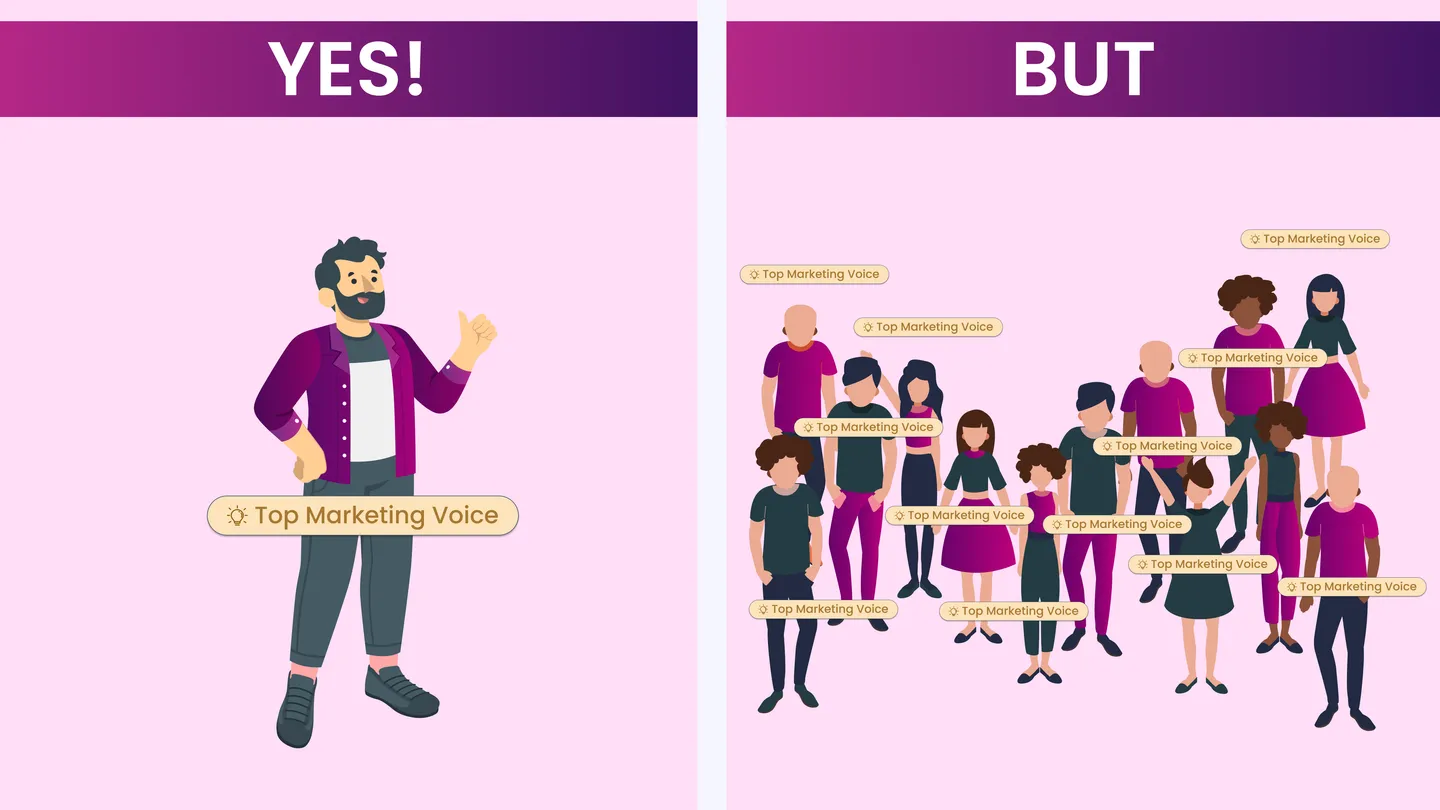
It didn’t take long for thegold Top Voicebadge to lose some of its initial shine. What was once a symbol of thought leadership became something anyone could achieve with enough contributions. Over time, it felt like everyone had one, and I mean, everyone. It got to the point where earning the badge became more like a meme than a mark of true expertise.
You could no longer distinguish between seasoned experts and contributors who were just adding to collaborative articles for the badge. The sheer volume of badges floating around made it difficult to tell who was a thought leader and who simply contributed to hit the milestone.
Here’s what thegold badgesituation started to feel like:
Here’s why it lost its significance:
1. Oversaturation
The more people earned the badge, the less exclusive it became. What started as a recognition for active contributors turned into something almost anyone could achieve. With so many people holding the badge, it lost its uniqueness, making it feel less like a special achievement and more like a common title.
2. Easy to Game the System
Earning thegold badgewas relatively easy, leading some users to focus on quantity rather than quality. Contributing to as many articles as possible, even if the content wasn’t particularly insightful, allowed people to earn the badge. This created a scenario where the badge didn’t always reflect true expertise.
3. Automated Awarding
The automatic nature of thegold badgemeant there was no real oversight. Instead of rewarding thoughtful, high-quality content, the system was based on activity levels. Contributors who offered little to no value could still earn badges simply by being active, which further diluted the badge’s significance.
4. Shallow Contributions
As some contributors realized how easily they could earn the badge, the quality of insights shared in collaborative articles began to decline. Many posts became repetitive, generic, or focused on basic topics, leading to a perception that the badge was more about participation than thought leadership.
5. Decline in Perceived Value
The badge’s growing ubiquity led to a decline in how others perceived it. What was once a symbol of industry recognition started to feel hollow. Professionals who initially saw the badge as a mark of expertise began to question its credibility when they saw it attached to less impactful content.
6. Temporary Nature
The fact that the badge expired after 60 days created a cycle where users felt pressured to keep earning it. Instead of focusing on producing valuable insights, the chase for the badge became about maintaining status. This temporary nature made the whole system feel less about expertise and more like a revolving door of recognition.
7. AI-Generated Content
In some cases, the collaborative articles themselves were AI-generated or formulaic, leading to a lower standard of discussions. Contributors were adding to articles that didn’t spark deep conversations or unique viewpoints, which contributed to the overall decline in the quality of content rewarded with thegold badge.
8. Lack of Genuine Thought Leadership
As the badge became more widely distributed, it was often awarded to contributors who weren’t thought leaders in the traditional sense. People sharing generic content or basic advice received the same recognition as industry experts. This inconsistency further devalued the badge in the eyes of LinkedIn’s professional community.
Comparing the Gold and Blue Top Voice Badges
As LinkedIn’s gold Community Top Voice badge became more widespread, it started losing its impact, especially when compared to the highly respected blue Top Voice badge. Here’s a quick comparison of the two badges, highlighting why theblue badgehas maintained its exclusivity and prestige while thegold badgefell short.
| Gold Community Top Voice Badge | Blue Top Voice Badge | |
| Awarding Process | Automatically awarded based on participation in collaborative articles. | Manually awarded by LinkedIn’s editorial team, based on real, thoughtful contributions. |
| Criteria | Primarily focused on the quantity of contributions. | Based on quality, consistency, and value of contributions over time. |
| Exclusivity | Easily accessible to a broad range of contributors. | Highly exclusive, awarded to a small, select group of thought leaders. |
| Oversight | No manual oversight; awarded through an automated system. | Handpicked by LinkedIn, ensuring human judgment and evaluation. |
| Perceived Value | Decreased over time due to oversaturation and low-quality content. | Consistently valued as a prestigious recognition of true thought leadership. |
| Content Quality | Often linked to basic, repetitive, or AI-generated content. | Associated with deep, insightful, and original thought leadership. |
| Recognition | Broadly recognized, but lost significance due to volume. | Highly respected within the LinkedIn community, seen as a badge of true influence. |
Theblue Top Voicebadge stands out as a mark of true thought leadership, awarded only to those who have consistently delivered value over time. It’s much harder to achieve, and that exclusivity has helped preserve its prestige. As many LinkedIn users have said,“You can’t win a blue badge, you earn one.”
What Could LinkedIn Do to Bring Back the Badge?
As LinkedIn moves forward without thegold badge, there’s still potential for the platform to reintroduce a similar recognition system that maintains its value and purpose. Here are a few improvements LinkedIn could consider to bring back the badge in a more meaningful way:
1. Introduce a Manual Review Process
LinkedIn could take a more curated approach to badge awards instead of relying on automatic algorithms. A system where a dedicated team or editorial staff manually reviews contributions would ensure that only high-quality content and genuine thought leadership are rewarded.
2. Create Tiers of Recognition
LinkedIn could introduce different levels of badges, similar to how other platforms have tiered recognition systems (e.g., bronze, silver, gold). This would help differentiate between contributors just starting out and those consistently providing top-notch insights. A tiered system would encourage continuous improvement without diluting the value of the top tier.
3. Incorporate Feedback from the Community
A critical issue with the gold badge was that it didn’t reflect what the LinkedIn community truly valued. By actively incorporating feedback from users and community leaders, LinkedIn could develop a more meaningful and reflective badge system that aligns with what professionals respect and admire.
4. Highlight Niche Expertise
LinkedIn could introduce category-specific badges, recognizing thought leadership in specialized fields rather than offering one broad badge for all contributors. This would allow users to stand out in their specific areas of expertise and prevent the badge from becoming too generalized.
5. Focus on Long-Term Contributions
Rather than awarding temporary badges, LinkedIn could reward sustained, long-term contributions. This would encourage consistent value-added participation and ensure that recognition is given to those who are dedicated to sharing meaningful insights over time, rather than those who are just “chasing badges.”
My Thoughts
The gold Community Top Voice badge had its moment in the spotlight, but over time, it lost the exclusivity and value that made it exciting in the first place. LinkedIn’s decision to retire the badge is a necessary step toward restoring credibility and quality on the platform. However, with the right changes, LinkedIn could bring back a similar system that both motivates contributors and maintains a high standard of thought leadership.
When you contribute meaningfully, you establish yourself as an expert in your field, expand your reach beyond your immediate network, and support the community by providing answers and guidance.
Recognition comes naturally when you add real value. So, badge or no badge, I urge you to focus on contributing to LinkedIn in ways that cultivate trust, build connections, and elevate conversations. That’s how you truly stand out and create a lasting impact.
INSIDEA
Ready to grow your audience for real?
Social strategy and content that builds a following worth having.



 How INSIDEA works