Mostrecruitment agencyblogs sound the same within seconds of opening.
You’ll see the usual topics repeated everywhere, such as how to write a CV, how to prepare for interviews, what employers look for in candidates, or when it’s time to hire.
While these topics aren’t wrong, they’ve been covered so extensively across job boards, career sites, and agency blogs that they no longer stand out. They don’t build authority, they don’t attract meaningful organic traffic, and they rarely influence a hiring decision.
The real issue is not effort; it’s positioning.Recruitment agenciesare trying to speak to two very different audiences at once: clients hiring and candidates seeking opportunities. In trying to serve both, most content becomes too broad, too safe, and too generic to truly resonate with either side.
Strong recruitment content doesn’t start with topics. It starts with clarity. Clarity on what your agency should be known for, and what specific problems you are uniquely qualified to speak about. When a hiring manager reads your content and feels you understand their market better than anyone else, the content stops being noise and becomes trusted.
That’s exactly where this guide comes in.
In the sections ahead, you’ll find 10+ smart content marketing ideas built specifically forrecruitment agencies, practical formats and strategies designed to help you attract better candidates, win stronger clients, and build real authority in your niche.
Let’s get started!
1. Turn Internal Data into a Salary & Hiring Trends Report
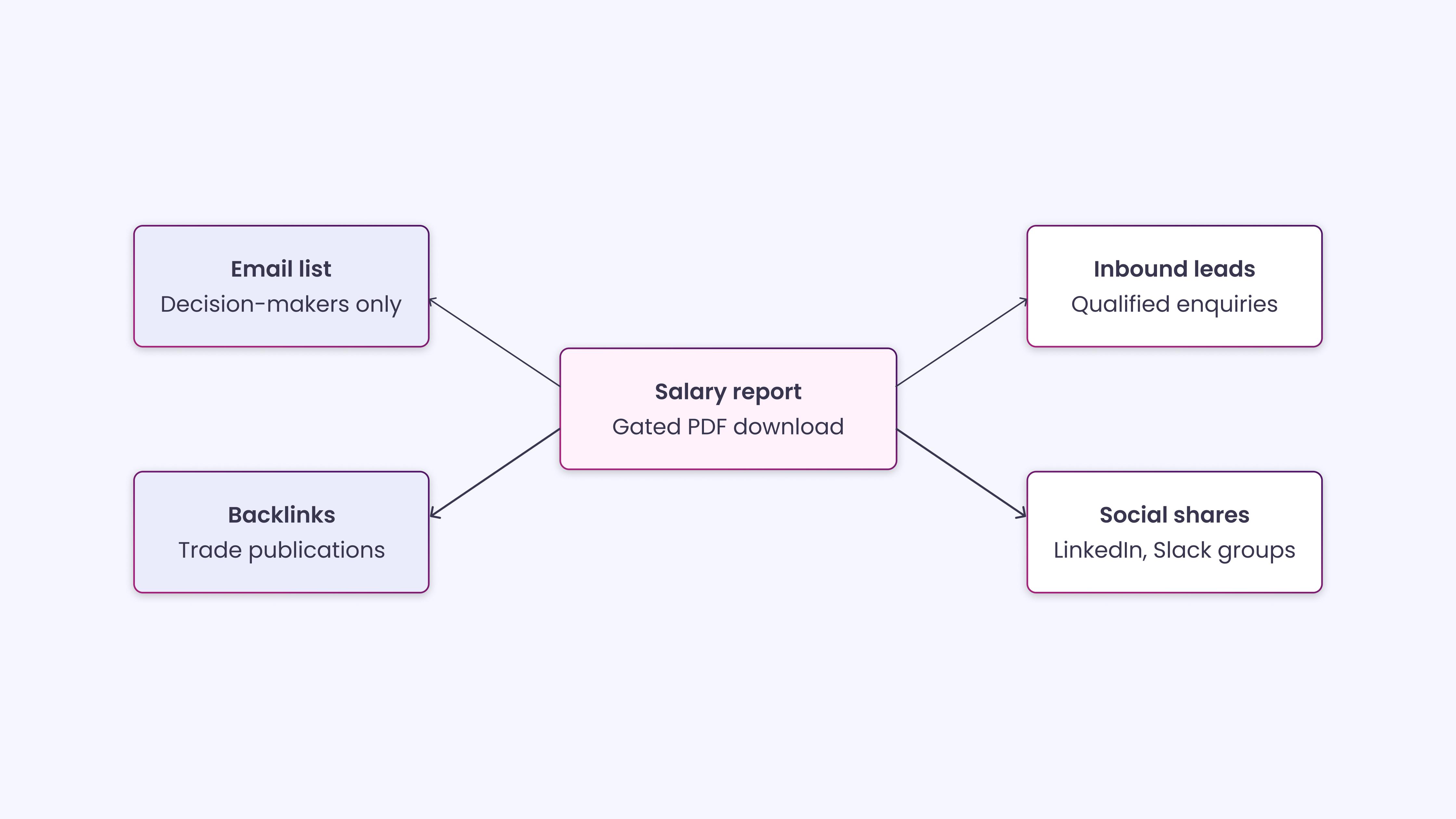
A well-researched salary and hiring trends report is one of the fastest ways to build credibility with senior hiring managers.
Most agencies already have the data needed to create it, such as salaries by role, time-to-hire, candidate availability, and shifting skill demand throughout the year. When structured properly, this becomes insight that hiring teams can’t easily find elsewhere.
Package it as a downloadable report with a simple gated landing page. Theemailcapture is worth it; the people downloading it are usually decision-makers or closely involved in hiring.
Once published, these reports tend to travel far across yourwebsite, be shared internally, be referenced on LinkedIn, and be picked up by industry publications. One strong report can outperform months of generic content.
2. Build a Focused Content Hub Around One Sector
If you operate in a specific niche, fintech, healthcare, tech, or something similar, your website should feel like the most useful resource in that space.
A content hub is a structured set of interconnected content organized around a single theme. It usually includes a core “pillar” page and supporting articles covering roles, salaries, hiring challenges, and market trends.
The secret is focus.
Agencies that go deep in one niche consistently outperform generalists who publish broadly but without depth. Search engines reward clarity, but clients reward expertise, and this approach delivers both.
3. Publish Honest “State of Hiring” Insights
Most hiring content is too safe. It tells hiring managers what they already know instead of what they actually need to hear.
“State of hiring” content changes that.
This could include real challenges in your sector, candidate shortages, salary pressure, or why offers are being rejected. When supported by your own placement experience or market data, it becomes far more credible than generic commentary.
This type of content works best when published regularly, not as a one-off. It positions your agency as a partner with real market awareness, not just another vendor publishing blog posts.
4. Create Role-Specific Career Guides for Candidates
Candidates don’t just apply for jobs; they research them heavily before making a move.
Role-specific guides help you capture that early attention.
Instead of broad advice, focus on real transitions and real roles, for example, moving into data engineering from software development or stepping into a CFO role at a startup.
The value comes from specificity:
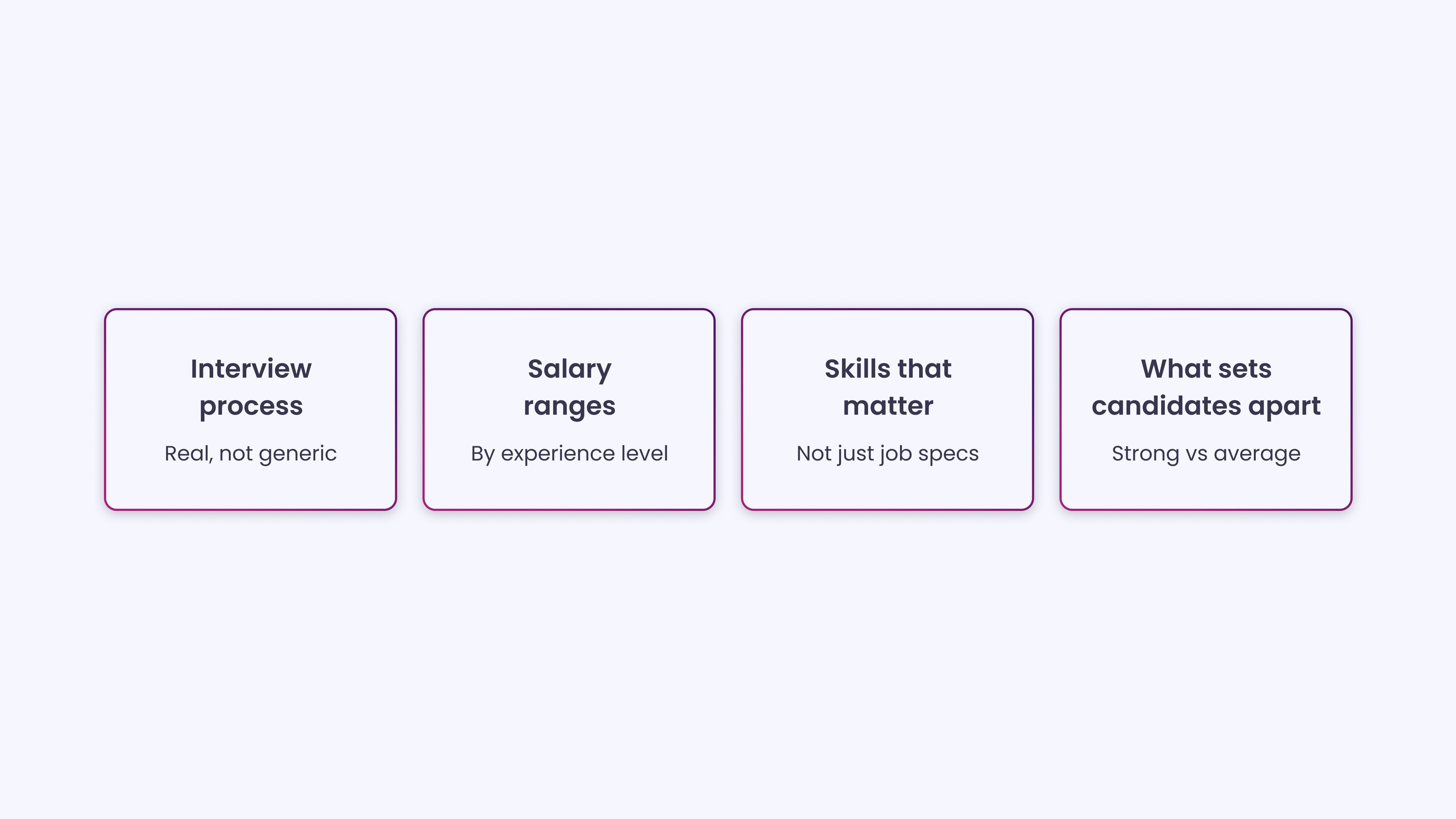
- Real interview processes
- Actual salary ranges
- Skills that truly matter in that role
- What separates strong candidates from average ones
When done well, these guides attract exactly the kind of candidates your clients want to hire.
5. Treat LinkedIn as a Publishing Platform
Most agencies use LinkedIn as a distribution channel. High-performing ones use it as a publishing platform.
There’s a difference between posting and publishing.
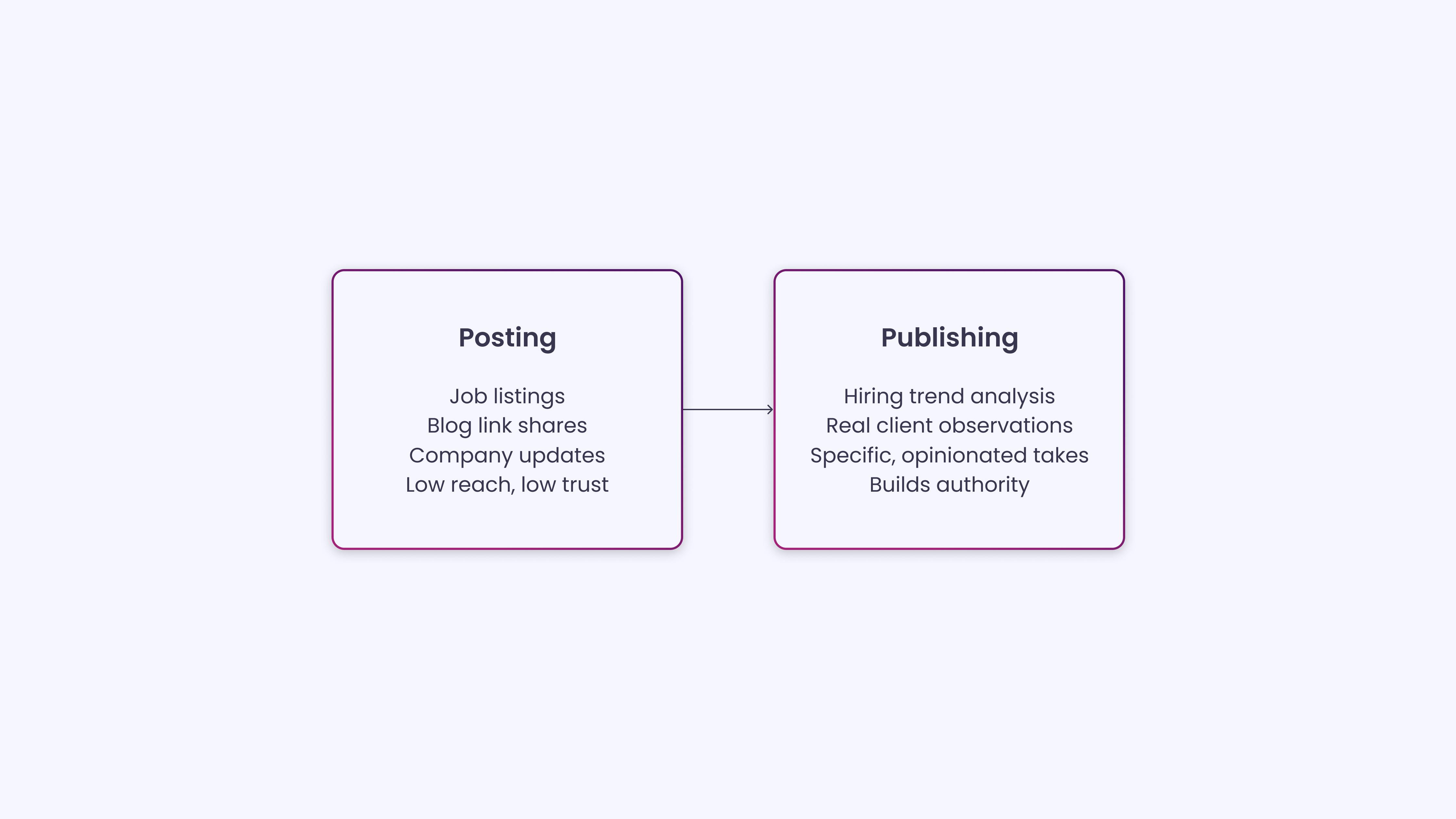
Posting is sharing jobs or links. Publishing is sharing insight, a viewpoint on hiring trends, a breakdown of a skill shortage, or a real observation from client conversations.
Content that is specific, opinionated, and grounded in real experience consistently outperforms generic updates. LinkedIn rewards clarity of thought, not volume of posts.
6. Launch a Simple Podcast or Video Series in Your Niche
You don’t need high production value to make this work.
A monthly conversation with a hiring manager, candidate, or industry expert can become a powerful content engine.
One session can be repurposed into:
- A blog post
- Social clips
- Quote posts
- Newsletter content
In addition to the content, this format also builds relationships. Many agencies find that podcast guests often become clients or long-term partners.
7. Be Transparent About How You Work
Most recruitment websites sound identical: “trusted partner,” “quality candidates,” “tailored process.” None of it feels real anymore. That’s why transparency stands out.
Content that explains how you actually work, sourcing methods, hiring timelines, expectations at each stage, and even what happens when things don’t go perfectly builds far more trust than polished marketing copy.
Case studies work best when they include challenges, not just outcomes. Real stories always outperform perfect ones.
8. Build a Newsletter People Actually Want to Read
A strong newsletter is one of the few audience channels you truly own.
But most recruitment newsletters fail because they focus on jobs or company updates instead of insight.
A good format is simple:
- One clear insight from your market
- One useful data point or observation
- One practical takeaway
Keep it short. Keep it relevant. And keep it consistent.
When done well, it becomes a direct line to hiring managers and candidates in your niche.
9. Publish Decision-Focused Comparison Content
Hiring decisions often involve comparison, agencies, hiring models, or talent strategies.
Content that helps people make those decisions tends to convert strongly.
Examples include:
- Contingency vs retained search
- Build vs buy talent strategies
- Choosing a specialist vs. a generalist agency
Even when the content doesn’t directly promote your services, it builds trust. And trust drives long-term client acquisition more than any promotional page.
10. Turn Testimonials Into Structured Proof
Most agencies collect feedback but don’t use it properly.
Testimonials work best when they’re structured into usable content:
- Short video clips from candidates
- Detailed client case studies
- LinkedIn recommendations requested at the right moment
The main factor is consistency. A steady system for capturing feedback creates a much stronger trust signal than a handful of generic quotes on a website.
11. Repurpose Everything You Create
Most content is underused, not underproduced.
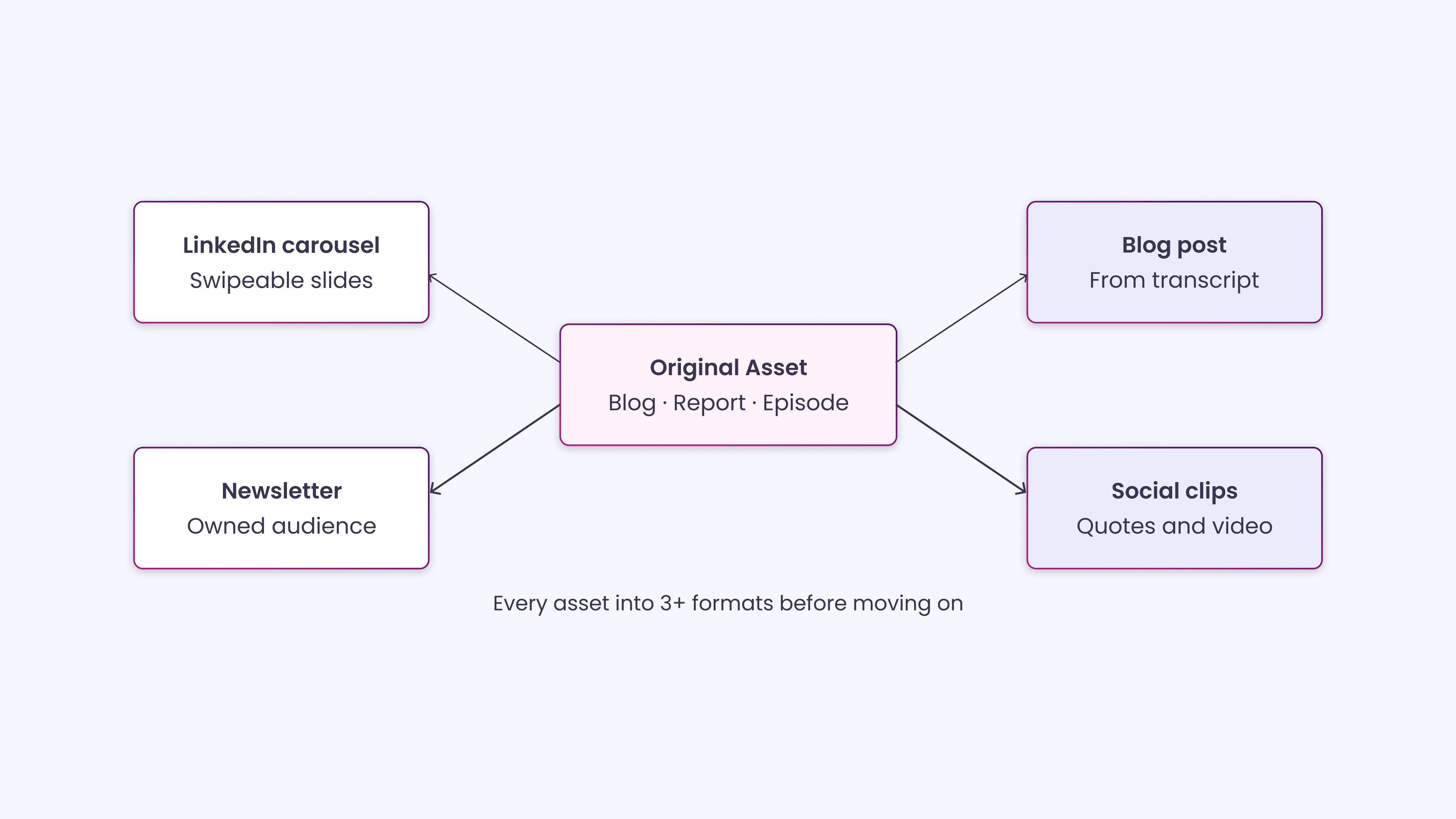
A single strong asset should be turned into multiple formats:
- Blog post → LinkedIn posts
- Report → newsletter + social content
- Podcast → blog + clips + quotes
The work doesn’t need to be repeated; it just needs to be redistributed properly.
Agencies that repurpose consistently get far more value from the same effort compared to those who publish once and move on.
Build Content That Earns Trust
Most recruitment agencies don’t lack content; they lack content that feels specific enough to matter. When everything sounds generic, it stops building trust, stops attracting the right audience, and stops influencing hiring decisions.
Today, clients and candidates form opinions long before they ever speak to an agency. Your content is either strengthening that trust or getting ignored entirely.
The ideas in this guide are not about doing more. They are about doing it better, with sharper focus, real insight, and content that reflects how hiring actually works.
Start with one strong format, stay consistent, and build from there.
In recruitment content, the agencies that win are not the ones publishing the most; they are the ones saying something worth paying attention to.
Grow Faster and Smarter with INSIDEA’s Digital Marketing Subscription

AtINSIDEA, we deliver powerful digital marketing strategies that elevate your brand’s presence, attract the right audience, and drive measurable growth. Our expert team is dedicated to creating top-tier marketing solutions to meet your unique business needs. With in-depth industry knowledge, we craft customized strategies that align perfectly with your goals, all within ourall-in-one digital marketing subscription.
Our comprehensive subscription includes everything you need to succeed in the digital space.
FromSearch Engine Optimization (SEO)that boosts your search rankings and drives organic traffic toWordPress Management, ensuring your website is visually appealing, highly functional, and optimized for conversions.
Ourcontent marketingservices establish your authority with engaging, insightful content.Social media marketingbuilds your presence across platforms through interactive, authentic strategies. Ouremail marketingsolutions connect directly with your audience, driving engagement and conversions.
With INSIDEA’s all-in-one subscription, you can access these services seamlessly, supported by our dedicated digital marketing experts committed to delivering measurable results for your business.
Book a meeting with our experts to explore how we can support your business goals.



 How INSIDEA works