E-commerce brands love their ads.
Product ads, category ads, dynamic remarketing, influencer shoutouts, flash sale banners, the whole nine yards. And sure, ads bring quick clicks. But here’s the thing no one wants to admit: most clicks go to organic results.
Organic search now accounts for over half of all website traffic across industries, driving 53% of visits, making it a channel that no serious e-commerce business can afford to overlook.
Look at Amazon. Yes, it’s a giant. However, it didn’t build its empire solely on ads. Amazon dominates Google search results for millions of product queries because it has an airtight keyword system behind its listings. From “wireless earbuds under $50” to “waterproof hiking backpack,” Amazon pages appear because they’re written the way people search.
That’s the edge: keyword research for e-commerce isn’t about sprinkling terms into product pages. It’s about understanding intent, structuring your content correctly, and making your store the natural answer to real search behavior.
The irony is that even the best ad campaigns start with solid keyword research. So if you’re pouring money into paid clicks but skipping organic strategy, you’re only playing half the game.
In this blog, I’ll break down a step-by-step guide to keyword research for e-commerce, the same process that powers the stores that consistently show up, get found, and sell on repeat.
The Practical Guide to Keyword Research for E-commerce
Below are 10 practical strategies to help you master keyword research for e-commerce and turn search traffic into real revenue:
Define Buyer Intent
Before you start brainstorming terms, get crystal clear on who your customer is and what they’re thinking in the moment they search. What they type into Google is often a reflection of what stage they’re in, and matching your keywords to that intent is non-negotiable if you want traffic that leads to sales.
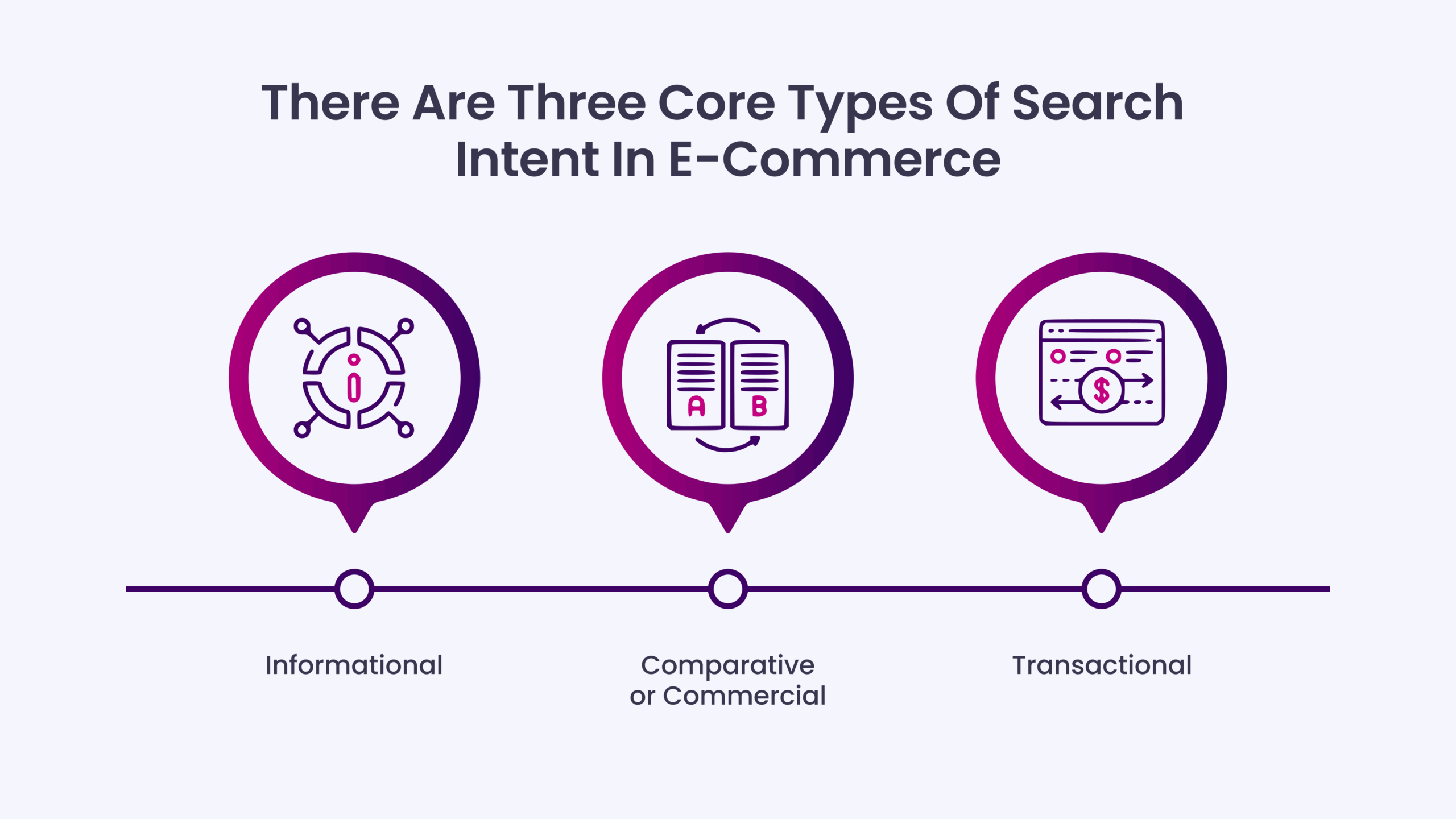
Informational: These individuals are gathering knowledge, not yet making a purchase.
Example: “how to clean white sneakers”
Use this intent to fuel blog content, how-to guides, FAQs, and educational pieces that build trust.
Comparative or Commercial: They’re weighing options.
Example: “best running shoes for flat feet” or “Adidas vs Nike running shoes”
This is your opportunity to position your brand, highlight its features, and provide honest comparisons.
Transactional: They’re ready to spend.
Example: “Nike Air Zoom Pegasus 40 size 9”
These are your money keywords. Optimize your product and category pages for these exact phrases.
When your keyword research for e-commerce aligns with the buyer’s intent, your content becomes more useful, your pages become more relevant, and your traffic becomes more qualified. You’re no longer just attracting visits, you’re attracting visitors who are more likely to take action.
Pro Tip: Utilize tools like Google’s “People Also Ask,” Reddit threads, Amazon auto-suggest, and even your customer support logs to understand what people care about at each stage of intent. This insight is one of the most underrated advantages in keyword research for e-commerce. It helps you write in a way that resonates with your audience.
Audit Current Queries
Before chasing new ideas, look at how people are already finding your store, even if your traffic numbers aren’t where you want them yet. Open Google Search Console and review the actual search terms triggering impressions and clicks. Ask yourself:
- Which pages are currently ranking?
- What phrases are showing up, even without clicks?
- Do those terms reflect what you’re trying to sell, or something else entirely?
This is one of the most overlooked steps in keyword research for e-commerce, but it’s where you get the truth. You’ll often find mismatches, blog posts ranking for terms unrelated to products, or category pages attracting traffic with outdated queries.
Fixing those disconnects is just as important as finding new keywords.
This provides a solid starting point, grounded in actual behavior. And it often reveals low-hanging wins: pages that are halfway visible but not yet converting. These early insights can guide and sharpen the rest of your keyword research for e-commerce strategy, ensuring you build forward, not sideways.
Study Real Search Behavior
Before you trust any keyword tool, go straight to the source: Google. Start typing phrases related to your products and pay close attention to:
- Autocomplete suggestions
- “People also ask” boxes
- Related searches at the bottom of the page
These clues show you how real users phrase their searches, and they often surface variations you wouldn’t have thought of.
Then cross-check those insights using tools like Keywords Everywhere, AlsoAsked, or AnswerThePublic. Each tool helps uncover patterns and phrasing that are actively being used, not just estimated.
This type of digging is one of the most underrated aspects of keyword research for e-commerce, as it helps you mirror real-world language instead of relying on generic SEO guesses.
These search signals come straight from user behavior, not hypothetical lists. The more your content reflects how people search, the better your store will perform. In short, if you want your keyword research for e-commerce to bring in qualified traffic, start by studying how people think.
Analyze Competitor Terms
Your competitors are already ranking for the searches you want. Instead of guessing what’s working for them, look. Pick 3-5 e-commerce sites that show up above you in Google; these can be direct competitors or larger brands in your category.
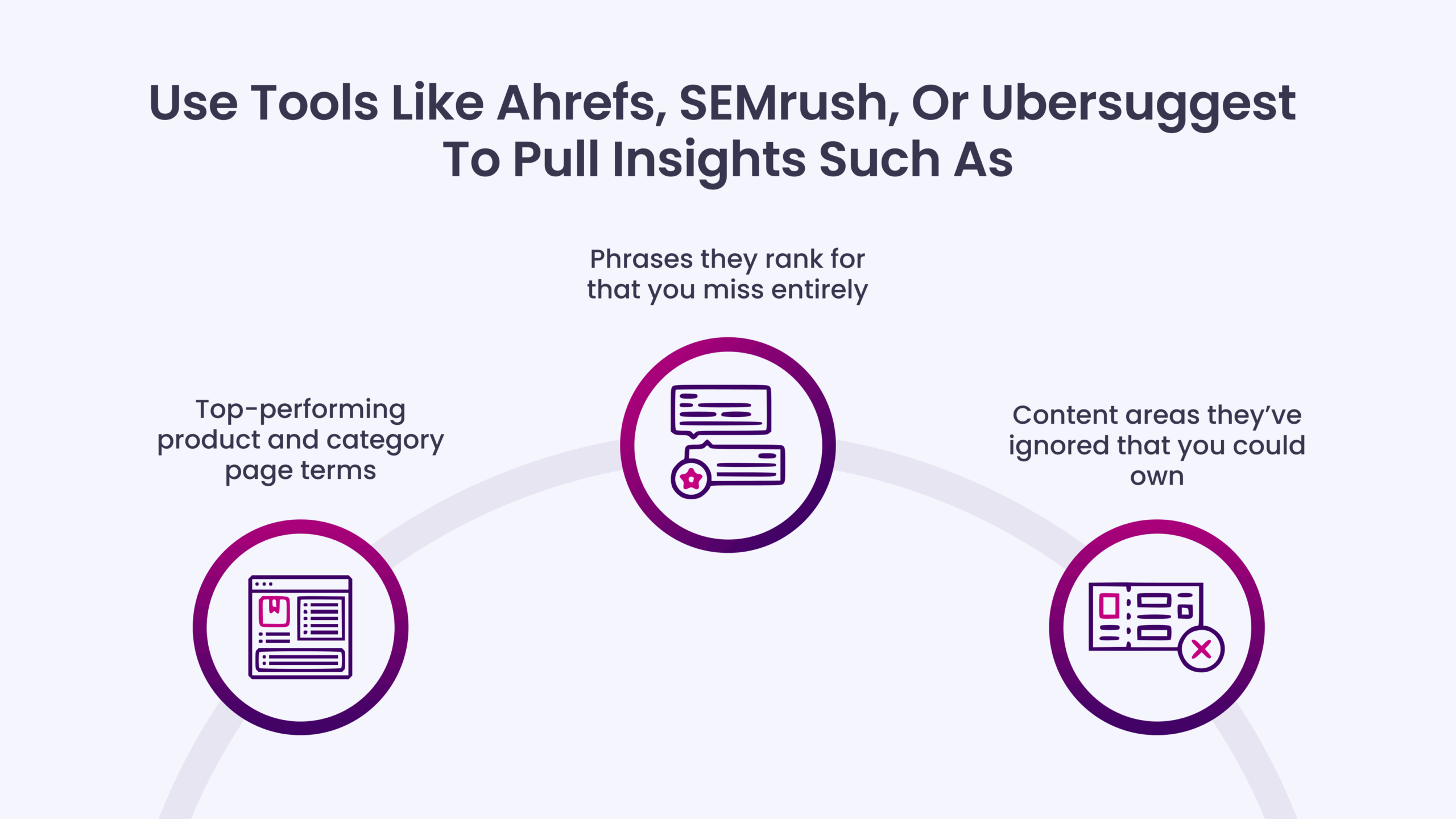
This is about reverse-engineering what’s driving their visibility, and then spotting the white space they’ve overlooked.
If done right, this step gives your keyword research for e-commerce a sharp edge: it stops you from shooting in the dark and helps you focus on what’s proven to attract buyers in your niche.
Build Topic Clusters
Treat your keywords like themes. Group related terms under a single topic, so each product category or buyer concern is supported by multiple, interconnected pages.
Example:
- “running shoes,” “trail running shoes,” and “best running shoes for flat feet” all fall under one product group
- That group can be served by a product page, a buyer’s guide, a comparison blog, and an FAQ
That’s a topic cluster. Apart from having a solid SEO structure, it also provides a better user experience. It allows people to explore deeper without bouncing off your site.
When conducting keyword research for e-commerce, this step transforms random terms into a comprehensive plan. You build clusters around each major product type, buyer problem, or intent level, so your store speaks directly to what people are looking for from multiple angles.
Google rewards depth and context. A standalone product page isn’t enough anymore. But when you connect it to helpful blogs, reviews, comparisons, and answers to real questions, your site becomes a stronger signal of authority. That’s how keyword research for e-commerce turns into rankings that last.
Prioritize High-Intent Phrases
Not all traffic is worth chasing. Your focus should be on terms that signal one thing: a clear indication of buying intent. These are the phrases people type when they’re choosing.
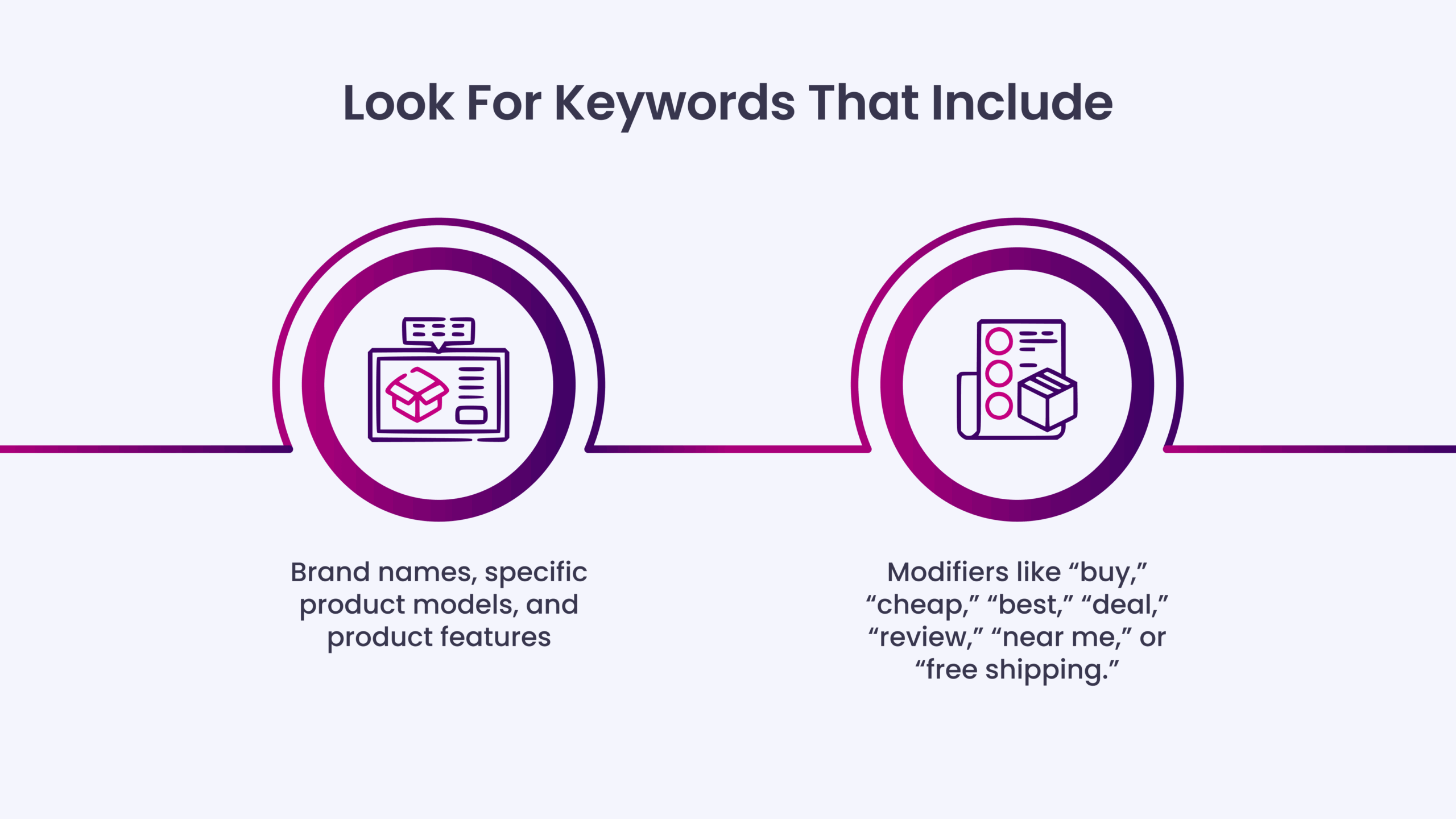
These terms tend to have lower search volume than broad terms, but much higher value. Use keyword tools with intent filters to isolate transactional or commercial queries. This helps you skip the window shoppers and speak to people who are ready to purchase.
In any keyword research for an e-commerce project, this is where the money is. It’s easy to get distracted by high-volume terms, but volume without intent drains your time.
Prioritizing high-intent terms ensures that your traffic consists of genuine prospects. It’s one of the fastest ways to turn keyword research for e-commerce into measurable sales.
Add Long-Tail Variations
Once you’ve covered the main phrases, go further. Long-tail keywords are longer, more specific search terms, think 4+ words that reflect exactly what someone wants. They’re lower in search volume, but higher in intent.
Example:
- Broad = “men’s shoes”
- Long-tail = “wide fit leather loafers for office wear”
Most stores ignore long-tail terms because they don’t look exciting on a spreadsheet. But that’s a mistake. These phrases are easier to rank for, face less competition, and attract people who already know what they’re looking for.
As you expand your keyword research for e-commerce, long-tail variations help you fill the gaps your competitors skip, and they’re often the fastest path to ranking new pages.
Long-tail searches may not generate a flood of clicks, but the visitors they attract are more likely to convert. That’s the whole point of smart keyword research for e-commerce.
Map Keywords to Pages
Once your keyword list is built, the next step is to match each keyword group to a specific page, or decide where you need to create a new one. This step transforms raw research into a structured format.
Here’s how to break it down:
- Homepage: Branded searches, store name, and broad product categories
- Category pages: General product types like “men’s running shoes” or “kitchen storage sets”
- Product pages: Model names, variations, and detailed features
- Blog content: Educational or comparison-based terms like “how to choose the right air purifier” or “best eco-friendly shampoo for dry hair.”
Avoid dumping all your terms on your homepage or cramming them into a single blog. It’ll confuse both users and search engines.
This is where keyword research for e-commerce becomes organized. Every keyword has a home. Every page has a purpose.
A clean keyword-to-page map prevents overlap, keeps your SEO tight, and avoids internal competition. It’s how strong site architecture takes shape, and how keyword research for e-commerce supports both rankings and user experience.
Balance Volume and Difficulty
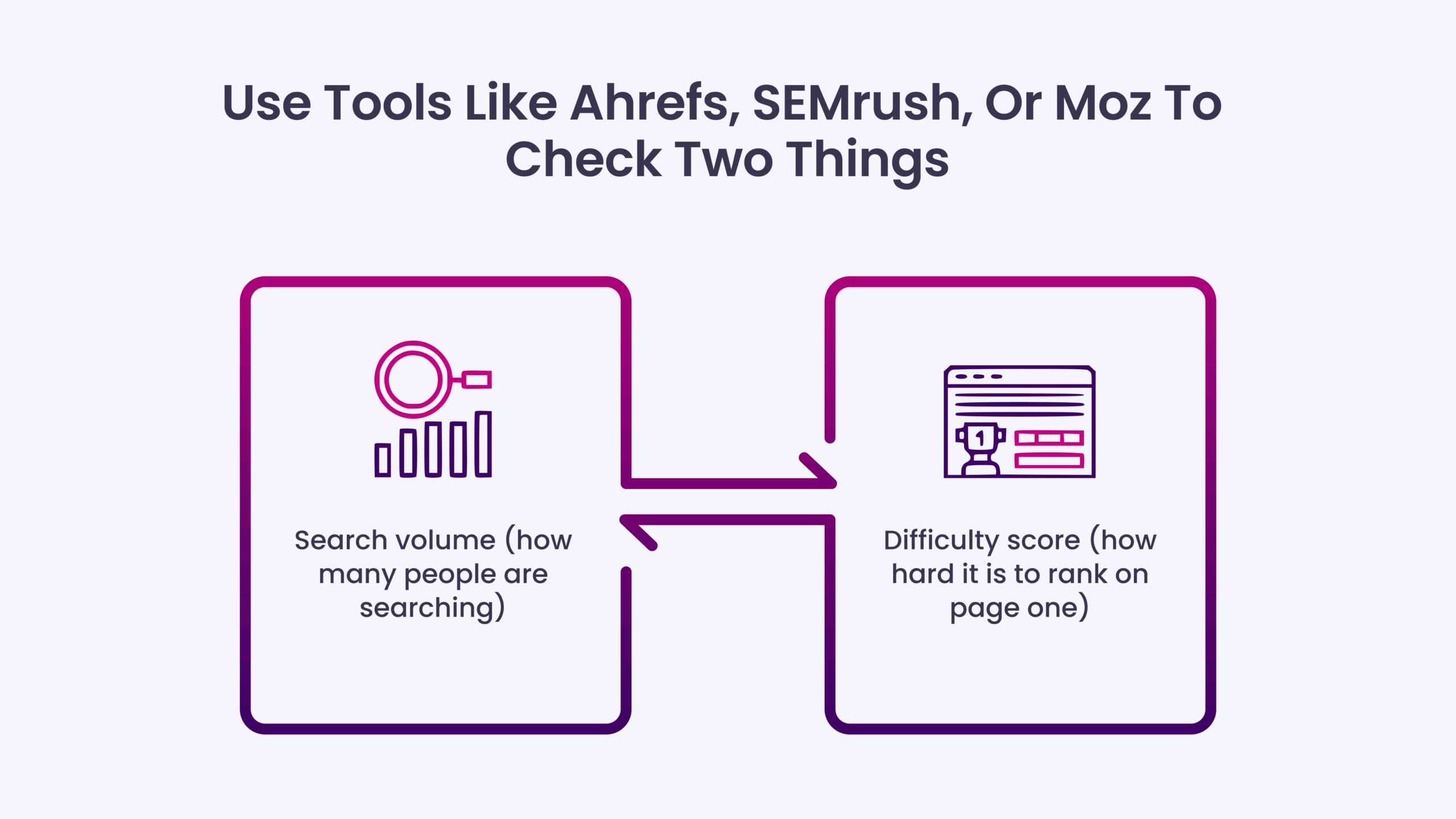
Early on, avoid targeting highly competitive search terms. You’ll waste time creating content that never sees the light of day.
Instead:
- Target mid-volume, low-difficulty terms to gain traction
- As your site earns backlinks and trust, gradually go after more competitive phrases.
A page that ranks well for a modest 300-search phrase will drive more clicks and sales than being buried on page five for a term with 30,000 monthly searches.
For effective keyword research for e-commerce, this step keeps your plan grounded in reality. It helps you build momentum with wins you can earn and turns your site into an authority over time.
Refresh and Refine Regularly
Keyword strategy isn’t a one-time task. Search behavior shifts, product trends emerge and fade, and new competitors enter the market. What worked six months ago might be stale today.
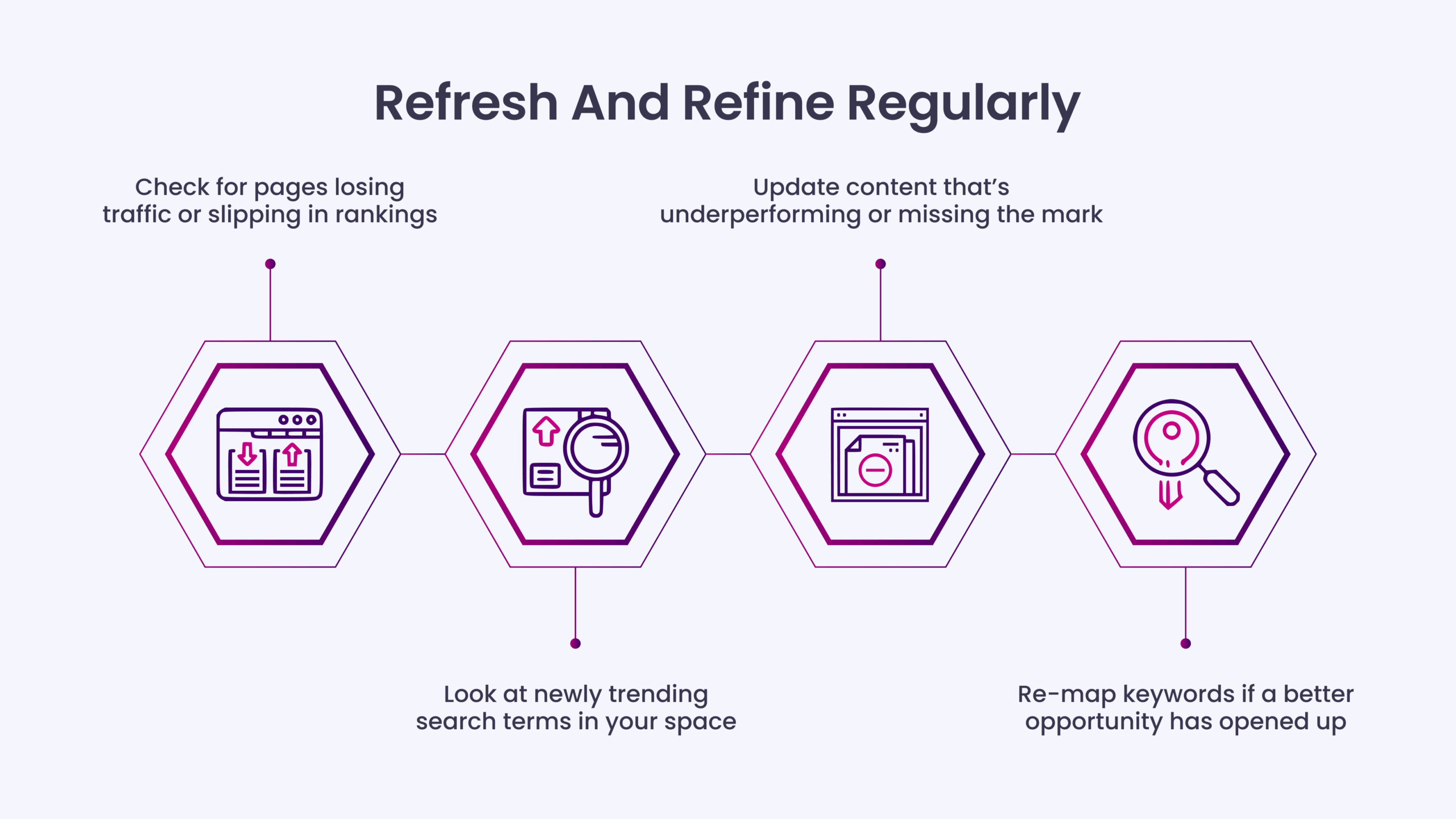
Build a habit of reviewing your keyword plan every 3-6 months. During each review:
- Check for pages losing traffic or slipping in rankings
- Look at newly trending search terms in your space
- Update content that’s underperforming or missing the mark
- Re-map keywords if a better opportunity has opened up
This ongoing check-in is what keeps your keyword research for e-commerce relevant and valuable.
E-commerce moves fast. The stores that climb in rankings aren’t always the biggest; they’re the ones that keep adapting. Refreshing your keyword research for e-commerce on a regular basis means you stay ahead of shifting demand, remain visible, and continue to be profitable.
You Focus on Sales. Let Experts Handle the Research.
Running an e-commerce business isn’t light work. You’re managing inventory, fulfilling orders, tweaking pricing, building campaigns, fixing bugs, handling returns, and still expected to bring in steady traffic on top of that.
However, keyword research for e-commerce involves extensive testing, adjusting, rewriting, and re-optimizing every month, while staying ahead of what your competitors are ranking for.
That’s not something you squeeze in between customer emails and product uploads.
If you want to win in search and turn traffic into revenue, you need someone who lives and breathes SEO. Someone familiar with keyword tools and knows how to apply them in the real world, across hundreds of product pages and evolving buyer intent.
That’s where a dedicated SEO team comes in. They track, test, and fine-tune your keyword strategy to keep your rankings climbing while you stay focused on what you do best: growing your store.
Grow Faster and Smarter with INSIDEA’s Digital Marketing Subscription

At INSIDEA, we deliver powerful digital marketing strategies that elevate your brand’s presence, attract the right audience, and drive measurable growth. Our expert team is dedicated to creating top-tier marketing solutions to meet your unique business needs. With in-depth industry knowledge, we craft customized strategies that align perfectly with your goals, all within our all-in-one digital marketing subscription.
Our comprehensive subscription includes everything you need to succeed in the digital space.
From Search Engine Optimization (SEO) that boosts your search rankings and drives organic traffic to WordPress Management, ensuring your website is visually appealing, highly functional, and optimized for conversions.
Our content marketing services establish your authority through engaging and insightful content. Social media marketing builds your presence across platforms with interactive and authentic strategies. Our email marketing solutions connect directly with your audience, driving engagement and conversions.
With INSIDEA’s all-in-one subscription, you can access these services seamlessly, supported by our dedicated digital marketing experts committed to delivering measurable results for your business.
Book a meeting with our experts to explore how we can help you achieve your business goals.



 How INSIDEA works