With a worldwide standing of over 30 million, standing out on Google isn’t just about viral products or sleek design. It’s about authority. And in the eyes of search engines, backlinks are the currency of credibility. A recent study reveals that the #1 Google result has 3.8 times more backlinks than those ranked 2 to 10. That’s not a coincidence: it’s a wake-up call!
Whether you run a cozy Shopify boutique, a booming WooCommerce store, or sell through Amazon, building a strong backlink profile is your backstage pass to higher rankings, more organic traffic, and ultimately, more sales.
In this blog, we’ll cover how to build backlinks for e-commerce websites, breaking it down for both beginners and seasoned marketers. From guest posting and influencer shoutouts to reclaiming brand mentions and creating content worth linking to, get ready for practical, proven tactics to build backlinks for e-commerce websites that drive results.
Why Build Backlinks for E-Commerce Websites?
Backlinks are one of the top off-page SEO ranking factors for Google. For e-commerce businesses, a trustworthy backlink profile offers multiple benefits:
- Higher Search Rankings & Traffic: Quality backlinks serve as a vote of confidence, enhancing your rankings and driving more organic traffic. Pages with more backlinks often rank higher, with top-ranking pages having 3.8 times more inbound links.
- Brand Trust & Credibility: Backlinks from trusted sites enhance brand authority and credibility, thereby improving your “E-E-A-T” (Experience, Expertise, Authority, Trustworthiness), particularly in sensitive niches such as health and finance.
- Referral Traffic & Sales: Backlinks can drive direct traffic and sales by connecting your store with high-traffic sites, like fashion blogs or viral posts.
- Competitive Edge: Backlinks can give you a competitive advantage in rankings, especially when competitors employ similar SEO strategies. 92% of SEO experts agree that competitors are actively building links, so you can’t afford to fall behind.
In short, build backlinks for e-commerce websites to prove your brand’s relevance to both search engines and shoppers.
Create Link-Worthy Content & Resources
Guest posting remains a top method to build backlinks for e-commerce websites. Here’s how:
In-depth Guides & How-To Articles: Long-form content (1,500- 2,000+ words) typically earns 77% more backlinks than shorter posts. Detailed guides, such as the “Ultimate Guide to Winter Hiking Equipment,” are valuable resources that others naturally link to. Content answering common “What” and “Why” questions or FAQs also attracts 25% more backlinks.
Infographics & Visual Assets: Infographics are highly shareable and often get embedded by other sites, generating backlinks. Consider creating infographics on industry trends or data, such as sustainable fashion facts for a clothing brand, which others will link to as a source.
Resource Lists & Directories: Offering a free tool on your site can differentiate your brand and attract valuable backlinks. Tools that address specific customer needs, such as calculators, quizzes, or size finders, become valuable resources for users. When people find your helpful tool, they are more likely to share it or reference it on their websites, generating organic backlinks.
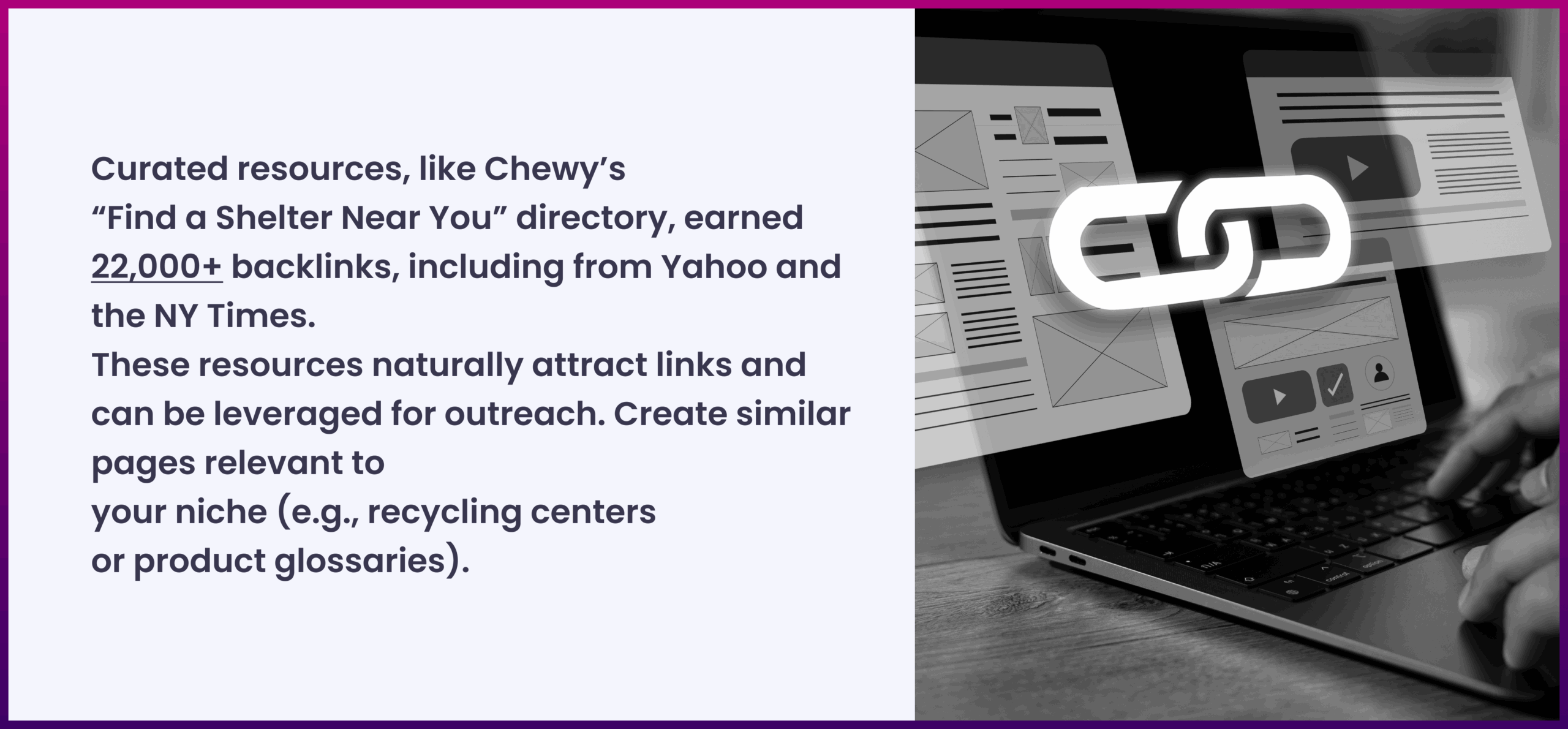
Interactive Tools or Calculators: Offering free tools or calculators, such as a dog food calculator, can drive significant backlinks. Tools addressing everyday customer needs, like quizzes or size finders, become powerful assets for link building.
Original Research or Data: Publish unique data, surveys, or insights. Writers love citing sources. For example, Blume’s study on teen girls’ experiences earned backlinks from high-authority sites like Forbes. New, unique data is valuable for attracting links.
Guest Posting on Relevant Websites
Guest posting remains a top method to build backlinks for e-commerce websites. Here’s how:
Choose the right sites: Target reputable industry blogs, publications, or niche websites that cater to your audience. Backlinks from relevant sites with high domain authority carry more SEO value and referral traffic. Use tools like Ahrefs or SEMrush to find guest post opportunities.
Pitch value-driven topics: Propose article ideas that align with the site’s content and offer value to its readers. Keep it helpful, not promotional, and highlight why you’re a good fit to contribute.
Provide quality content: Treat your guest post like your own blog content, well-researched, informative, and polished. Include natural links to your site where relevant, especially in your author bio, to maximize SEO impact.
Collaborate with Influencers and Bloggers
Collaborating with influencers can build backlinks for e-commerce websites in impactful ways:
Product Reviews & Features: Reach out to bloggers or YouTubers in your niche who specialize in reviewing products. Offer samples with no obligation for a review, which can result in backlinks when they mention your product. Product reviews can drive traffic and boost authority.
Sponsored Content & Affiliate Influencers: Partner with influencers for sponsored posts or affiliate deals. Ensure that links are tagged as “sponsored” or “nofollow” per Google’s guidelines. While these links may not pass full SEO value, they still offer referral traffic and exposure.
Influencer Guest Spots: Invite influencers or experts to contribute to your blog. They’ll likely share and link to the content, building backlinks. Likewise, guest post on their platforms to earn backlinks.
Choose Influencers Strategically: Prioritize influencers with their site or blog, as they can offer permanent backlinks. Niche micro-influencers may drive more meaningful traffic than celebrities. Approach collaborations as a two-way street to build genuine relationships and respect their compensation terms.
Utilize Digital PR & Media Coverage
Digital PR uses traditional PR tactics to gain online exposure and secure backlinks. For e-commerce brands, a creative campaign can attract press coverage, editorial links, and social buzz. Here are some strategies to consider:
Press-Worthy Story Angles: Pitch unique, newsworthy angles, such as product launches tied to trends or social causes. A compelling story, such as a sustainable fashion line, can attract press and backlinks from relevant publications.
Stunts, Events, or Contests: Host events, challenges, or social campaigns that catch the media’s attention. Quirky or charitable initiatives can result in coverage and backlinks.

Press Releases & Outreach: Craft compelling press releases that deliver real news and tailor outreach to journalists. Use services like HARO to respond to media queries, earning mentions and backlinks. HARO is used by 46% of link builders for link building, though success rates may vary. Make your outreach personal and provide helpful assets to increase your chances of coverage.
Aim for High-Authority Coverage: Target high-authority coverage from reputable sites like Forbes, BBC, or government domains to enhance your domain authority. Google’s search quality documents highlight that backlinks from major media outlets carry significant weight. Start with niche or local media, then expand as your brand grows. PR and SEO work together, and brand awareness can indirectly support link building by driving searches and mentions.
Reclaim Unlinked Brand Mentions
An easy way to build backlinks for e-commerce websites is to reclaim mentions:
Monitor mentions: Use tools like Google Alerts to track online mentions of your brand. Tools like Ahrefs and BuzzSumo can also identify unlinked mentions.
Identify unlinked mentions: If your brand is mentioned without a link, add it to a list for follow-up.
Reach out politely: Contact the author or webmaster with a friendly, brief request to add a link to your site. A polite ask is often well-received and enhances user experience.
Success rate and impact: Reclaiming mentions is relatively high success because you’re not coming out of the blue - you have a pre-existing connection (they mentioned you!). According to some accounts, this tactic is the quickest way to build high-quality backlinks. Every time you convert an unlinked mention, you gain a relevant backlink without creating new content or making a significant effort. It’s often just a one-sentence edit on their side.
Get Featured on Resource Lists and Link Roundups
Top 10 lists and resource roundups are goldmines for link building. Resource link building involves pitching your site to these page owners for inclusion, boosting your SEO, and driving targeted traffic.
There are a few ways to go a bout it:
Best-of Lists: Find “Best [Product]” or “Top [Industry]” articles and pitch your product or tool for inclusion. Highlight what makes it unique to showcase its value, and make it easy to find by providing a concise one-liner, a relevant URL, and a brief description.
Resource Pages: Identify relevant resource pages and suggest your site for inclusion. Use search operators like “inurl: resources” + [your keyword] to find them.
Link Roundup Posts: Find weekly or monthly link roundups in your niche and pitch your content for consideration. Reach out politely to increase brand visibility.
Local or Niche Directories: Search for reputable directories in your industry or local area to list your business. These provide quality backlinks and direct traffic.
When conducting outreach with resource links, keep it concise and respectful. Google Central Search (formerly called Webmasters) is often happy to update its list if your suggestion truly adds value.
And because those pages exist to link out to good resources, your request isn’t out of place - you’re helping them keep their resource fresh.
Example outreach template for a resource page:
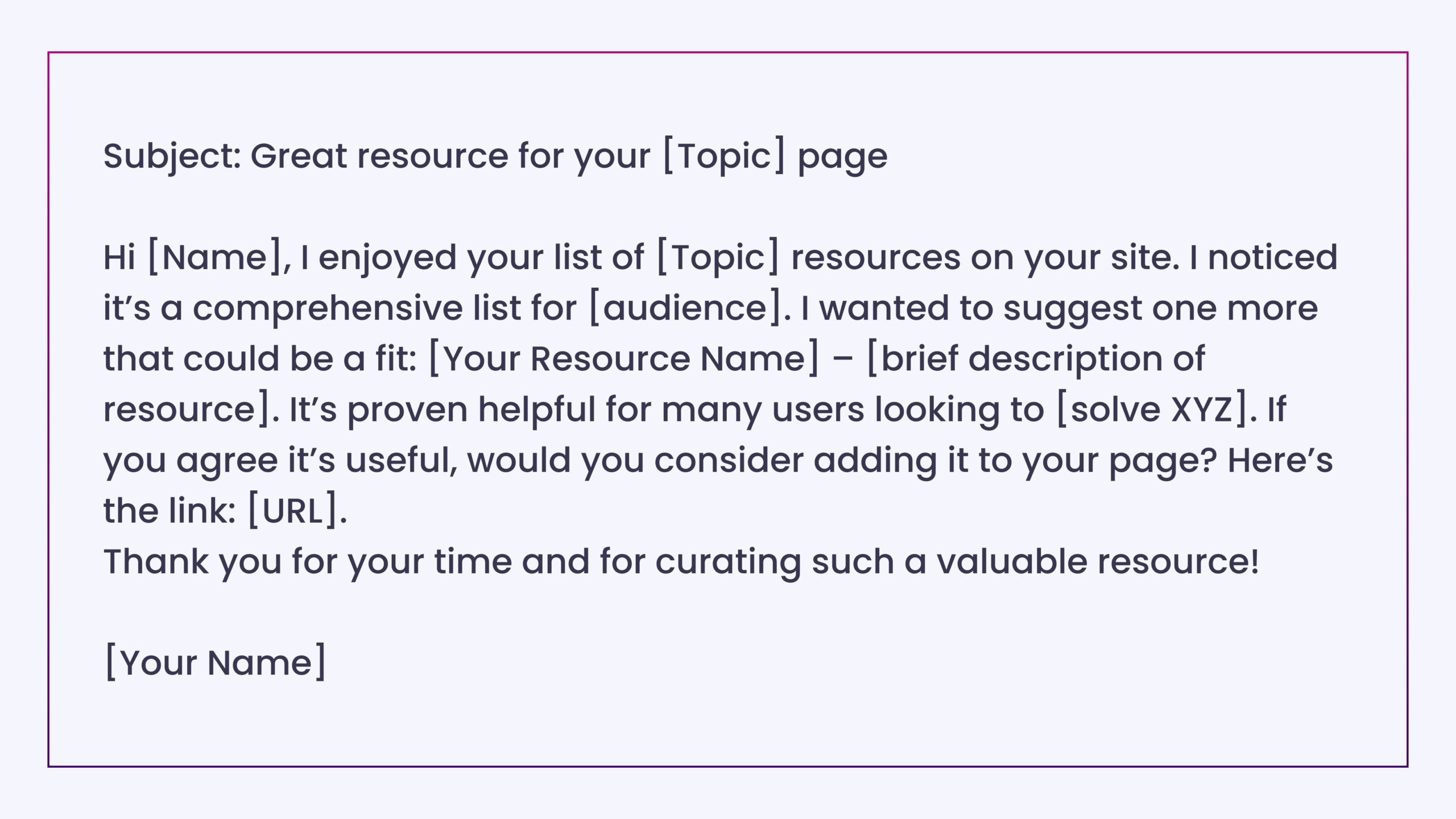
Now, remember not everyone will respond or act, but even landing a handful of these links can boost your link diversity. Also, being listed in “top X” lists directly drives qualified traffic (“Oh, this shop is one of the top 10, let me check them out!”), which is great for brand discovery.
Use Broken Link Building to Your Advantage
Broken link building involves finding broken links on a site and suggesting your content as a replacement. It’s a win for both you and the site owner, offering a quick SEO boost for e-commerce brands.
How to do broken link building:
- Find broken links: Use tools like Check My Links (Chrome) or Ahrefs Broken Link Checker to find 404 errors on niche sites or competitor pages.
- Identify a relevant replacement: Check the context of the broken link and see if you have similar content on your site that can be used as a replacement. If not, create an appropriate replacement, such as a blog post.
- Reach out and suggest your link: Contact the webmaster and politely inform them of the broken link. Suggest your content as an alternative: “We have a similar article that might be useful.”
- Two approaches: You can either match broken links to your existing content or recreate a competitor’s dead content and reach out to sites linking to it for an update.
- Tools to help: Ahrefs, SEMrush, and Moz can assist in identifying broken link opportunities. Alternatively, use search operators like “keyword + 404 page not found” to uncover dead content.
Broken link building requires effort, but the resulting links are of high quality and relevance. Be courteous and frame your outreach as a way to help improve their page, rather than criticizing it.
8. Analyze Competitors’ Backlinks
Your competitors’ backlinks are a goldmine. Identify where they’re getting links, offer something valuable, and target those same sources for your link-building efforts.
Steps to leverage competitor backlinks:
Use link analysis tools: Tools like Moz’s Link Intersect, Ahrefs, and SEMrush help you identify sites linking to competitors but not to you. Focus on sites that link to multiple competitors, as they’re more likely to link to you.
Examine link context: Check how competitors are linked through guest posts, product reviews, or resource pages, to tailor your outreach accordingly.
Reach out with value: Pitch your superior content or product to targeted sites. For example, offer a better guide or perspective on a topic that aligns with their content.
Offer content as needed: Create content, such as guest posts or case studies, to secure valuable links. This can help you target “low-hanging fruit” link opportunities.
Don’t chase every link: Focus on quality, relevant links from reputable sources. Avoid spammy sites and prioritize links that offer the most SEO value.
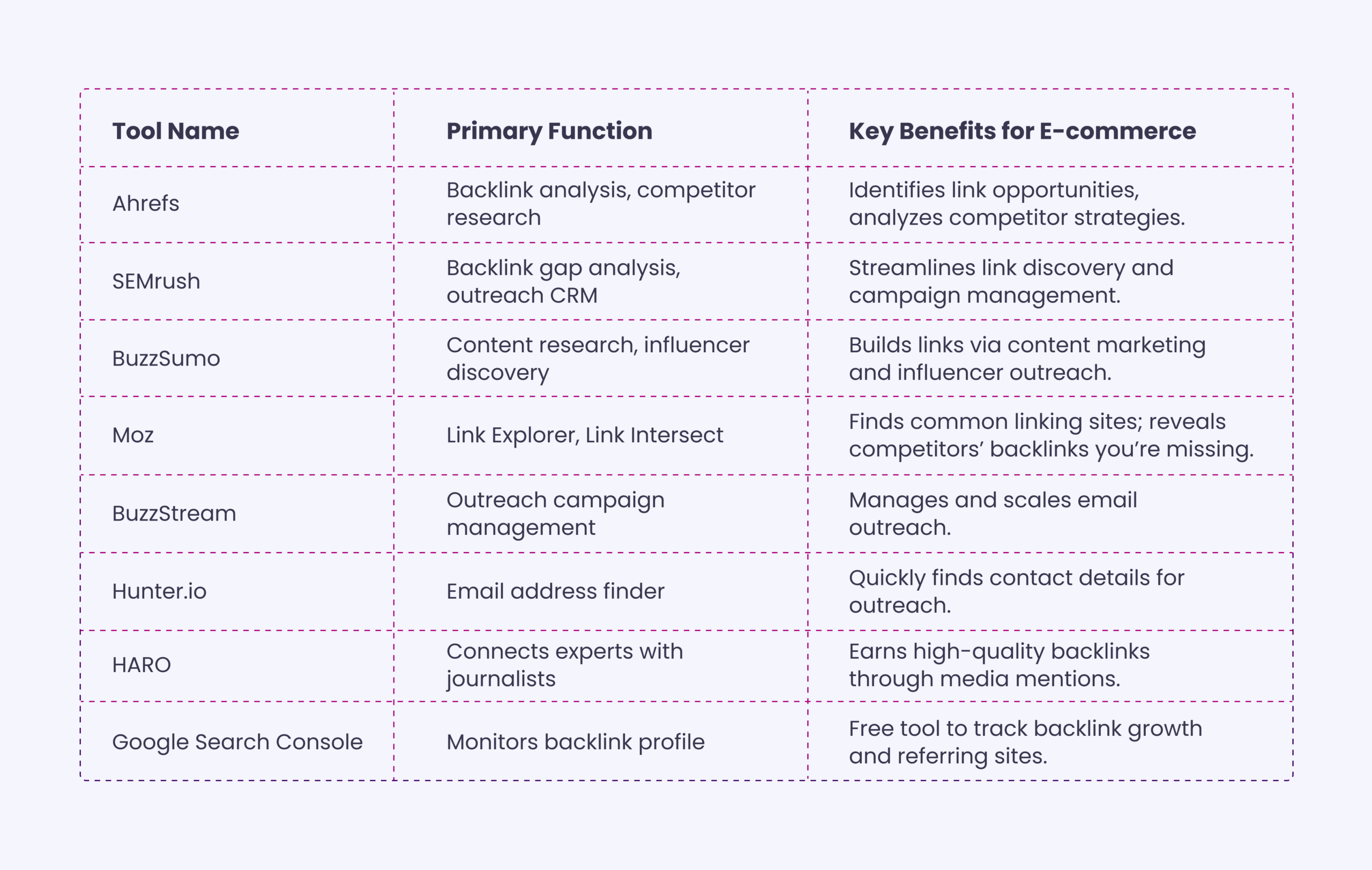
Use Tools to Streamline Your Backlink Strategy
Use the following to make it easier if you’re still wondering how tobuild backlinks for e-commerce websites efficiently:
How to Build Backlinks for E-Commerce Websites: A Step-by-Step Guide to Boost Your SEO is about combining strategy with persistence. Focus on creating value, building relationships, and using the right tools to scale smartly.
If you’re feeling overwhelmed, INSIDEA is here to help. We specialize in digital strategies that build backlinks for e-commerce websites and drive real results. Let us handle the link-building while you focus on growing your store.
Grow Faster and Smarter with INSIDEA’s Digital Marketing Subscription

At INSIDEA, we deliver powerful digital marketing strategies that elevate your brand’s presence, attract the right audience, and drive measurable growth. Our expert team is dedicated to creating top-tier marketing solutions to meet your unique business needs. With in-depth industry knowledge, we craft customized strategies that align perfectly with your goals, all within our all-in-one digital marketing subscription.
Our comprehensive subscription includes everything you need to succeed in the digital space.
From Search Engine Optimization (SEO) that boosts your search rankings and drives organic traffic to WordPress Management, ensuring your website is visually appealing, highly functional, and optimized for conversions.
Our content marketing services establish your authority with engaging, insightful content. Social media marketing builds your presence across platforms with interactive and authentic strategies.
Our email marketing solutions connect directly with your audience, driving engagement and conversions.
With INSIDEA’s all-in-one subscription, you can access these services seamlessly, supported by our dedicated digital marketing experts committed to delivering measurable results for your business.
Book a meeting with our experts to explore how we can support your business goals.



 How INSIDEA works