If you’re only looking at what your competitors rank for, you’re seeing half the picture.
The real gold is in what they don’t rank for. The topics they missed. The questions they left unanswered. The customer concerns they skipped. That’s where content gap analysis comes in, and it’s where e-commerce brands can quietly pull ahead without outspending anyone.
96.55% of content never sees a single visit from Google. In most cases, it’s not due to poor quality; it simply doesn’t reflect what people are searching for. For e-commerce stores, that’s traffic (and sales) going straight to someone else.
Most e-commerce content sounds the same. Everyone’s got a “Top 10” list, a vague product description, and a generic blog post nobody reads. But the stores that win publish what people are searching for: those overlooked queries, unaddressed comparisons, and how-tos that close the sale.
That’s what content gap analysis helps you spot and fix. It’s about identifying where your competitors stopped short and going further.
In this blog, I’ll walk you through how to run content gap analysis the smart way, using competitor research to find what’s missing, fill it with value, and rank where others don’t.
How to Spot and Fix Content Gaps with Content Gap Analysis
Content gap analysis is a methodical process that tells you:
- What your audience is searching for
- What your competitors have covered
- And most importantly: what they’ve missed
Here’s how to approach it like a pro:
1. Identify Competing Ranking Pages
Before you figure out what’s missing, you need to know who’s already taking up space in search results. Start by identifying which pages are currently ranking for the kinds of queries your potential customers are typing into Google, especially across your top product categories.
For content gap analysis, any site that’s getting in front of your audience counts. That means:
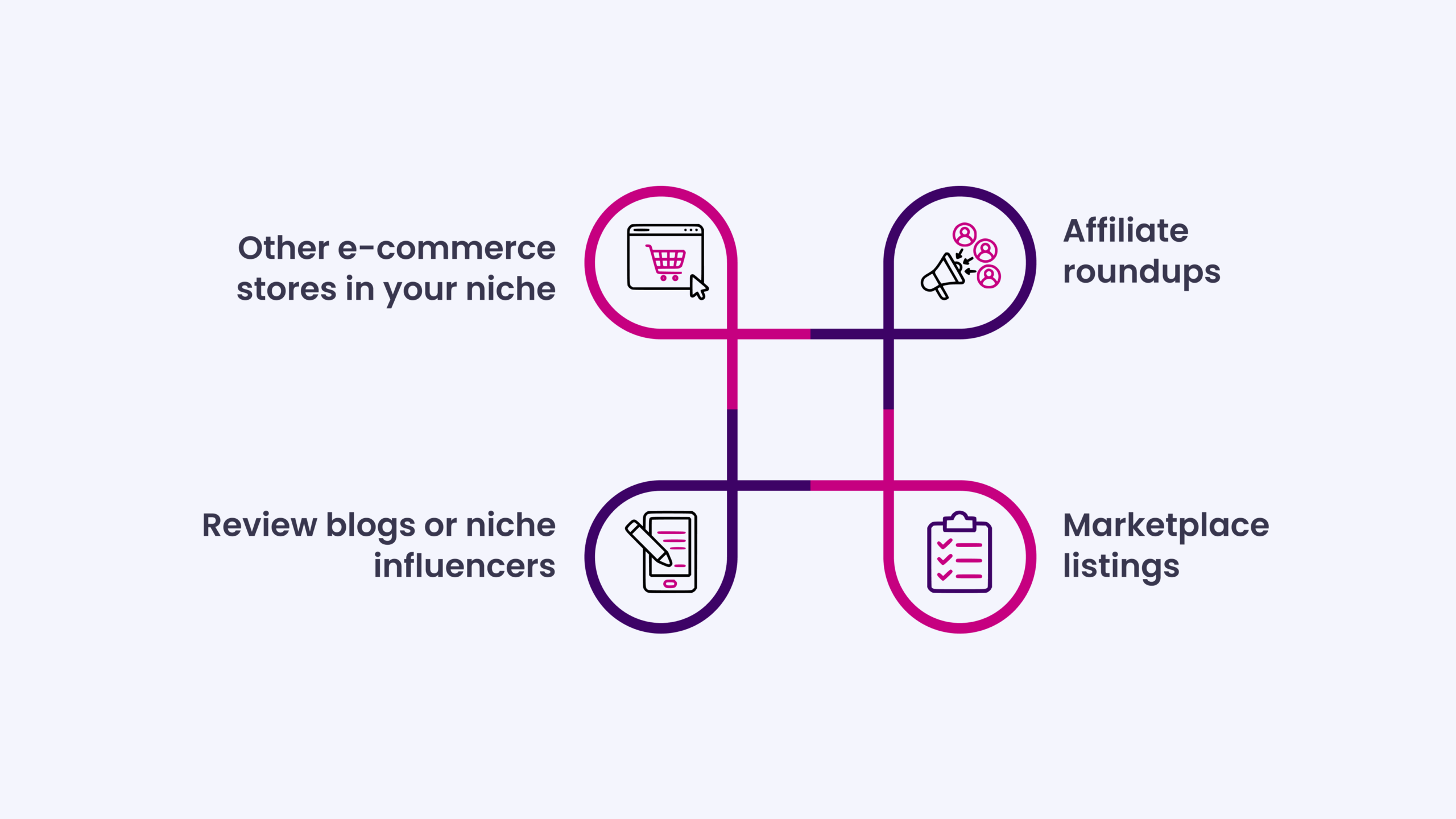
Focus on the top 3 results; these pages are getting the lion’s share of clicks. Analyze what formats they’re using (product pages, blogs, videos), what topics they’re covering, and how they’re structuring their content.
This first step isn’t about copying. It’s about mapping the current landscape so you can see which questions are already being addressed and which ones have been left unanswered. That’s the foundation of effective content gap analysis.
2. Extract Their Search Traffic Terms
Once you’ve identified your content competitors, it’s time to dig into how they’re getting found. Use tools like Ahrefs, SEMrush, or Ubersuggest to pull the actual search terms driving traffic to their site.
Don’t just skim the surface. Look specifically for:
Export the complete list, sort it by URL or traffic volume, and examine the pages associated with their top-performing keywords. This will show you what they’ve already built content around, and how they’re winning attention.
But here’s where content gap analysis earns its place: when you review this keyword data alongside your own, you’ll see clear patterns. What are they ranking for that you’re not? And just as important, what aren’t they ranking for at all?
This step gives you hard evidence. It’s not guesswork. It’s the raw input you’ll use to steer a smarter content gap analysis that surfaces missed opportunities and helps you create content with actual value.
3. Map Missing Topics and Queries
This is where the gaps start to surface.
Take the list of ranking keywords and content you pulled from your competitors, and lay it side by side with what you currently have. Use a simple spreadsheet to track which questions, themes, or formats your competitors are covering that you haven’t touched yet.
These gaps will usually fall into a few clear categories:
- Category gaps - Perhaps they have detailed guides for “gifts under $50” or “eco-friendly kitchen tools,” but you have nothing beyond a category page.
- Format gaps - They’ve written comparison blogs or FAQs, but your content stops at product descriptions.
- Intent gaps - They’re pulling in top-of-funnel traffic with how-to content, while your site only speaks to buyers ready to purchase.
This process is the backbone of content gap analysis. You’re not just finding topics; they’re clues about what your audience is already searching for but not yet finding on your site.
Done right, a content gap analysis provides a prioritized list of content to build. It’s your chance to answer real buyer questions better, earlier, and more completely than the competition.
4. Review SERP Format and Intent
Not all content ranks just because it answers a question. Google prefers specific content formats based on what users expect to see, and understanding this is a crucial part of smart content gap analysis.
Search the queries you’ve flagged as missing from your site. Then look closely at what’s ranking in the top results:
- Are they product pages with strong metadata and reviews?
- Are they blog posts offering detailed guides or comparisons?
- Do you see videos, especially for how-tos or reviews?
- Are listicles or visual-heavy explainers dominating the page?
Then ask: what’s the user trying to do? Are they researching options, comparing features, or planning to make a purchase today?
When you match both format and intent, your content feels natural in the search results, which increases the odds that it’ll earn clicks. It’s not just about writing more; it’s about aligning with what people want to see and what Google is already rewarding.
This is where content gap analysis moves from “what’s missing” to “what’s worth building next.”
5. Build What Competitors Ignored
Here’s where the work pays off.
You’ve found what your competitors missed. Now it’s your move. But don’t just crank out another 500-word blog post to check a box. Create content that’s sharper, more detailed, and useful to your buyers.
Start with what they skipped. Build:
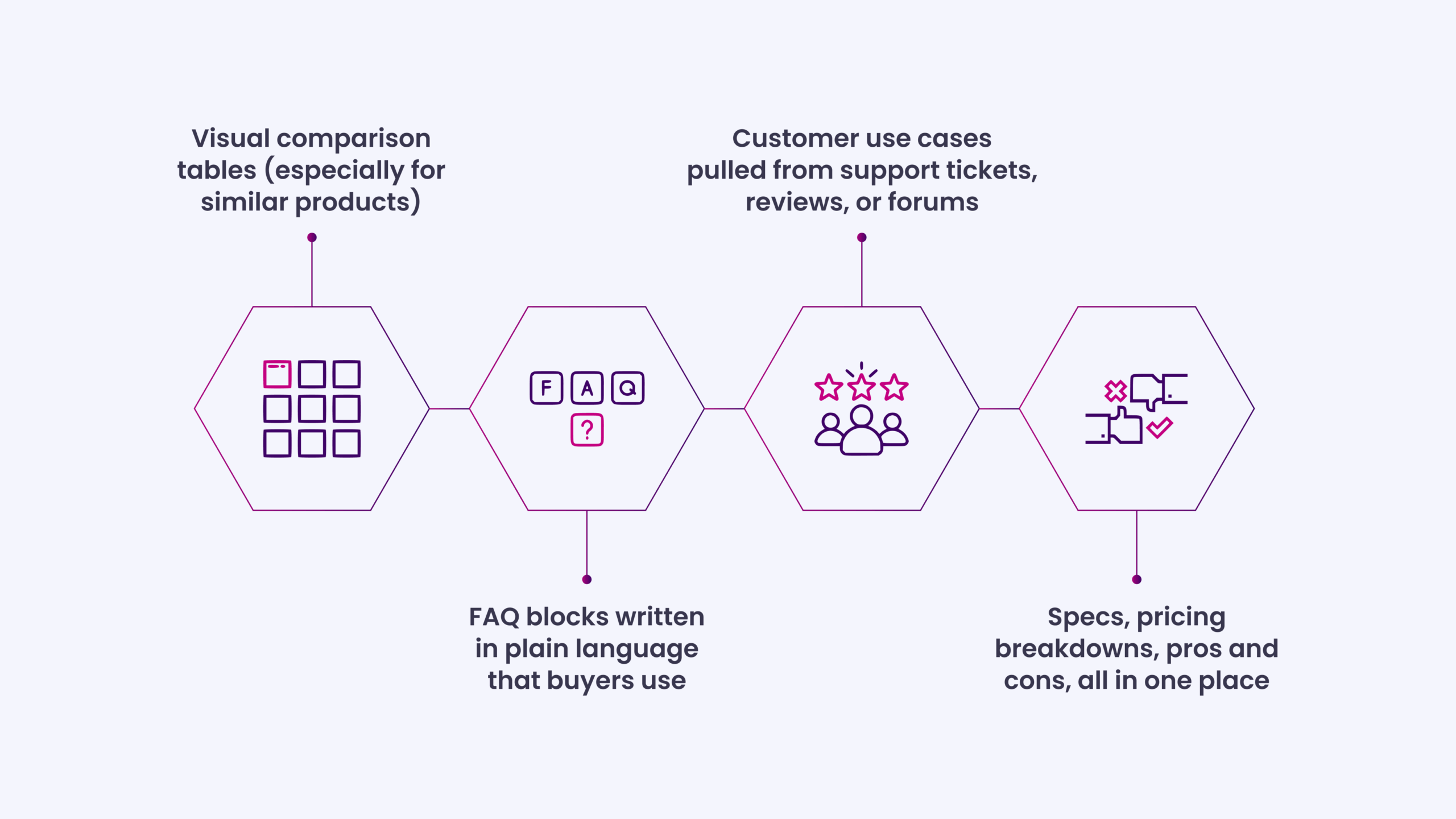
The aim isn’t volume. It’s precision. With every new page, you should address something your competitors have left vague, shallow, or untouched.
That’s the edge of good content gap analysis: it’s not about copying what exists, it’s about spotting the cracks in it and then filling those cracks with something better.
When you do, you don’t just earn rankings. You earn trust.
6. Link Content to Strengthen Authority
Don’t let your new content float around like an island.
Once you’ve filled a gap, it needs to connect, both for your visitors and for search engines. Internal linking is how you turn isolated posts into a network that signals authority and depth.
Here’s how to do it right:
- Add links from related blog posts that support the same topic
- Connect product and category pages to your new guides or comparisons.
- Create loops that keep users exploring (e.g., from FAQ → product → review)
The goal is to reinforce your relevance on a topic. Strong internal linking tells Google that your site doesn’t just cover one angle, it covers it entirely.
In the context of content gap analysis, linking pulls everything together. It’s how your insights don’t just rank, but rise above the rest.
7. Benchmark Against SERP Features
Ranking #1 isn’t the only goal anymore. These days, Google fills the results page with carousels, featured snippets, videos, “People Also Ask” boxes, and more, and they grab serious attention.
So when analyzing content gaps, don’t just look at who is ranking. Look at how the search results are being presented.
Here’s what to assess:
- Is there a featured snippet? → You could win it with a tighter definition, bulleted steps, or clearer formatting.
- Are videos showing up? → Consider adding short explainer clips or demos.
- Are images or shopping carousels visible? → Optimize your visuals and product markup to show up there.
- Does Google show FAQs? → Add structured FAQ content to your product or blog pages.
You’re not just publishing more content, you’re shaping it to match how Google delivers answers now.
This step in content gap analysis helps you meet both the searcher’s intent and the platform’s behavior, putting your content in all the right spots.
8. Track Changes and Refine Content
Creating content is just the beginning. Keeping it functional is the real challenge.
Search behavior evolves constantly. New products launch. Competitors publish fresh content. Google shifts what it rewards. If your content sits untouched for too long, even well-optimized pages can lose traction.
That’s why your content gap analysis needs a follow-up loop.
Make it a habit to revisit your analysis every 3 to 4 months. When you do, check for:
- New competitors outranking you for your core terms
- Pages that dropped in traffic or position
- New questions showing up in “People Also Ask” or search autosuggestions
- Content formats that are now dominating (maybe video is taking over text)
Then take action. Expand guides that are working but shallow. Re-optimize older content to reflect updated product details or buying behavior. Add new internal links where they are relevant and make sense.
This is what separates one-hit content from long-term traffic drivers.
Effective content gap analysis involves building a system that continually adapts, improves, and outpaces the competition on a quarterly basis.
You Can’t Fill the Gaps Blindfolded
Spotting content gaps isn’t just about running a few reports or copying what’s ranking. It’s about asking the right questions, seeing what others overlook, and turning missed opportunities into traffic that converts.
But here’s where it gets tricky: what works today might not hold tomorrow. Competitor content changes. Algorithms shift. SERPs evolve. Keeping track of it all is a full-time loop of testing, tweaking, comparing, and continually improving.
That’s where experienced marketers come in.
Not AI tools. Not plug-and-play templates. But actual experts who know how to read data, sense intent, and A/B test content angles until something sticks, and then refine it, make all the difference.
While you stay focused on running your store, they stay focused on what’s missing, what’s working, and what’s next. That’s how brands stop chasing rankings, and start owning them.
Grow Faster and Smarter with INSIDEA’s Digital Marketing Subscription

At INSIDEA, we deliver powerful digital marketing strategies that elevate your brand’s presence, attract the right audience, and drive measurable growth. Our expert team is dedicated to creating top-tier marketing solutions to meet your unique business needs. With in-depth industry knowledge, we craft customized strategies that align perfectly with your goals, all within our all-in-one digital marketing subscription.
Our comprehensive subscription includes everything you need to succeed in the digital space.
From Search Engine Optimization (SEO) that boosts your search rankings and drives organic traffic to WordPress Management, ensuring your website is visually appealing, highly functional, and optimized for conversions.
Our content marketing services establish your authority with engaging, insightful content. Social media marketing builds your presence across platforms with interactive and authentic strategies. Our email marketing solutions connect directly with your audience, driving engagement and conversions.
With INSIDEA’s all-in-one subscription, you can access these services seamlessly, supported by our dedicated digital marketing experts committed to delivering measurable results for your business.
Book a meeting with our experts to explore how we can support your business goals.



 How INSIDEA works