Pest control is a service people seek when they have a problem. That urgency is both an opportunity and a challenge. If your business does not appear when someone searches for “termite treatment near me” or “bed bug exterminator in [city],” that lead goes to a competitor within seconds.
The US pest control industry is worth over $26 billion and continues to grow, but the market remains fragmented. Independent operators and regional companies compete with national franchises that have large advertising budgets. Winning leads in that environment requires a clear system, not random effort.
This blog explains how pest control companies can build a lead-generation system that delivers consistent, trackable results across multiple channels.
Ultimate Lead Generation Guide for Pest Control Firms
This is how pest control companies can move from occasional inquiries to consistent lead flow:
Build Your Google Business Profile First
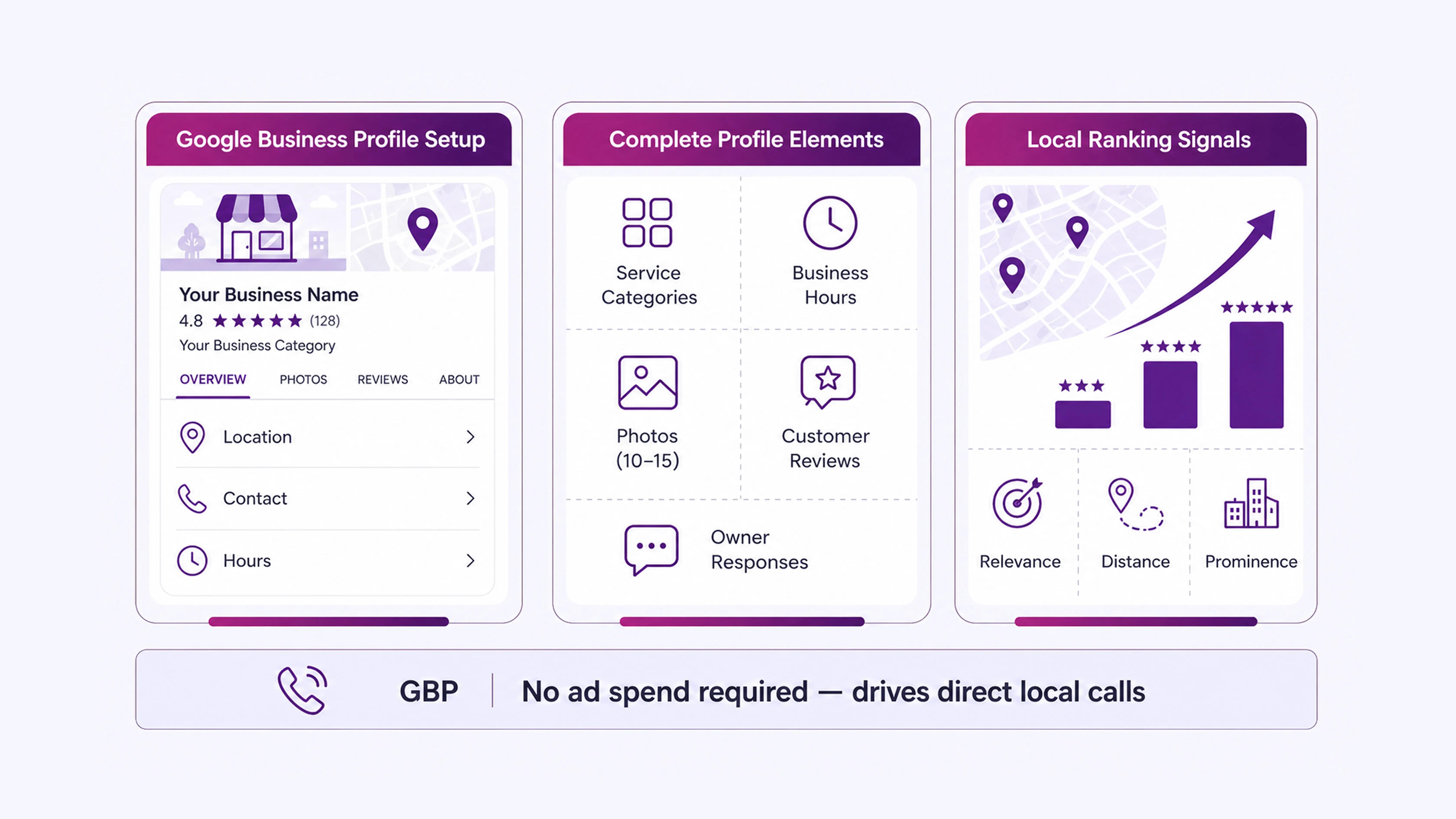
Before spending anything on ads, your Google Business Profile (GBP) needs to be complete and active. This is the listing that appears in Google Maps and the local pack results when someone searches for pest control in your area.
A complete GBP includes:
- Accurate business name, address, and phone number
- All service categories selected (general pest control, termite control, wildlife removal, etc.)
- Business hours updated for holidays and seasonal changes
- At least 10-15 photos of your team, vehicles, and equipment
- A consistent stream of customer reviews with responses from your side
Google ranks GBP listings based on relevance, distance, and prominence. Businesses that update their profiles regularly, respond to reviews, and post service updates tend to rank higher in local results. This costs nothing except time, and it directly affects how many people call you.
Local SEO: Rank for the Searches That Matter
Local SEO is the process of getting your website to appear in organic search results for location-specific queries. For pest control, the most valuable searches include terms like “pest control [city name],” “exterminator near me,” and specific pest types combined with location.
To rank for these terms, your website needs:
Service pages by location: If you serve multiple cities or neighborhoods, create a separate page for each one. A page titled “Pest Control in [City Name]” with relevant content about local pest issues performs better than a generic homepage.
On-page basics: Each page should have a clear title tag, a meta description, and headers that reflect its content. Include your city name naturally in the content without stuffing keywords.
Backlinks from local sources: Links from local business directories, the Chamber of Commerce, local news sites, and industry associations help establish your site’s authority in your area.
Page speed and mobile performance: Most pest control searches happen on mobile devices. A site that loads slowly or displays poorly on a phone loses conversions before a visitor even reads your content.
Local SEO takes three to six months to show meaningful results, but the leads it generates are organic, consistent, and do not require ongoing ad spend.
Google Local Services Ads: Pay Per Lead, Not Per Click
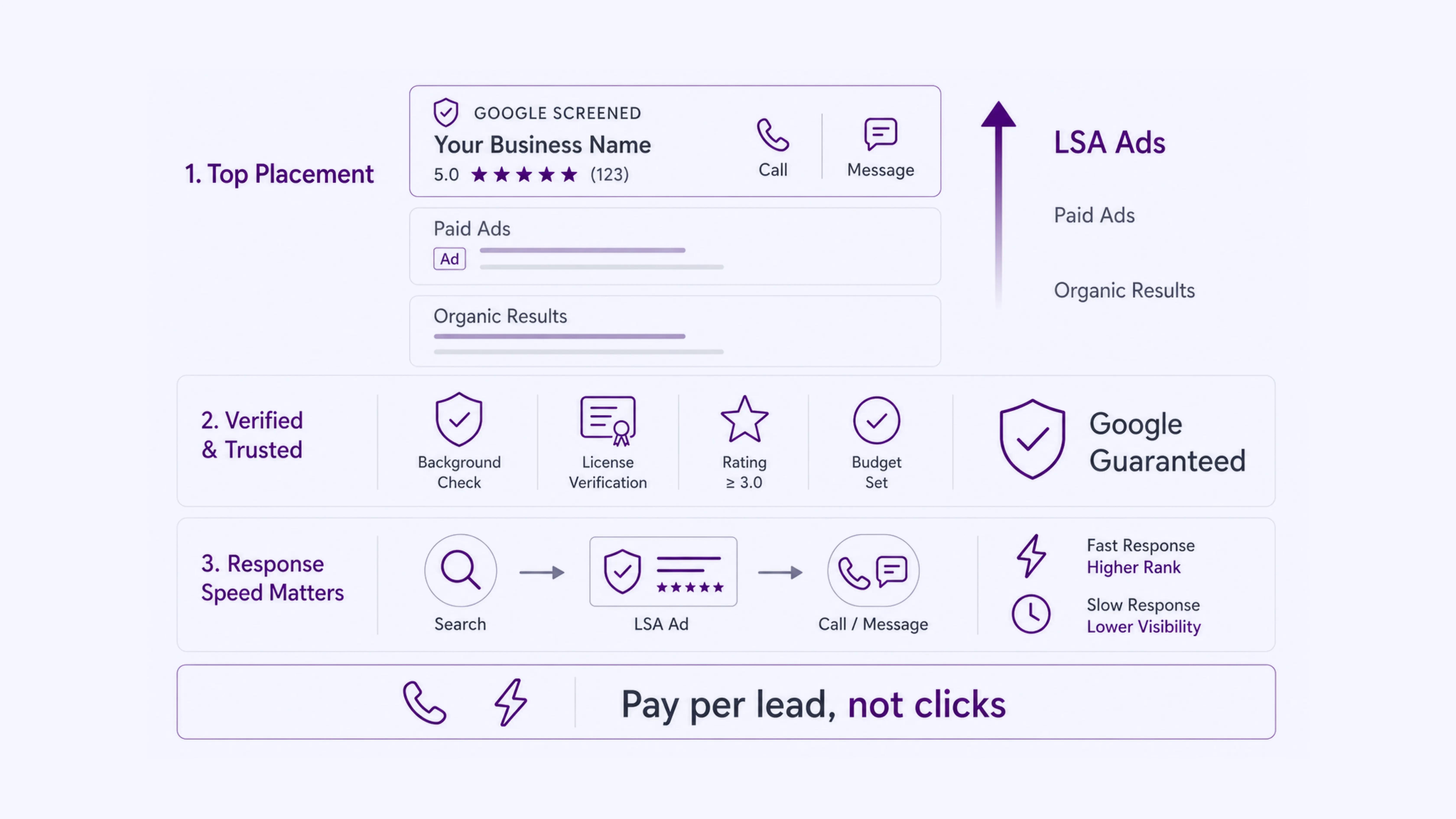
Google Local Services Ads (LSAs) appear at the very top of search results above standard paid ads. Unlike traditional pay-per-click campaigns, LSAs charge you only when a potential customer contacts you directly through the ad, either by calling or messaging.
To run LSAs, pest control companies need to:
- Pass Google’s background check and license verification
- Maintain a minimum star rating (typically 3.0 or higher)
- Set a weekly budget based on how many leads you want
The “Google Guaranteed” badge that comes with LSA approval builds immediate trust with searchers. Studies have shown that this badge increases click and contact rates compared to standard ads.
LSAs work best for companies that respond to leads quickly. Google’s algorithm factors in your response rate and speed when deciding how often to show your listing. If you miss calls or respond slowly, your visibility drops.
Pay-Per-Click Advertising: Targeted Reach With Full Control
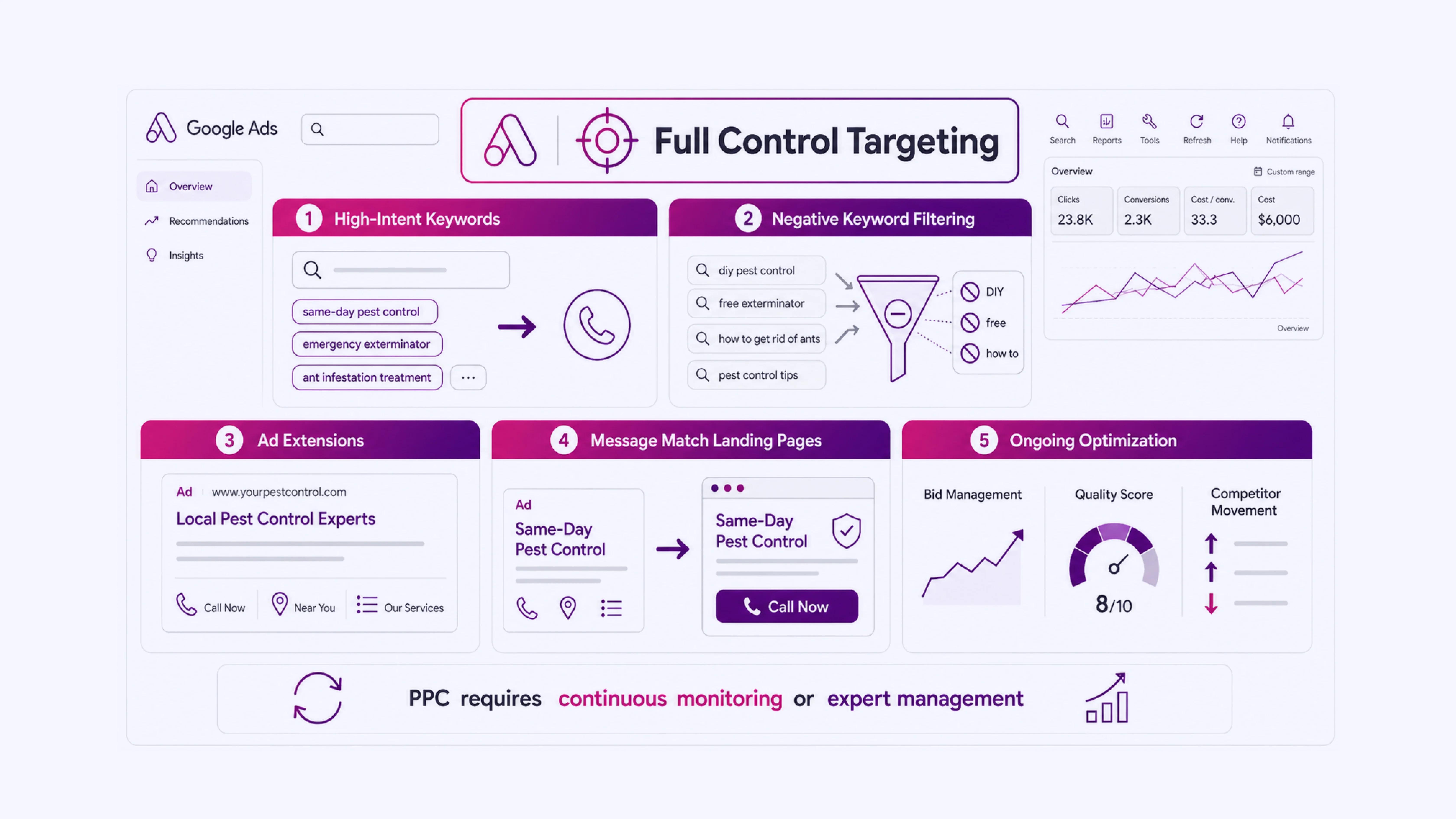
Standard Google Ads (PPC) gives you more flexibility than LSAs. You can target specific pest types, services, or seasonal concerns, set geographic boundaries precisely, and control the messaging.
For pest control, effective PPC campaigns focus on:
- High-intent keywords: “same-day pest control,” “emergency exterminator,” “ant infestation treatment.”
- Negative keywords: filter out searches like “DIY pest control” or “free pest removal” that are unlikely to convert
- Ad extensions: include your phone number, service list, and location directly in the ad
- Landing pages: each ad should send visitors to a page that matches the ad’s promise, not your homepage
PPC requires ongoing management. Bids, quality scores, and competitor activity change regularly. Either dedicate time to monitoring campaigns weekly or hire someone with documented experience in pest control or home services advertising.
Reviews and Referrals: The Channels Most Companies Underuse
Word of mouth has always driven the pest control business, but it now plays out on Google, Yelp, and Facebook rather than just between neighbors. A company with 200 five-star reviews on Google will consistently outperform a competitor with 20 reviews, regardless of how much either spends on ads.
Getting more reviews:
- Ask for a review at the moment of highest satisfaction, which is right after a successful treatment
- Send a follow-up text or email with a direct link to your Google review page
- Make the process as simple as possible. A two-step link is better than asking someone to find you on Google
Building a referral program:
- Offer a discount or account credit to existing customers who refer a new paying client
- Mention the program at the end of service calls and in follow-up communications
- Track referral sources so you know which customers are most likely to send others
A referral lead converts at a higher rate than any paid lead because it comes with a built-in endorsement. These programs cost very little to run and produce compounding returns over time.
Your Website’s Job Is to Convert, Not Just Attract
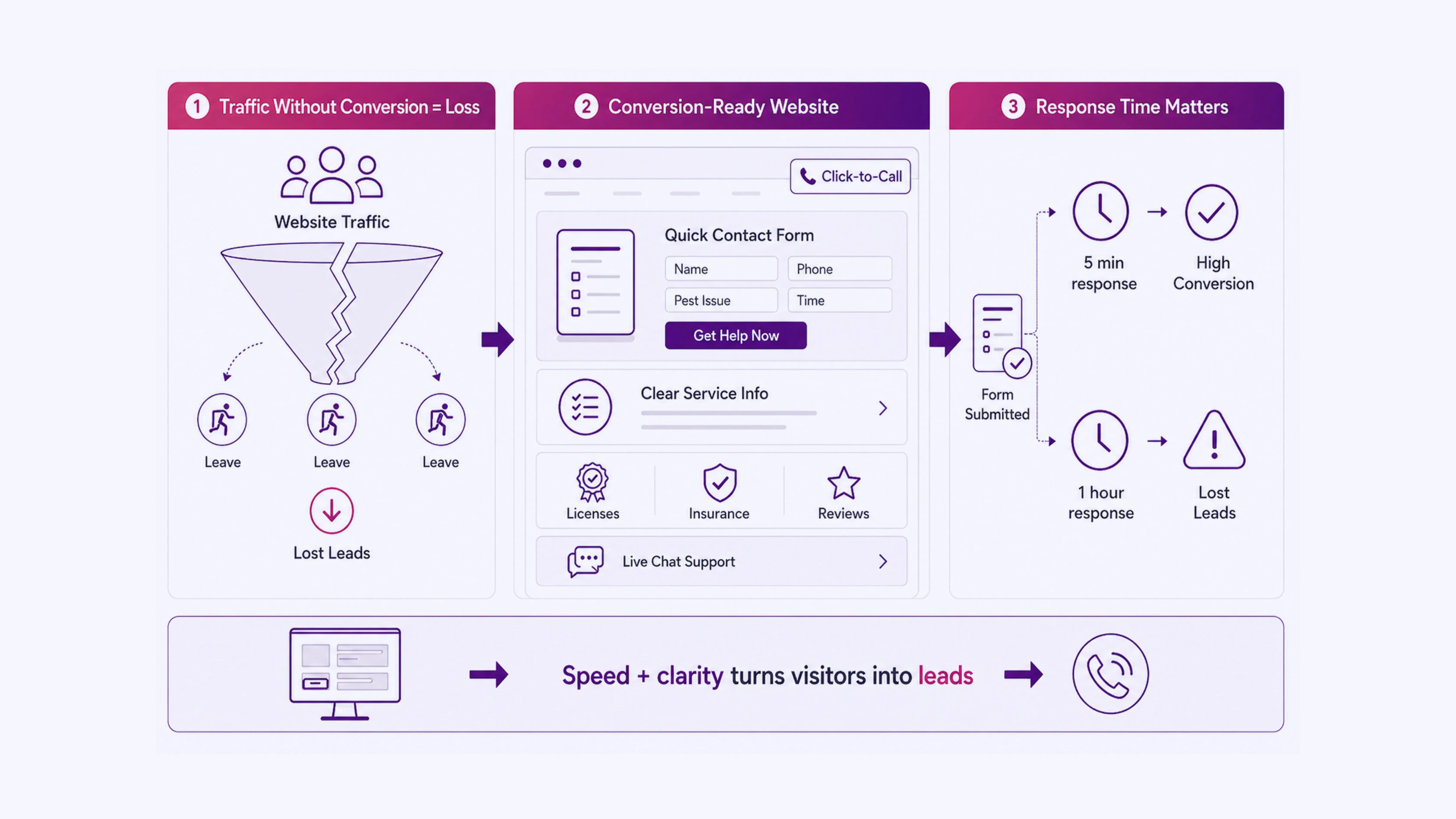
Traffic without conversion is wasted effort. Many pest control websites attract visitors but lose them because they make it difficult to take the next step.
A website that converts leads consistently will have:
- A phone number in the top right corner of every page, click-to-call on mobile
- A short contact form above the fold on the homepage (name, phone, pest issue, preferred time)
- Clear service descriptions that explain what the treatment involves and what results to expect
- Trust signals: licenses, insurance confirmation, years in business, review count
- A live chat or chatbot option for visitors who prefer not to call
Response time after a form submission is critical. Research across service industries shows that responding to a web lead within five minutes dramatically increases the chance of conversion compared to responding an hour later. Automate an immediate acknowledgment text or email while a human follows up.
Seasonal Strategy: Adjust Spend Based on Demand Cycles
Pest activity follows predictable seasonal patterns. Ants and mosquitoes peak in spring and summer. Rodents move indoors in the fall and winter. Termite swarms appear in spring in most regions.
Your marketing budget should reflect this. Increasing ad spend two to three weeks before a pest’s active season positions you ahead of demand rather than reacting to it. Running mosquito treatment ads in February wastes budget. Running them in late March, when people start planning for the outdoor season, captures early buyers.
Email and SMS campaigns to existing customers work well for seasonal upsells. A customer who bought a general pest plan in spring is a reasonable prospect for a rodent prevention service in September. You already have the relationship; the cost of that lead is just the message.
Track Every Lead Source Without Fail
Generating leads without tracking their source means you cannot improve your system. At a minimum, pest control companies should know:
- How many calls came from Google organic search, paid ads, and GBP
- Which ad campaigns produced jobs, not just calls
- Average cost per lead by channel
- Which services generate the most inquiries
Use call-tracking software (such as CallRail) to assign unique phone numbers to each marketing channel. Connect your CRM or job management software to capture which leads became paying customers. Over time, this data shows you where to increase investment and where to cut.
Build a Predictable Lead Generation System for Pest Control
Lead generation for pest control companies is not complicated, but it requires consistency across multiple channels.
Local SEO and Google Business Profile form the foundation. Paid ads through LSAs and PPC accelerate volume. Reviews and referrals bring in high-quality leads at low cost. Your website either converts that traffic or wastes it.
The companies that grow steadily treat lead generation as a system with measurable inputs and outputs, not a collection of one-off tactics. Build that system, track the numbers, and adjust based on what the data shows.
Grow Faster and Smarter with INSIDEA’s Digital Marketing Subscription

At INSIDEA, we deliver powerful digital marketing strategies that elevate your brand’s presence, attract the right audience, and drive measurable growth. Our expert team is dedicated to creating top-tier marketing solutions to meet your unique business needs. With in-depth industry knowledge, we craft customized strategies that align perfectly with your goals, all within our all-in-one digital marketing subscription.
Our comprehensive subscription includes everything you need to succeed in the digital space.
From Search Engine Optimization (SEO) that boosts your search rankings and drives organic traffic to WordPress Management, ensuring your website is visually appealing, highly functional, and optimized for conversions.
Our content marketing services establish your authority with engaging, insightful content. Social media marketing builds your presence across platforms through interactive, authentic strategies. Our email marketing solutions connect directly with your audience, driving engagement and conversions.
With INSIDEA’s all-in-one subscription, you can access these services seamlessly, supported by our dedicated digital marketing experts committed to delivering measurable results for your business.
Book a meeting with our experts to explore how we can support your business goals.



 How INSIDEA works