Facebook and Instagram ads (within the Meta ecosystem) give personal injury lawyers a uniquely powerful advantage: the ability to reach injury victims before they start searching for legal help. While Google Ads focuses on high-intent queries like “best car accident lawyer near me,” Facebook excels at brand awareness and lead generation when the audience isn’t yet ready to search.
The truth is, most accident victims don’t immediately think of hiring a lawyer. They’re navigating hospital visits, insurance claims, and confusion about their rights. By deploying Facebook ads effectively, your firm can show empathy, educate prospects, and stay top-of-mind for when they’re ready to reach out.
This blog breaks down 12 advanced strategies for optimizing Facebook ads for personal injury lawyers - from targeting and copywriting to retargeting and compliance. The goal: help your firm generate steady, high-quality consultation leads while cutting wasted ad spend.
Marketing for personal injury lawyers
Rather have this done for you?
Book a 30-minute call with INSIDEA. We look at how customers find you today and send a proposal within 48 hours if we are a fit.
Book a strategy call1. Use Facebook Ads To Stay Visible Before The Search Starts
Unlike Google Ads, which capture intent at the moment of search, Facebook Ads are interruption-based. Your ad appears while users scroll through personal updates, making it your job to create relevance and empathy. This channel works best for shaping awareness and trust before prospects actually need a lawyer.
Personal injury law firms that invest in Facebook and Instagram advertising can nurture audiences long before the case occurs. For example, your ad might educate drivers on “What to Do After a Car Crash” or offer a downloadable accident checklist. These awareness campaigns ensure that when someone or their family has an accident, your name is the one they remember.
Facebook’s algorithm supports this relationship-building with detailed audience options. You can target specific ZIP codes, relevant interests (like “motorcycle enthusiasts” or “auto safety”), and behaviors predictive of local commuting, resulting in a tailored audience that aligns closely with potential claimants even before a search is triggered.
This approach isn’t about instant form fills; it’s about visibility. The best-performing firms use Meta campaigns to build a steady “trust base,” retarget warm audiences, and reduce the average cost per retained case over time.
2. Stop Treating Meta Like Search Ads
Facebook advertising demands a mindset shift from traditional search-based marketing. On Google, prospects look for you, and on Meta, you invite them into a conversation they didn’t plan to have. It’s interruption marketing with relationship intent.
Many personal injury lawyers mistakenly run Meta campaigns using the same transactional copy and conversion expectations as Google Ads, “Injured? Call now!”, which often leads to low engagement and policy violations. Instead, view Meta as a storytelling platform where authority, empathy, and timing drive conversions.
Your first objective is to build trust, not to drive instant case sign-ups. That’s why best practices include educational video content, local insights, and testimonials that demonstrate experience. Then, retarget those who watched your videos, visited your site, or engaged with your posts.
Every stage of the client journey requires different messaging:
- Awareness: Educational videos, community presence, safety tips.
- Consideration: Case results, FAQs, free consultation offers.
- Decision: Retargeting ads that clearly present your process and availability.
Injury firm campaigns that embrace Meta’s full-funnel approach often outperform search-only marketing over time, blending brand awareness with measurable lead generation.
3. Structure Your Campaigns Around Intent, Not Around Ad Formats
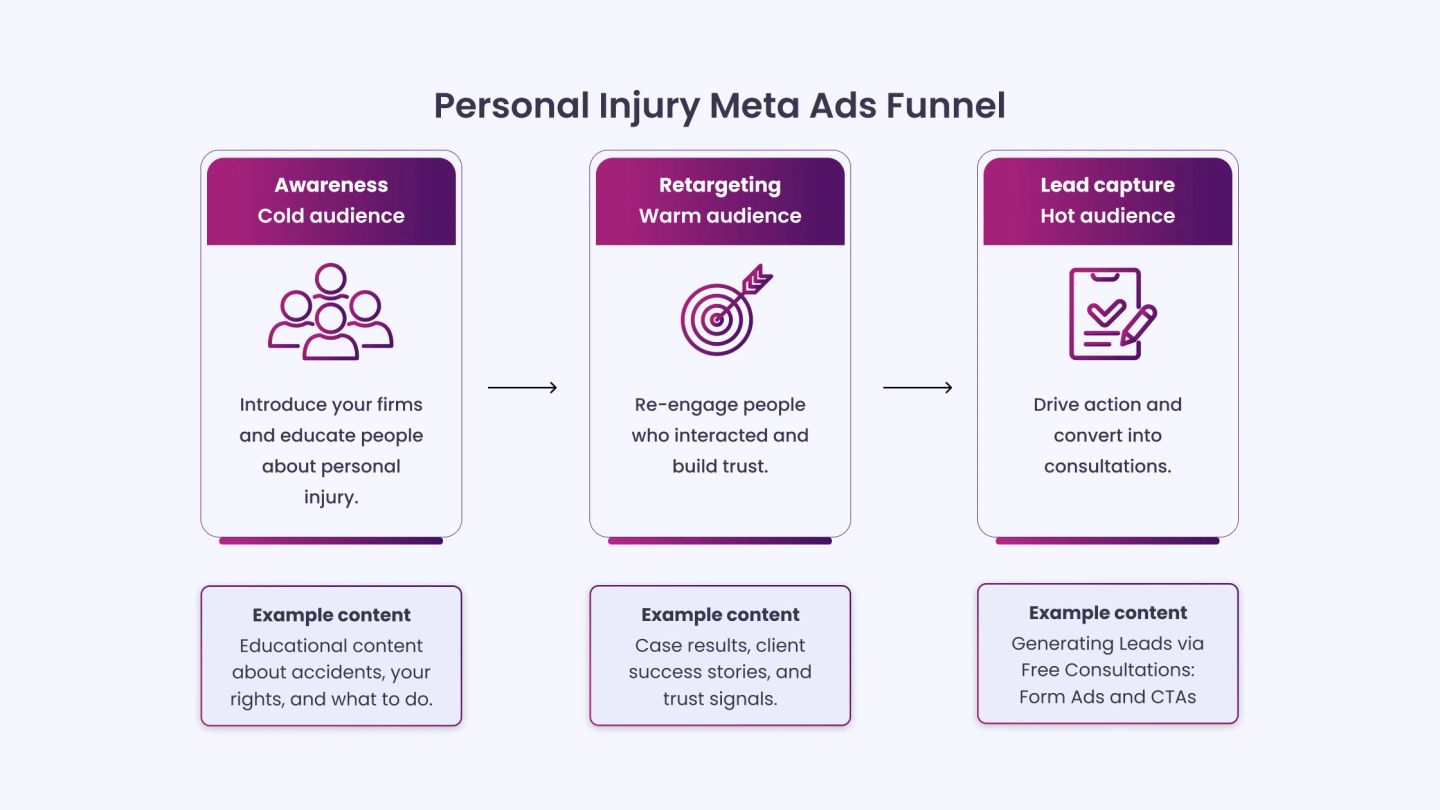
If you want Facebook ads to generate higher-quality inquiries, you need to organize campaigns around where prospects are in the decision-making process. That makes it easier to match your message, offer, and follow-up to user intent, which is exactly what the next three campaign types are meant to do.
Cold Audience Campaigns
Top-of-funnel campaigns focus on awareness and brand recognition. For personal injury law firms, this means creating ads that inform rather than sell. A local Houston firm, for example, might run a “What to Do After a Car Accident” video ad. Even if viewers don’t click, this content plants your brand in their memory.
Accident type or service area, auto accidents, workplace injuries, and slip-and-fall cases should be the theme of each cold campaign. Clear segmentation lets Meta learn which audiences respond best, improving your results and the quality of future lookalikes.
Retargeting Campaigns
Retargeting is where your ROI grows. Once people interact with your cold ads, visit your website, or engage with your video content, they become prime candidates for follow-up. These campaigns remind potential clients that you’re the firm they’ve already seen and trusted.
For instance, if a prospect viewed your “Truck Accident” landing page but didn’t submit a form, you can retarget them with a case result ad like, “$500k Settlement for Local Truck Crash Victim: Find Out How.” Keep creative, consistent, and respectful.
Lead Capture Campaigns
Finally, capture warmed-up prospects through Facebook Lead Ads or conversion-optimized landing pages. With Lead Ads, users can submit contact information without leaving the app, ideal for mobile users in urgent situations. Add qualifying questions like “Was the accident in the past 30 days?” to reduce intake friction and weed out unqualified contacts.
Integrating these lead forms directly into your CRM ensures your intake team follows up within minutes, a critical factor for personal injury lead conversion.
4. Target Local Intent Without Crossing Policy Lines
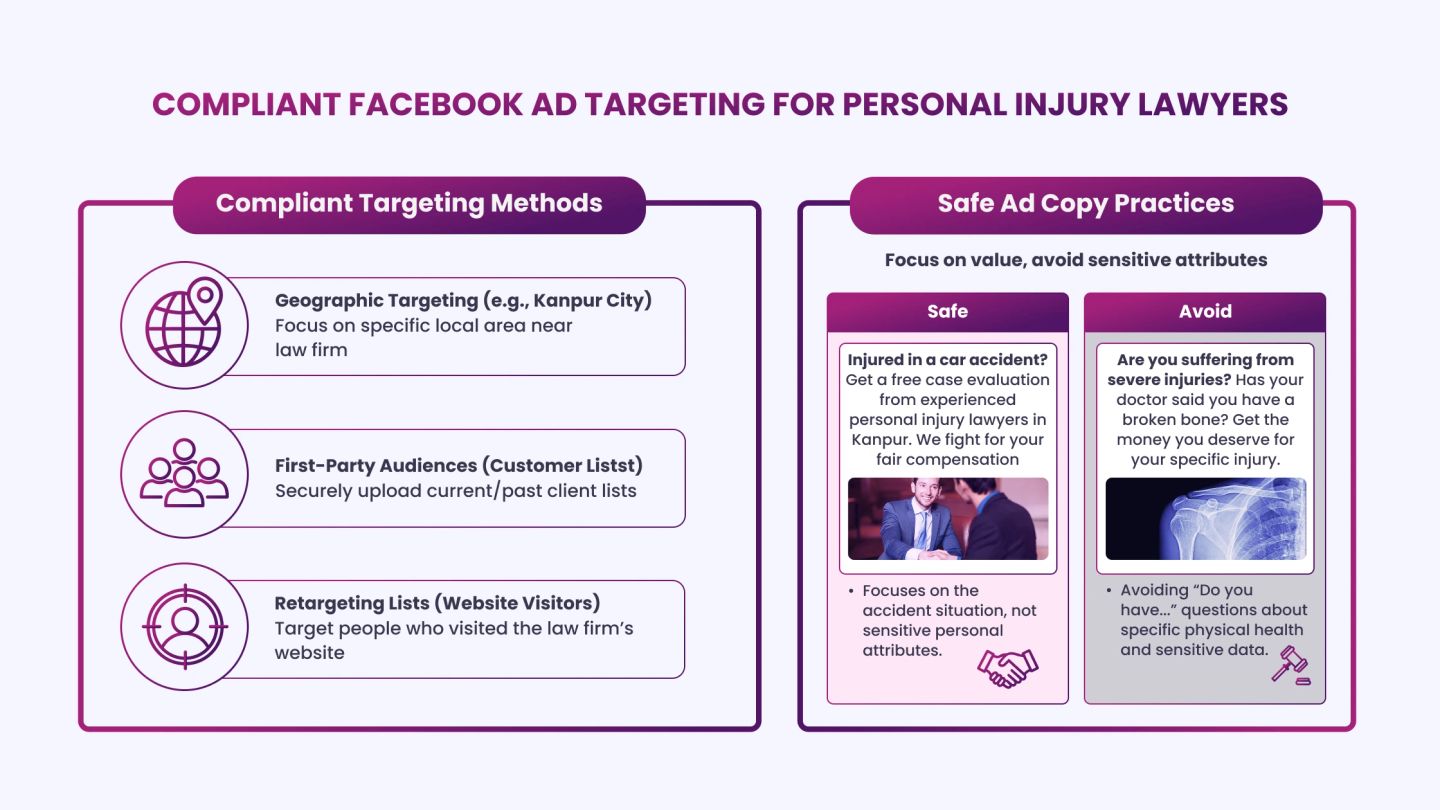
Strong targeting comes from narrowing your audience without making your ads feel invasive or non-compliant. The sections below show how to tighten location targeting, separate audiences by case type, use your own data more effectively, and keep your copy within Meta’s rules.
Focus On Geography First
Local visibility is non-negotiable for personal injury firms. Focus your targeting radius tightly around counties or cities where you’re licensed to practice. Smaller, segmented campaigns let you control costs and ensure your ads show up only where potential cases are relevant. For example, rather than targeting an entire state, launch distinct campaigns for each metro area.
This strategy also improves ad relevance scores and encourages localized messaging (“Serving Atlanta accident victims for over ten years”). It’s a simple way to boost CPL efficiency.
Use First-party Audiences And Retargeting Lists
Your best-performing audiences come from first-party data, website visitors, email subscribers, and prior leads stored in your CRM. Upload these safely and compliantly into Facebook to create Custom Audiences. Then, use those segments to build Lookalike Audiences that reach new prospects with similar characteristics. These tactics consistently deliver lower CPLs compared to cold targeting alone.
Keep Ad Copy Within Meta Policy
Facebook has strict guidelines for legal advertisers. You cannot imply someone is injured, broke, or desperate for help. Instead, focus on empowerment and information. For instance, replace “Hurt in an accident?” with “Know your rights after a collision.” Writing empathetic yet compliant copy is an art, and crucial for campaign approval.
For strong empathetic messaging tips, explore Mastering Instagram captions: 100+ ideas for every type of post.
5. Write Ads Around Fear, Urgency, And Next Steps
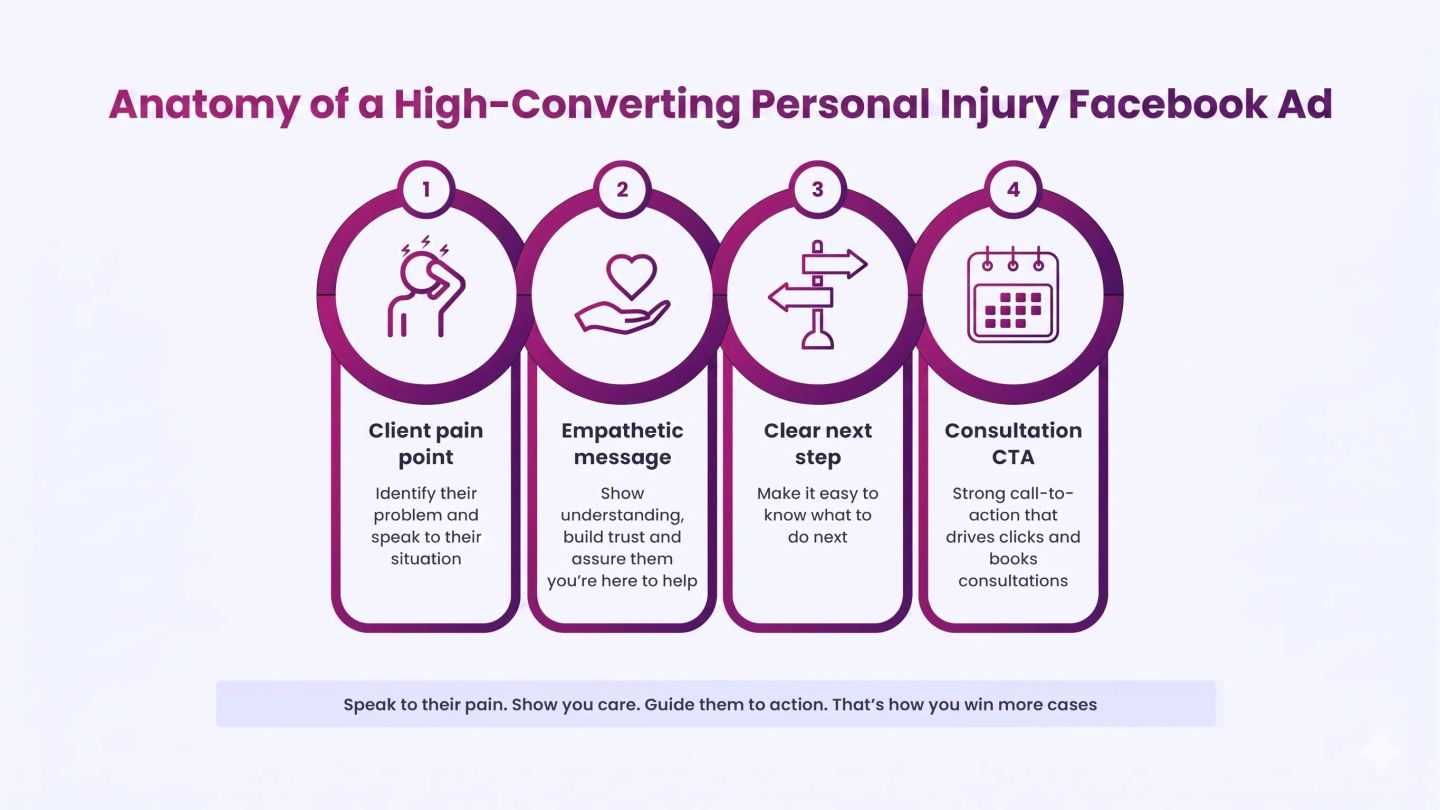
Once your targeting is in place, your ad copy needs to reflect what the prospect is feeling and what they need to know before taking action. The next points break that down into three parts: how to speak to the situation, explain the process clearly, and align your angle with buyer readiness.
Lead With The Prospect’s Situation
The most effective personal injury ads mirror what your audience is feeling: confusion over insurance, anxiety about medical bills, or frustration with recovery timelines. Instead of listing firm achievements, speak directly to these pain points. Example: “The insurance company isn’t on your side. Get a free case review today.”
Compare this empathetic approach with generic ads that list practice areas; it’s clear which feels more human and urgent.
Show What Happens After They Contact You
Clarity reduces hesitation. Prospects often avoid clicking ads because they fear endless spam calls or opaque processes. Use ad copy and landing pages to explain exactly what happens next: “You’ll speak directly with an attorney within 15 minutes.” This simple transparency drives higher conversion rates and trust.
(Tip: For more empathy-aligned communication, revisit the 7 qualities of good customer service.)
Use Ad Angles That Match Buyer Readiness
Some people need education (“Know your legal rights after a collision”), others need reassurance (“See how our firm secured justice for hundreds of families”). Rotate creative angles, educational, proof-driven, process-focused, based on where your audience is in the funnel. Small testing with varied emotional triggers can sharply increase conversion performance.
6. Use A Creative That Looks Credible In The Feed
Your creative has to stop the scroll without making the ad look exaggerated or low-trust. These formats tend to work best because they keep the message clear, the presentation professional, and the firm credible from the first impression.
Short Attorney Videos
Videos create instant authenticity. A 30-second clip of your lead attorney explaining next-step guidance feels more trustworthy than any banner ad. Keep these direct-to-camera videos clean, calm, and focused on empathy; avoid scripts; use natural language; and include captions for viewers who are deaf or hard of hearing.
Simple Static Ads And Carousels
Static images still work, especially for retargeting campaigns. Use clean visuals featuring your attorneys, office interiors, or community involvement. A consistent visual style communicates professionalism and familiarity. Carousels are excellent for showcasing different practice areas or highlighting case results succinctly.
For visual inspiration on content presentation, check 30+ content ideas for fashion brands for Instagram.
Avoid Low-Trust Creative Choices
Avoid sensational injury imagery, overly dramatic colors, or “clickbait” headlines, as it lowers ad relevance and trust. Clients need to see calm authority, not panic. Keep design aligned with your brand style to reinforce recognition across channels.
7. Treat Lead Quality As The Real Score
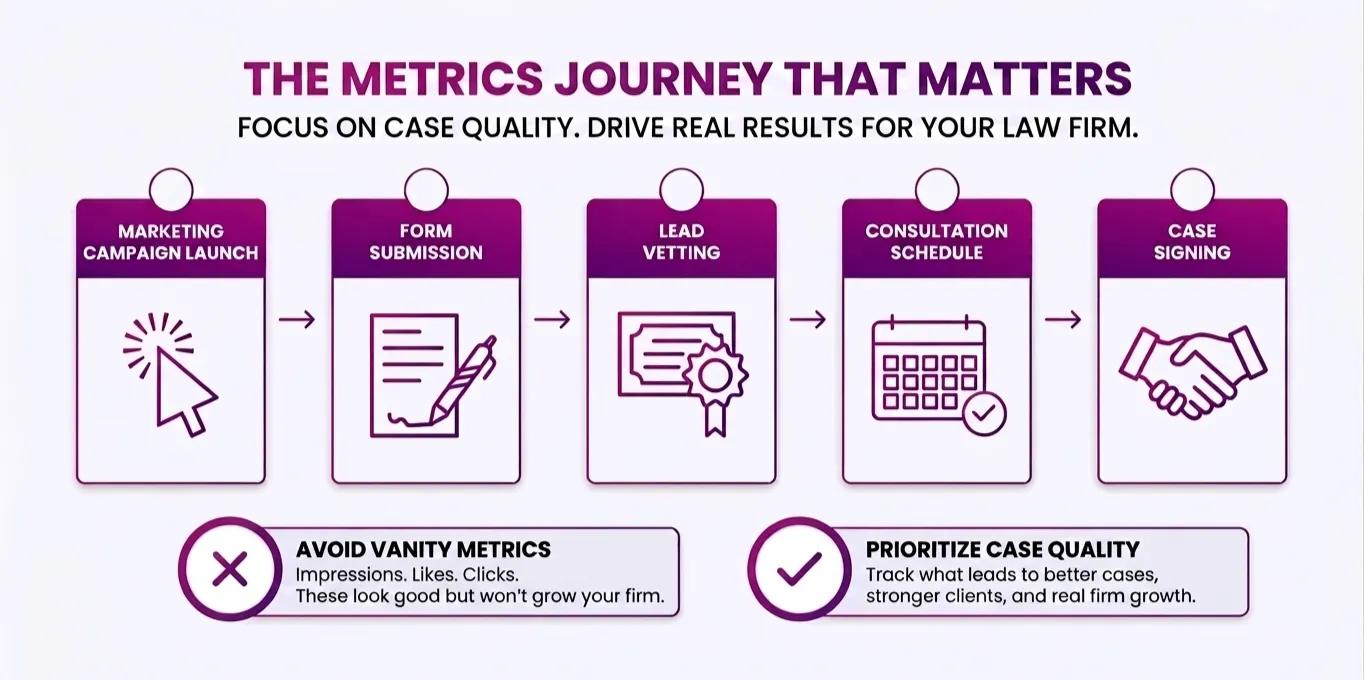
A campaign that generates cheap leads is not necessarily good. To judge performance properly, you need to look at both the front-end numbers and the back-end case outcomes, which is why the next two areas deserve close attention.
Track More Than Clicks And Form Fills
Clicks and impressions tell only part of the story. Evaluate how many of those clicks turn into qualified leads and ultimately into retained cases. Measure from “Contacted” to “Signed Client.” Reporting on meaningful KPIs, like cost per qualified lead (CPQL), ensures your optimization focuses on actual revenue generation.
Connect Meta Tracking To Real Case Outcomes
Install the Meta Pixel and use the Conversions API to securely send real lead data back to Meta. This helps Facebook’s algorithm optimize toward actual conversions, not vanity metrics. Over time, Meta learns the behaviors associated with higher-value cases, improving cost-efficiency.
To enhance analytics and AI adoption, explore advanced insights from the Top 10 AI tools for career guidance, which demonstrate smart data usage across sectors.
8. Fix The Landing Page And Intake Handoff
Even strong ads underperform when the click leads to a weak page or a slow intake process. The next two sections focus on the handoff after the click, because that is where many personal injury campaigns lose otherwise qualified prospects.
Match The Landing Page To The Ad
Your landing page should match the promise of the ad that led visitors there. A car accident ad should never redirect to a general “personal injury” homepage. Create pages for each case type, featuring relatable visuals, credibility badges, testimonials, and a single clear CTA.
For design inspiration across service-based industries, explore 35+ dental clinic website design inspirations. The principles of trust, clarity, and conversion-centered structure are just as applicable to law firms.
Improve Intake Speed And Follow-up
The fastest follow-up wins. Leads from Facebook can go cold within hours. Use automated notifications to alert intake teams instantly. Chatbots and response scripts in Messenger or SMS can maintain engagement until an attorney follows up.
For optimizing direct communication ethics and speed, refer to The 5 A’s of quality customer service.
9. Set a Testing Plan Before You Scale Spend
Testing works best when you know exactly what you are trying to learn from each change. The two points below help you test in a controlled way and judge results using business outcomes that reflect real case value.
Test One Variable At A Time
A/B testing is critical, but only works with discipline. Change one element per test: a new headline, creative style, or CTA. Measure statistically credible differences before scaling. Running multiple simultaneous tests muddies attribution and wastes data clarity.
Judge Performance By Qualified Leads And Signed Cases
Move beyond CTR and CPL metrics. Judge campaign health by cost per qualified consultation or cost per signed client. While Meta can optimize for leads, it’s your CRM connection and intake reporting that reveal the true ROI. Use a consistent conversion framework to compare campaigns hourly or weekly and reallocate budget efficiently.
10. Use Facebook Lead Forms To Screen Out Bad-Fit Cases
More leads do not help if most of them are poor-fit inquiries. Facebook Lead Ads work better when you add a few qualifying questions that help your intake team sort serious cases from weak ones.
Ask short questions such as:
- What type of accident were you involved in?
- When did the accident happen?
- Did you receive medical treatment?
- Which city did the accident happen in?
Keep the form short enough to finish on mobile, but detailed enough to filter out spam, wrong geography, and non-injury matters. You should also connect the form directly to your CRM or intake workflow so follow-up starts fast. A lead that sits untouched for hours is far less likely to turn into a signed case.
11. Match The Message And Landing Page To Each Injury Type
A generic personal injury ad usually feels vague. A prospect hurt in a truck accident does not think the same way as someone dealing with a slip-and-fall or a motorcycle crash. Your ads should reflect that.
Create separate ad sets and landing pages for case types such as:
- car accidents
- truck accidents
- motorcycle accidents
- pedestrian accidents
- slip-and-fall claims
- wrongful death cases
Each ad should address the facts, concerns, and next steps associated with that case type. This improves click quality, lowers wasted spend, and makes your message feel more relevant without sounding intrusive.
12. Turn Reviews, Results, And Attorney Credibility Into Ad Assets
Many law firms run ads that ask for a consultation before they have earned trust. You can fix that by using proof-based creative. People want signs that your firm is credible, responsive, and capable of handling serious injury claims.
Use ad assets such as:
- short client testimonials with permission
- attorney video introductions
- review snippets
- years of focused injury practice
- verdicts or settlements with proper disclaimers
- media mentions or bar recognition where appropriate
This works especially well in retargeting campaigns, where the prospect already knows your name but has not yet contacted you. At that stage, trust signals often carry more weight than a louder sales pitch.
Where Most Personal Injury Facebook Ad Strategies Fall Short
Many law firms underperform on Meta because they:
- Rely on broad, untargeted campaigns that drain budgets.
- Use non-compliant or insensitive ad copy.
- Send traffic to generic landing pages with poor alignment.
- Fail to retarget or follow up within hours.
Bridging these gaps requires a funnel-based setup: educational content first, retargeting next, lead conversion last. Firms that integrate proper tracking, empathetic creativity, ethical compliance, and quick intake follow-up see dramatic improvement in both lead quality and signed-case percentage.
INSIDEA
Ready to put this into practice?
INSIDEA is an Elite HubSpot Partner rated 4.99 across 500+ verified reviews. Let's map it to your goals.



 How INSIDEA works