Your neighbor just hired a landscaper who charges 40% more than you do.
And why? Because when she searched “landscaper near me,” his business appeared first with 147 five-star reviews, and yours was nowhere to be found.
This happens 500 times a day in your area: homeowners with cash are ready to hire but can’t see you exist.
In fact,78% of location-based mobile searches result in an offline purchase, highlighting the critical role of local SEO in driving real-world business. The solution isn’t to lower your prices or buy bigger truck decals. It’s mastering local SEO for landscapers.
When done right, it puts your business in front of customers exactly when they’re ready to buy, without spending a fortune on ads that may or may not work. Most landscaping companies ignore this completely. That’s your opportunity.
In this blog, I will explain local SEO strategies for landscapers that will fill your calendar with qualified leads who found you first.
Marketing for landscapers
Rather have this done for you?
Book a 30-minute call with INSIDEA. We look at how customers find you today and send a proposal within 48 hours if we are a fit.
Book a strategy callThe Importance of Local SEO for Landscapers
So, before we get into the step-by-step strategies, let me first lay out why this even matters. Here’s why local SEO for landscapers matters:
- Local demand: Most landscaping jobs are hyper-local: Homeowners don’t want a guy with a truck from the next county; they want someone nearby, someone they can reach quickly.
- Real-world search behavior: When people search online, they don’t type in “award-winning landscaping expert in the region.” They type “landscaper near me.” That search tells Google one thing: show me someone close, now.
- Google Prioritizes Nearby Searches: Google’s algorithm favors relevance and proximity. If your business has a strong local presence, accurate listings, good reviews, and clear info, it gets pushed to the top. If it doesn’t, it gets buried.
- Appear in the Right Places: A solid local SEO setup for landscapers helps you appear at the exact moments when customers are ready to call, especially in mobile searches and map results. That’s visibility you can’t afford to miss.
Local SEO for Landscapers: Proven Tactics That Bring Results
Before we get into the details, here’s a quick breakdown of the main areas to focus on if you want local SEO for landscapers to start bringing real results:
- Set Up and Optimize Your Google Business Profile (GBP)
- Keep NAP Details Consistent
III. Optimize Your Website
- Research Location-Based Search Terms
- Get Listed in Local Directories and Citations
- Build Local Backlinks That Boost Your Authority
VII. Use Google’s Autocomplete Suggestions
VIII. Use Google Ads & Local Service Ads for Immediate Leads
1. Set Up and Optimize Your Google Business Profile
Before anything else, you need to own your real estate on Google. Your Google Business Profile (GBP) is often the first (and only) thing potential customers see for landscaping businesses. It appears in Google Maps, local search results, and mobile listings, where most homeowners click when they’re ready to hire.
If it’s incomplete or inconsistent, you’re invisible.
What to Do:
- Claim your profile: Go to Google profile and claim your business. If it’s already listed, request access and verify it.
- Use your exact business name: No added keywords, no slogans. Just the legal, public-facing name. Google punishes keyword stuffing in business names.
- Pick the right categories: Primary: Landscaper or Landscaping Service
Secondary: Lawn care service, Tree service, Hardscaping service, whatever applies to your real offerings. - Add a local-focused business description: Example: We provide full-service landscaping, lawn care, and outdoor design in [City, State], serving homeowners in [Nearby Areas].
- Upload real, high-quality photos: Show off completed jobs, before-and-afters, equipment, and your team in action. At least 10-15 images. These build trust fast.
- List accurate business hours: Include seasonal changes if needed. Make sure they match what’s on your website.
- Use Google Posts weekly: Share quick updates, seasonal services, limited-time offers, or recent jobs. This activity keeps your profile fresh and signals trust to Google.
- Get reviews and respond to them: Ask for reviews after each job. Homeowners read them, and Google places heavy weight on them when ranking local results. Reply to every review, positive or not, to show you’re engaged and responsive.
Pro Insight: Landscapers who show up in the top 3 map results (Google’s “Map Pack”) get most calls. And those spots are heavily influenced by the completeness, activity, and accuracy of your GBP.
2. Keep Your NAP Consistent Everywhere
If your name, address, and phone number (NAP) aren’t the same across the web, Google will treat your business as if it doesn’t know you, and neither will potential customers.
Inconsistent information tells Google, “This might be a different company,” which kills your local trust signals. Even slight differences, like “Ave” vs. “Avenue” or a missing suite number, can hurt your rankings.
What to Do:
- Match your NAP across your Google Business Profile, website, directories, and social media. Copy-paste it from one clean source (usually your GBP) to avoid typos or formatting differences.
- Stick to one version of your business name. If you go by “Green Ridge Lawn & Landscape,” don’t list “Green Ridge Landscaping” elsewhere. Be exact.
- Update old listings you may have forgotten about’especially on places like Yelp, Facebook, Angi, BBB, Houzz, and local chamber of commerce directories.
- If you want to check and clean up your NAP data across the web faster, use tools like Moz Local or Whitespark.
NAP consistency is a fundamental but critical part of local SEO for landscapers. If Google doesn’t fully trust your identity, you won’t show up where it counts, no matter how good your work is.
3. Optimize Your Website for Local Search
If your website loads slowly, looks outdated, or hides your contact info, most people will leave before they even think about calling. A strong site needs to be clear, fast, and built to appear in local search results.
Here’s what to focus on:
- Make It Mobile-First: Most homeowners search for landscapers on their phones. Your site should load quickly, display cleanly, and be easy to scroll and tap on, with no tiny text or cluttered menus.
- Add Location-Based Service Pages: If you serve more than one city or area, create a dedicated page for each city or area. Example: “Lawn Care in Cedar Grove” or “Hardscaping Services in Lakeview.” This gives Google more local signals and improves search relevance.
- Display NAP on Every Page: Your business name, address, and phone number (NAP) should appear in the footer of every page, exactly as it appears on your Google Business Profile. It’s simple, but it reinforces trust.
- Embed a Google Map: Add a map with your business’s location on your Contact page. This will help users get directions and send location data to Google.
- Use Local Page Titles and Meta Descriptions: Your site’s backend matters. Ensure every page has a unique title tag and meta description that includes your services and city name. Example: “Landscaping and Lawn Care in Spring Hill, FL.”
- Improve Your Site Speed: Compress large images, minimize heavy code, and use reliable hosting. Use tools like Google PageSpeed Insights to catch what’s slowing you down.
Even with solid rankings, a weak website can still kill conversions. For local SEO for landscapers, your site isn’t just a brochure; it’s a trust signal and a booking tool.
4. Research Location-Based Search Terms
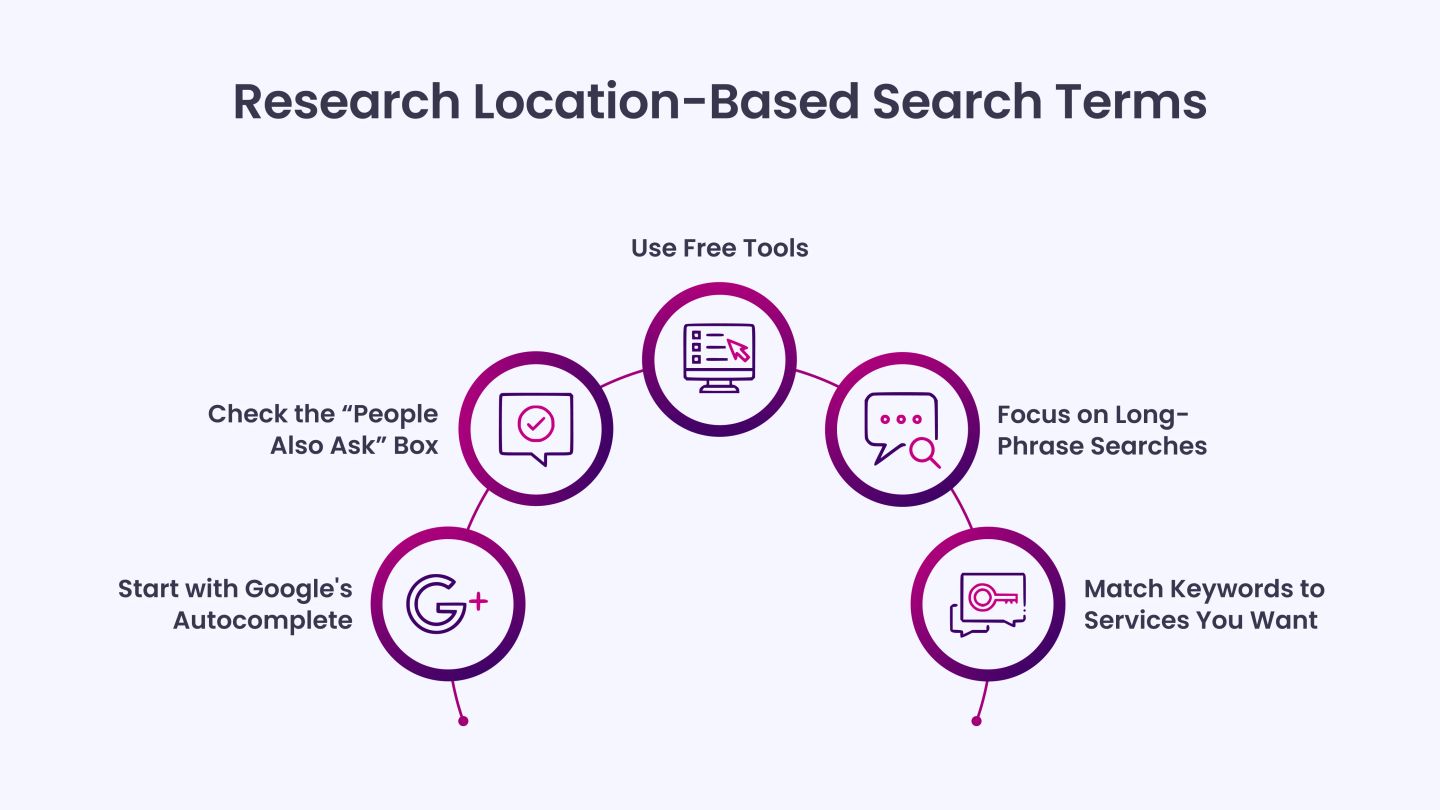
You need to know the exact terms homeowners in your area use and match them on your site. That’s how you show up when they’re ready to book.
Here’s how to lock in the right terms:
- Start with Google’s Autocomplete: Type “landscaper” followed by your city in Google. See what it suggests. Those results come from real searches people in your area are doing. Use them.
- Check the “People Also Ask” Box: Google shows common questions underneath when you search for your service. Example: “What’s the average landscaping cost in [City]?” Turn those into content and headers on your site.
- Use Free Tools: Start with tools like Google Keyword Planner, Ubersuggest, or AnswerThePublic. Look for location + service combos, like “lawn mowing in Westfield” or “yard cleanup in Brentwood.”
- Focus on Long-Phrase Searches: Short terms like “landscaper” are flooded with competition. Go after more specific terms:
“Backyard drainage help in [City]”“Affordable sod installation [City]”
These are easier to rank for and often lead to faster conversions.
- Match Keywords to Services You Want: Don’t waste space targeting services you don’t want more of. If you wish to do more hardscaping work, ensure those terms appear across your site page titles, service pages, image file names, and alt text.
Smart keyword targeting is the engine behind local SEO for landscapers. You’re not writing for clicks, you’re writing to get found by the right clients, in the right areas, looking for exactly what you offer.
5. Get Listed in Local Directories and Citations
Think of online directories as digital phone books. Every time your landscaping business is listed with the correct information, it reinforces your legitimacy with Google and real people comparing options.
However, it only works if those listings are accurate and consistent.
- Focus on High-Trust Directories
Start with the platforms that matter most for local visibility:
- Yelp
- Houzz
- Thumbtack
- Better Business Bureau (BBB)
- Local Chamber of Commerce sites
They help build authority and strengthen your presence in search.
- Use Industry-Specific Listings
List your business on landscaping or home-service-specific directories. Google scrapes many of these, increasing your chances of being seen in search and map results.
Examples:
- HomeAdvisor
- LawnStarter
- Nextdoor (as a local business)
- Submit to General Local Listings
Add your business to local newspaper directories, town guides, or “Best of [City]” lists. They may not drive massive traffic, but they add legitimacy and location signals.
- Keep Listings Updated
If you’ve changed your phone number or moved to a new location, update that information across all listings for your business. Don’t let outdated details linger online. Tools like Whitespark or BrightLocal can help you track and manage your listings efficiently.
- Don’t Ignore the Basics
Some landscapers get their Google Business Profile right, but forget to fix their Facebook page or Instagram contact info. These count too. Every listing tells Google whether it can trust your business data.
These citations feed directly into local SEO for landscapers. They tell Google your business is real, active, and tied to your location, which gives you the edge when clients search nearby.
6. Build Local Backlinks That Boost Your Authority
Backlinks from other websites to yours act like credibility votes. But not all links are equal. Local backlinks carry the most weight for landscapers because they reinforce your business’s location and trustworthiness.
This isn’t about chasing big national websites. It’s about being known and referenced in your area.
- Partner with Local Businesses: Work with nurseries, hardware stores, pest control services, or local fence builders. Add them to a “Local Partners” page on your site and ask them to link back to you from theirs. It builds trust and business.
- Get Involved in Community Events: Sponsor a local Little League team, support a neighborhood clean-up, or offer services for a local park project. These events often have websites or press coverage linking to local contributors.
- Pitch Stories to Local Blogs and News: Local lifestyle blogs and news sites often seek expert input. Offer insights on seasonal lawn care or outdoor trends in your area. You’ll get coverage and a backlink to your site.
- Write Guest Content for Local Sites: Reach out to real estate agents, property managers, or local contractors. Offer to write a short, helpful article, like “How to Boost Curb Appeal Before a Home Sale.” Include a link back to your site in your byline.
- Use Local Associations and Directories That Link: If you’re a member of your town’s Chamber of Commerce or a trade association, ensure your profile includes a link to your site. Many already offer this; you just have to fill it out.
Local backlinks send a different kind of trust signal than basic directory listings. Local SEO for landscapers shows that your business isn’t just listed; you’re active, visible, and trusted in your community.
7. Use Google’s Autocomplete Suggestions
Most landscapers skip this, but Google’s search bar can give you real-time insight into what people in your area are typing. That’s free, live market data sitting right in front of you.
Autocomplete suggestions come straight from user behavior, so if Google finishes the sentence, you know people are searching for it.
- Start Typing Your Core Services: Begin with phrases like “landscaper in [City]” or “lawn care near…” and let Google finish the thought. Those suggestions aren’t random; they reflect what real people search in your area.
- Collect Ideas You’re Not Targeting Yet: You might see results like:“landscaping with payment plans” , “sod installation [City] cost” and “drainage solutions for backyard [City]”
If you don’t already have content or pages built around these, you’ve got direction now.
- Use These Terms in Content and Metadata:
Take the most relevant suggestions and bake them into:
- Page titles
- Headings (H1s and H2s)
- FAQs
- Blog topics
- Alt text on service images
- Refresh Pages Using Real Search Terms: If you already have a service page, update it with current phrasing that matches what autocomplete is showing. This can lift your relevance without a complete rewrite.
- Track Shifts Seasonally: Autocomplete suggestions change with the seasons. In spring, you’ll see “mulching” or “spring clean up.” In the fall, it might be “leaf removal” or “gutter cleaning.” Use those seasonal shifts to guide your weekly updates and blog topics.
8. Use Google Ads & LSAs for Immediate Leads
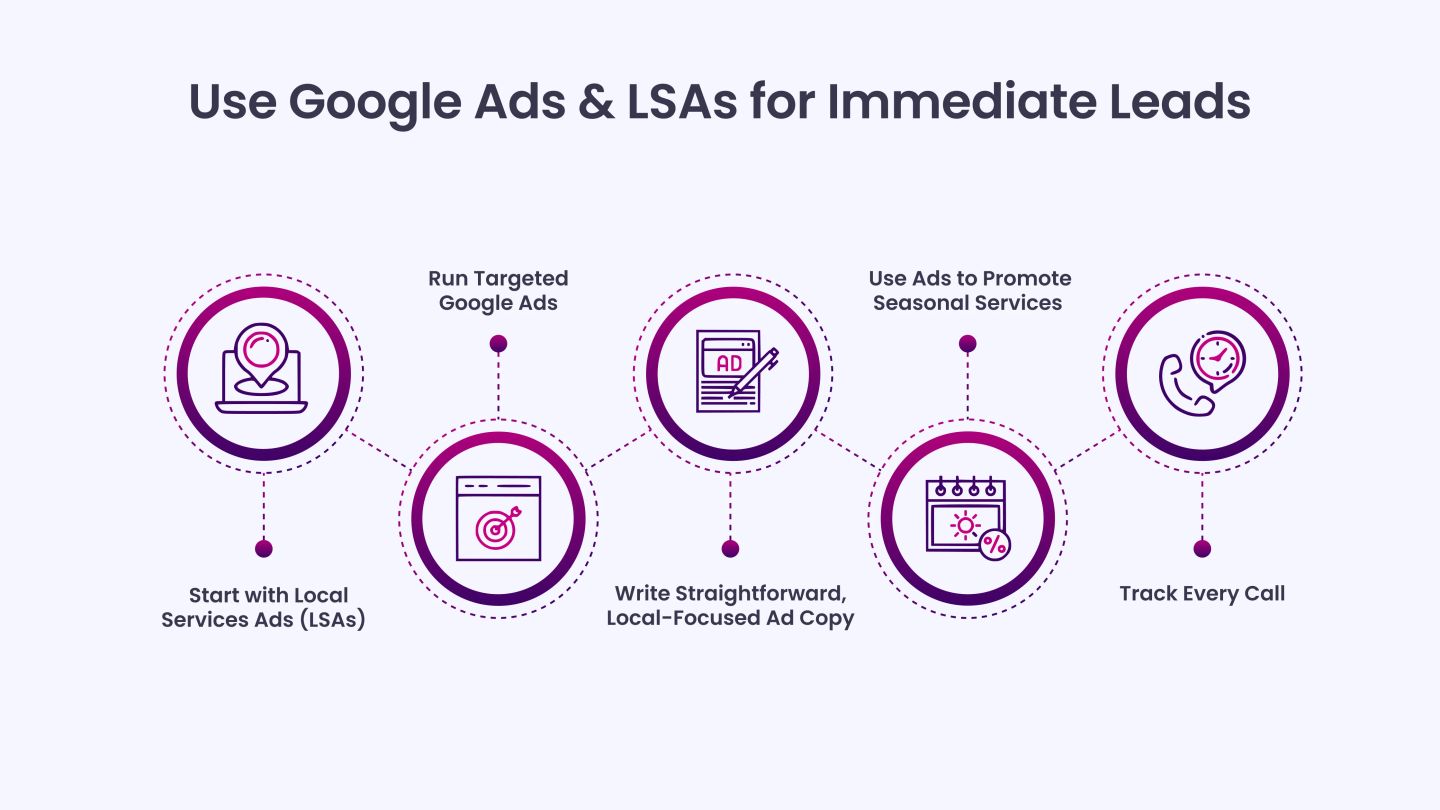
Organic SEO builds long-term momentum, but if you need calls this week, paid tools like Google Ads and Local Services Ads (LSAs) get you in front of ready-to-hire homeowners instantly.
Here’s how landscapers can use paid tools smartly, without burning cash on random clicks.
- Start with Local Services Ads (LSAs): These appear above all other search results and are built specifically for service businesses like landscaping. You only pay for genuine leads, calls, messages, or bookings.
What to do:
- Get verified through Google (proof of license and insurance required)
- Build out your profile with service areas, job types, and business hours
- Respond quickly. Google tracks responsiveness as a ranking factor
- Run Targeted Google Ads: If you narrow your focus, traditional pay-per-click (PPC) ads still work.
How to stay efficient:
- Target by ZIP code or radius around your service areas
- Focus on high-intent terms like “lawn care estimate [City]” or “yard grading service near me.”
- Set a small daily budget to test which services and keywords pull the best results
- Write Direct, Local-Focused Ad Copy
Skip the generic Ad copy. Focus on what the homeowner cares about:
- Fast response
- Local crew
- Free estimates
- Weekend availability
Example: “Get a Sod Installation Quote in [City], Local Crew, Fair Rates, No Waiting.”
- Use Ads to Promote Seasonal Services: Push services when demand spikes, such as spring cleanups, fall leaf removal, snow prep, and irrigation installs. These short bursts often deliver better ROI than always-on ads.
- Track Every Call: Use call tracking numbers and conversion tracking inside Google Ads to see what brings business. Cut what doesn’t perform. Double down on what does.
Local SEO takes time to build for landscapers, but paid ads let you control when and where you show up. Used together, they give you immediate leads and long-term visibility.
You Handle the Groundwork. We Handle the Google Work
Your days are packed with quotes, crews, back-to-back job sites, equipment runs, and ensuring the client’s lawn looks better than their neighbor’s. You’re the first one in and the last one out. But while you’re out there doing the hard work, who’s making sure your business is the one that shows up when someone types “landscaper near me”?
You shouldn’t have to learn SEO between mowing schedules and client calls. And keeping up with Google’s updates, local ranking factors, listings, backlinks, reviews, etc. It’s a full-time job in itself.
You’ve got two options:
- Keep trying to do it all, manage the business, the jobs, and figure out local SEO on your own. Or
- Bring in marketing experts who do this every single day.
That’s where INSIDEA steps in.
If you’re ready for more qualified leads and calls, let us handle the digital side while you focus on building yards that speak for themselves.
INSIDEA
Ready to put this into practice?
INSIDEA is an Elite HubSpot Partner rated 4.99 across 500+ verified reviews. Let's map it to your goals.



 How INSIDEA works