No one wakes up excited to shop for insurance. But when life shifts, getting married, buying a house, or starting a business, people look for answers. And the first place they turn to is Google.
That’s where inbound marketing comes in. It’s not about cold calls or flashy ads. It’s about showing up with the right advice, at the right moment, in the right way. Inbound marketing is focused on attracting potential customers through valuable content, helpful tools, and genuine expertise, rather than interrupting them with hard-sell tactics.
For insurance companies, that means creating resources that address real concerns, like how much coverage a young family needs or whether pet insurance is worth it.
The payoff is clear: Inbound leads cost 61% less than outbound ones. More importantly, they’re people who already trust you before you ever speak.
In this blog, I’ll explain how to build an inbound marketing strategy that explicitly works for insurance companies. Whether you’re a local agency or a national provider, this approach can help you stop chasing leads and start attracting them. After all, inbound marketing for insurance companies is a more innovative way to grow.
How Inbound Marketing for Insurance Companies Differs from Outbound?
Outbound marketing is the old-school way of getting attention. Think cold calls during dinner, ads on the radio, or a billboard you speed past without noticing. It pushes a message out, hoping someone responds. It’s fast, loud, and often expensive. The problem is that most people tune it out.
Inbound marketing flips that. Instead of chasing people, you pull them in by being helpful. When someone types “Do I need umbrella insurance?” into Google and finds your blog, that’s inbound at work. It’s slower to build but earns trust and stays relevant longer.
For insurance companies, the difference matters. Outbound might get you a name and number. However, inbound marketing for insurance companies helps you earn trust before that person even speaks to an agent. Once they do, they will see you as the expert.
Here’s a straight comparison:
| Feature | Outbound Marketing | Inbound Marketing |
| Method | Push (interruptive messaging) | Pull (helpful content draws users in) |
| Channels | Cold calls, TV/radio ads, direct mail, billboards | Blogs, SEO, social posts, and email nurturing |
| Cost | High ongoing costs | Lower long-term investment |
| ROI Timeline | Immediate (but short-lived) | Slower start, stronger over time |
| Audience Response | Often ignored or blocked | Found by people actively seeking solutions |
| Value to Insurance Brands | Brand recall, quick reach | Brand trust, stronger relationships |
Inbound marketing for insurance companies is how modern buyers learn, compare, and decide.
What an Effective Inbound Marketing Strategy Looks Like for Insurance Companies?
Before I start with the detailed strategy, let’s do one thing: let’s break it down into a simple funnel format. I’ll use the classic TOFU, MOFU, BOFU structure, which stands for Top, Middle, and Bottom of the Funnel.
This will make it easier for you to understand what belongs at each stage and what kind of content and actions are best suited for someone just starting to explore, comparing options, and ready to decide. Once that’s clear, applying the complete inbound strategy becomes much easier. Let’s begin:
TOFU (Top of Funnel): Attract & Educate
TOFU (Top of Funnel) is where you make your first impression, reaching people who don’t know you yet by being helpful and answering the questions they’re already asking.
Know Your Audience
Before writing a blog post or launching a campaign, ask: Who am I talking to?
Inbound marketing for insurance companies starts with understanding your audience, not just in broad categories like “homeowners” or “business owners,” but in real, relatable terms. Think: a 32-year-old couple who just bought their first home, a single mom juggling bills and looking for affordable coverage, or a local cafe owner wondering if they’re underinsured.
These are your people. And each has different worries, questions, and levels of insurance knowledge. That’s why defining clear personas is non-negotiable. You’re not just collecting demographic data, you’re trying to understand what keeps them up at night.
Do they feel overwhelmed by all the insurance jargon? Are they wondering if renters’ insurance is worth it? Do they even know what an umbrella policy is? Maybe they’re anxious about what happens if they miss a claim deadline.
Once you know what they care about, you can create content that speaks directly to them.
Create Educational Content That Answers Questions
People don’t search for “insurance solutions.” They search for answers. That’s where inbound marketing for insurance companies shows its value.
Use real questions your team hears daily, like “How much life insurance do I need?” or “Is flood insurance included in my homeowners policy?” These are the moments when people are looking for clarity, not a sales pitch.
Write blog posts, explainers, or short guides directly addressing those concerns. Pull from actual sales calls, support chats, and emails. Keep the language simple; insurance is already complicated enough.
When your content helps people understand what they’re signing up for, they’re far more likely to take the next step with you.
Optimize for Search Engines (SEO)
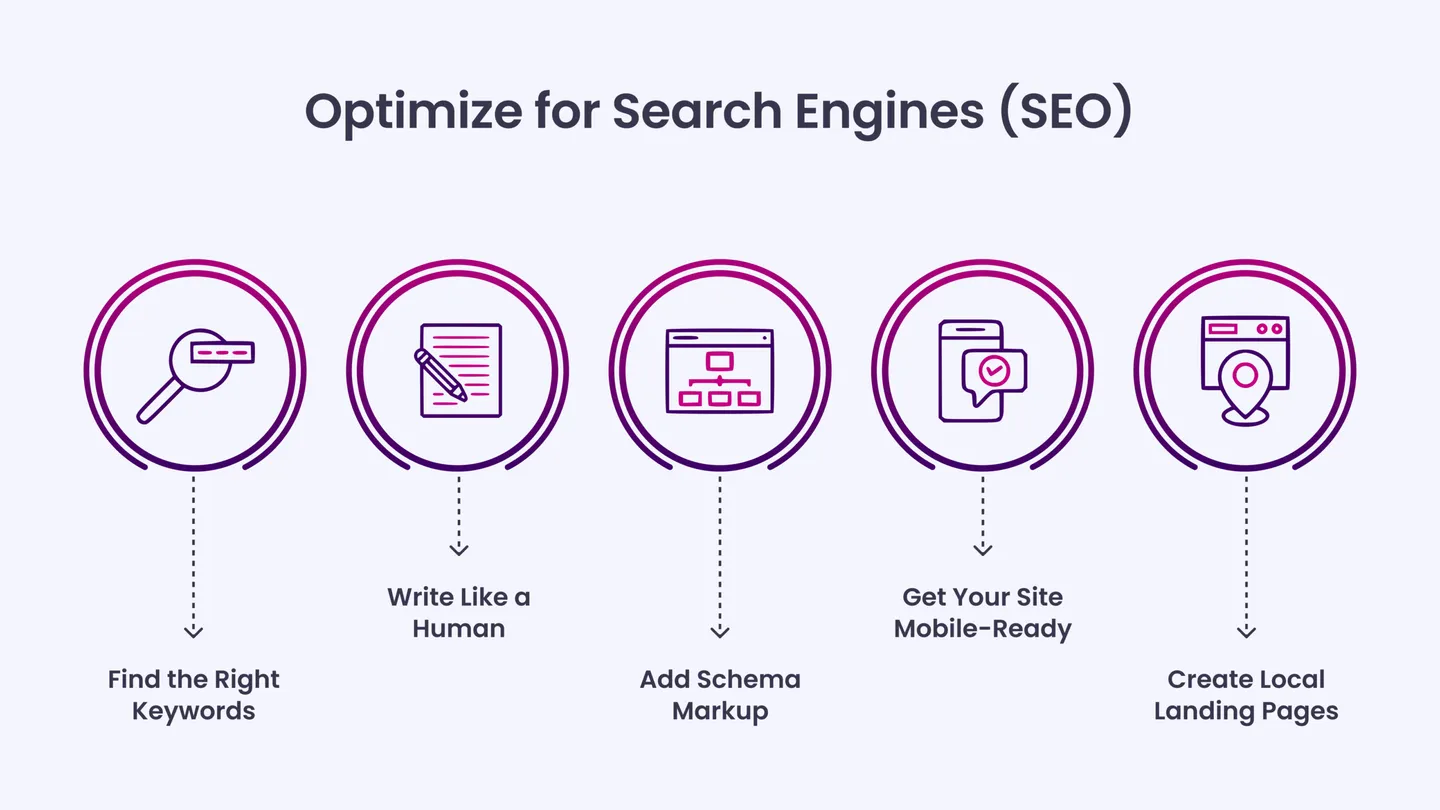
If your content isn’t showing up when someone searches “best home insurance in Dallas,” you’re simply not part of their consideration. That’s where SEO comes in.
Start by targeting local terms people use. Think like a shopper, not a marketer. Use phrases that match what your audience types into Google when searching for help, not what your industry says internally.
Go a step further with technical tweaks. Adding schema markup to your FAQs, reviews, and ratings helps search engines understand your content better, which can improve your visibility in search results.
When done properly, inbound marketing for insurance companies becomes more than just content; it becomes how people find you when they’re ready to decide.
How to Put This into Action:
- Find the Right Keywords: Use tools like Google Keyword Planner, Ubersuggest, or Ahrefs to see what terms people are searching for in your city or state, terms like “affordable renters insurance in Austin” or “best life insurance for young parents.”
- Write Like a Human: Skip the corporate jargon. Use the language your customers use. If someone’s Googling “What happens if I file a claim late?”, answer it in plain English.
- Add Schema Markup: Use Google’s Structured Data Markup Helper to tag FAQs, star ratings, and reviews with schema. It tells search engines exactly what your content is about, which can lead to rich snippets, which are those extra lines of info you see in search results.
- Get Your Site Mobile-Ready: The Majority of insurance research happens on phones. Use Google’s Mobile-Friendly Test to check if your site works smoothly on all screen sizes.
- Create Local Landing Pages: If you serve multiple cities or neighborhoods, build separate pages for each. For example, you could dedicate a page to “Home Insurance in Plano, TX” and another to “Home Insurance in Fort Worth.”
Use Social Media to Engage and Build Trust
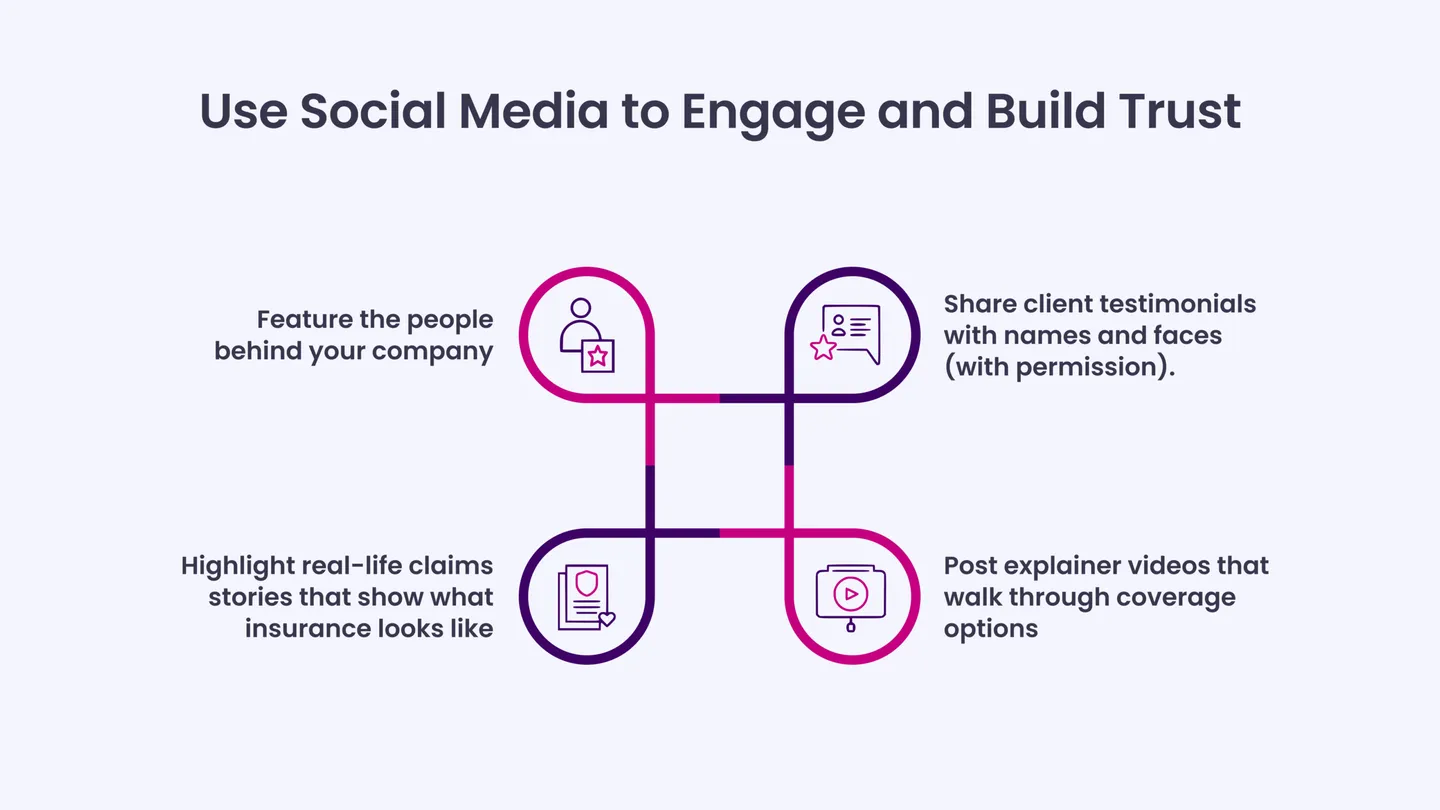
Social media is where your brand becomes relatable. Inbound marketing is not enough for insurance companies to post links to blog articles and hope someone clicks. This is where people size you up. Are you trustworthy? Are you helpful? Are you even real?
Use content that builds a connection:
- Share client testimonials with names and faces (with permission).
- Post explainer videos that walk through coverage options in plain English.
- Highlight real-life claims stories that show what insurance looks like when it matters.
- Feature the people behind your company: agents, service reps, and community work.
Reply to comments. Ask questions. React to trends with your own take.
MOFU (Middle of Funnel): Engage & Build Trust
This is where curiosity turns into consideration. Your audience knows they need insurance; they’re just figuring out who to trust. Here, your job is to educate, nurture, and prove you’re the one worth talking to.
Leverage Email Nurturing
Once someone has shown interest, downloaded a guide, or requested a quote, it’s your job to keep the conversation going without being pushy. That’s where email nurturing comes in.
Start with segmented drip campaigns. Don’t lump everyone into one list. A young couple exploring life insurance shouldn’t get the same content as a small business owner evaluating commercial coverage. Use your CRM to segment leads based on product interest, user behavior (like pages viewed or content downloaded), and specific concerns (e.g., rising premiums, coverage confusion).
Create helpful, topic-specific sequences like:
- “Insurance Tips for New Homeowners”
- “Understanding Your Life Insurance Options”
- “Smart Ways to Cut Auto Premiums Without Losing Coverage”
Make your emails short, relevant, and valuable, ideally with one clear takeaway or action. Avoid sending sales-y blasts. Instead, aim for consistency and relevance.
And don’t forget the tools. Platforms like HubSpot, Mailchimp, or ActiveCampaign let you automate these sequences and track engagement.
Used well, email becomes a bridge, not a broadcast. Inbound marketing for insurance companies works best when every message feels personal, not programmed.
Offer Free Tools or Resources
People don’t want to be sold to; they want help making smart decisions. That’s why offering practical tools and resources can make a real difference.
Give your audience something to use:
- A quote calculator that estimates their home or auto insurance premium
- A downloadable checklist like “What to Have Ready Before Filing a Claim”
- An explainer PDF that breaks down complex topics like umbrella coverage or deductible structures
Keep the barrier low: use short lead forms that ask for just a name and email. Don’t overcomplicate it, and do not close a deal right away.
When done right, this type of content serves two roles: it helps your audience and fills your pipeline. It’s a simple but powerful part of inbound marketing for insurance companies, allowing you to earn attention by offering value up front.
Webinars or Live Q&As
Sometimes, the best way to build trust is to show up in real time.
Hosting webinars or live Q&A sessions, like “What Home Insurance Covers” or “Ask an Agent Anything”, lets you engage directly with potential buyers. It’s not a pitch; it’s a chance to answer fundamental questions, break down confusing policies, and show that you get what people care about.
You don’t need a massive production setup. Tools like Zoom, Google Meet, or even Instagram Live work well. Keep the tone conversational, use simple slides if needed, and invite questions throughout.
Require an email to register. That way, you’re building a list for follow-up. Inbound marketing for insurance companies isn’t about chasing leads; it’s about showing up when people are ready to listen. This format does precisely that.
BOFU (Bottom of Funnel): Convert & Retain
At this stage, your leads are nearly ready to buy; they just need proof, clarity, and a final nudge. BOFU content clears doubts, reassures the buyer, and makes choosing you easy.
Highlight Case Studies or Success Stories
Highlight real customer outcomes such as how much they saved, how quickly a claim was paid, or how smooth their policy setup was. These can be short blog posts, 60-second testimonial videos, or downloadable PDFs. Focus on results, not hype.
Done right, this kind of content makes inbound marketing for insurance companies far more persuasive because people trust stories, not pitches. When potential buyers see others succeed, they start picturing themselves as your next client.
Comparison Pages
Your leads are already comparing options. Make it easier for them by building honest, side-by-side comparisons between you and other insurers or platforms.
Example: “Your Local Insurance Agent vs. National Providers, Who Responds Faster?”This type of content shows you understand what buyers weigh and positions you as the transparent choice.
Personalized Demos or 1-on-1 Consults
Offer short, no-pressure calls or demos where an agent helps the lead understand their policy needs. Use tools like Calendly, HubSpot, or a simple form to book 15-minute consultations. People are more likely to convert when they can quickly ask questions and get real answers.
Limited-Time Offers or Bundled Deals
Don’t overdo the urgency, but say it if rates are increasing or a discount is available for bundling home and auto.
This makes the buying decision feel timely, not rushed. It’s a practical nudge that works when the lead is almost there.
Track and Improve
Once you’ve built your inbound engine, the work doesn’t stop. Now comes the part separating average from adequate: knowing what’s working. This is where tools like Google Analytics, HubSpot, and Hotjar earn their place.
Start by tracking how users move through your site and content. Are they dropping off before filling out a quote form? Are your email CTAs getting clicks? Look at metrics like conversion paths, bounce rates, and form completions.
Then, test. Change the headline. Switch a button color. A/B test a landing page layout. These small tweaks stack up over time and can seriously impact conversions.
When used right, tracking tools help inbound marketing for insurance companies become smarter.
What An Inbound Funnel Could Look Like for Insurance Companies?
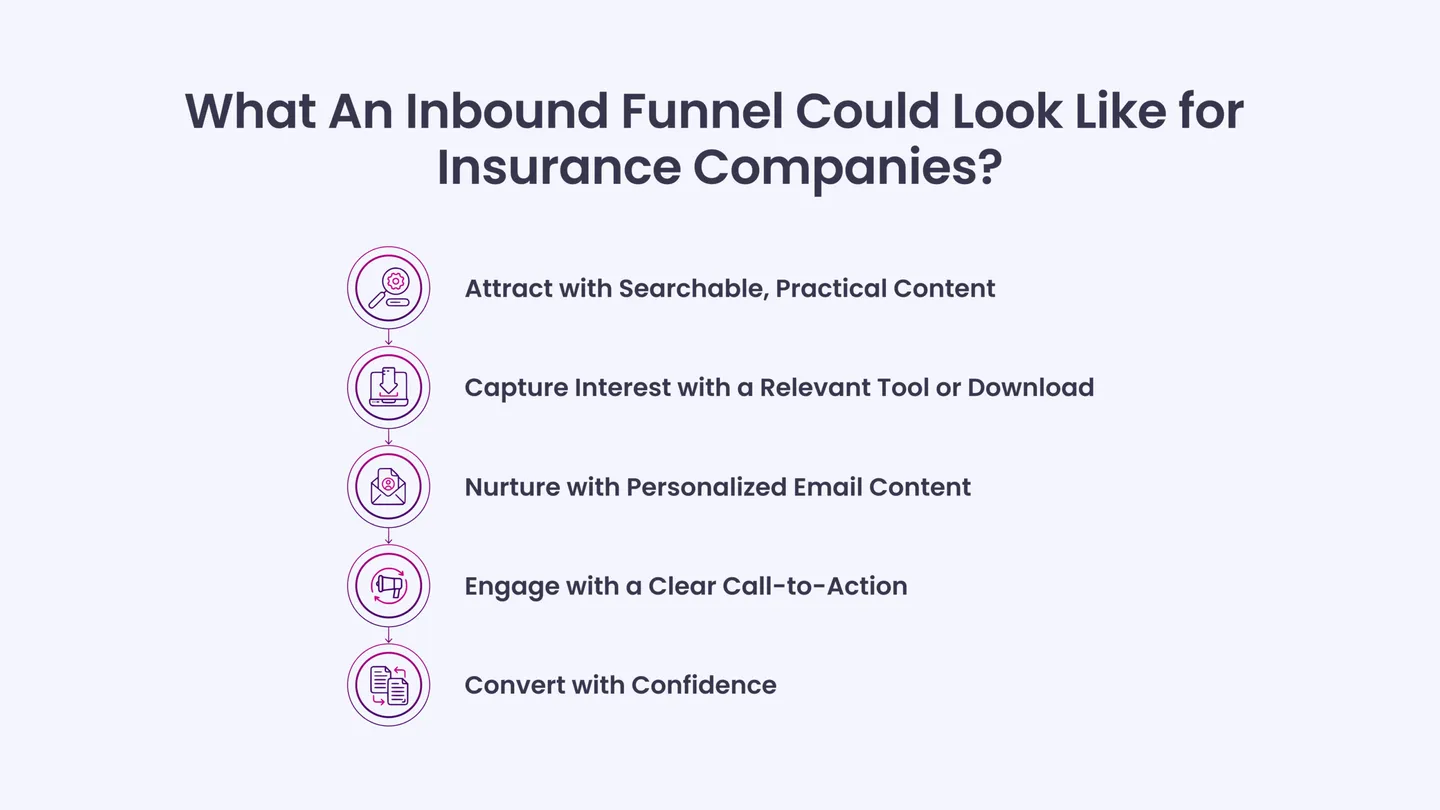
Step 1: Attract with Searchable, Practical Content A user searches, “What’s the right deductible for home insurance?”
They land on a clear, jargon-free blog post that breaks it down using real-life examples, such as monthly premiums vs. potential claim amounts, with a simple visual to help them decide.
Step 2: Capture Interest with a Relevant Tool or Download
At the end of the post, they’re offered a “Deductible Decision Checklist”, a 1-page printable that helps them evaluate different deductible levels based on their budget and risk tolerance. They fill out a light lead form (name, email, and zip code), which gives you a signal about their interest and location.
Step 3: Nurture with Personalized Email Content
They receive a follow-up email series titled “Coverage Basics Every Homeowner Should Know.”
The first email helps them understand replacement cost vs. actual cash value. The second dives into what’s typically not covered. The third introduces your local agency, including a short video from the agent who serves their area.
Step 4: Engage with a Clear Call-to-Action
The final email says, “Still unsure? Book a free 15-minute coverage review with [Agent Name], no pressure, just answers.”
By this point, they’ve consumed your content, interacted with a helpful tool, and started building a connection with your brand.
Step 5: Convert with Confidence On the call, the agent already knows what content the prospect downloaded, what emails they opened, and what they care about most.
Instead of starting cold, the conversation picks up where the content left off.
Focus on Insurance. Let Inbound Experts Do the Outreach.
Your plate is full of policy management, client calls, claims, and compliance. You don’t need to be tinkering with blog schedules, SEO, or email drip logic on top of it all.
But missing those pieces means missing buyers. If your brand isn’t showing up when people actively search for answers, you’re not in the conversation, but your competitor is.
Inbound marketing for insurance companies is how you stay relevant, helpful, and visible when it matters most. So while you keep your business running, let inbound specialists build a system that draws the right people in and gives them a reason to stay.
INSIDEA
Ready to put this into practice?
INSIDEA is an Elite HubSpot Partner rated 4.99 across 450+ verified reviews. Let's map it to your goals.



 How INSIDEA works