Insurance customers now research, compare, and purchase policies online instead of relying on branches or word-of-mouth. They expect instant quotes, transparent pricing, responsive mobile experiences, and credible content before choosing a provider.
For insurance companies, digital marketing directly impacts growth. Every click, review, and interaction builds credibility and shapes trust. With competition increasing across search engines, social platforms, and aggregator sites, insurers must go beyond basic online presence. A cohesive digital ecosystem that attracts qualified leads, nurtures relationships, and delivers measurable results has become central to success.
This blog explains how insurance companies can generate high-quality leads, improve conversions, and strengthen brand presence in 2026. It includes actionable examples and practical frameworks to help marketing managers create campaigns that deliver results.
Understanding the Modern Insurance Customer Journey
The journey of an insurance buyer today is multifaceted. Customers interact with multiple platforms before purchasing a policy, from Google searches to influencer reviews and AI-powered chat assistants. Understanding this path is critical to aligning your content, advertising, and engagements to each stage of awareness.
Awareness Stage
At this stage, customers recognize their need for insurance, often triggered by life events such as buying a home, having children, or launching a business. They search for answers, not brands. Insurance companies that publish educational blog posts, explainer videos, or short reels demystifying topics like “health insurance deductibles” or “car insurance coverage types” gain early visibility.
Example: A life insurance company can create a “Life Milestones and Coverage” content series explaining insurance needs for newlyweds, parents, or business owners.
Consideration Stage
Once aware, users begin comparing options. They visit your website, read reviews, and watch testimonial videos to assess credibility. Tools like policy comparison charts, downloadable buyer guides, and FAQ resources help steer them toward your solutions.
Transparency is the main factor; offer side-by-side policy comparisons and include case studies to prove value, whether it’s a “Small Business Liability Plan” or an “All-Inclusive Health Insurance Family Pack.”
Decision and Retention Stages
At the decision point, simplify actions. Enable one-click quotes, chatbot assistance, and seamless payment gateways. To retain customers, leverage personalized email campaigns that remind them of renewals or offer loyalty discounts. Retention isn’t about selling; it’s about continuously reassuring clients of your reliability and service excellence.
Modern insurance journeys are circular, not linear. Retained customers can become referrers, amplifying your reach organically.
SEO Strategies That Drive Qualified Insurance Leads
Search visibility determines whether your agency captures high-intent traffic or loses it to aggregators. SEO for insurance companies in 2026 must prioritize local visibility, E-E-A-T (Experience, Expertise, Authoritativeness, and Trustworthiness), and structured data to stand out in Google’s refined algorithmic environment.
Local SEO for Multi-Location Agencies
Most insurance shopping is geographically bound; people often search “auto insurance near me” or “best home insurance in Chicago.” Optimize your Google Business Profile with a consistent NAP (Name, Address, Phone), verified reviews, and service attributes such as “Instant Online Quotes” or “24/7 Support.”
Agencies with multiple branches should create location landing pages, each targeting city-specific search terms while maintaining consistent branding.
Content Built for High-Intent Keywords
Insurance searches often begin with informational queries. Create targeted content using commercial-intent keywords such as “affordable family health insurance” or “compare business liability plans.”
- Educational Articles: Break down key topics with authority and clarity.
- Comparison Guides: “Term Life vs. Whole Life Insurance” posts convert exceptionally well.
- FAQ Pages: Google’s rich snippet features thrive on structured FAQs that answer “how much,” “what’s the process,” and “can I qualify”- type queries.
Schema and E-E-A-T
Adding FAQ, HowTo, and Review schemas boosts visibility and click-through rates. Google’s March 2024 Core Update placed renewed emphasis on authentic expertise, so ensure all content cites trusted sources and is authored by licensed professionals where applicable.
Measuring Organic Success
SEO KPIs include organic lead submissions, conversion rate from local searches, and click-through rates from SERPs. Track these with Google Analytics 4 and Search Console for actionable optimization.
For brands investing in content storytelling, linking to thought leadership, such as Customer service qualities that create outstanding experiences can also reinforce trust and engagement.
Paid Media & PPC Strategies That Convert
While SEO builds foundation visibility, paid media accelerates lead acquisition. In insurance, where each policy represents significant lifetime value, PPC campaigns deliver predictable ROI when managed precisely.
Google Ads Structures for Insurance Niches
Organize campaigns by product type: Auto, Health, Life, and Commercial Insurance. Each ad group should include closely related keywords and dedicated landing pages with matching language and CTAs. For example, a “Business Liability” campaign could feature a headline like “Protect Your Business With Tailored Coverage, Instant Quotes Available.”
Use ad extensions to enhance visibility:
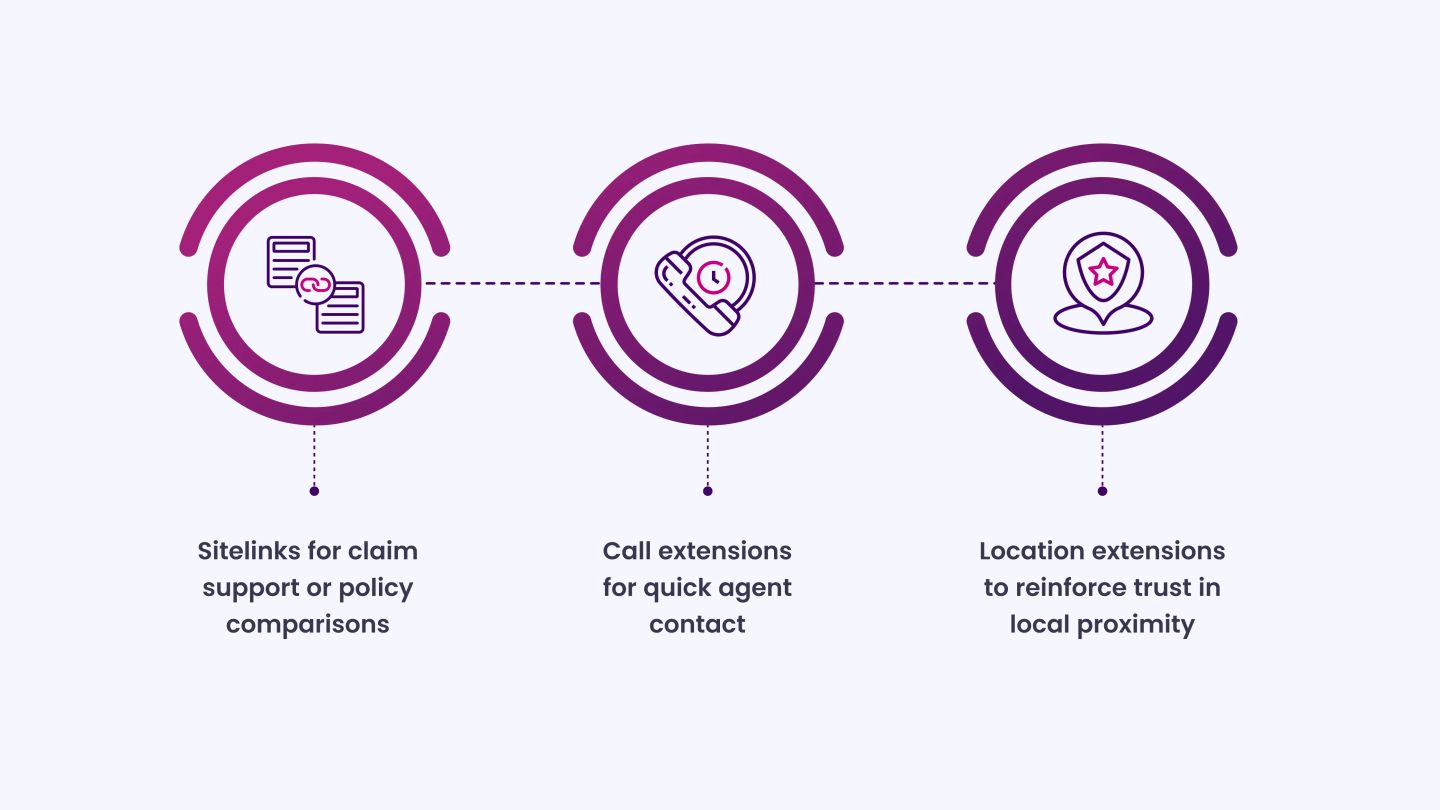
- Sitelinks for claim support or policy comparisons
- Call extensions for quick agent contact
- Location extensions to reinforce trust in local proximity
Retargeting and Personalization
Many undecided visitors abandon quote forms. Retarget them with personalized messages like “Finish Your Quote in Two Minutes” or educational offers such as a downloadable “Auto Insurance Renewal Checklist.” These gentle nudges build familiarity and drive conversions.
Measuring ROI from Paid Campaigns
Evaluate campaigns based on cost per lead (CPL), conversion rate (CR), and policy acquisition cost (PAC). Integrating CRM systems allows closed-loop ROI tracking, linking ad spend to actual premium revenue.
When optimized, PPC delivers measurable impact quickly, a crucial advantage for competitive insurance segments.
Social Media and Community Marketing for Insurers
Social media has evolved into a full-scale trust engine for insurers. Beyond promotions, it’s where real conversations and credibility-building occur.
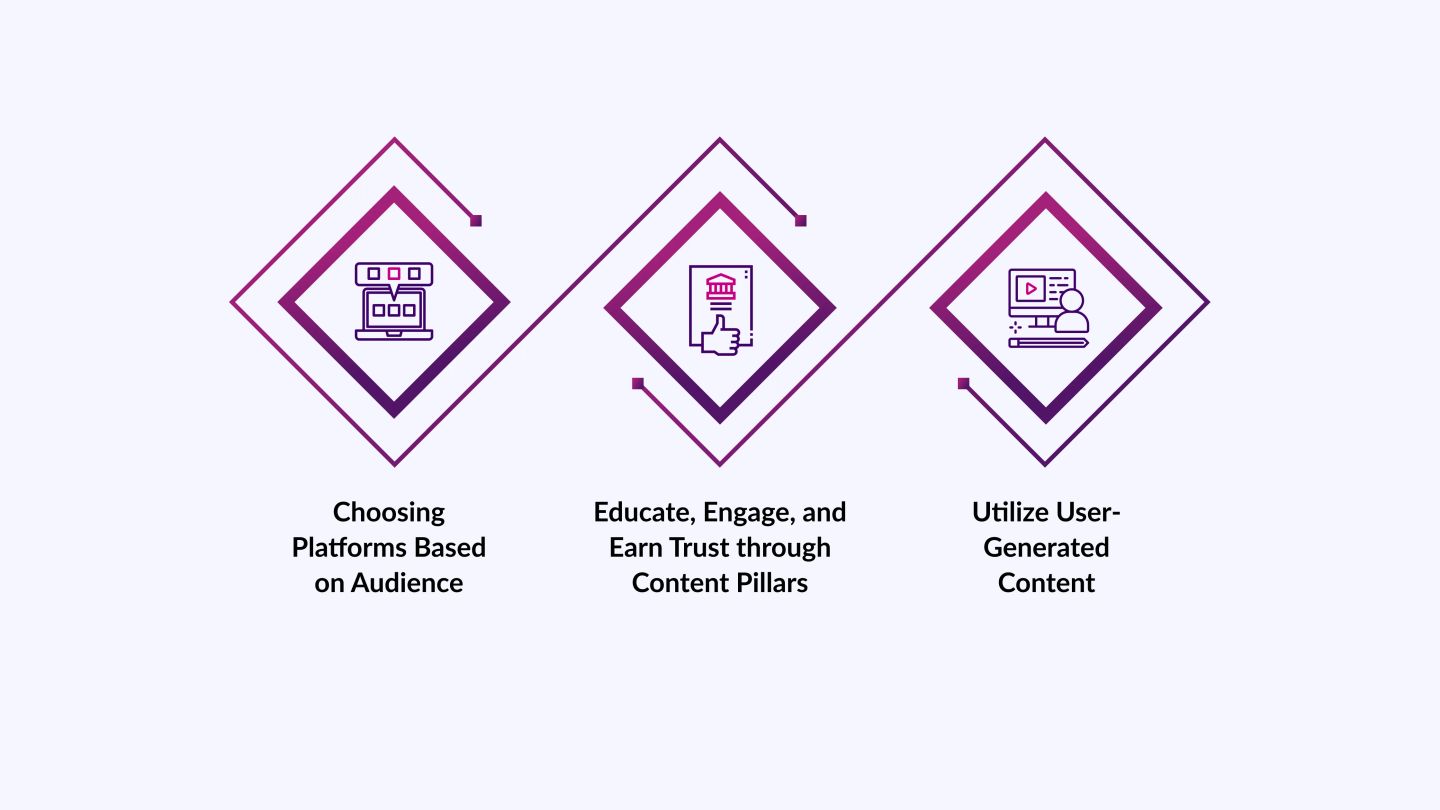
Choosing Platforms Based on Audience
- LinkedIn: Ideal for B2B insurance targeting, group health, or liability products. Share thought leadership posts and webinars.
- Facebook & Instagram: Strong for B2C policies, home, life, and auto. Use lifestyle storytelling and carousel ads featuring relatable scenarios.
- YouTube: Elevate authority with educational videos and success stories.
To strengthen your creative approach to social storytelling, explore INSIDEA’s guides, such as Creative Instagram captions for photographers, for visual marketing inspiration adaptable to insurance brand storytelling.
Educate, Engage, and Earn Trust through Content Pillars
Content should balance information and empathy. Share real customer testimonials, behind-the-scenes videos, and claim assistance stories. Short-form videos, such as agents clarifying “3 Common Insurance Misconceptions”, humanize the brand.
Utilize User-Generated Content
Encourage satisfied policyholders to share their experiences. Reposting these authentic endorsements boosts credibility far more than brand statements alone. With consent, convert strong feedback into short-form videos or story highlights.
Consistency is the main factor over here. Establish posting calendars focusing on weekly themes, protection, lifestyle, or service excellence to sustain visibility across networks.
Email Marketing and Automation Workflows That Nurture and Retain
In a heavily regulated sector like insurance, where trust determines renewal rates, personalized email marketing remains unmatched for nurturing long-term relationships.
Lead Nurturing Sequences for Quotes
Automated drip campaigns should respond intelligently to user actions. When someone downloads a brochure or begins a quote form, the first email should acknowledge the action and provide value, not pressure. Follow-ups can highlight benefit comparisons, customer testimonials, or limited-time offers.
Engagement and Retention
Policyholders should feel informed well past the renewal reminders. Monthly newsletters offering safety tips, financial literacy advice, or regulation updates reinforce value between policy cycles. A simple “Welcome to Our Family” onboarding sequence can significantly reduce churn.
Best Tools & Segmentation
CRM-linked platforms like HubSpot and ActiveCampaign help segment leads by intent, new homeowners, business owners, and retirees, and trigger personalized journeys accordingly. Automating this ensures timely outreach while preserving human tone.
Automation fueled by personalization drives higher open rates and deeper client loyalty, critical outcomes for retention-focused insurers.
Video and Visual Content: Humanizing Complex Insurance Topics
Video content transforms abstract insurance jargon into digestible, relatable stories. In 2026, short-form storytelling and interactive video formats will dominate audience engagement.
Explainer and Educational Storytelling
Use short explainer clips to simplify coverage types. For instance, a 60-second video on “The Difference Between Deductible and Premium” can significantly reduce customer confusion and boost confidence in conversion.
Webinar and Live Q&A Formats
Live educational sessions featuring underwriters or claims experts can establish authority. Post these sessions on LinkedIn or YouTube to enable replay value and ongoing SEO traffic.
Distribution and Visibility
Optimize videos for YouTube SEO by integrating target keywords into titles and descriptions. On social media, repackage webinar snippets as 15-second Reels or LinkedIn Clips to extend content lifecycle while maximizing engagement.
Visual authenticity equals customer trust. Consider integrating AI-enhanced subtitles and localized voiceovers to expand accessibility and reach.
Conversion Rate Optimization (CRO) for Insurance Websites
A website’s design can make or break your marketing ROI. CRO ensures that every visitor, especially those who arrive through paid or organic channels, is more likely to convert.
Frictionless Experiences
Streamline quote forms. Use progressive fields that pre-populate data and include live chat for instant support. Sticky quote buttons and scroll-triggered CTAs maintain accessibility without interrupting the browsing experience.
Landing Page Optimization
Run A/B tests on CTAs such as “Compare Policies Now” vs. “Get My Custom Quote.” Evaluate time-on-page and form completion rates. Successful tests often reveal that trust signals, like review stars or insurer partnerships, above the fold, dramatically raise conversions.
Trust and Compliance
Financial products require trust and transparency. Prominently display compliance badges and license numbers. Outline data security policies clearly to reassure visitors that their information is safe, an essential step given heightened digital privacy concerns in 2026.
CRO isn’t about pushing sales; it’s about removing doubt through clarity and confidence.
Referral, Review, and Reputation Management
Online reputation significantly influences insurance conversions. According to consistent industry findings, customers trust peer reviews more than marketing claims.
Building Review Pipelines
Automate review requests after claims or policy sign-ups through CRM triggers. A simple “How was your experience?” follow-up can generate powerful social proof. Encourage Google and Facebook reviews to strengthen both SEO and credibility.
Referral Incentives
Referral programs rewarding customers with small benefits, such as a $25 gift card or a premium discount, promote advocacy. When tied to email automation, these become an ongoing lead source requiring minimal managerial oversight.
Demonstrated Outcomes
For instance, a regional insurer implementing automated review requests saw a 40% uptick in organic leads within six months, purely through improved star ratings and word-of-mouth amplification. Transparency-driven visibility sells.
Advanced Strategies for 2026
Insurance marketing is entering an era defined by predictive, AI-driven, and privacy-conscious personalization.
AI-Powered Targeting and Personalization
Chatbots trained on proprietary data can now generate quotes instantly while learning from customer interactions. Predictive lead scoring algorithms help sales teams focus on high-conversion prospects by analyzing behavior patterns across email, ad, and website touchpoints.
To explore AI’s potential in conversational engagement, explore AI tools that enhance social media marketing for hospitality brands, and many principles apply to insurance chatbot deployment, too.
Data Privacy and Compliance
Strict frameworks such as GDPR and state-level privacy laws require transparent consent and data-use disclosures. Use privacy-centered messaging not as a compliance burden but as a conversion driver; customers trust brands that protect their information.
Omnichannel Integration
Ensure your platforms, CRM, ad analytics, and automation tools share unified data for consistent messaging. A customer reading an email, watching a YouTube clip, and receiving an SMS reminder should experience continuity, not fragmentation.
Forward-thinking companies investing in unified data ecosystems will dominate competitive markets in 2026.
Measuring Marketing ROI in the Insurance Space
Performance matters. Digital transformation without measurable outcomes defeats purpose.
KPIs
- Cost per Lead (CPL): Efficiency metric indicating acquisition cost per inquiry.
- Conversion Rate (CR): Percentage of leads turning into policies.
- Customer Lifetime Value (CLV): Long-term profitability of acquired customers.
- Retention Rate: Indicator of renewal success, especially for long-term policies.
Dashboard and Reporting Frameworks
Integrate GA4, CRM dashboards, and ad analytics to track multi-touch attribution. Create recurring monthly performance reviews, mapping ad spends to revenue impact to validate every digital channel’s ROI contribution.
Mastering metrics helps insurance marketers transition from campaign-driven actions to predictive growth models that anticipate market behavior.
Partnering with Experts for Sustainable Growth
Digital marketing success demands consistency, expertise, and scalability, qualities often difficult for internal teams to balance with daily client demands. Partnering with professionals ensures campaigns remain optimized and future-ready.
At INSIDEA, we specialize in performance-focused digital marketing for insurance companies. Through a comprehensive subscription model, we streamline your marketing ecosystem, from SEO strategies and WordPress management to personalized content and social media campaigns. Our retention-focused email flows and transparent reporting frameworks align every click with ROI.
If your marketing feels stretched thin or your in-house results have plateaued, let INSIDEA’s digital marketing experts help you realign strategy and efficiency.
INSIDEA
Ready to put this into practice?
INSIDEA is an Elite HubSpot Partner rated 4.99 across 450+ verified reviews. Let's map it to your goals.



 How INSIDEA works