As a financial advisor, you’re great at what you do, helping clients with investments, retirement planning, or managing taxes. But here’s the challenge: getting the right clients to find you in the first place.
Referrals are necessary, but today, they’re not enough. Potential clients are looking for you online, where things can get tricky. 93% of people will search for you before they reach out. So, when someone searches for a financial advisor nearby, what do they see?
Is your website outdated, making it hard for them to trust you immediately? Is your LinkedIn profile inactive, with little to no updates or engagement?
Or, is there no trace of your business online, leaving them wondering if you’re still in business?
This is a real problem. Without an updated online presence, clients may move on to someone who appears more trustworthy. This is where digital marketing steps in. With the right approach, you can establish trust and stand out long before a client contacts you.
Now, don’t be fooled - digital marketing isn’t about jumping on trends. It’s about making you visible, building your credibility online, and connecting with people looking for your services. Improving your website, being active on social media, and mastering SEO will help you reach clients who need your expertise.
This blog provides a detailed digital marketing guide for financial advisors, breaking down websites, SEO, content, social media, and paid ads so you can attract, engage, and convert the right clients.
The Importance of Digital Marketing for Financial Advisors
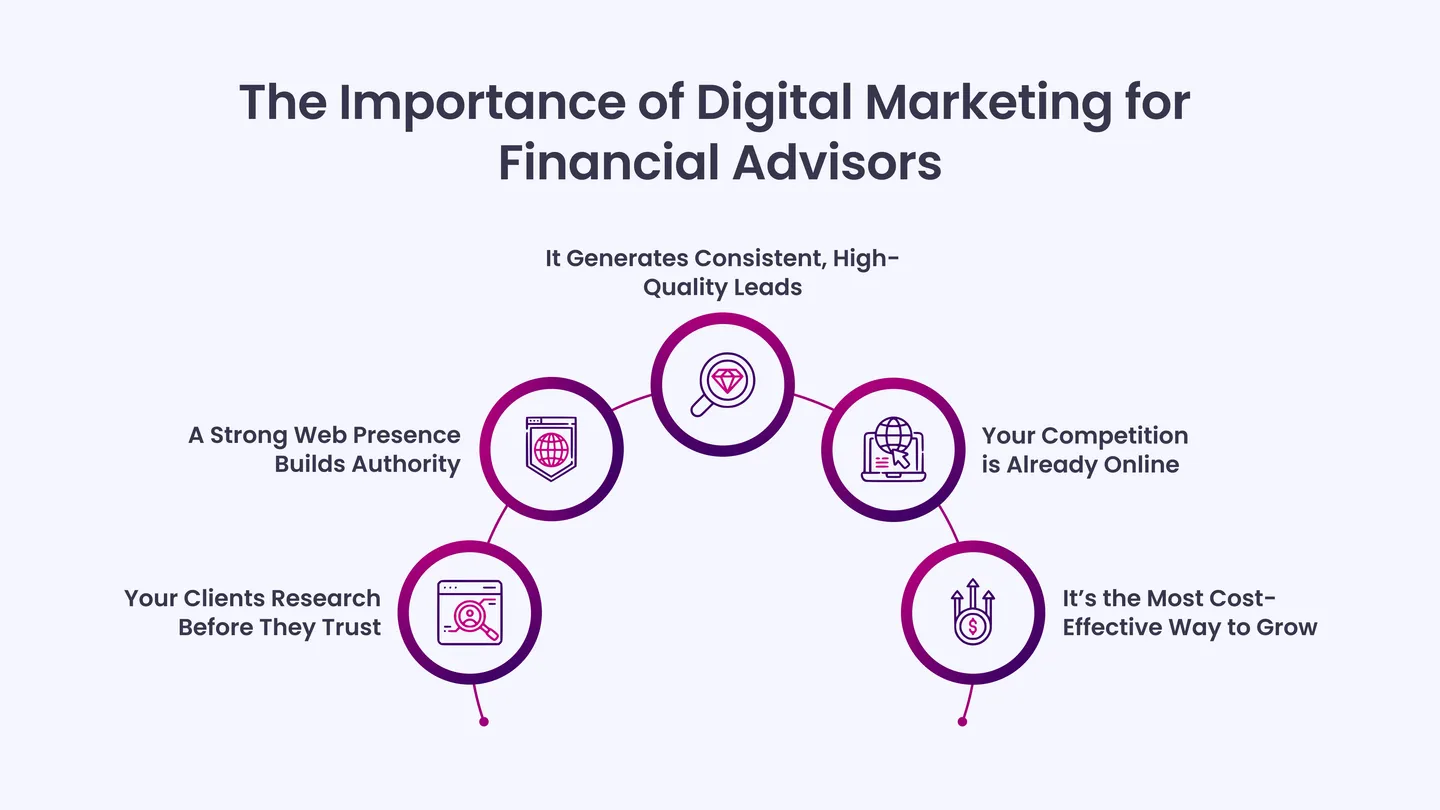
As mentioned earlier, having a strong online presence is essential. Financial advisors who overlook digital marketing lose potential clients before the first conversation. Here’s why it matters:
1. Your Clients Research Before They Trust
Financial planning is personal. Before handing over their portfolio, potential clients want to know who you are, what you offer, and whether you’re credible. 76% of people research a business online before reaching out. If your online presence is weak or outdated, they’ll move on to someone who looks more professional and active.
2. A Strong Web Presence Builds Authority
The most successful financial advisors aren’t just advisors, they’re recognized experts. When you publish valuable content, engage on LinkedIn, and rank high in search results, you prove your expertise before prospects even contact you. That authority builds trust, which leads to better clients and higher retention rates.
3. It Generates Consistent, High-Quality Leads
Relying on referrals alone means waiting for someone to send you a client. A strong digital marketing system works 24/7 to bring in leads, through SEO, content, and social media. Advisors who use digital marketing strategically get more inbound leads than those who don’t.
4. Your Competition is Already Online
Searches for “financial advisor near me” have jumped significantly in the last two years. If you’re not showing up in search results, your competitors are. Having the best service doesn’t matter if no one can find you.
5. It’s the Most Cost-Effective Way to Grow
Conventional advertising is expensive and unpredictable. Digital marketing allows you to precisely target your ideal clients at a fraction of the cost of cold outreach or print ads.
A Detailed Digital Marketing Guide for Financial Advisors
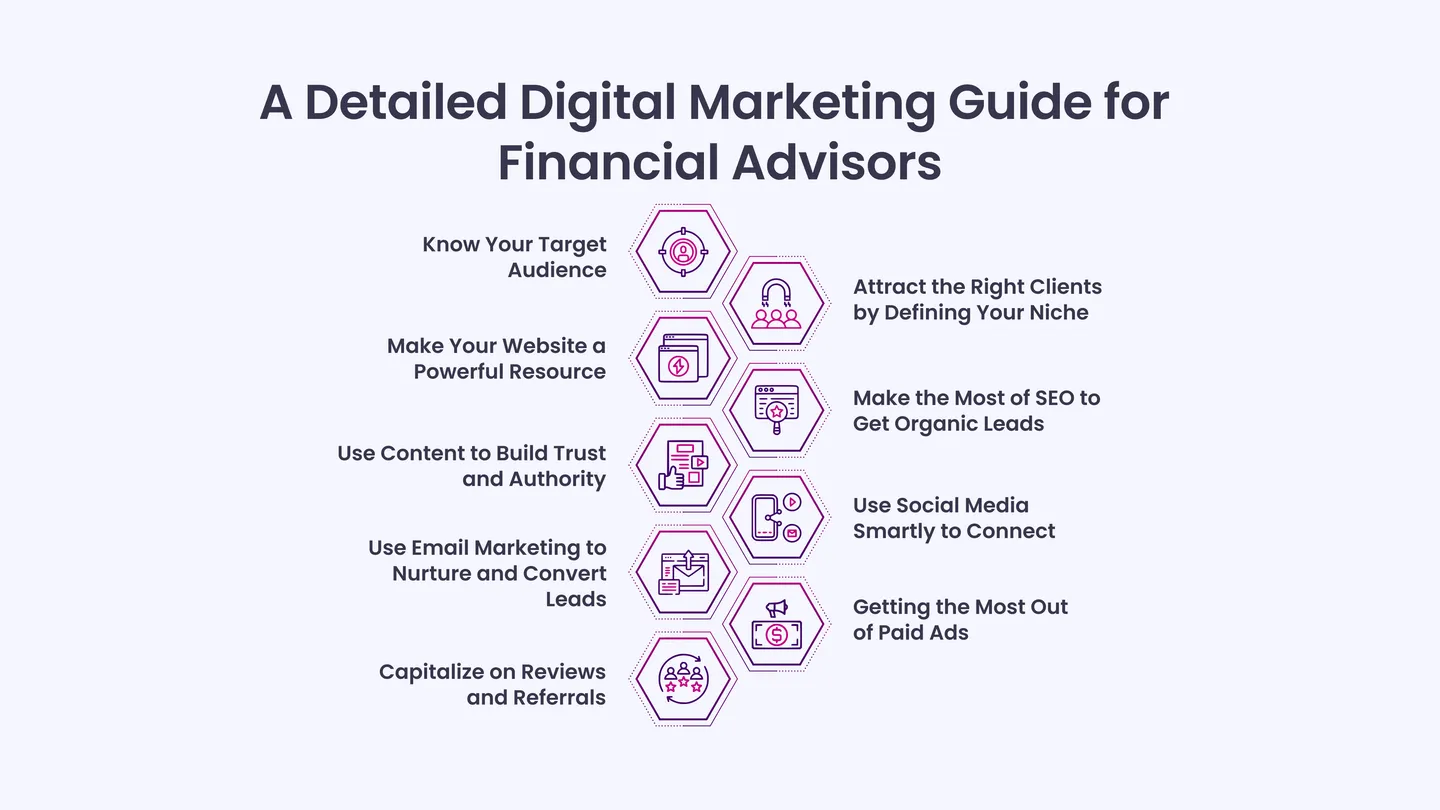
Before getting into the digital marketing guide, knowing your audience is one thing, but knowing what you want them to do is just as important.
Without clear objectives, it becomes difficult to determine. Are you trying to increase prospect calls, email subscribers, or website traffic? Defining these goals upfront helps you measure success and adjust your method.
Some important numbers worth tracking:
- Email subscribers: Are people signing up to hear from you?
- Website traffic: Are potential clients visiting your site?
- Social media engagement: Are your posts starting conversations?
- YouTube subscribers: Are people interested in your insights?
Now that you know what to track, let’s go through the steps to make digital marketing effective for your business.
1. Know Your Target Audience
You can’t market effectively if you don’t know who you’re trying to reach. Financial planning isn’t one-size-fits-all, and neither is digital marketing. The more you understand your ideal client, the easier it is to create messaging that feels relevant and valuable to them.
How to Build a Client Profile?
Here are the following metrics to build your audience profile:
- Age & Income: Are you advising young professionals, high-net-worth individuals, or retirees?
- Career & Industry: A doctor, a tech executive, and a small business owner all have different financial needs.
- Where They Get Their Financial Information: Do they read Forbes? Follow finance blogs? Scroll LinkedIn? Your content should meet them where they are.
- Goals & Fears: Are they worried about retirement? Are they paying too much in taxes? Understanding their pain points helps you address them directly.
- Biggest Hesitations: Why wouldn’t they hire an advisor? Maybe they think they can manage their money alone or fear high fees. Your content should address these objections upfront.
What to Do Next?
Take a look at your current clients. What patterns do you see? Build profiles based on the types of people you already help and want more of, then customize your marketing to speak directly to them.
2. Attract the Right Clients by Defining Your Niche
Trying to be the “go-to financial advisor for everyone” is exhausting. When your messaging is too broad, it’s harder for potential clients to see why they should choose you over someone else. Specialization makes you stand out, builds trust faster, and attracts higher-quality leads.
People want an advisor who understands their financial concerns, not someone offering generic advice. When you specialize, you position yourself as an expert in a particular area, making it easier for them to see the value you bring.
For example,
- Doctors and medical professionals deal with irregular income, student loans, and complex tax situations. An advisor who focuses on this niche can customize solutions to their needs.
- Small business owners often struggle with retirement planning, fluctuating revenue, and tax optimization. If you cater to these pain points, your messaging can address them directly.
- Tech professionals with stock options need guidance on equity compensation, tax implications, and investment strategies. Advisors who specialize in this area can quickly build trust.
Actionable Step: Make Your Specialization Clear
Look at your website, LinkedIn profile, and marketing materials. Do they clearly communicate who you help and how? If not, revise them to highlight your niche. Use case studies, blog content, and client testimonials that speak directly to your ideal audience.
When you focus on a specific group, your marketing becomes sharper, your messaging resonates more, and potential clients feel confident that you’re the right advisor.
3. Make Your Website a Powerful Resource
Many financial advisor websites are nothing more than online business cards, just a bio, a list of services, and a contact form. But that alone won’t turn visitors into clients. Your website should educate, engage, and encourage action, helping potential clients see your value and making it easy for them to take the next step.
To make your website a true client-generating asset, it must include:
- Clear, Compelling Messaging: Within seconds, visitors should understand who you help, how you help, and why you’re different. Make this obvious on your homepage with a strong value proposition.
- Lead Capture Forms: Offer a valuable free resource (e.g., “10 Tax-Saving Tips for Business Owners”) in exchange for an email address. This helps you build your list and nurture potential clients.
- Client-Centric Content: Instead of just listing services provide insights that address your audience’s pain points. Blog posts, case studies, and FAQ sections can build trust and demonstrate expertise.
- Mobile Optimization: More than half of web traffic comes from mobile devices. If your site isn’t fast, easy to navigate, and readable on the phone, you’re likely losing potential clients.
Pull out your phone and test your website now. Is it slow, clunky, or hard to navigate? If yes, prioritize fixing it to avoid missing out on leads.
4. Make the Most of SEO to Get Organic Leads
If someone types “financial advisor near me” or “best tax strategies for retirees” into Google, you want your name to be at the top of the results, not buried on page five where no one looks. That’s where SEO (search engine optimization) comes in. A well-optimized website helps you get found without paying for ads.
How to Make SEO Work for You?
- Claim and Optimize Your Google Business Profile: When people search for local advisors, Google prioritizes businesses with verified listings and strong reviews. Make sure your Google Business Profile is set up, accurate, and includes:
Your business name, address, and phone number
A detailed description of your services
Client reviews (ask happy clients to leave them) - Create Blog Content That Answers Real Questions: SEO isn’t just about ranking, it’s about showing up when people need answers. Think about what your clients search for and write content around those topics. Some good examples:
“How much do I need to retire?”
“What’s the best investment strategy for small business owners?”
“How do I minimize taxes on my 401(k)?”
When your website provides clear, helpful answers, Google recognizes your site as valuable and ranks it higher. - Use Local Keywords on Your Website: To attract local clients, include phrases like “Financial Advisor in [Your City]” or “Retirement Planning in [Your State]” in key places on your site, your homepage, service pages, and blog content.
5. Use Content to Build Trust and Authority
People don’t wake up thinking, “I need a financial advisor today.” Instead, they search for answers to specific financial questions. If your content provides those answers, they’ll see you as a trusted expert before considering working with you.
Good content educates and helps people understand complex financial decisions in a way that’s easy to digest.
What Kind of Content Works Best?
i) Short-Form Content (Quick, Actionable Insights):
Great for grabbing attention and staying relevant:
- LinkedIn posts: Share industry updates, financial tips, or lessons from real client experiences.
- Twitter threads: Break down complex topics into bite-sized insights.
- Email newsletters: Send monthly financial advice, market insights, or tax-saving tips.
ii) Long-Form Content (In-Depth Value That Builds Authority)
Ideal for establishing credibility and answering bigger questions:
- Blog articles: Answer common financial concerns, like “How much should I save for retirement?”
- Whitepapers: Provide deep dives on tax planning, investment strategies, or retirement savings.
- Webinars: Teach financial topics live, answer questions, and engage with potential clients.
iii) Evergreen Content (Timeless Resources That Keep Working for You)
Unlike time-sensitive market updates, evergreen content stays relevant for years and continues attracting leads over time. Examples:
- “How to Lower Your Taxes in Retirement”
- “Best Investment Strategies for Small Business Owners”
- “What to Do With a Large Inheritance”
6. Use Social Media Smartly to Connect
Social media isn’t about blasting out sales pitches, it’s about staying visible, building relationships, and showing your expertise in honest conversations. For financial advisors, LinkedIn should be the first priority because it’s where professionals actively seek financial insights, industry updates, and expert advice.
How to Use LinkedIn Effectively?
- Post Regularly (At least twice a week): Share practical insights that help your audience make better financial decisions. Examples:
“Three tax-saving strategies business owners should know before year-end.”
“How to handle a large cash windfall without making costly mistakes.”
“Why delaying Social Security isn’t always the best retirement move.” - Engage With Your Network: Don’t just post, start conversations.
Comment on relevant industry discussions.
Answer questions in LinkedIn groups.
Reach out to potential clients or referral partners with genuine insights. - Show Your Personality: People hire advisors they trust. Share real experiences, personal perspectives, and client success stories (while respecting privacy). A simple story about how you helped a client avoid a financial mistake is more relatable than a generic investment tip.
- Expanding Across LinkedIn: Once you have a steady LinkedIn presence, consider adding:
YouTube: Short explainer videos on common financial questions.
Twitter: Quick insights on market trends and financial news.
Facebook Groups: Engaging with niche communities like “Finance for Physicians” or “Wealth Planning for Entrepreneurs.”
7. Use Email Marketing to Nurture and Convert Leads
Most financial advisors focus on social media and websites but overlook one of the most effective marketing tools, email. Unlike social media algorithms that limit your reach, email lands directly in your prospect’s inbox. It allows you to build trust over time, provide value, and stay in front of potential clients until they’re ready to take action.
What should financial advisors send in their emails?
Welcome Series (First Impressions Matter): When someone downloads a free resource (like a tax guide or retirement checklist), don’t just leave them hanging. Set up a short email sequence that:
- Introduce your firm and how you help clients
- Share a useful financial tip or ca ommon mistake to avoid
- Ends with a soft call to action, like booking a free consultation or reading another valuable resource
Monthly Newsletter (Consistent Value): A simple, once-a-month email keeps you in front of prospects without overwhelming them.
What to include:
- Market insights (without the jargon)
- Tax-saving strategies or retirement tips
- Answers to common client questions
- A reminder that you’re available for consultations
Personalized Outreach : Many prospects need multiple touchpoints before taking action. If someone expressed interest in your services but never followed up, send a quick, friendly check-in email. Example:
“Hi [First Name], I remember you were exploring retirement planning options a while back. If you still have any questions, I’d be happy to chat. Let me know if you’d like to schedule a quick call.”
8. Getting the Most Out of Paid Ads
Paid ads can bring in new clients, but most financial advisors waste money on ineffective campaigns. Running generic “Free Consultation” ads rarely works because people don’t hire advisors impulsively. They need trust first.
If you invest in ads, focus on attracting the right people with the right message.
What Works?
Retargeting: Most website visitors don’t book a call on their first visit, but that doesn’t mean they’re not interested. Retargeting ads allow you to stay visible to people who have already interacted with your content.
- Show ads to website visitors who didn’t take action.
- Retarget people who engaged with your LinkedIn posts or watched a YouTube video.
- Keep your name in front of potential clients until they’re ready to reach out.
Lead Magnets: Instead of running an ad saying, “Book a Free Consultation”, offer something useful in exchange for their email. Examples:
“5 Retirement Planning Mistakes to Avoid” (for pre-retirees)
“Tax Strategies for Self-Employed Professionals” (for business owners)
“How to Maximize Your 401(k) and Minimize Taxes” (for high-income earners)
Once they download your guide, you can nurture them through email before pitching your services.
Hyper-Targeting: One of the financial advisors’ biggest mistakes is casting too broad of a net. Instead of advertising to “everyone,” get specific:
- Target based on age, job title, income level, and financial interests.
- Run niche ads like “Retirement Planning for Physicians” or “Investment Strategies for Tech Executives.”
- Focus on one audience at a time, generic ads don’t convert well.
If you’re already running ads, track where your leads come from. Are people clicking but not booking calls? Adjust your messaging. If you haven’t tried ads yet, start with a small budget and a focused strategy, ads only work when they bring in the right people.
9. Capitalize on Reviews and Referrals
People trust real experiences over advertisements. No matter how polished your website is, potential clients want proof that you deliver results. That’s why reviews and referrals are some of the most powerful resources for growing your advisory business.
How to Build Credibility Through Social Proof?
Ask for Reviews: Even your happiest clients probably won’t leave a review unless you ask. A simple email or message can go a long way. Keep it short and personal:
“Hi [Client’s Name], I really appreciate the opportunity to work with you. If you’ve found our services valuable, would you mind leaving a quick review on Google (or LinkedIn)? It helps others who might be looking for financial guidance. Here’s the link: [Insert Link]. Thanks so much!”
Use Testimonials That Show Results: Instead of vague praise like “Great service!”, feature testimonials that highlight specific wins:
“With [Your Name]’s help, I reduced my tax burden by $15,000 last year.”
“Thanks to [Your Firm], I now have a clear retirement plan and feel confident about my future.”
“As a business owner, I struggled with cash flow planning, until I started working with [Your Name].”
Showcasing these testimonials on your website, emails, and social media gives potential clients real reasons to trust you.
Use LinkedIn for Recommendations: LinkedIn recommendations are public, credible, and highly visible to your professional network. Ask satisfied clients and colleagues to leave recommendations on your profile. It strengthens your authority and makes you stand out when prospects check your profile.
Advising Clients Is Your Expertise, Let Marketing Experts Handle the Rest
You already have a full plate, managing client portfolios, staying updated on market trends, and guiding people toward their financial goals. The last thing you need is to spend hours figuring out SEO, social media, and email marketing.
Marketing isn’t just another task, it’s a system that either brings in quality leads or lets potential leads slip away. And if you’re juggling it on your own, chances are it’s costing you time and business.
If marketing feels like a distraction or isn’t bringing in the results you need, it might be time to refine your methodology, or bring in marketing experts who can handle it. A strong, well-executed process means:
- A steady flow of qualified leads without constant effort
- A digital presence that builds trust while you focus on advising clients
- A marketing system that works in the background, so you don’t have to
Instead of spending hours guessing what works, focus on what you do best, helping clients secure their financial future. Let marketing professionals handle the rest, so your business grows while you stay focused on what matters most.
INSIDEA
Ready to put this into practice?
INSIDEA is an Elite HubSpot Partner rated 4.99 across 450+ verified reviews. Let's map it to your goals.



 How INSIDEA works