SEO in 2026 presents a clear challenge: the stakes are higher, but finding clarity is harder than ever.
With 8.5 billion searches conducted daily globally, making your business visible at the right moment has never been more critical. But for many, SEO remains a struggle due to shifting algorithms, inconsistent data, and overwhelming amounts of advice. This leads to wasted budgets, missed opportunities, and uncertainty about what drives results.
SEO spending is on the rise. Mordor Intelligence reports that global SEO investments will exceed $80 billion by 2026. Yet, despite the increase in budget, businesses often struggle to identify the right strategies that deliver tangible results.
That’s where this blog comes in.
We’ve curated over 150 data-backed statistics to help you see past surface-level trends. These insights come from credible sources and reflect the core factors driving SEO success in 2026.
Let’s dig into the numbers to understand what’s materially different about SEO in 2026.
Google Ranking Factor Statistics For 2026
Google ranking factors are the elements Google uses to determine a webpage’s relevance and ranking for a particular search query. These factors include content quality, backlinks, technical SEO, user engagement, and more.
Ranking high on Google requires optimization across several of these factors, making SEO a multifaceted and ongoing effort.
1. Google Uses Over 200 Ranking Signals To Rank Web Pages
Google’s algorithm evaluates more than 200 distinct signals when determining how websites are ranked in search results. These signals include content relevance, user engagement, technical quality, backlink profiles, and more.
Source: https://backlinko.com/seo-stats
2. Content Quality Is The Most Weighted Ranking Factor (Approx. 23%)
In the 2026 weighting model based on recent Google internal documentation leaks, content quality accounts for about 23% of the overall ranking influence in Google’s algorithm.
Source: https://akselera.tech/en/insights/guides/google-ranking-factors
3. Backlinks Now Carry Around 13% Weight In Ranking Signals
Backlinks continue to matter, but their relative influence has decreased significantly to around 13% of total ranking factor weight in 2026.
Source: https://akselera.tech/en/insights/guides/google-ranking-factors
4. User Engagement Signals Represent About 12% Of Ranking Influence
User behavior metrics such as dwell time, click patterns, and session activity now contribute around 12% to how content is ranked.
Source: https://akselera.tech/en/insights/guides/google-ranking-factors
5. Content Freshness Accounts For Approximately 6% Of Ranking Signals
Regularly updated pages that are refreshed at least annually tend to rank higher, and this freshness factor now has an estimated 6% influence.
Source: https://akselera.tech/en/insights/guides/google-ranking-factors
6. Pages Updated Quarterly Or Monthly Gain ~4.6 Positions On Average
Web pages that are updated more frequently often see ranking improvements averaging nearly five positions.
Source: https://akselera.tech/en/insights/guides/google-ranking-factors
7. Mobile-Friendliness Is A Confirmed Google Ranking Factor
Google continues to prioritize mobile usability as part of its page experience requirements, which affects where pages appear in search results.
Source: https://www.semrush.com/blog/google-ranking-factors
8. Core Web Vitals Metrics Are Used To Measure Page Experience
Google uses Largest Contentful Paint (LCP), Interaction to Next Paint (INP), and Cumulative Layout Shift (CLS) as measurable signals tied to user experience.
Source: https://developers.google.com/search/docs/appearance/core-web-vitals
9. Average Word Count For Pages Ranking On Page One Is ~1,447 Words
Content that ranks on the first page of Google tends to have higher word counts, suggesting that deeper content is correlated with better rankings.
Source: https://backlinko.com/seo-stats
10. Mobile-First Indexing Now Applies To Over 70% Of Sites
The majority of sites are now indexed primarily based on their mobile experience, and mobile-optimized sites are about 67% more likely to appear on the first page of results.
Source: https://akselera.tech/en/insights/guides/google-ranking-factors
11. HTTPS Is Used By 95% Of Top-Ranking Pages
Nearly all top-ranking sites use HTTPS, confirming that secure connections remain a ranking requirement.
Source: https://akselera.tech/en/insights/guides/google-ranking-factors
12. Semantic Search And Entities Are Increasingly Important
Google’s understanding of entities and topic relationships now plays a measurable role in how content relevance and context are evaluated.
Source: https://akselera.tech/en/insights/guides/google-ranking-factors
13. Pages That Answer User Intent Precisely Rank Higher
Matching the exact meaning of a user’s query is now a confirmed ranking signal, thanks to AI underpinnings in Google’s algorithms.
Source: https://akselera.tech/en/insights/guides/google-ranking-factors
14. Websites With Comprehensive Content Perform Better
Pages that provide thorough coverage of a topic are statistically more likely to rank above content that only addresses parts of a query.
Source: https://www.semrush.com/blog/google-ranking-factors
15. High-Quality Content, Page Experience, And Links Are The Top 3 Ranking Influencers
Across multiple industry sources, these three areas are shown to have the strongest correlation with higher ranking positions.
Source: https://backlinko.com/seo-stats
16. Nearly 60% Of Pages in Top 10 Results Are Older Than 3 Years
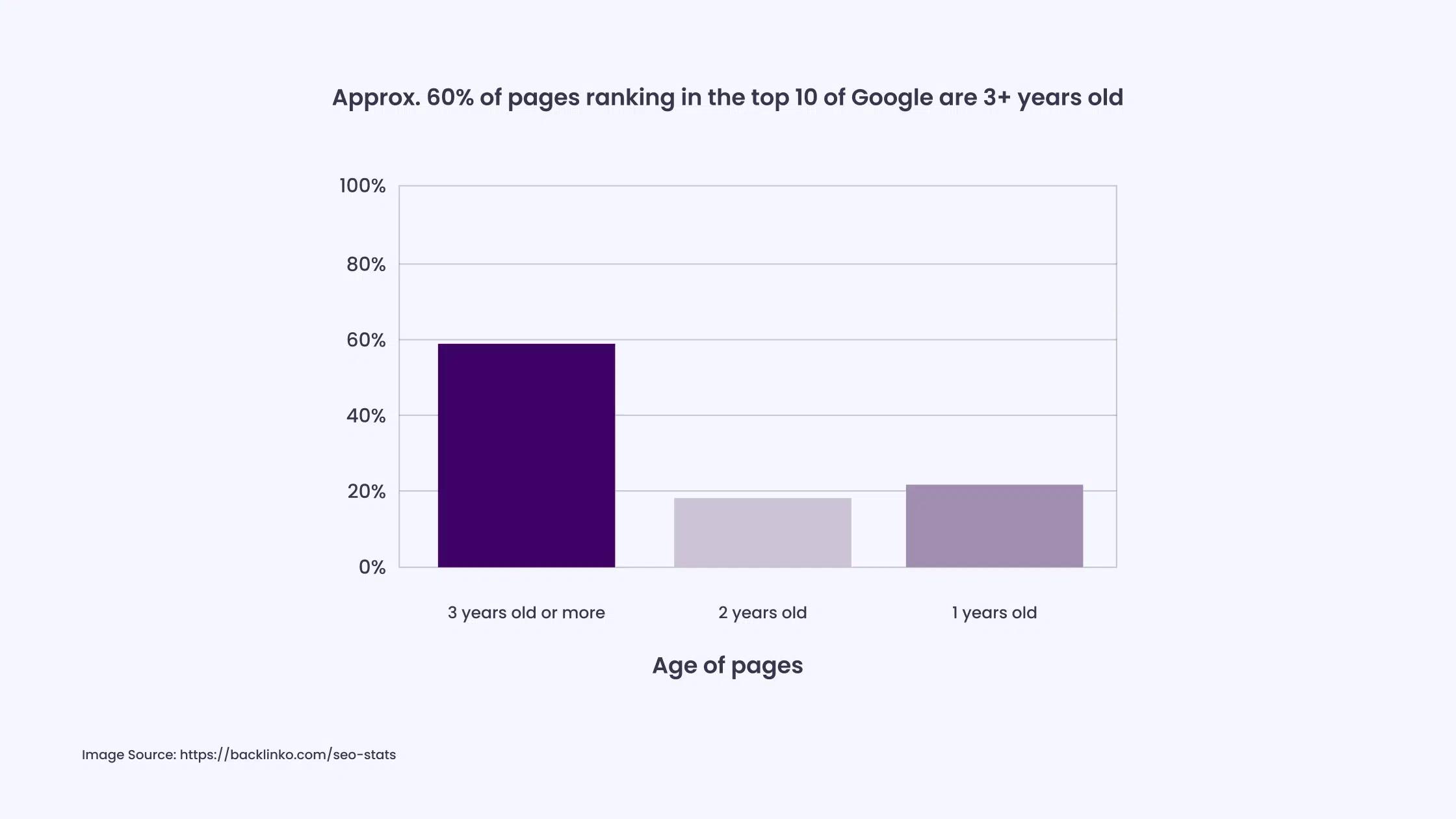
Image Source: https://backlinko.com/seo-stats
Established, long-standing content continues to hold strong positions in search rankings, showing the value of stable, maintained pages.
Source: https://backlinko.com/seo-stats
17. Google Organic Search Drives ~57.8% Of Global Web Traffic
Organic results account for the majority of global web traffic, underscoring the importance of ranking factor optimization.
Source: https://backlinko.com/seo-stats
18. The #1 Organic Result On Google Gets Around 27.6% Of All Clicks
The highest-ranking organic listing captures the largest share of user clicks, underscoring the impact of strong ranking signals.
Source: https://backlinko.com/seo-stats
19. Less Than 1% Of Searchers Click On Page Two Of Google Results
Sites that fail to secure first-page rankings receive minimal traffic, underscoring the importance of ranking factors.
Source: https://www.sixthcitymarketing.com/seo-facts-and-statistics
20. Google Handles Around 8.5 Billion Searches Per Day
The scale of search volume reflects how widely ranking factors determine visibility on the web.
Source: https://www.sixthcitymarketing.com/seo-facts-and-statistics
21. About 96.55% Of Content Gets No Traffic From Google
The vast majority of web pages receive little to no organic traffic, largely because they lack alignment with ranking factors.
Source: https://www.sixthcitymarketing.com/seo-facts-and-statistics
22. Core Web Vitals Are Part Of Google’s Page Experience Signals
Google explicitly uses these metrics in its page experience algorithm updates.
Source: https://developers.google.com/search/docs/appearance/core-web-vitals
23. High-Quality Backlinks Still Influence Rankings
Backlinks remain part of the ranking equation and contribute to visibility when they come from reputable sources.
Source: https://www.rankability.com/ranking-factors/google
24. Search Intent Matching Improves Visibility
When content aligns with what users are actually seeking, Google is more likely to rank it prominently.
Source: https://www.semrush.com/blog/google-ranking-factors
25. Content That Solves Queries Outperforms Keyword-Stuffed Content
Google’s algorithm favors content that directly answers user questions rather than pages trying to rank based on keyword repetition alone.
Source: https://www.semrush.com/blog/google-ranking-factors
Voice Search SEO Statistics For 2026
Voice search SEO involves optimizing content for voice-enabled devices such as Google Assistant, Siri, and Alexa. These platforms rely on spoken queries, which tend to be more conversational, natural, and specific. Optimizing for voice search means understanding the types of questions people ask and how to structure content to match the way voice assistants return answers.
26. Around 20.5% Of People Worldwide Use Voice Search
Approximately 1 in 5 people worldwide now use voice search. This highlights the growing trend of voice technology integration into everyday life. As the adoption of voice assistants continues to increase, businesses must ensure their content is optimized for voice search queries to stay competitive.
Source:https://www.demandsage.com/voice-search-statistics/
27. There Are Approximately 8.4 Billion Voice Assistants In Use Worldwide
Voice-enabled devices are ubiquitous, with the number of voice assistants now surpassing the global population. This indicates how deeply embedded voice search is in consumer technology, suggesting that marketers need to focus on optimizing for voice search to reach a broad audience.
Source: https://www.demandsage.com/voice-search-statistics/
28. 58.6% Of Consumers Have Tried Voice Search At Least Once
More than half of all consumers have experimented with voice search, reflecting a shift in user behavior toward spoken queries. While not everyone may use voice search regularly, the fact that over half of consumers have tried it indicates its growing importance in SEO strategies.
Source:https://www.invoca.com/blog/voice-search-stats-marketers
29. 21% Of People Use Voice Search Regularly
Approximately 1 in 5 individuals engage with voice search regularly, demonstrating that this behavior is becoming part of their daily routines. This consistency of use underscores the need for businesses to optimize for voice queries, as voice search is likely to become a staple in consumer interaction.
Source:https://www.invoca.com/blog/voice-search-stats-marketers
30. 27% Of People Use Voice Search On Mobile Devices
Voice search on mobile devices has become quite common, with nearly a third of mobile users turning to voice commands for information. The convenience of using voice search on mobile phones, especially for on-the-go queries, makes it essential for businesses to ensure mobile voice optimization is a part of their SEO strategy.
Source: https://www.demandsage.com/voice-search-statistics/
31. 76% Of Smart Speaker Users Perform Local Voice Searches Weekly
A significant number of voice search users rely on smart speakers for local information, such as finding nearby stores or services. The frequency with which users engage in local voice searches each week shows how integral voice search has become to local SEO, requiring businesses to prioritize local optimization for voice queries.
Source:https://www.invoca.com/blog/voice-search-stats-marketers
32. 58% Of Consumers Use Voice Search to Find Local Business Information
More than half of voice search users turn to voice assistants to find information about local businesses, underscoring the growing importance of local SEO optimization. This behavior reflects a shift towards convenience, with users seeking fast, hands-free access to nearby services and offerings.
Source:https://www.invoca.com/blog/voice-search-stats-marketers
33. 51% Of People Use Voice Search To Research Restaurants
Voice search is frequently used to find local dining options. This is a valuable opportunity for restaurants to optimize their content for voice search queries related to food, hours of operation, and reviews. As more consumers embrace voice search, local eateries can benefit significantly from voice-optimized websites and local listings.
Source:https://www.invoca.com/blog/voice-search-stats-marketers
34. 90% Of People Believe Voice Search Is Easier Than Typing
A clear majority of voice search users believe speaking to devices is easier than typing. This preference for convenience highlights why optimizing for voice search is crucial for ensuring accessibility and ease for users, potentially leading to higher traffic and engagement for businesses.
Source: https://www.demandsage.com/voice-search-statistics/
35. 71% Prefer Voice Search Over Typing When Possible
When given the option, 71% of users prefer voice search to typing. This preference reveals a larger trend toward hands-free, faster interactions. Brands need to adapt to this growing demand by optimizing their content for voice search to avoid missing out on user traffic.
Source: https://aicurator.io/voice-search-statistics/
36. 65% Of People Speak to Their Voice Devices Daily
A large percentage of users speak to their voice assistants daily, emphasizing the central role voice technology is beginning to play in consumer habits. Daily interactions with voice devices make it all the more essential for businesses to optimize their content for voice queries to stay relevant.
Source:https://www.invoca.com/blog/voice-search-stats-marketers
37. 72% Of People Have Used Voice Assistance In The Last Six Months
This statistic shows the widespread use of voice assistance among the general population, with most people engaging with these devices at least once every six months. As voice search adoption increases, businesses should prioritize voice-friendly optimization to capture these regular interactions.
Source: https://aicurator.io/voice-search-statistics/
38. Over 80% Of Voice Answers on Google Assistant Come from the Top 3 Search Results
The majority of answers provided by Google Assistant are sourced from the top three search results. This highlights the importance of securing a high search ranking to ensure your content is selected by voice assistants for their responses.
Source:https://aicurator.io/voice-search-statistics/
39. The Average Voice Search Answer Contains About 29 Words
Voice search responses tend to be brief and direct, with answers averaging just 29 words. For businesses, this means their content should focus on concise, clear answers that are easy for voice assistants to read, often matching the format of featured snippets.
Source:https://aicurator.io/voice-search-statistics/
40. Pages That Rank In Voice Search Results Load 52% Faster Than Average Pages
Web pages that rank in voice search results tend to load much faster than average pages, reflecting the importance of speed in the voice search ecosystem. Fast loading times improve both the user experience and the likelihood of being chosen by voice assistants for relevant queries.
Source: https://aicurator.io/voice-search-statistics/
41. 75% Of Voice Search Users Look for Local Information
A significant number of voice search users rely on voice assistants to find information about local businesses, events, and services. Optimizing for local SEO is therefore crucial for businesses aiming to capture these users’ queries.
Source:https://searchendurance.com/voice-search-statistics/
42. 35% Of Voice Search Queries Are Related to General Information
Voice search is increasingly used to find quick facts, definitions, and general knowledge. Businesses that provide clear and direct information about common queries may be more likely to appear in voice search results.
Source:https://searchendurance.com/voice-search-statistics/
43. 60% Of Voice Search Queries Come From Mobile Devices
A majority of voice searches are conducted on mobile devices, underscoring the need for businesses to optimize for mobile voice search to capture this significant user base.
Source:https://searchendurance.com/voice-search-statistics/
44. 50% Of Voice Search Queries Are Four Words or More
Voice queries tend to be longer and more conversational than typed searches, with many containing 4 or more words. This means businesses must focus on natural language and long-tail keywords for voice search optimization.
Source: https://www.backlinko.com/voice-search-stats
45. 55% Of Voice Search Queries Are From People Looking for Businesses Near Them
Voice search is widely used to find businesses in close proximity, making it important for businesses to focus on local SEO and ensure they are discoverable via voice search.
Source: https://www.backlinko.com/voice-search-stats
46. 44% Of Voice Search Users Have Made Purchases Through Their Voice Assistants
Voice search is increasingly used for e-commerce, with nearly half of users making purchases via voice assistants. Optimizing for voice search could help businesses drive more conversions through smart devices.
Source:https://searchendurance.com/voice-search-statistics/
47. Over 50% Of Voice Search Results Come From Featured Snippets
Voice assistants often pull their answers from featured snippets, making it essential for businesses to target these results for better visibility in voice search results.
Source:https://searchendurance.com/voice-search-statistics/
48. 43% Of Voice Search Users Expect Instant Results
Voice search users expect quick responses, and studies show that 43% expect results within 1 second. Speed is a critical factor for businesses looking to succeed in voice search.
Source: https://www.backlinko.com/voice-search-stats
49. 50% Of Voice Searches Are Conducted Using Google Assistant
Google Assistant is the leading platform for voice searches, making it a priority for businesses to optimize their content for Google’s voice search ecosystem.
Source:https://searchendurance.com/voice-search-statistics/
50. 72% Of Smart Speaker Users Have Made A Purchase After Voice Search
A large percentage of voice search users take action after using their voice assistant, including making purchases. This statistic underlines the commercial potential of voice search as a powerful tool in e-commerce.
Source:https://searchendurance.com/voice-search-statistics/
Local SEO Statistics For 2026
Local SEO focuses on optimizing a business’s online presence, so it appears in searches for a geographic area. Google and other search engines use a variety of local ranking signals, including proximity, relevance, and online business information, that directly influence visibility in local results, maps, and voice queries.
Local SEO drives real-world actions such as store visits, calls, and purchases.
51. Nearly Every Consumer Uses Online Search To Find Local Businesses
A vast majority of people search online first for local business information, underscoring the importance of digital visibility for local companies.
Source: https://seoprofy.com/blog/local-seo-statistics/
52. 99% Of People Have Used The Internet To Research A Local Business
Almost all consumers have used online search to gather information about a business nearby, making local SEO practically universal.
Source: https://seoprofy.com/blog/local-seo-statistics/
53. 32% Of U.S. Consumers Search for Nearby Businesses Several Times A Week
About one‑third of American consumers look up local products or services multiple times weekly, highlighting consistent local search patterns.
Source: https://seoprofy.com/blog/local-seo-statistics/
54. 88% Of Local Smartphone Searches Lead To A Visit Or Call Within A Day
Nearly nine in ten users who perform local searches on mobile take action, such as visiting the business or calling, within 24 hours.
Source: https://seoprofy.com/blog/local-seo-statistics/
55. 78% Of Searches on Mobile Devices Result in Purchases
A substantial portion of mobile local searches end with a purchase, reinforcing the value of mobile‑optimized local SEO.
Source: https://seoprofy.com/blog/local-seo-statistics/
56. 96% Of People Find Out About Nearby Businesses Through Online Search
Almost all consumers discover local companies online, showing that offline discovery is now secondary to digital search.
Source: https://seoprofy.com/blog/local-seo-statistics/
57. 46% Of People Include “Near Me” In Local Searches
Nearly half of consumers explicitly use location terms like “near me” to find nearby services, driving the need for geo‑targeted SEO content.
Source: https://seoprofy.com/blog/local-seo-statistics/
58. 72% Of Local SEO Marketers Have A Dedicated Link Building Strategy
Most professionals investing in local SEO also build local links to improve authority and rankings, underscoring the importance of local backlinks.
Source: https://seoprofy.com/blog/local-seo-statistics/
59. 58% Of Local Search Queries Are Made on Mobile Devices
More than half of all local searches occur on mobile phones, making mobile optimization a fundamental part of local SEO.
Source: https://seoprofy.com/blog/local-seo-statistics/ (SeoProfy)
60. Local Mobile Searches Are Growing 50% Faster Than Overall Searches
Local mobile queries are growing faster than general search, underscoring the importance of mobile experiences for local businesses.
Source: https://seoprofy.com/blog/local-seo-statistics/
61. Over 80% Of People Search For Local Businesses Weekly
A strong majority of consumers conduct local searches at least once a week, underscoring how frequently people look for services near them.
Source: https://wiserreview.com/blog/local-seo-statistics/
62. 32% Of Consumers Search Daily for Local Products or Services
Almost one‑third of local consumers look up products and services every single day, indicating strong ongoing intent.
Source: https://wiserreview.com/blog/local-seo-statistics/
63. 87% Of Users Rely On Google For Local Searches
Most consumers use Google as their go‑to platform for local search information, ahead of alternative search and app platforms.
Source: https://wiserreview.com/blog/local-seo-statistics/
64. 76% Of “Near Me” Mobile Searches Lead To Offline Store Visits Within 24 Hours
A large majority of local searches with location intent result in physical visits on the same day, showing intent turns into action quickly.
Source: https://wiserreview.com/blog/local-seo-statistics/
65. 28% Of Local Searches Result In A Purchase
More than a quarter of local queries convert into purchases, indicating high commercial intent among local searchers.
Source: https://wiserreview.com/blog/local-seo-statistics/
66. 90% Of Local Searchers Buy Within A Week Of Searching
Highly intent users aren’t just browsing; almost all local searchers make purchasing decisions in a short time frame.
Source: https://wiserreview.com/blog/local-seo-statistics/
67. A Verified Google Business Profile Gets Around 200 Interactions Per Month
Completing and verifying your business listing consistently yields clicks and engagements, providing measurable local visibility.
Source: https://seoprofy.com/blog/local-seo-statistics/
68. 40.16% Of Local Queries Trigger Google AI Overviews
A significant portion of local searches now return AI‑generated summaries as part of the result, showing the evolving presentation of local search.
Source: https://seoprofy.com/blog/local-seo-statistics/
69. Consumers Are 2.7X More Likely To Trust A Complete Business Profile
A fully filled-out local business profile increases trust and engagement compared with partial or missing information.
Source: https://seoprofy.com/blog/local-seo-statistics/
70. Verified Local Business Listings Receive Over 21,000 Views Annually
Well‑maintained local listings deliver high annual visibility, underscoring the value of local SEO upkeep.
Source: https://seoprofy.com/blog/local-seo-statistics/
71. 62% Of Consumers Avoid Local Businesses With Incorrect Info
More than half of local searchers will steer clear of a business if they find wrong contact or operational details online.
Source: https://seoprofy.com/blog/local-seo-statistics/
72. Google Uses About 149 Local Search Ranking Factors
Local SEO rankings are influenced by a wide range of signals, including on‑page signals, links, behavioral data, and proximity.
Source: https://seoprofy.com/blog/local-seo-statistics/
73. 72% Of Consumers Use Google Search As Their Primary Local Discovery Tool
A dominant share of users rely on Google Search above all for finding local businesses online.
Source: https://bloggerspassion.com/local-seo-statistics/
74. 51% Of Local Searches Happen On Google Maps
Google Maps is now a core platform for people trying to locate and navigate to nearby businesses.
Source: https://bloggerspassion.com/local-seo-statistics/
75. “Near Me” Searches Have Increased Fivefold In The Past Two Years
Local intent phrases like “near me” have grown dramatically, reflecting how users refine their searches for nearby solutions.
Source: https://bloggerspassion.com/local-seo-statistics/
76. Over 7 Million “Near Me” Keywords Receive About 1.5 Billion Searches Per Month
The sheer volume of local intent keywords shows how users are searching for location‑based results at scale.
Source: https://bloggerspassion.com/local-seo-statistics/
77. 42% Of Users Click A Result From The Local Map Pack
A large portion of local searchers interact directly with the map listings, making map visibility crucial.
Source: https://bloggerspassion.com/local-seo-statistics/
78. 80% Of Searchers Use Search Engines For Local Information
Most local discovery starts with general search engines rather than apps or directories.
Source: https://seoprofy.com/blog/local-seo-statistics/ (SeoProfy)
79. Local Mobile Searches For “Can I Buy” Or “To Buy” Have Grown By 500%
Action‑oriented local queries targeting purchases have seen dramatic growth, signaling high intent.
Source: https://bloggerspassion.com/local-seo-statistics/ (bloggerspassion.com)
80. 75% Of Businesses Say Local SEO Drives More Leads Than Any Other Channel
Most local businesses report that their local SEO efforts outperform other marketing channels for lead generation.
Source: https://wiserreview.com/blog/local-seo-statistics/
Mobile SEO Statistics For 2026
Mobile SEO is the practice of optimizing websites to perform well in mobile search results. Search engines now prioritize the mobile version of websites in ranking, and user behavior on mobile devices influences everything from traffic to conversions.
As global mobile usage grows, mobile SEO has become vital for visibility and engagement.
81. Mobile Devices Account For Nearly Two‑Thirds Of All Global Web Traffic
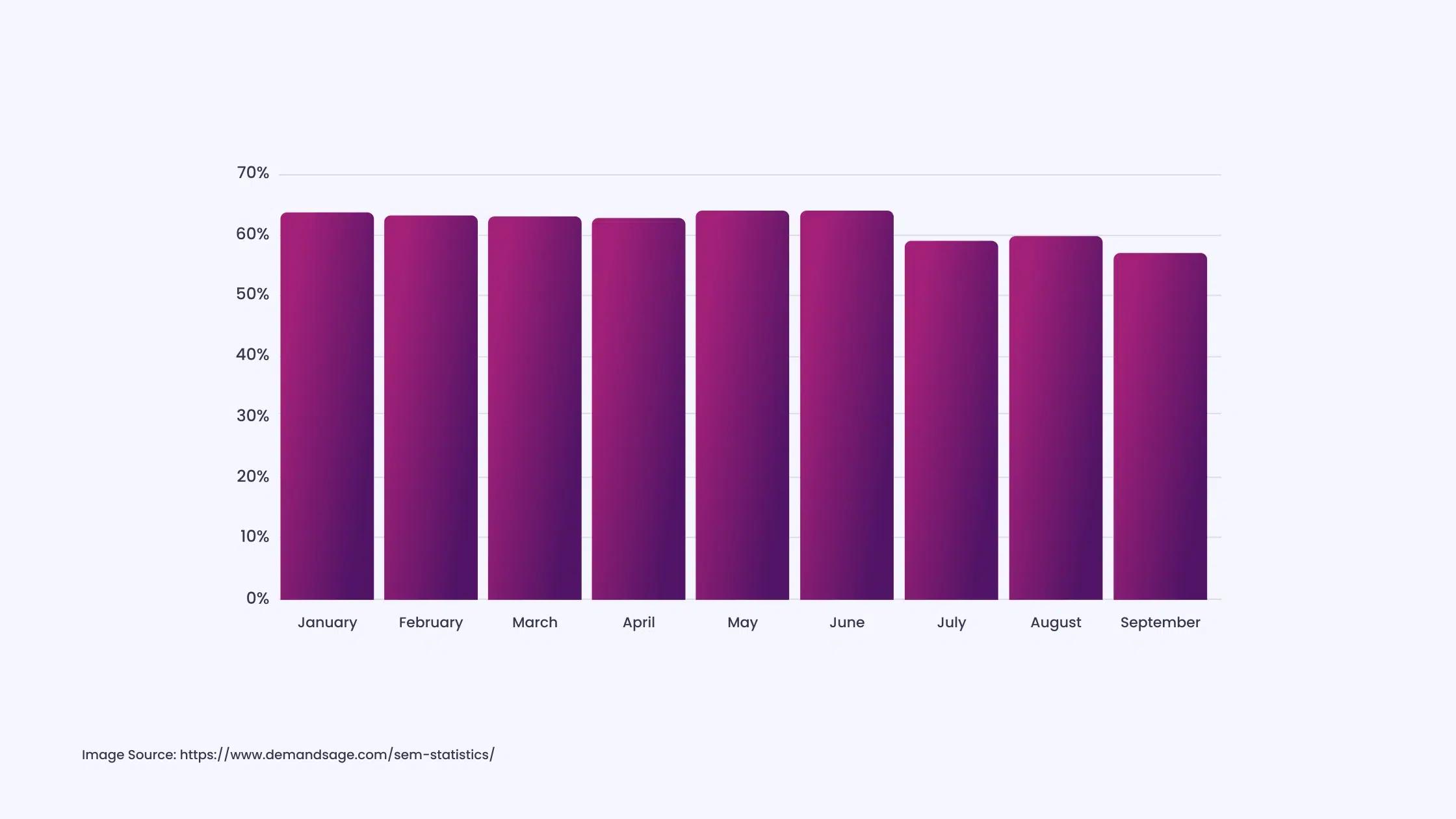
Image Source: https://www.demandsage.com/sem-statistics/
Mobile phones now generate approximately 62.66% of total global web traffic, far surpassing desktop usage. This means that most web visits originate from smartphones, making mobile optimization essential for search visibility and user experience.
Source: https://www.designrush.com/agency/search-engine-optimization/trends/mobile-traffic-statistics
82. Mobile Search Queries Have Grown More Than 300% Over the Past Five Years
Search activity on mobile devices has increased dramatically, while desktop search volumes have remained relatively flat. This reflects the broader shift toward on‑the‑go access to information and places greater importance on mobile SEO.
Source: https://www.ranktracker.com/blog/mobile-seo-statistics-2025/
83. Over Half Of Mobile Visitors Abandon Sites That Take Longer Than 3 Seconds To Load
More than 53% of users will leave a mobile website if it takes longer than three seconds to load. Slow pages not only hurt SEO rankings but also reduce engagement and conversions on mobile devices.
Source: https://www.ranktracker.com/blog/mobile-seo-statistics-2025/
84. 100% Of Websites Are Indexed Based On Their Mobile Version
Google’s mobile‑first indexing means Google predominantly uses the mobile version of a website for indexing and ranking. Sites that perform poorly on mobile may lose visibility even if their desktop version is optimized.
Source: https://www.ranktracker.com/blog/mobile-seo-statistics-2025/
85. Mobile Users Are 5x More Likely To Abandon A Task If The Site Isn’t Optimized
Mobile users have little patience for poorly optimized interfaces and will abandon a task 5 times more often than desktop users. This directly impacts bounce rates and search rankings.
Source: https://www.ranktracker.com/blog/mobile-seo-statistics-2025/
86. 61% Of Mobile Users Are Unlikely to Return To A Site They Had Trouble Accessing
Once users encounter performance issues on mobile, a majority are unlikely to revisit the website. This highlights the importance of smooth mobile experiences for long‑term engagement and repeat visits.
Source: https://www.ranktracker.com/blog/mobile-seo-statistics-2025/
87. 73% Of Mobile Pages Still Have Loading Speed Issues
Despite the importance of speed for mobile SEO rankings and user experience, nearly three‑quarters of mobile pages still struggle with slow loading times, creating opportunities for optimized sites to outperform competitors.
Source: https://www.ranktracker.com/blog/mobile-seo-statistics-2025/
88. Mobile Shopping Queries Now Represent A Majority Of Mobile Search Activity
Shopping‑related searches on mobile devices account for a larger share than traditional browsing, underscoring the growing role of mobile in commerce and conversion‑oriented search behavior.
Source: https://www.ranktracker.com/blog/mobile-seo-statistics-2025/
89. Google’s Mobile Search Market Share Worldwide Is Over 95%
Google dominates mobile search globally with more than 95% share, indicating that most mobile SEO efforts should prioritize performance and ranking factors aligned with Google’s mobile search algorithms.
Source: https://gs.statcounter.com/search-engine-market-share/mobile/worldwide
90. Mobile Site Engagement Sessions Are Shorter But Often Higher Intent
Mobile sessions tend to be shorter than desktop sessions, but they often indicate strong user intent, as mobile users often seek immediate answers or take immediate action. Optimizing for high‑intent mobile queries can improve conversions.
Source: https://www.ranktracker.com/blog/mobile-seo-statistics-2025/
Search Engine Trends Statistics For 2026
Search engine trends capture how people discover information online, from which platforms they use to how behaviors shift over time. These trends include changes in search engine market share, consumer habits, AI influence, zero‑click outcomes, device usage, and more.
Understanding these helps businesses and marketers shape strategies that reflect where search is going.
91. Search Engines Are The Starting Point For 68% Of All Online Activities
A large portion of online interaction, including shopping, research, and navigation, begins with search engines, showing that search still anchors much of web behavior.
Source: https://www.demandsage.com/seo-statistics/
92. Traditional Search Engines Still Dominate, But Users’ Behavior Is Shifting
While search engines like Google remain the primary entry point for many online tasks, users now combine traditional search with AI tools, social discovery, and direct platform engagement.
Source: https://blog.hubspot.com/marketing/how-search-behaviors-are-changing
93. Google Continues To Lead Global Search With Over 90% Share
Google accounts for more than 90% of global search traffic, underscoring that, despite emerging alternatives, it remains the overwhelmingly dominant platform.
Source: https://resourcera.com/data/search/search-engine-market-share/
94. Bing’s Global Search Market Share Has Grown To Over 4%
Microsoft’s Bing has slightly increased its share of global search traffic, reflecting user interest in alternatives and integrations like AI features.
Source: https://resourcera.com/data/search/search-engine-market-share/
95. DuckDuckGo And Other Smaller Engines Are Expanding Their User Bases
Privacy‑focused engines and niche alternatives show growth, signaling that users are exploring broader search options beyond the biggest players.
Source: https://resourcera.com/data/search/search-engine-market-share/
96. Google’s Market Share Slightly Declined From 2022 To 2026
Although Google still leads, its overall market share has dipped a bit over the past few years as other engines and search behaviors diversify.
Source: https://resourcera.com/data/search/search-engine-market-share/
97. AI Search Tools Are Becoming Part Of The Search Mix
Search behaviors now routinely include asking AI tools for answers, a significant shift from typing queries into traditional search engines only.
Source: https://blog.hubspot.com/marketing/how-search-behaviors-are-changing
98. Daily Use Of AI Search Tools Has Nearly Doubled In Recent Months
Users are increasingly relying on AI tools like ChatGPT and Gemini for quick answers and insights, reflecting changing search habits.
Source: https://www.highervisibility.com/seo/learn/how-people-search/
99. Gen Z And Millennials Prefer Social Or AI Search Over Traditional Search Engines
A notable share of younger users now turns first to social networks or AI tools instead of a traditional search engine for discovery.
Source: https://blog.hubspot.com/marketing/how-search-behaviors-are-changing
100. Google’s Dominance Is Slightly Less Among Younger Searchers
Behavioral studies reveal that younger demographics are more willing to experiment with AI‑powered search platforms than older generations.
Source: https://www.highervisibility.com/seo/learn/how-people-search/
101. Platform Switching In Search Has Increased Significantly
More users report moving between search platforms, such as traditional engines and AI tools, based on task type and intent.
Source: https://www.highervisibility.com/seo/learn/how-people-search/
102. Daily AI Search Use Grew From 14% To Nearly 30% In A Single Year
In a short period, daily use of AI tools for search more than doubled, showing how quickly users adopt new ways of finding information.
Source: https://www.highervisibility.com/seo/learn/how-people-search/
103. “Never Used AI Search” Users Have Declined Sharply
The proportion of users who have never used an AI search tool has dropped significantly, meaning more people are trying alternative search approaches.
Source: https://www.highervisibility.com/seo/learn/how-people-search/
104. Search Behavior Now Includes Multi‑Platform Journeys
Consumers increasingly mix traditional search with social platforms, AI assistants, and apps to complete a single search journey.
Source: https://blog.hubspot.com/marketing/how-search-behaviors-are-changing
105. Nearly 53% Of Searches Are Now Categorized as Informational Intent
Over half of all search queries focus on finding information rather than transactional or navigational purposes, showing how search remains essential for learning.
Source: https://www.demandsage.com/sem-statistics/
106. “Near Me” And Purchase‑Focused Searches Have Grown 200% In Recent Years
Locally oriented and buying‑intent queries have surged, showing how search engines reflect real‑world needs such as finding products or services nearby.
Source: https://www.demandsage.com/sem-statistics/
107. Google Handles Over 99,000 Queries Per Second and Dominates the Search Engine Market
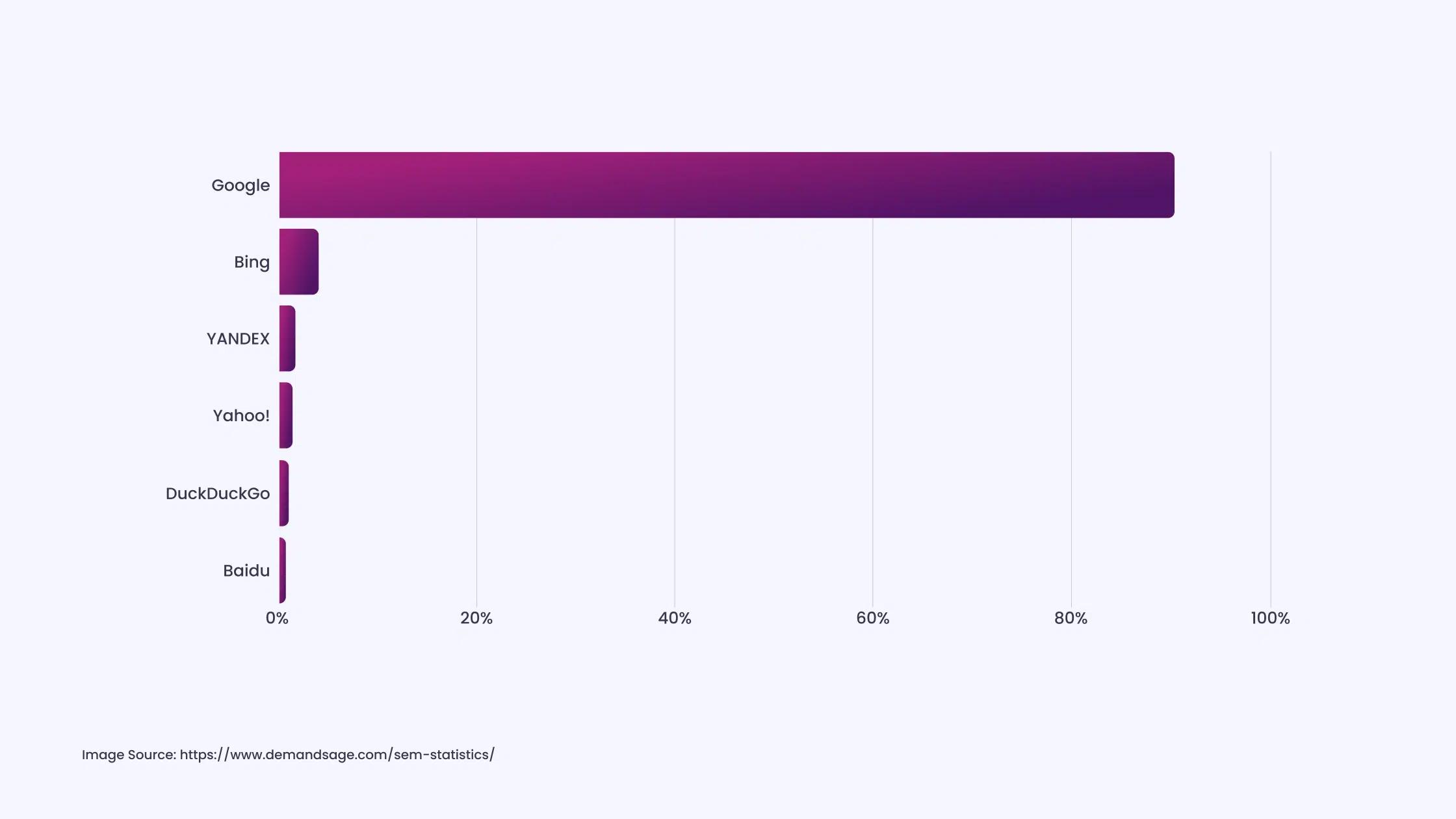
Image Source: https://www.demandsage.com/sem-statistics/
Google processes an immense volume of queries every second, reflecting the scale of global search demand. Google continues to dominate the global search engine market, holding approximately 90.4% of the worldwide share, which makes it the primary platform users rely on to find information online.
Source: https://www.demandsage.com/sem-statistics/
108. Over 6 Billion People Are Expected To Use The Internet By 2026
As global internet usage expands, searches across engines are also increasing, expanding search’s influence across markets.
Source: https://www.demandsage.com/sem-statistics/
109. More Than Half Of Internet Users Rely On Search For Everyday Tasks
Search engines remain fundamental tools for daily tasks, from checking facts to discovering businesses or learning new skills.
Source: https://www.demandsage.com/seo-statistics/
Video SEO Statistics For 2026
Video SEO involves optimizing video content to rank higher in search results, boosting visibility and engagement. It requires understanding user behavior, optimizing for keywords, thumbnails, metadata, and utilizng platforms like YouTube and Google Video. As video content continues to grow, it plays a central role in search engine strategies.
110. Video Content Accounts For Over 80% Of All Internet Traffic
Video now dominates internet traffic, accounting for more than 80% of all online content consumption. This growth reflects the increased preference for visual and interactive content, making video optimization essential for businesses aiming to capture audience attention through SEO. Businesses must invest in video content and ensure it’s discoverable across platforms like YouTube and Google.
Source: https://storybox.io/video-seo-statistics-data/
111. YouTube Is The Second‑Largest Search Engine With Over 2 Billion Users
YouTube, with over 2 billion active users, stands as the second-largest search engine in the world, trailing only Google. This vast audience makes YouTube a critical platform for video SEO, as it’s not only a source of entertainment but also a powerful tool for discovering information, products, and services. Optimizing for YouTube search is an essential strategy for any brand focused on video content.
Source: https://storybox.io/video-seo-statistics-data/
112. Users Watch Over 5 Billion Videos On YouTube Every Day
Every day, YouTube sees over 5 billion video views, demonstrating the platform’s unparalleled reach and engagement. This massive volume of views shows the demand for video content and the importance of optimizing video titles, descriptions, and metadata to ensure visibility. If businesses can optimize their video content to rank higher on YouTube, they can access this massive daily traffic.
Source: https://storybox.io/video-seo-statistics-data/
113. Search Results With Videos Drive 157% More Organic Traffic
Including videos in search results significantly boosts organic traffic, driving 157% more visits compared to text-only results. This highlights the power of video in capturing searchers’ attention and engagement. Businesses looking to improve their SEO rankings should consider integrating video content to not only increase traffic but also enhance user experience by providing multimedia answers to queries.
Source: https://storybox.io/video-seo-statistics-data/
114. 34.6% Of External Views on YouTube Come From Google Search
Almost 35% of YouTube views are driven by Google search, underlining the interplay between Google’s search engine and YouTube. This shows that video SEO must not only focus on YouTube itself but also ensure that video content is optimized for Google’s search algorithms. When videos rank well in Google search results, they are more likely to be discovered on YouTube.
Source: https://storybox.io/video-seo-statistics-data/
115. Videos On The First Page Of YouTube Average Nearly 15 Minutes In Length
On average, videos on the first page of YouTube search results are 14 to 15 minutes long, highlighting a trend towards longer content for better engagement. Videos that keep users watching for extended periods tend to rank higher, signaling that video SEO should focus not just on keywords but also on crafting engaging, in‑depth content that maintains viewer attention.
Source: https://storybox.io/video-seo-statistics-data/
116. The Most Visitors To YouTube Come From India, Japan, Russia, China, And The US
The largest YouTube audiences come from India, Japan, Russia, China, and the US, indicating where global video search demand is most concentrated. Understanding where traffic originates can help businesses tailor their video SEO strategies for specific regions, taking into account language, cultural nuances, and local search trends.
Source: https://zupo.co/video-seo-statistics/
117. YouTube Is Available In Over 91 Countries And 80 Languages
YouTube’s availability in 91 countries and 80 languages presents vast opportunities for global video SEO. This extensive reach means businesses can optimize video content for international audiences by using subtitles, region-specific keywords, and localized content strategies to improve visibility and engagement across diverse markets.
Source: https://zupo.co/video-seo-statistics/
118. 62% Of Universal Google Searches Include Video Results
Video results appear in over 60% of universal Google searches, reflecting Google’s increasing integration of video content into its search results. Businesses that optimize their video content not only for YouTube but also for Google’s video search features are more likely to appear in these results, driving traffic and engagement.
Source: https://zupo.co/video-seo-statistics/
119. 8 Out Of 10 Videos That Appear On Google Search Results Come From YouTube
YouTube dominates video search results on Google, accounting for 80% of video results. This underlines the importance of optimizing content for YouTube’s search algorithms and ensuring that video metadata aligns with both Google’s and YouTube’s ranking factors.
Source: https://zupo.co/video-seo-statistics/
120. 50% Of Shoppers Say Online Video Helped Them Decide What to Buy
Online videos influence purchasing decisions for half of shoppers, highlighting the role of video content in driving conversions. Businesses can use product videos, reviews, and tutorials to help potential customers make informed decisions, leveraging video SEO to increase visibility in search results.
Source: https://zupo.co/video-seo-statistics/
121. 55% Of Shoppers Use Online Video While Shopping In‑Store
Consumers are increasingly using video content while shopping in physical stores to compare products, check reviews, or find additional information. This growing use of video in the offline shopping experience highlights the importance of having well-optimized video content that caters to both online and in-store search behavior.
Source: https://zupo.co/video-seo-statistics/
122. 80% Of People Switch Between Online Search And Video During Product Research
Consumers often switch between text search and video during their product research phase, showing that video content serves as a complementary tool to written search results. Optimizing for both types of search will ensure a brand’s visibility across all touchpoints in the research phase.
Source: https://zupo.co/video-seo-statistics/
123. Video Ad Spend Is Expected To Exceed $240 Billion By 2028
The global ad spend on video content is projected to exceed $240 billion by 2028, underscoring video’s continued growth as a critical advertising tool. For businesses investing in video SEO, this growing market indicates that optimizing video content for search is increasingly valuable.
Source: https://storybox.io/video-seo-statistics-data/
124. 91% Of Businesses Use Video as Part of Their Marketing Strategy
Nearly all businesses use video as part of their marketing efforts, making video SEO a must-have component of any comprehensive digital strategy. Optimizing video for search ensures businesses can reach and engage with a wider audience.
Source: https://storybox.io/video-seo-statistics-data/
125. 91% Of Marketers Say Video Has Increased Traffic
Most marketers confirm that video content has been a major driver of increased traffic to their websites. This further emphasizes the need for video SEO optimization to capture more organic visits and engagement.
Source: https://storybox.io/video-seo-statistics-data/
126. 90% Of Marketers Report Video Generates New Leads
Video content not only drives traffic but also generates high‑quality leads, making it an essential tool for lead generation strategies. Businesses should ensure their video content is optimized for search to maximize its potential.
Source: https://storybox.io/video-seo-statistics-data/
127. 87% Of Marketers Note Video Has Increased Sales Revenues
Video content significantly impacts sales revenues, with nearly 9 out of 10 marketers reporting a positive effect on their bottom line. This underscores the need for businesses to prioritize video SEO in their overall marketing strategy to maximize returns.
Source:https://storybox.io/video-seo-statistics-data/
Backlink Statistics For 2026
Backlinks are one of the most critical ranking factors in search engine algorithms. A backlink is a link from one website to another that signals authority, trust, and relevance. Quality backlinks act as endorsements for your content, boosting your website’s search engine rankings.
As search engines evolve, the role of backlinks continues to grow, with more emphasis on the quality and relevance of the linking sites. Effective link building remains a core aspect of any successful SEO strategy.
128. Only About 6% Of All Published Web Pages Ever Acquire Any External Backlinks
Most published content on the internet never receives a link from another site, making backlinks rare and valuable. This highlights why proactive backlink strategies are critical for visibility and organic growth.
Source: https://www.ranktracker.com/blog/backlink-statistics-2025/
129. Pages Ranking #1 On Google Have About 3.8x More Backlinks Than Pages Ranked 2-10
Top-ranking pages typically have significantly more backlinks than lower‑ranked competitors, suggesting a strong correlation between link quantity and top search positions.
Source: https://www.ranktracker.com/blog/backlink-statistics-2025/
130. The Average Top‑Ranking Page Has Backlinks From Around 66.5 Referring Domains
Backlink diversity, measured by the number of unique domains linking to a page, is a major indicator of authority and correlates with higher search rankings.
Source: https://www.ranktracker.com/blog/backlink-statistics-2025/
131. 94% Of All Content Online Get Zero External Links
The vast majority of web pages receive no backlinks at all, underscoring the competitive advantage for those who earn links through quality content or outreach.
Source: https://www.ranktracker.com/blog/backlink-statistics-2025/
132. 68% Of Backlink Builders Prefer Linking To Blog Posts Rather Than Homepages or Product Pages
Most link builders focus on blog content for acquiring backlinks because informative articles tend to attract more natural links than static pages.
Source: https://bloggerspassion.com/link-building-statistics/
133. Digital PR Tactics Are Nearly 48.6% More Effective Than Other Link‑Building Methods
Digital PR, securing links from reputable news sites, online magazines, and industry publications, often produces better SEO results than other tactical approaches.
Source: https://bloggerspassion.com/link-building-statistics/
134. Reciprocal (Link Exchange) Strategies Still Exist In ~25% Of Link Builders’ Tactics
Despite being riskier and often discouraged, reciprocal link exchanges remain part of many SEO strategies, underscoring the wide variety of link acquisition practices.
Source: https://bloggerspassion.com/link-building-statistics/
135. Only Around 8.5% Of Link Outreach Emails Receive A Response
Getting backlinks through outreach is difficult, as most outreach efforts go unanswered, making personalization and follow‑ups core to successful campaigns.
Source: https://bloggerspassion.com/link-building-statistics/
136. Pages With Infographics Get Up To 178% More Backlinks Than Pages Without Them
Adding visual elements, such as infographics, to content dramatically increases its backlink potential, making multimedia content a strong link magnet.
Source: https://bloggerspassion.com/link-building-statistics/
137. Blogs With Three Or More Videos Attract Around 55% More Backlinks Than Those Without
Incorporating video content into written pages correlates with higher backlink counts, likely because multimedia content increases engagement and shareability.
Source: https://bloggerspassion.com/link-building-statistics/
138. About 80% Of SEO Professionals Still Believe Backlinks Will Remain A Ranking Factor For The Next Decade
Despite changes in search engines, most experts agree that backlinks will continue to influence rankings far into the future, emphasizing their enduring SEO role.
Source: https://searchendurance.com/link-building-statistics/
139. 80% Of SEO Experts Believe Unlinked Brand Mentions Still Help Organic Rankings
Brand mentions without direct links are increasingly seen as valuable signals of authority and relevance in search engine algorithms.
Source: https://searchendurance.com/link-building-statistics/
140. Around 59% Of SEO Professionals Expect Backlinks To Gain More Importance As A Ranking Signal In The Future
A majority of experts anticipate that backlinks will play an even larger role as search engines evolve, especially with the growth of AI‑driven relevance signals.
Source: https://searchendurance.com/link-building-statistics/
141. Median Top‑10 Ranking Pages Have About 112 Total Backlinks From A Median Of 6 Referring Domains
While top rank pages often have many links, even median levels of backlinks can demonstrate strong SEO performance when combined with quality content and user signals.
Source: https://searchendurance.com/link-building-statistics/
142. 72% Of SEO Experts Are Concerned About Sites With Poor Domain Authority Metrics When Evaluating Link Opportunities
Backlink quality assessments often prioritize sites with high domain authority, showing how professionals discriminate between valuable and low‑impact link sources.
Source: https://editorial.link/link-building-statistics/
AI & Generative Search Statistics For 2026
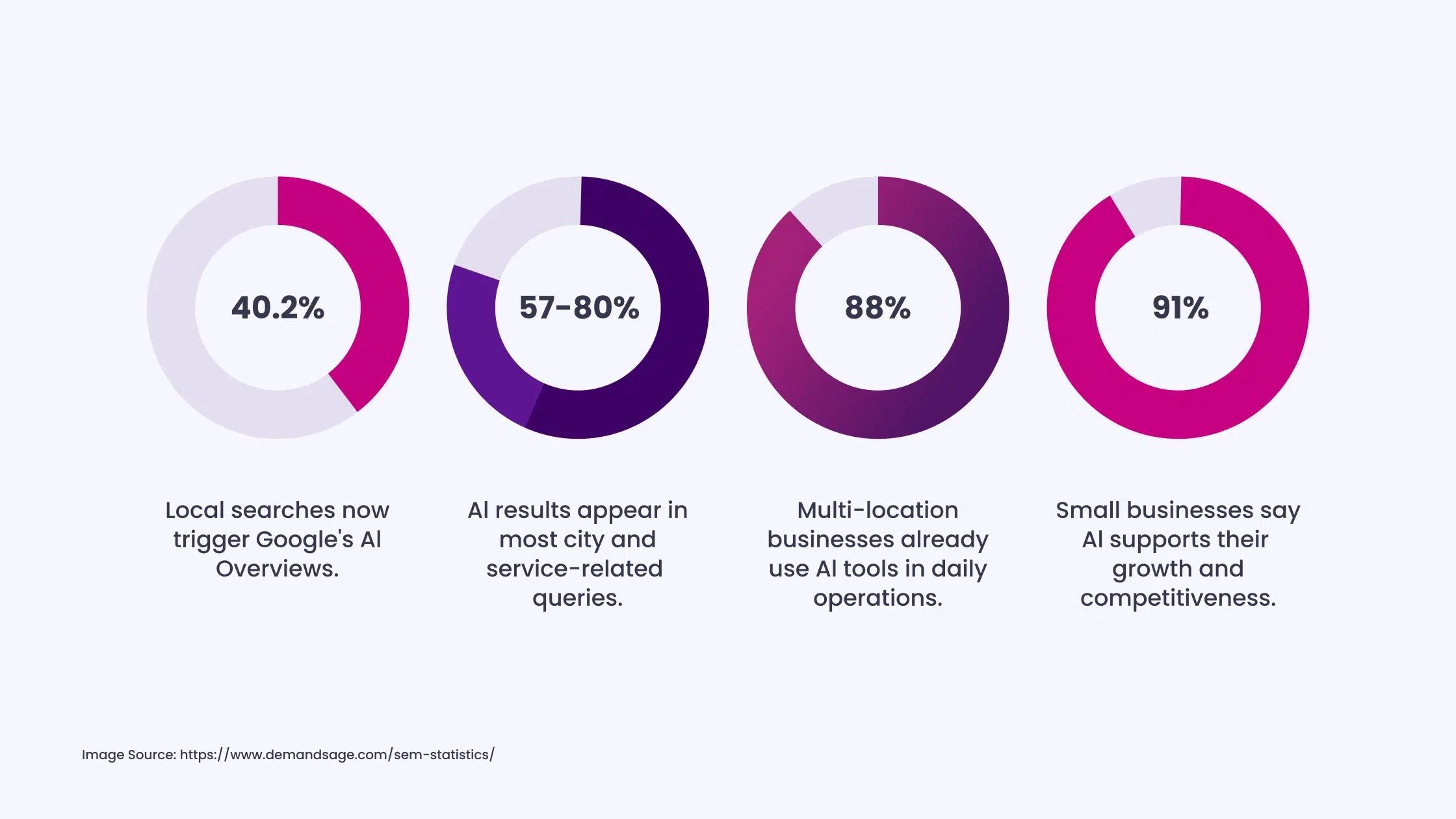
Image Source:https://seoprofy.com/blog/local-seo-statistics/
AI and generative search are transforming how search engines deliver results. Instead of showing links, these systems provide direct answers, summaries, and recommendations, shaping how users discover information.
As AI becomes more integrated, businesses must adapt their SEO strategies to optimize for these advanced, AI‑driven searches.
143. Google’s AI Overviews Reach 2 Billion Monthly Users
A significant number of search queries now trigger AI‑generated overviews in search results, which are seen by roughly 2 billion people every month, underscoring how generative search is becoming mainstream for information discovery.
Source: https://www.semrush.com/blog/ai-seo-statistics/
144. AI Overviews Appear In About 30 % Of US Search Keywords
Data shows that AI Overviews are triggered for nearly a third of search queries in the United States, indicating that generative responses are now a major part of how people get answers online.
Source: https://www.semrush.com/blog/ai-seo-statistics/
145. AI Traffic Has Increased Around 8× In The Past Year
Traffic driven by AI‑powered search features has grown about eight times year‑over‑year, reflecting how quickly users and platforms are adopting generative search channels.
Source: https://www.seranking.com/blog/ai-statistics/
146. Roughly 68.94 % Of Websites Now Receive Traffic From AI Search
A substantial portion of websites today get some portion of their traffic from AI search interactions, showing how generative tools are influencing referral sources beyond traditional search engines.
Source: https://www.seranking.com/blog/ai-statistics/
147. AI Search Platforms Drive Over 2 Billion Queries Per Day
Combined traffic across AI search tools, including chat‑based and generative search engines, exceeds 2 billion queries daily, demonstrating how generative search is scaling alongside traditional engines.
Source: https://www.allaboutai.com/resources/ai-statistics/ai-search-engines/
148. AI Search Engines Are Projected To Capture Over 60 % Of Total Search Volume By 2030
Projections indicate that generative search platforms will handle the majority of search queries within the next few years, reshaping where users seek answers and how search engines deliver results.
Source: https://www.allaboutai.com/resources/ai-statistics/ai-search-engines/
Keyword Statistics For 2026
Keywords are the foundation of search engine optimization. They reflect what users are typing into search engines and help search engines understand the intent behind a query. As search behavior evolves with AI, long‑tail and conversational keyword usage continues to grow, making research and targeting a crucial part of SEO success.
149. Over 94% Of All Keywords Get Ten Or Fewer Searches Per Month
Most keywords in search databases have extremely low search volume, highlighting how rare high‑traffic terms are. This means that focusing on niche, long‑tail keywords can unlock valuable but overlooked traffic opportunities.
Source: https://www.ranktracker.com/blog/keyword-research-statistics-2025/
150. About 15% Of Google Searches Have Never Been Searched Before
Every day, a significant portion of queries are new to Google’s index, showing that keyword trends constantly evolve and that fresh search behavior emerges frequently. SEO strategies must adapt regularly to capture these emerging intents.
Source: https://www.ranktracker.com/blog/keyword-research-statistics-2025/
151. Roughly 91.8% Of All Search Queries Are Long‑Tail Keywords
Long‑tail terms (three or more words) now dominate search queries, meaning that most search traffic comes from specific, detailed requests rather than short generic phrases. Targeting these improves relevance and conversion.
Source: https://www.ranktracker.com/blog/keyword-research-statistics-2025/
152. The Search Volume For Ultra‑High Volume Keywords Is Extremely Rare (Only 0.0008%)
Keywords with more than 100,000 monthly searches are almost nonexistent, emphasizing that competing for extremely high‑volume terms is not realistic for most sites and that targeting mid‑tier and niche terms is more strategic.
Source: https://www.ranktracker.com/blog/keyword-research-statistics-2025/
153. The Average Length Of Keywords That Top Ranking Sites Target Is Between 3.2 And 3.5 Words
High‑ranking pages often target slightly longer phrases, suggesting that a moderate keyword length is optimal for capturing user intent without being overly generic.
Source: https://keywordseverywhere.com/blog/seo-stats/
154. Keywords With 10-15 Characters Get 1.76× More Clicks Than Single‑Word Keywords
Keywords that are slightly longer (10-15 characters) tend to generate significantly more clicks than shorter single‑word terms, likely due to better alignment with specific user intent.
Source: https://keywordseverywhere.com/blog/seo-stats/
Setting Up for SEO Success in 2026
SEO in 2026 is all about focus, focusing on what truly drives results, not getting lost in endless trends and stats. From Google’s evolving ranking factors to the rise of voice and mobile search, the data we’ve shared helps you understand where to put your energy for the best outcomes.
If you’re looking to turn this insight into a clear, actionable plan, INSIDEA is here to help. Our team of experts can guide you through refining your strategy and getting the most out of your SEO efforts.
With the right approach, you can make sure your business stands out where it matters most, right in front of the right audience.
Get High-Intent Leads With INSIDEA’s Digital Marketing Subscription

Most businesses struggle because execution is split across too many tools, vendors, and timelines. SEO lives in one place, ads in another, content somewhere else, and reporting rarely lines up.
INSIDEA solves that by giving you a dedicated marketing team, working on a monthly subscription, covering every channel that drives demand and pipeline.
Instead of managing agencies, freelancers, and scattered deliverables, you get a single point of ownership for planning, execution, and ongoing optimization across your whole marketing stack.
What you get with INSIDEA’s digital marketing subscription:
- SEO: on-page SEO, technical fixes, link building, online reputation management, Google Business Profile support
- Content Marketing: blogs, articles, case studies, newsletters, ebooks, whitepapers
- Social Media Marketing: LinkedIn, Facebook, Instagram, X (Twitter), TikTok
- Email Marketing: campaigns, newsletters, lifecycle emails, list cleanup, and targeting
- Lead Generation: LinkedIn outbound, email outbound, appointment setting
- Performance Marketing: Google Ads, LinkedIn Ads, Meta Ads, media buying support
- WordPress Management and Development: website updates, design, development, integrations, ongoing maintenance
- CRM and Automation: workflow setup, lead routing, reporting-ready data structure



 How INSIDEA works