Insurance marketing comes with a different kind of pressure. Buyers take their time, compare multiple options, and rely heavily on trusted sources before making a decision. Paid campaigns may drive traffic, but conversions often lag, and acquisition costs continue to rise across most insurance categories.
This is where affiliate marketing fits well. Instead of reaching out to cold audiences, insurance companies work with partners such as financial bloggers, advisors, comparison platforms, and niche creators who already have credibility with their audience. These partners introduce your offerings in a way that feels natural, and you pay for actual results, not just clicks.
This guide explains how to build an affiliate marketing plan for insurance companies, covering goal setting, partner selection, compliance, and performance tracking. You’ll see how to turn referral partnerships into a consistent source of qualified leads.
How Affiliate Marketing Helps Insurers Acquire Qualified Customers
The following points explain how affiliates help insurers reach the right customers:
The Current Insurance Marketing Challenge
Insurance is one of the most saturated markets online. Every click competes against giants with million‑dollar ad budgets. Yet most insurers face unpredictable ROI from paid search and struggle to maintain acquisition efficiency as costs per lead rise.
The challenge is not just visibility, it’s credibility. Customers buy insurance from brands they trust, not merely those that appear first on Google Ads.
How Affiliate Marketing Solves for Trust, Cost, and Quality
Affiliate marketing flips the traditional cost model by paying for performance rather than exposure. Instead of buying impressions, insurers pay affiliates for verified leads, quote submissions, or completed policy applications. That means reduced wastage and highly targeted reach through credible voices.
Affiliates act as pre‑qualifiers, explaining your product in context. For instance, a personal finance YouTuber reviewing “best family savings strategies” can seamlessly recommend your life insurance offering. The result is higher‑intent traffic, improved conversion rates, and sustainable customer acquisition.
Understanding Affiliate Marketing in the Insurance Context
Understanding how affiliates generate leads and drive policy conversions:
How the Affiliate Model Works for Insurance Products
Affiliate marketing in insurance follows a simple yet powerful premise: a third‑party (the affiliate) promotes your product to their audience through tracked links. When a user takes the desired action, requesting a quote, submitting a lead form, or purchasing a policy, the affiliate earns a commission. It’s a value‑exchange built entirely on performance.
For insurance companies, affiliates can include financial comparison sites, media publishers, niche bloggers, and even mortgage or auto‑loan advisors. They extend your distribution network while lowering upfront risk since you only pay for valid conversions.
The Main Stakeholders: Carriers, Aggregators, and Affiliates
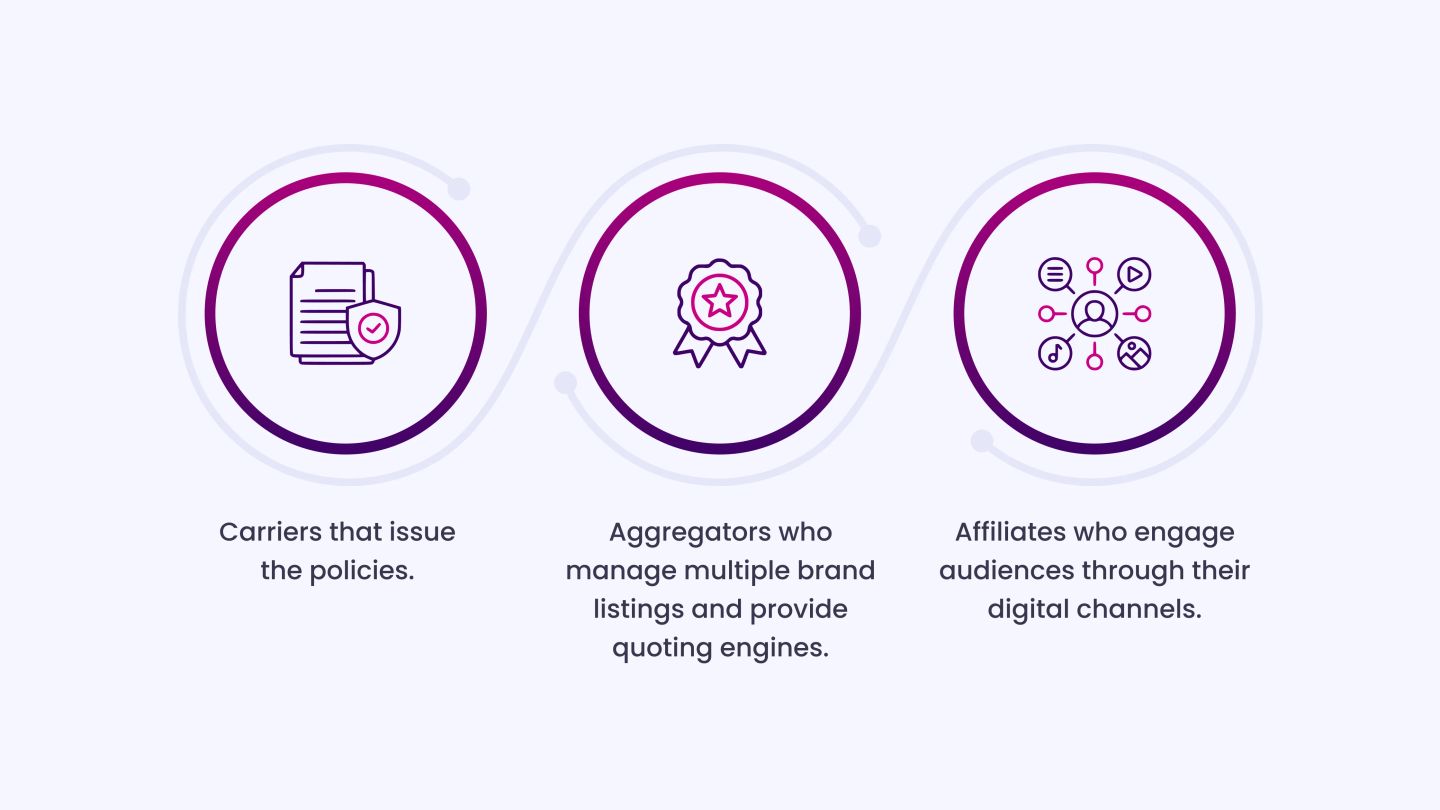
- Carriers that issue the policies.
- Aggregators who manage multiple brand listings and provide quoting engines.
- Affiliates who engage audiences through their digital channels.
Each has a distinct role, but together, they form a lead‑to‑policy pipeline that combines visibility, timing, and trust.
Common Performance Models (CPL, CPA, Revenue Share) Explained
- CPL (Cost per Lead): The affiliate earns per qualified lead. This works well if your internal sales teams excel at follow‑up.
- CPA (Cost per Acquisition): Payouts occur only when a policy is purchased, ideal for optimizing ROI.
- Revenue Share: The affiliate receives a recurring commission, suitable for long‑term policy renewals.
Why Affiliate Marketing Fits Insurance Better Than Traditional Channels
Unlike standard advertising, affiliate marketing combines influence, cost control, and niche targeting to generate more qualified leads for insurers. The following sections explain these advantages in detail:
Trust-Based Influence vs. Paid Ads
Unlike traditional banners or PPC campaigns, affiliate promotions feel organic, recommendations from someone knowledgeable rather than overt sales messaging. This matters because insurance purchasing decisions rely on personal endorsement and expert reassurance. When a financial blogger shares a positive review or walks readers through comparing policy benefits, credibility transfers directly to your brand.
Cost Control and Lead Quality
Affiliate marketing introduces a direct performance relationship between spend and outcome. You define payout structures that match business targets, whether leads, quotes, or policy sign‑ups, keeping your customer acquisition cost predictable. Performance‑based models also prevent budget leakage commonly seen in impression‑based advertising.
Niche Audience Access with High Intent
Affiliates often specialize in well‑defined segments, such as new homeowners, small business owners, or retirees, where insurance needs are immediate. This precision targeting amplifies campaign effectiveness and drastically shortens the path from awareness to conversion.
Step-by-Step: Building an Effective Affiliate Marketing Plan for Insurance Companies
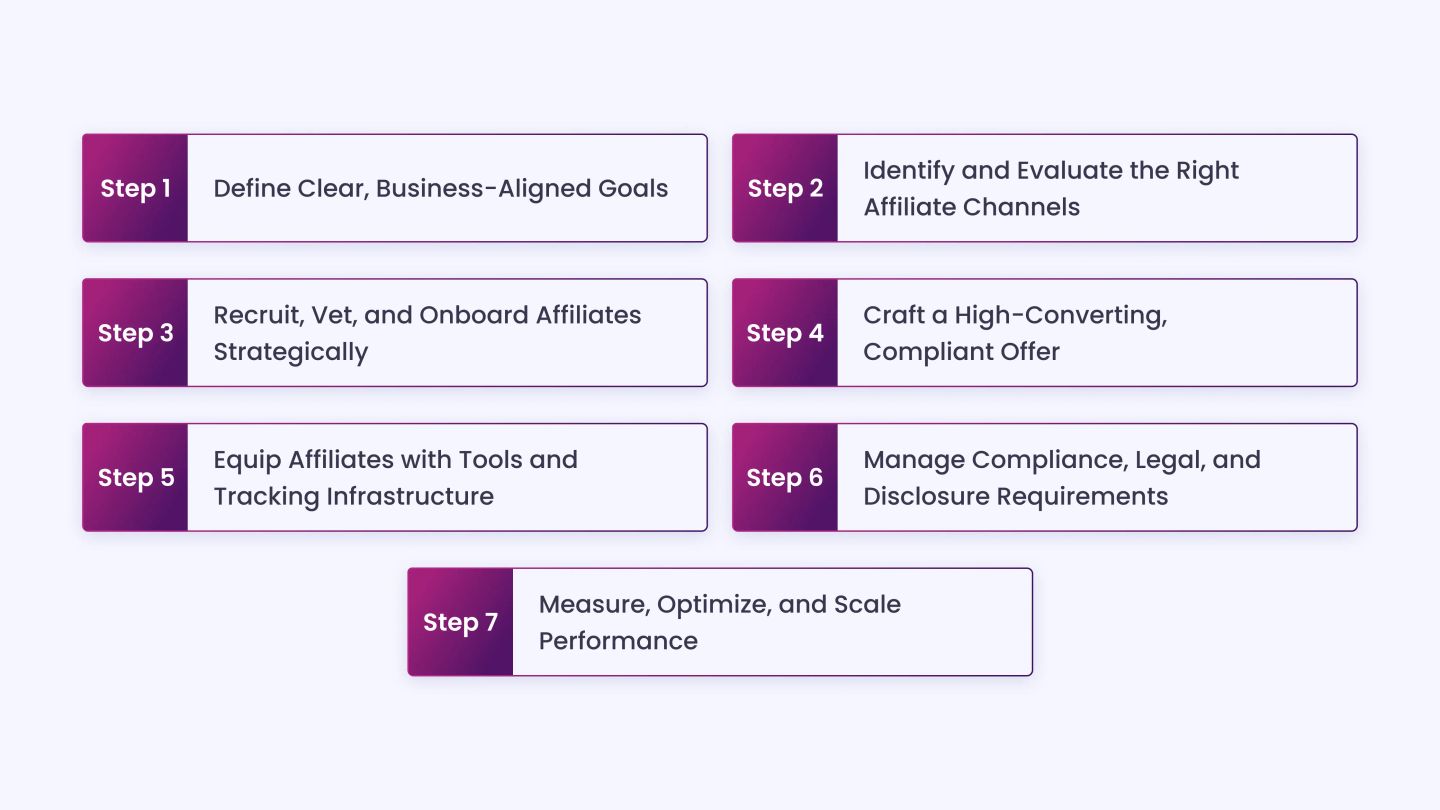
Follow these steps to create an affiliate marketing plan that drives qualified leads and predictable results for insurance companies:
Step 1: Define Clear, Business-Aligned Goals
Every strong affiliate strategy begins with measurable intention. Instead of “getting more leads,” align metrics with business outcomes, such as a 25% increase in policy quotes for home insurance or a 15% reduction in CPL. Determine your ideal cost per acquisition (CPA) threshold to remain profitable.
Choose your payout model accordingly: CPL for volume, CPA for profitability, or revenue sharing for retention. Linking affiliate performance directly to business goals ensures clarity for all stakeholders.
Step 2: Identify and Evaluate the Right Affiliate Channels
The right affiliate partners already speak your customer’s language. Financial advisors, comparison portals, mortgage brokers, and health or lifestyle influencers each address specific life triggers that prompt insurance purchase.
For B2B outreach, platforms like LinkedIn offer strong recruitment potential; ensure your company profile mirrors professional credibility
Check Out: 15 Best LinkedIn Company Page Examples
When assessing potential affiliates, evaluate engagement authenticity, content quality, awareness of compliance, and past campaign history. Diversify channels, blogs, social platforms, and niche aggregators to stabilize lead flow and broaden reach.
Step 3: Recruit, Vet, and Onboard Affiliates Strategically
Don’t rush partnerships. Vet affiliates through manual audits, review tone, content ethics, and relevance to your target audience. For example, a real estate agent with a blog on “first‑time home buying” may outperform a general lifestyle influencer when promoting homeowner’s insurance.
During onboarding, provide structured training: approved messaging, payout terms, and compliance expectations. Treat affiliates as long‑term collaborators. Building genuine relationships follows similar principles to delivering great client service, empathy, communication, and reliability.
Refer:7 Qualities of Good Customer Service
Step 4: Craft a High-Converting, Compliant Offer
Even the most aligned partner can’t convert weak offers. Focus on simplifying user actions, use CTAs like “Get a free quote in 60 seconds” rather than jargon‑heavy language. Design dedicated, branded landing pages consistent with your campaign identity.
See inspiration examples in:35+ Dental Clinic Website Design Inspirations
Maintain compliance while keeping the tone human. Add urgency but ensure transparency. Brand consistency also matters; naming, tone, and design should convey trust and professionalism, as discussed in Brand Name Ideas for an Advertising Agency.
Step 5: Equip Affiliates with Tools and Tracking Infrastructure
A well‑supported affiliate produces stronger performance. Create personalized landing pages, distribute unique tracking links, and deliver a toolkit of pre‑approved creatives, banners, and social captions.
Check this out: Mastering Instagram Captions: 100+ Ideas for Every Type of Post.
Consider automating communication and reporting with AI or messaging tools, such as those featured in Top 10 AI Tools for WhatsApp.
Applying structured communication methods ensures reliability, paralleling the principles outlined in The 5 A’s of Quality Customer Service.
Step 6: Manage Compliance, Legal, and Disclosure Requirements
Compliance is crucial in insurance. Provide affiliates with pre‑approved copy, clear disclaimers, and guidance on restricted language to align with regulation and carrier requirements.
- Disclosure statements on every promotional content.
- Regional compliance (GDPR for EU traffic, state‑specific disclaimers for U.S.).
- Proper carrier mentions, accurate claims, and no “guaranteed” language.
Step 7: Measure, Optimize, and Scale Performance
A live affiliate program demands ongoing management. Define KPIs such as click‑through rates, conversion rates, and policy approvals. Set up CRM integration so every lead’s source is traceable, allowing more accurate attribution.
Optimization involves iterative testing, adjusting creatives, payout tiers, or landing page UX to improve conversion. Reward top performers with scaled commissions or exclusive campaigns.
Advanced Strategies for Insurance Affiliate Growth
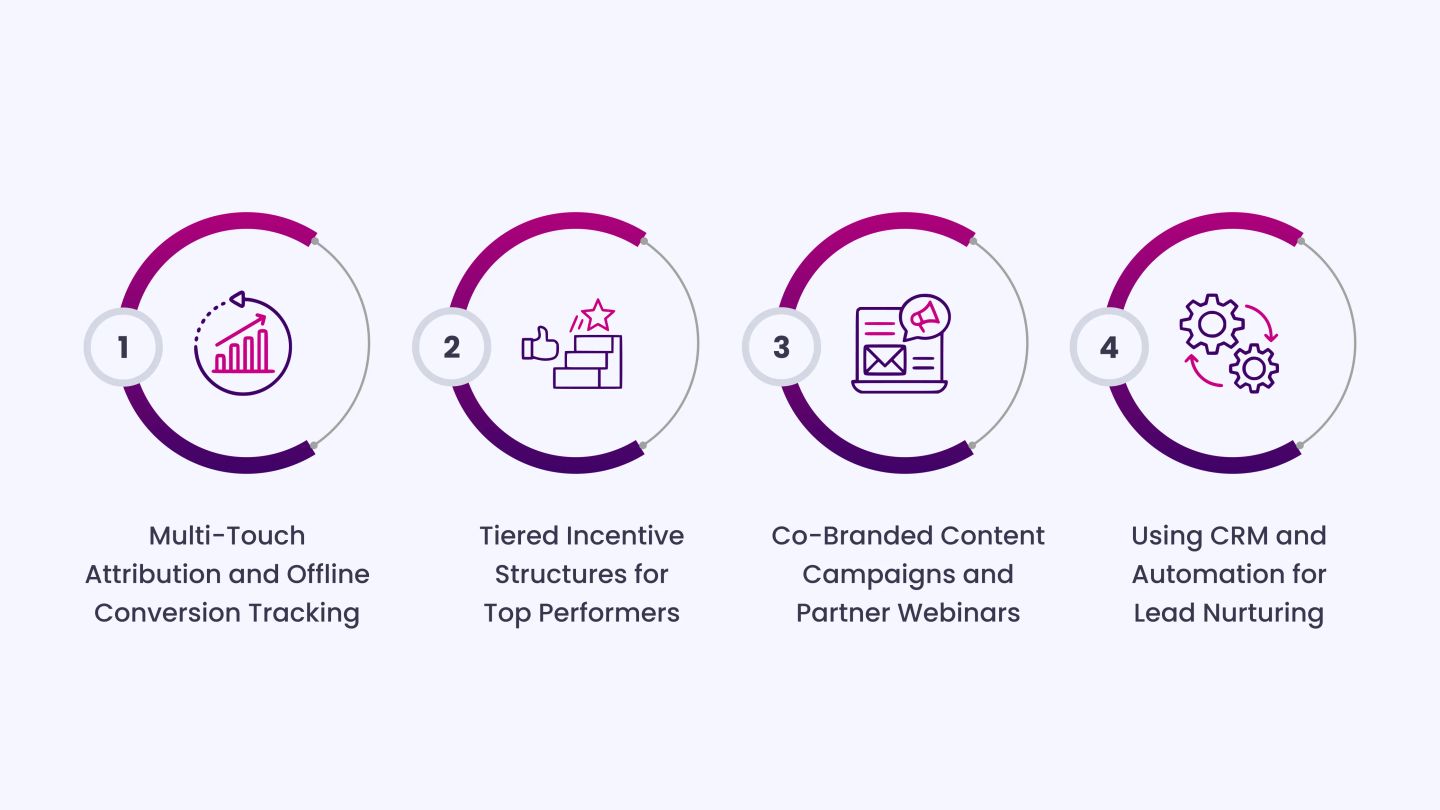
Here are the following advanced strategies for insurance affiliate growth:
Multi-Touch Attribution and Offline Conversion Tracking
Insurance often includes hybrid sales journeys combining online forms and agent phone calls. Implement call tracking, tagged CRM fields, and offline attribution models to connect affiliate conversions across channels.
Tiered Incentive Structures for Top Performers
Motivate affiliates with performance‑based tiers. Offer escalating commissions, quarterly bonuses, or hybrid CPL + CPA payouts to encourage long‑term alignment.
Co-Branded Content Campaigns and Partner Webinars
Go well past the referral links and collaborate on educational assets, such as financial wellness guides or webinars on “Understanding Policy Options.” Co‑created content elevates authority, boosts SEO, and deepens trust between audiences and your brand.
For content ideation inspiration, explore 30+ Content Ideas for Fashion Brands for Instagram, and adapt themes to insurance education.
Using CRM and Automation for Lead Nurturing
Synchronize affiliate leads with your CRM to trigger automated follow‑ups and scoring workflows. Use advanced segmentation to personalize drip emails or remarketing.
Metrics Dashboard and ROI Example
The following dashboard metrics and ROI example illustrate how affiliate marketing impacts your insurance business:
Core KPIs (CTR, CPL, Policy Conversion Rate)
Your dashboard should visualize the entire funnel, click‑through rate (CTR), lead‑to‑quote ratio, quote‑to‑policy conversion, and payout ROI.
Sample ROI Formula for Affiliate Marketing in Insurance
Affiliate ROI = (Net Revenue from Policies − Total Payouts to Affiliates) ÷ Total Payouts × 100
Example: If affiliate‑generated policies bring in $30,000, and you’ve paid $10,000 in commissions, ROI = 200%.
How to Interpret and Act on the Data
Use insights to refine targeting, pause underperforming affiliates, and adjust creative formats. Campaign optimization should be a continuous feedback loop between marketing analytics and partner relationships.
Common Mistakes to Avoid in Insurance Affiliate Programs
Even well-planned affiliate programs can stumble. Here are common mistakes insurers should avoid to protect performance and compliance:
- Quantity over Quality: Onboarding too many low‑fit affiliates dilutes focus.
- Weak Offer Design: Generic CTAs or confusing landing pages fail to convert.
- Neglecting Compliance: One non‑compliant post can damage reputation.
- Poor Relationship Management: Affiliates thrive with recognition and support.
90-Day Execution Roadmap for Launching Your Program
Follow this 90-day roadmap to systematically plan, launch, and optimize your insurance affiliate program:
Phase 1: Planning and Goal Definition (Days 1-30): Clarify objectives, determine payout model, create conversion‑focused offers, and develop compliance guidelines.
Phase 2: Partner Outreach and Onboarding (Days 31-60): Search affiliate communities, LinkedIn groups, and relevant publishing networks.
Explore allied sectors such as healthcare, referencing 50+ Healthcare Websites Accepting Guest Posts.
Phase 3: Campaign Launch and Optimization (Days 61-90): Launch with a controlled number of affiliates, track performance daily, and refine copy, offers, and payouts.
Build an Affiliate Marketing System That Drives Qualified Policy Growth
An effective affiliate marketing plan for insurance companies relies on more than placing links. It depends on trust, clear data, and strong partner relationships. When you work with credible affiliates, you reach audiences who already value the source, which improves both lead quality and conversion.
To grow consistently, define clear goals, stay compliant, track performance closely, and refine your partnerships and offers over time. This creates a steady, performance-based system that supports long-term growth without relying on guesswork.
When your affiliate strategy runs with structure and accountability, you gain better control over acquisition, clearer visibility into results, and stronger returns from every partnership.
INSIDEA
Ready to put this into practice?
INSIDEA is an Elite HubSpot Partner rated 4.99 across 450+ verified reviews. Let's map it to your goals.



 How INSIDEA works