
Running a beverage business is not limited to just selling the drinks. It is about keeping up with demand, managing relationships, and ensuring the right product reaches the right customer at the right time.
The biggest challenge? Staying organized while growing.
You deal with multiple distributors, fluctuating inventory, and customers who expect fast, seamless service.
- If your sales team is juggling spreadsheets or missing follow-ups, opportunities are slipping through the cracks.
- If your inventory system isn’t synced with sales, you could be overstocking slow-moving products or running out of bestsellers when demand spikes.
The right CRM helps you track leads, automate orders, prevent stock issues, and improve customer engagement. It takes the guesswork out of sales and lets you focus on scaling your business without the chaos.
But choosing the right one is not easy. Some CRMs are built for large-scale distributors, while others are made for smaller businesses that need simplicity and automation. To save you time, we have broken down the six best CRMs for the beverage industry—what they do best, who they are for, and how they can help you sell smarter and manage better.
Why Do Beverage Companies Need a CRM?
1. Sales Optimization
Manually tracking orders, leads, and customer accounts slows your sales process. A CRM automates these tasks, helping your sales team close deals faster. You can set up automatic follow-ups, manage your pipeline in real-time, and track every customer interaction. This means fewer missed opportunities and more time spent on selling than administrative work.
2. Customer Engagement
Your customers expect personalized experiences. A CRM allows you to segment your audience and send targeted promotions, loyalty rewards, and special offers based on their preferences and purchase history. You can track interactions across multiple channels—email, phone, and social media—ensuring consistent communication and better engagement.
3. Supply Chain & Inventory Management
Running out of stock or overstocking products can hurt your business. A CRM integrated with inventory management tools helps you monitor stock levels, predict demand based on past sales, and prevent supply chain disruptions. You get real-time visibility into product movement, so you can plan and avoid costly stock issues.
4. Compliance & Regulation Management
The beverage industry is highly regulated, with strict requirements for labeling, distribution, and safety standards. A CRM helps you stay compliant by organizing essential records, tracking legal requirements, and ensuring proper documentation. This reduces the risk of non-compliance penalties and keeps your operations running smoothly.
5. Data-Driven Decision-Making
A CRM provides detailed analytics on sales trends, customer preferences, and market patterns. With real-time reports and AI-powered insights, you can forecast demand, identify high-value customers, and refine your sales strategies. The result? Smarter decisions that drive growth and profitability.
Essential Features to Look for in a CRM for the Beverage Industry
Choosing the right CRM for your beverage business means finding a system that fits your sales process, customer needs, and operational challenges. Here are the essential features to look for:
1. Lead & Sales Pipeline Management
Your CRM should help you track potential customers from the first interaction to the final sale. You need clear visibility into your sales pipeline—who’s interested, ready to buy, and who needs follow-up.
For example, if a restaurant chain inquires about bulk beverage orders, your CRM should notify your sales team to follow up promptly, preventing lost opportunities.
2. Order & Inventory Tracking
Managing stock efficiently is critical in the beverage industry. A CRM that integrates with inventory management lets you track available stock, monitor order statuses, and reduce overstock or shortages. If a distributor places a large order, your system should instantly check inventory levels and flag potential supply issues.
3. Customer Segmentation & Targeted Marketing
Not all customers have the exact needs. A CRM should allow you to segment them based on purchase history, location, or buying frequency.
For example, if a bar owner regularly orders craft beer from you, your system can trigger personalized promotions on similar products, increasing the likelihood of repeat business.
4. Omnichannel Support (Email, Social Media, SMS, etc.)
Your customers interact with your business through emails, phone calls, social media, and even text messages. A CRM with omnichannel capabilities consolidates all these interactions in one place. This ensures that whether a customer contacts you via Instagram or email, your team has all previous conversations at their fingertips.
5. AI-Powered Analytics & Forecasting
A CRM should do more than store data—it should analyze it. AI-driven analytics help you predict sales trends, customer behavior, and seasonal demand shifts.
For instance, if your data shows that energy drink sales spike in the summer, your CRM can help you prepare targeted marketing campaigns and adjust inventory accordingly.
6. Integration with ERP & POS Systems
Your CRM should connect seamlessly with your existing tools, like your Enterprise Resource Planning (ERP) system or Point of Sale (POS) software. This integration ensures smooth data flow between departments, reducing manual entry and errors.
For example, when a restaurant purchases beverages through your POS, the CRM should automatically update customer records and sales data.
7. Mobile Accessibility for Sales Reps on the Go
Beverage sales reps often work in the field, visiting retailers, bars, and restaurants. A CRM with a mobile app allows them to access customer information, update orders, and log interactions in real time. If a sales rep meets a potential client at a trade show, they can instantly add the lead to the CRM, ensuring follow-up without delay.
8. Regulatory Compliance & Reporting Tools
The beverage industry is subject to various regulations, from alcohol distribution laws to food safety guidelines. A CRM with built-in compliance tracking ensures that all sales, licenses, and distribution records meet legal requirements. Automated reporting tools also help generate necessary documentation, reducing the risk of compliance issues.
Looking to boost your sales process? Check out 10 Fundamental Strategies on How to Use HubSpot for Sales to learn how to streamline your pipeline and close deals more efficiently.
FYI: This article contains affiliate links. We receive commission on purchases made through links on this page.
Top 6 CRMs for the Beverage Industry
Choosing the right CRM can transform how you manage sales, inventory, and customer relationships in the beverage industry. Below, we explore the top six CRMs that help streamline operations and drive business growth.
1. HubSpot
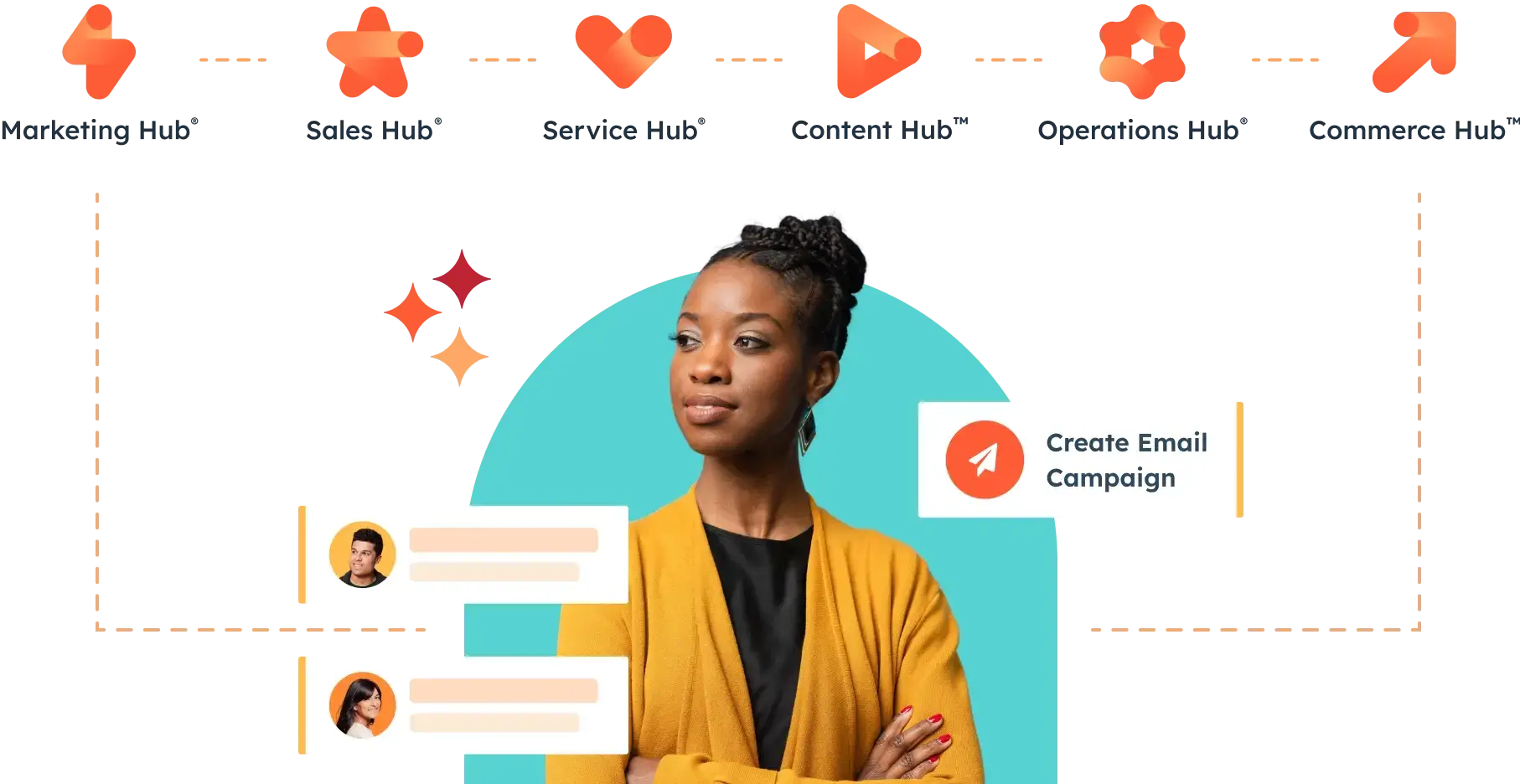
HubSpot is known for its ease of use and free plan, making it an excellent option for small and mid-sized beverage businesses. It provides essential CRM tools, including contact management, email automation, and sales tracking, without the high cost of enterprise solutions.
Features of HubSpot
- Lead Nurturing: Helps track potential customers and move them through the sales pipeline.
- Email Automation: Sends personalized follow-ups and promotional emails to customers.
- Pipeline Tracking: Provides a clear view of sales progress and helps prioritize deals.
- CRM Integrations: Connects with third-party tools, including e-commerce platforms and accounting software.
Best For
- Small to mid-sized beverage businesses
- Companies looking for an easy-to-use CRM
- Businesses that need marketing automation without a high budget
Pros
- Free plan with robust features: A great starting point for small businesses that need essential CRM functions.
- Easy to use: The interface is simple and requires little technical knowledge.
Cons
Limited advanced automation: Lacks the depth of automation and AI-driven analytics in enterprise-grade CRMs.
HubSpot is a solid choice if you need a budget-friendly, user-friendly CRM to manage leads, automate emails, and track sales. However, larger businesses may find their automation capabilities limited.
Want to maximize your marketing efforts? Explore How to Use HubSpot for Marketing to learn how to streamline campaigns, automate tasks, and drive better results.
2. Salesforce

Salesforce is one of the most powerful CRM solutions available. It offers AI-driven insights, sales automation, and advanced analytics, making it ideal for large beverage manufacturers and distributors. Its scalability ensures that as your business grows, the CRM can adapt to increasing demands without disruption.
Features of Salesforce
- Sales Cloud & Marketing Cloud: Automates sales processes and manages customer interactions across multiple channels.
- Predictive Analytics: Uses AI to analyze customer behavior and forecast future sales.
- Omnichannel Communication: Allows customer engagement through email, phone, social media, and live chat in one system.
- Workflow Automation: Reduces manual tasks by automating follow-ups, order tracking, and reporting.
- Integration with Third-Party Apps: Connects with accounting, inventory, and ERP systems for a seamless workflow.
Best For
- Large-scale beverage manufacturers
- Distributors handling high-volume sales
- Businesses that need deep customization and automation
Pros
- Highly customizable: You can tailor Salesforce to your specific sales process, inventory needs, and marketing strategies.
- Strong integration capabilities: Works well with ERP, POS, and e-commerce platforms, making managing operations in one place easier.
Cons
Expensive for small businesses: The pricing structure can be high, especially when adding advanced features or multiple users.
If you’re a large beverage company looking for a robust and scalable CRM, Salesforce is a strong choice. However, smaller businesses might find the cost and complexity overwhelming.
3. Microsoft Dynamics 365

Microsoft Dynamics 365 is a powerful CRM with deep integration into Microsoft’s ecosystem. It is ideal for businesses using Microsoft tools like Office 365 and Azure. It offers AI-driven insights, advanced sales forecasting, and business intelligence tools for data-driven decision-making.
Features
- Sales Forecasting: Uses AI to predict sales trends and customer demand.
- Customer Segmentation: Organizes customers based on behavior, location, and purchase history.
- Business Intelligence Tools: Provides real-time insights and advanced reporting for better decision-making.
- Seamless Microsoft Integration: Works with Outlook, Excel, Teams, and other Microsoft applications.
Best For
- Beverage companies using Microsoft products
- Large enterprises needing advanced reporting and analytics
- Businesses that require deep customization and automation
Pros
- Powerful data analytics and reporting: Helps businesses analyze customer behavior and optimize sales strategies.
- Excellent for enterprises needing customization: Allows businesses to tailor workflows, automation, and reports.
Cons
High cost and complexity in setup – Requires technical expertise and a higher budget to implement and maintain.
Microsoft Dynamics 365 is a great option for beverage businesses that rely on Microsoft tools and need advanced analytics. However, it may be too complex and costly for smaller companies.
4. Zoho CRM

Zoho CRM offers an affordable solution with AI-powered automation and omnichannel support. It helps streamline sales, manage inventory, and engage customers across multiple platforms without the high cost of enterprise-level CRM.
Features
- AI-Driven Sales Assistant: AI analyzes sales trends, suggests next steps, and improves customer interactions.
- Inventory Tracking: Helps businesses monitor stock levels, track orders, and prevent shortages.
- Customer Segmentation: Organizes customers based on purchasing behavior, location, and preferences for targeted marketing.
- Omnichannel Capabilities: Allows businesses to interact with customers via email, social media, phone, and chat in a single platform.
Best For
- Mid-sized beverage distributors
- Retailers looking for cost-effective CRM solutions
- Businesses needing automation and omnichannel communication
Pros
- Cost-effective with flexible plans: Suitable for businesses that need advanced features without a high price tag.
- Strong mobile accessibility: Sales teams can access customer data and manage leads.
Cons
Some integrations require additional setup effort: Connecting with third-party tools may need extra configuration.
Zoho CRM is a great option for mid-sized beverage businesses looking for an affordable, AI-powered system with strong mobile and omnichannel support. However, companies relying on multiple integrations may need extra setup time.
5. Pipedrive

Pipedrive is made for businesses that prioritize sales pipeline management. Its intuitive drag-and-drop interface makes tracking deals and moving them through different stages easy. Unlike complex CRMs, Pipedrive keeps things simple, making it a great choice for beverage companies focused on direct B2B sales.
Features of Pipedrive
- Visual Sales Pipeline: Provides a clear, drag-and-drop view of deals at different stages.
- Automation Tools: Reduces manual work by automating follow-ups, reminders, and data entry.
- Lead Tracking: Helps sales teams manage incoming leads and prioritize potential customers.
- Customizable Workflows: Allows businesses to tailor their pipeline based on their sales process.
Best For
- Beverage companies handling wholesale or direct B2B sales
- Businesses looking for a straightforward sales tracking tool
- Sales teams that want a visual, easy-to-use CRM
Pros
- Simple and effective for sales teams: The user-friendly interface makes tracking deals and managing leads easy.
- Budget-friendly pricing: Offers affordable plans compared to enterprise CRMs.
Cons
Lacks built-in marketing automation: Businesses needing email campaigns or customer segmentation may need third-party integrations.
Pipedrive is a great choice for beverage companies focused on B2B sales that want a straightforward CRM without unnecessary complexity. However, you may need additional tools if you need advanced marketing features.
6. NetSuite CRM (by Oracle)
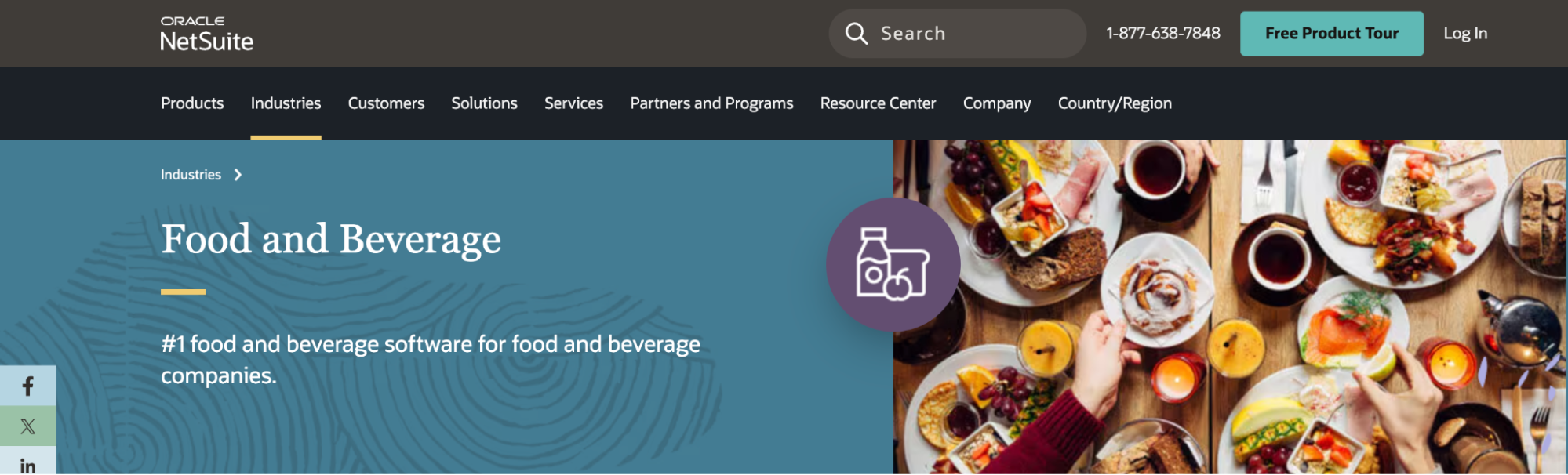
NetSuite CRM is a powerful solution that seamlessly integrates with Oracle’s Enterprise Resource Planning (ERP) system, making it ideal for large beverage enterprises. It provides end-to-end business management, from sales and order processing to financial tracking and multi-location inventory management.
Features
- End-to-End Order Management: Tracks the entire sales process, from lead generation to order fulfillment.
- Financial Tracking: Helps manage pricing, invoicing, and financial reporting in one system.
- Multi-Location Inventory Management: Monitors stock levels across multiple warehouses or distribution centers.
- Advanced Reporting & Analytics: Provides real-time insights into sales, inventory, and financial performance.
Best For
- Large beverage manufacturers and distributors
- Businesses with complex supply chain operations
- Enterprises needing advanced reporting and customization
Pros
- Ideal for large-scale businesses with high customization needs: Supports tailored workflows and industry-specific requirements.
- Advanced inventory and supply chain tools: Ensures smooth order fulfillment and stock management across locations.
Cons
Expensive and requires technical expertise: Implementation and maintenance can be costly and may require dedicated IT support.
NetSuite CRM is best suited for large beverage companies that need an all-in-one solution for managing sales, inventory, and financial operations. However, its high cost and complexity make it less practical for smaller businesses.
Transform Your CRM Strategy with INSIDEA’s HubSpot Services

As a HubSpot Diamond Solutions Partner, we take pride in assisting you in streamlining your HubSpot efforts. With our best-in-class marketing, sales, and service solutions, we help you scale exponentially. INSIDEA’s HubSpot Specialists have the required in-depth knowledge and can provide expert guidance on how to use the platform to meet your business needs.
Explore the range of services we offer:
- HubSpot Onboarding: Seamless onboarding process to get your team up to speed and fully integrated with all HubSpot features.
- HubSpot Management: Ongoing management ensures your HubSpot environment runs at peak efficiency.
- HubSpot Migration: Smooth and secure migration services that protect your data and enhance your CRM capabilities.
- HubSpot White-Label Solutions: Exclusive white-label services tailored to your brand, allowing you to offer branded HubSpot solutions.
Get in touch today to learn more about how INSIDEA can help you succeed!
At INSIDEA, we understand the importance of valuable HubSpot strategies that understand your target audience and drive conversions. Book a meeting with our HubSpot experts to explore how we can help you with your upcoming projects.