You’ve likely heard the phrases “customer service” and “customer experience” tossed around. But what do they really mean, and how are they different?
Customer service is the help we give or receive during purchases, like asking about a product’s feature or reporting a problem. On the other hand, customer experience is the complete process of a new customer, from browsing a website to post-purchase support.
Understanding customer service vs. customer experience is crucial for any brand to thrive in the market.
In this blog, we’ll break it all down for you.
What is Customer Service?
Customer service is the bridge between a brand and its customers. It’s centered on problem-solving, addressing concerns, and ensuring satisfaction. It’s direct communication that addresses immediate needs, answers queries, and fosters trust between a business and its clientele.
Simply put, customer service vs. customer experience is all about building a relationship of trust and reliability by assisting and supporting the customers through various means.
The Role of Customer Service
Now, let’s get a closer look at the role of customer service:
- Problem Resolution: Addressing and rectifying customer issues promptly
- Building Trust: Establishing confidence in the brand through reliable support
- Enhancing Satisfaction: Ensuring customer needs are met and expectations are managed
- Retention: Keeping customers loyal to the brand by consistently meeting their service needs
- Feedback Loop: Gathering customer insights to improve products, services, and processes
- Brand Representation: Serving as the face or voice of the company during most direct interactions
- Driving Revenue: Assisting in upselling or cross-selling opportunities by understanding customer needs
- Crisis Management: Handling complaints or issues effectively to protect the brand’s reputation
- Educating Customers: Providing information about products, services, or policies
- Setting Standards: Upholding and promoting the company’s values, culture, and ethos in every interaction
What is Customer Experience?
Now let’s debug the customer experience in our customer service vs. customer experience journey. The customer experience is all about the entirety of a consumer’s interactions with a brand. It covers every touchpoint, from initial awareness to post-purchase. Its job is not done after the transaction. Customer experience is where you nurture your clients and ensure their overall service satisfaction.
A well-curated customer experience talks about needs, ensures seamless service integration, and aims to build lasting trust and loyalty.
The Role Of Customer Experience
A stellar customer experience ensures long-term growth and strengthens the brand’s image in the market. Customer experience is the backbone of a brand’s reputation and success, setting clear expectations for what customers can consistently look forward to. Now, let’s get a closer look at the role of customer experience.
- Holistic Perspective: Customer experience captures a customer’s journey with a brand
- Building Loyalty: It encourages repeat business by creating positive, memorable interactions
- Differentiation: Customer experience sets brands apart in a competitive market based on the quality of interactions
- Driving Decisions: It influences purchasing choices based on past experiences
- Feedback and Improvement: Customer experience provides insights into areas the brand can refine and enhance
- Emotional Connection: It cultivates a deeper bond between customers and brands through positive experiences
- Brand Advocacy: Delighted customers become brand ambassadors, promoting the brand organically
- Long-term Growth: It directly impacts a brand’s sustainability and growth by retaining customers and attracting new ones
- Setting Expectations: Customer experience benchmarks what customers can consistently expect from a brand
- Strengthening Brand Image: It shapes a company’s public perception and reputation in the market
Customer Service vs. Customer Experience: 4 Ways They Are Different
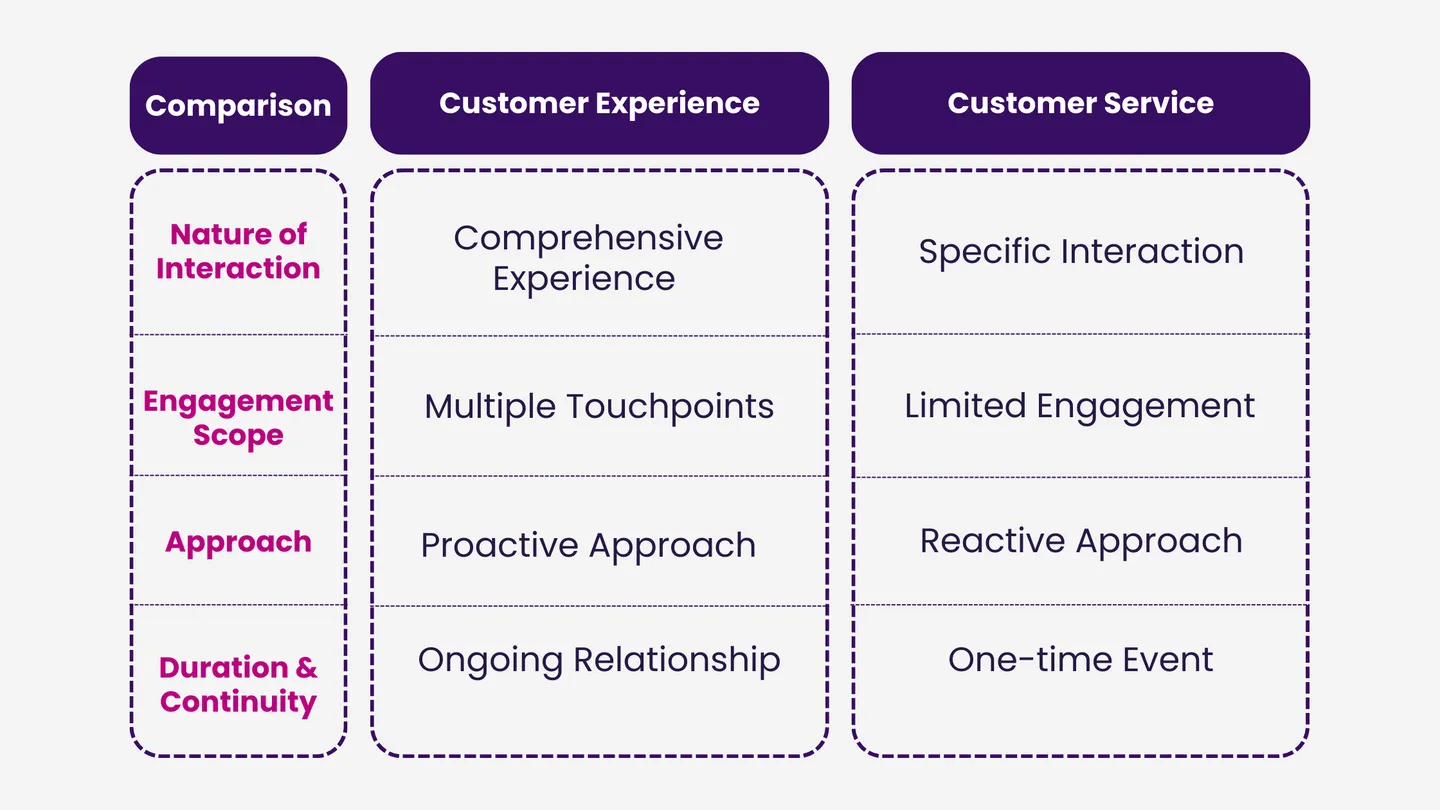
Customer service and customer experience are crucial in building and maintaining client relationships. While they often overlap, understanding their impact can help businesses cater to their clients better. So, let’s get started with the four main differences between customer service and customer experience.
1. Comprehensive Experience vs. Specific Interaction
The customer experience encompasses a consumer’s journey with a brand, from discovery to potential repeat purchases. It’s the cumulative result of all interactions. In contrast, customer service is a single stage in this journey that addresses specific queries or concerns.
2. Multiple Touchpoints vs. Limited Engagement
The customer’s journey with a brand, denoted as the customer experience, involves many interactions and requires coordination across different departments to ensure a pleasant experience. On the other hand, customer service is often limited to one or two direct touchpoints, typically overseen by customer-facing departments.
3. Proactive vs. Reactive Approach
The customer experience is about anticipation. Brands are proactive in this domain, constantly refining the journey, analyzing potential challenges, and guiding customer interactions. Customer service is largely reactive. It springs into action primarily when a customer initiates contact due to an issue or query.
4. Ongoing Relationship vs. One-Time Event
Customer experience is continuous and difficult to pin down to a single event. It’s an evolving narrative that continues each time a customer interacts with the brand. However, customer service is about distinct events like addressing a specific concern or responding to a particular query. Such interactions are measurable through various metrics, signifying distinct touchpoints in the customer’s journey.
INSIDEA
Ready to turn support into retention?
Responsive, on-brand customer support that keeps customers around.



 How INSIDEA works