




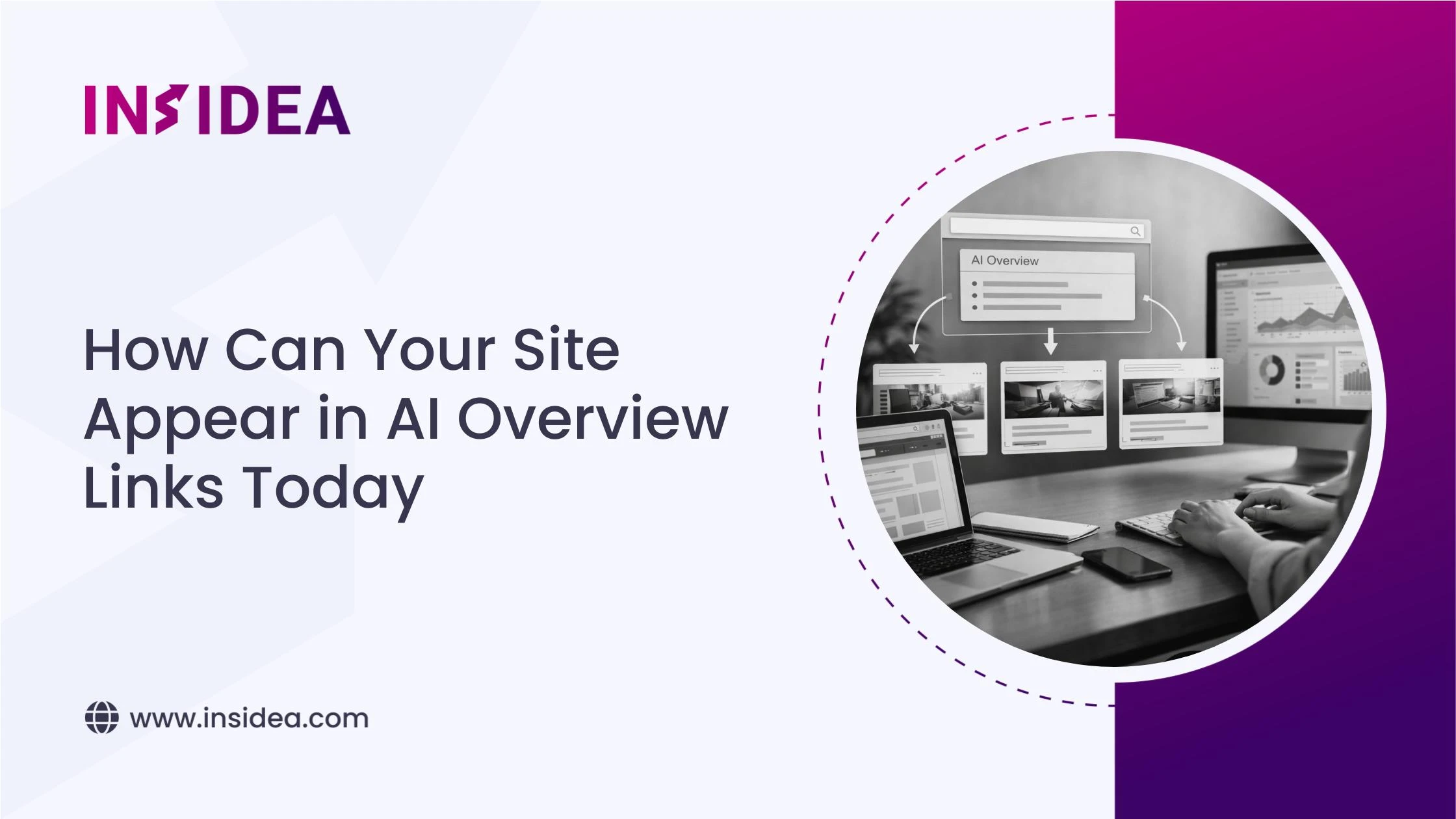
You’ve put in years mastering SEO, building rank, and earning your spot on Google’s front page—and suddenly, your traffic slows down. No algorithm updates. No bigger player stealing your spot. Just a new feature quietly changing the rules: AI-generated overviews appearing above the traditional links.
What shows up first now isn’t your site—it’s a summary. One written by AI. One that pulls selective supporting links into the spotlight, leaving everyone else invisible until the user scrolls.
This is how search is evolving. Google’s generative AI features, known as AI Overviews, are rewriting the playbook. They surface compact, synthesized answers and credit a shortlist of sources—what the algorithm deems trustworthy.
If your website isn’t among those references, you’re losing more than just traffic. You’re missing out on reputation-building exposure and future-ready discoverability.
Let’s break down exactly how to make your content AI-citable—and keep your visibility from slipping away.
What Are AI Overviews and Why Should You Care?
Imagine search engines no longer acting like librarians who hand you a stack of books, but like researchers who’ve done the reading and now present the summary.
AI Overviews do just that. They compile key points from multiple sources into a response that appears above traditional search listings. These summaries often include links labeled “According to…” or “As explained by…”—a small set of sources chosen for credibility and clarity.
For your business, this is prime real estate on the results page. But unlike traditional SEO, you can’t game this with backlinks or long-form content alone. AI Overviews prioritize editorial clarity, topic expertise, and whether you’ve directly answered what the user wants to know.
It’s why traditional SEO tactics now need a complement: Answer Engine Optimization—AEO.
From SEO to AEO: What’s Changed?
Think of it this way: SEO got you seen. AEO gets you cited.
While SEO revolves around keyword targeting and technical optimization, AEO focuses on how well your content solves actual questions. With generative search, algorithms are no longer just ranking links—they’re analyzing meaning and extracting value.
That means your content’s job isn’t just to rank—it’s to answer.
Here’s how the two strategies compare:
| Element | SEO | AEO
|
|---|---|---|
| Goal | Rank high in SERPs | Be cited in AI-generated summaries |
| Success Metric | Organic traffic | Visibility as a trusted referenced source |
| Strategy | Keywords, metadata, backlinks | Structured answers, EEAT, semantic clarity |
| Outcome | User clicks the page | AI cites a page within its response |
SEO isn’t going away—but if you want to earn space in AI-led search, upgrading your approach to include AEO is now non-negotiable.
How Do AI Features Determine Website Appearance?
AI Overviews don’t pull names from a hat. They analyze content using a series of signals to assess what’s most credible and valuable.
These are the factors that influence whether your site gets cited:
- Alignment with the user’s query intent
- Clarity and readability of your content
- Demonstrated authority and depth on the topic
- Effective formatting that supports AI extraction
- Schema markup and connected internal linking
- Clear signs of EEAT: Expertise, Experience, Authoritativeness, and Trustworthiness
Let’s look at how you can act on each of these.
1. Optimize for Precise Query Intent, Not Just Keywords
Search engines now interpret full questions, not just search phrases. Therefore, your content must address the underlying intent directly.
It’s not about writing broad articles stuffed with keywords. It’s about providing a complete, human-sounding answer to a particular question. The more targeted your content is, the more valuable it becomes to AI models seeking strong citations.
Here’s how to get closer to alignment:
- Use headers that ask real questions users type or say (e.g., “What are energy-efficient tax credits in 2025?”)
- Reverse-engineer popular “People Also Ask” boxes to find nuanced queries
- Prioritize intent clarity—why someone’s searching—not just what they’re typing
In short, reshape your editorial calendar to resemble a Q&A knowledge base, rather than a blog with loosely themed articles.
2. Structure Content for Easy Synthesis
AI tools parse content differently from humans. They break it into chunks, scan for structured patterns, and pull concise blocks of information that match the user’s query.
Large paragraphs with clever intros and winding stories? AI skips them.
If you want to be quoted, make your content intensely skimmable:
- Use bullet points or numbered lists
- Create bolded subheadings that telegraph exactly what follows
- Keep paragraphs brief and formatting uniform across similar sections
- Add short “At a Glance” summaries under headings
- Use schema-enabled FAQ or How-To sections for structured delivery
Here’s a real-world result: A personal finance site inserted a 50-word summary box under each section, clearly answering user questions. Within weeks, they began appearing in AI overviews on “how to build credit from scratch.”
Make your best points obvious—and let the AI do the rest.
3. Build Semantic Authority, Not Just Topical Authority
Having a wealth of content on a single topic isn’t enough anymore. AI doesn’t just evaluate relevance per page—it considers how your site is semantically interconnected.
In other words, are you building deep, intentional knowledge pathways across your site?
Tools like InLinks and Frase.io can help you identify where your content falls short of topic depth. But the foundation is this: Create supportive content clusters. Pillar pages. Detailed subtopics all working together.
And most importantly? Link them with purpose. Help AI map how your content answers not just one question, but an ecosystem of them.
The stronger those semantic relationships, the more your site reads like a trusted expert, rather than a page that merely happens to use the right keywords.
4. Improve Page-Level EEAT Signals
If your content sounds generic or detached, AI models will pick up on that—and skip it.
Instead, spell out why your page deserves trust.
Here’s how to strengthen EEAT in practical ways:
- Use bylines with bios and credentials, especially for professional content
- Cite other sources for facts or stats (including links when possible)
- Add testimonials, reviews, or tangible data to substantiate advice
- Speak from first-hand experience or directly state your methodology
- List “last updated” dates showing current relevance
One small law firm experienced a notable increase in citations after incorporating attorney bios and linking to local tenant statutes in their landlord-tenant guides. Authority isn’t about size—it’s about clarity and credibility.
5. Add Structured Data (But Do It Intelligently)
Schema isn’t dead—it just needs to be strategic. AI utilizes structured data to contextualize and validate the meaning of your content.
Here’s where schema still pulls weight:
- Use the FAQ schema for any Q&A or list-style sections
- Add How-To schema for process explanations
- Include Blog or Article markup with publication dates and authorship
- Consider the About and Author schema for individual authors and companies
Don’t overapply it. Match schema with actual content elements, and test your pages using Google’s Rich Results Test. Poor implementation is worse than none at all.
6. Use a Balanced Content-to-Query Ratio
When a user asks a specific question, AI overviews don’t go hunting for sprawling guides. They seek a concise, relevant, well-structured answer.
That’s why many cited sources come from surprisingly short or medium-length pages.
Aim for:
- 800–1200 words focused tightly around one user intent
- Logical headings are split into standalone sections
- Visuals that support comprehension, like charts or screenshots
- Short takeaway boxes summarizing the key result
You don’t win AI features with volume—you win with focus. Make your point clearly, directly, and with context that helps the AI package your content into its following response.
7. Monitor and Adapt: AI Citations Can Fluctuate
AI summaries evolve. As machine learning models update, what they pull in today might shift tomorrow.
You need to keep score.
Use tools like SEO Clarity or SERPwatcher to flag when you’re included in AI features—and when those references drop off. Watch for emerging patterns in phrasing, structure, and tone among cited competitors.
And don’t forget to audit content regularly. Refresh stats, update language, refine headers, and remix formatting where needed.
This isn’t about chasing algorithm changes. It’s about improving the user experience—because the AI is trained to reflect precisely that.
Client Analogy: The Moving Company That Got Cited
One of our clients owned a local moving company in Raleigh. Great reviews, strong SEO, and lots of page-one rankings. But once Google rolled out AI Overviews, their top queries—like “best moving companies near me”—started surfacing summaries that didn’t include their site at all.
So we pivoted.
They didn’t just add another basic services page. They created a guide called: How to Budget for a Move in Raleigh (Real Local Costs). It was clear, helpful, updated monthly, and pulled straight from their own job data.
Within the month, that guide was being cited in AI-generated overviews—driving more traffic than their homepage ever had.
When your content answers real questions with authority, AI notices.
Tools and Practices to Get Ahead
You don’t need to guess what works—you need the right toolkit and workflow.
Start with tools built for content clarity:
- Surfer SEO (for NLP insights and on-page structure)
- Frase.io (for aligning with SERP intent and summary formatting)
- InLinks (for connecting semantic clusters intelligently)
- AnswerThePublic (for user-question goldmines)
- Content Harmony (to structure briefs with answer-first logic)
Best practices to make it work:
- Write from the question outward—not from the keywords in
- Lead every section with summary-level answers before diving into detail
- Incorporate lived experience or cited proof wherever possible
- Refresh older posts with better formatting and markup
- Use internal links like an editor—not like a robot
If it reads like a clear, confident answer from someone who knows what they’re talking about, you’re doing it right.
Why AEO Is Not Optional Anymore
AI-powered summaries are being rolled out across major search engines on a large scale. Billions of queries are being filtered through generative models that cite only the top handful of trusted sources.
This isn’t a beta test. It’s the new battleground of visibility.
You’re no longer fighting for blue links—you’re competing to be the line that gets quoted.
If your content isn’t optimized for that kind of clarity, someone else’s will be.
Stand Out Where AI Looks for Answers
You don’t get cited in an AI overview by chance. You earn your seat by being the best, most findable answer—structured in a way machines trust and humans understand.
That’s where INSIDEA comes in. We help brands upgrade from old-school SEO to modern AEO—building content that earns citations, not just clicks.
Want to show up in the places that matter—before the scroll, at the top of the summary, inside the AI response?
Visit INSIDEA and let’s build content that gets quoted.









