The way we search online has changed more in the last two years than it did in the previous decade. A growing number of people are typing their questions into ChatGPT, Perplexity, Gemini, and Claude instead of Google and getting direct answers back without clicking a single link.
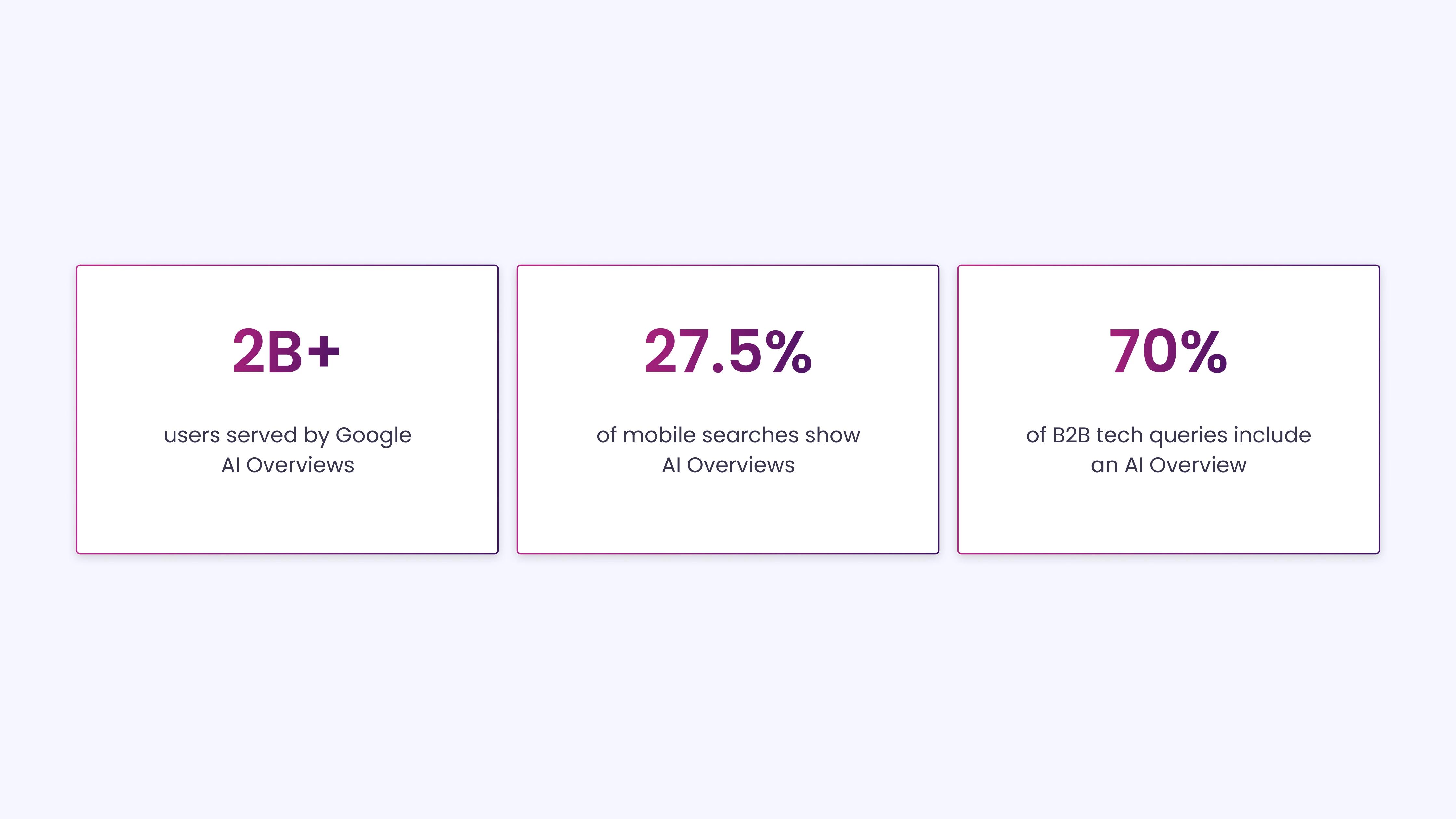
Google’s AI Overviews, which generate answers at the top of search results, now serve more than 2 billion users worldwide, showing answers before users scroll or click through to sites.
For brands, this creates a real problem. If you are not showing up in those AI‑generated answers, you are losing visibility at the exact moment a potential customer is asking about your category, your competitors, or your solutions.
Standard Google ranking dashboards do not report where your brand appears in AI‑generated answers or which sources are driving those mentions. You may have strong organic rankings but no clear view of where you stand in these AI summaries.
This blog breaks down 10+ practical, distinct ways to track your brand mentions in AI search, so you stop flying blind and start measuring where your brand appears and where it does not.
How AI Overviews Select Sources?
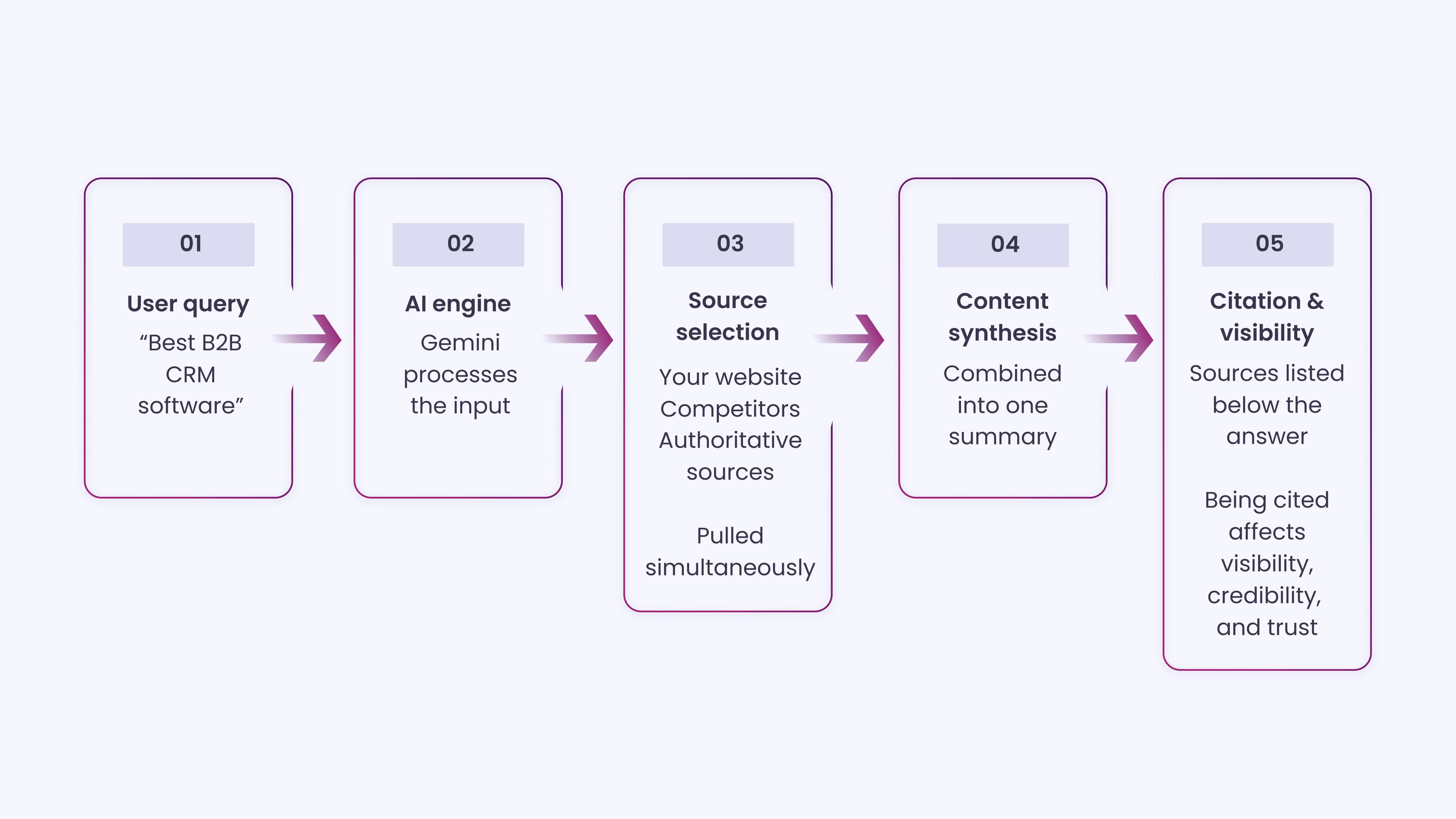
When someone searches on Google, AI Overviews pull information from multiple sources across the web, your website, competitors, and trusted industry sites. These sources are then synthesized into a single summary with citations at the bottom.
With AI Overviews appearing in 27.5% of mobile searches and covering 70% of B2B tech queries, being cited as a source has a real impact: users may see your brand without ever clicking a link. If competitors are cited instead of you, your visibility is reduced before a potential customer even scrolls down.
Understanding how sources are selected gives context for the tracking methods that follow, so you know exactly where to focus your efforts to be seen.
10+ Proven Methods to Monitor Your Brand in AI Search
The methods below are not interchangeable. Each one gives you a different angle, such as manual spot-checks, automated monitoring, and understanding the content signals that drive AI citations.
1. Run Direct Prompts Across Multiple AI Platforms
The simplest starting point is also one of the most overlooked. Open ChatGPT, Perplexity, Google Gemini, Microsoft Copilot, and Claude. Type queries that your target audience would actually ask, things like “best tools for [your category],” “who are the leading [your service] providers,” or simply your brand name itself.
Look at what comes back. Is your brand mentioned? Is it framed positively, neutrally, or not at all? Are competitors named while you are absent? Screenshot everything and log it in a spreadsheet with the date, the platform, and the exact prompt used. This gives you a baseline you can return to weekly or monthly to measure movement.
The reason this matters: each AI engine draws from different training data and applies different weightings. A brand could appear prominently in Perplexity answers and be completely absent from ChatGPT responses. You need to check each one separately.
2. Use Perplexity’s Citation Tracking to See What Sources AI Trusts
Perplexity is unique in that it shows its sources directly below each answer. This makes it one of the most useful platforms for understanding the content signals driving AI brand mentions.
When you run a search on Perplexity and your brand appears in the answer, check which sources were cited to support that mention. If you are cited, that tells you which of your own content is being trusted. If a competitor is cited instead of you, that tells you exactly which content gaps you need to fill.
Go deeper. Run prompts around your product category, pain points your customers face, and comparison searches like “[your brand] vs [competitor].” Document which third-party sources, review sites, publications, and industry blogs are consistently being pulled into these answers. Those are the exact platforms where your brand needs a stronger presence.
3. Set Up Google Alerts for Brand Mentions Across Indexed Sources
AI engines largely draw from publicly indexed, reputable content. Google Alerts remains a reliable way to monitor when your brand gets mentioned across the web, news sites, blogs, forums, and industry publications, all of which feed into AI training data and retrieval systems.
Set up alerts for your brand name, your product names, executives, and any branded phrases you use. Set the frequency to daily or weekly, depending on your volume. When alerts fire, check whether the source is the kind that AI engines tend to cite. Authoritative, well-structured, niche-relevant content tends to have more pull than thin blog posts.
The added value here is that you are not just tracking AI mentions after the fact; you are tracking the upstream content that will influence future AI answers.
4. Monitor Brand Mentions on Reddit and Quora
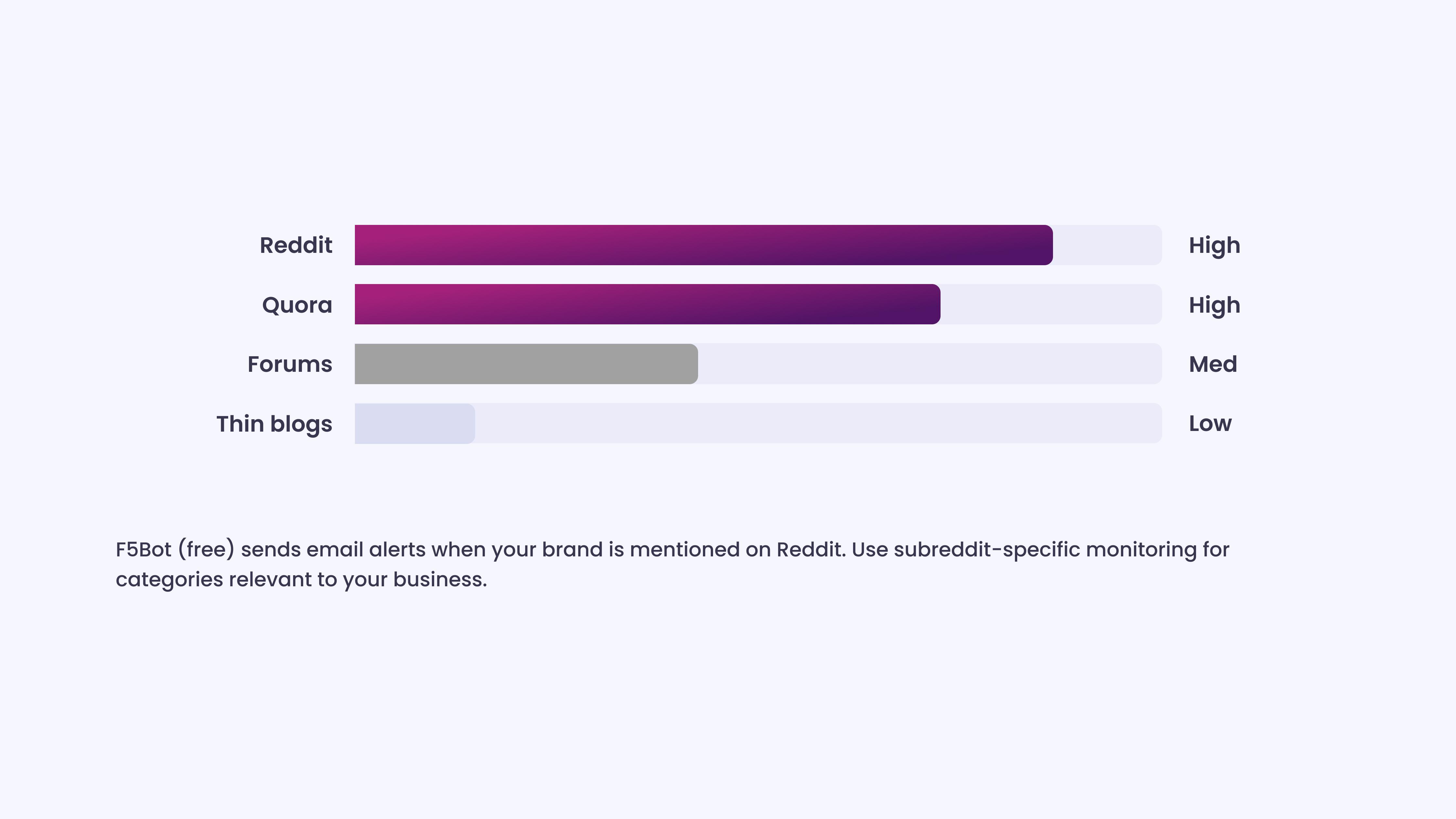
Reddit and Quora receive disproportionate weight in AI-generated answers. Both ChatGPT and Perplexity frequently surface discussions from these platforms when answering open-ended questions, comparison queries, and “best of” searches.
Search for your brand name directly on both platforms. Look at the context: are the discussions positive, negative, or mixed? Are people recommending you, comparing you unfavorably to competitors, or asking questions that suggest confusion about your product?
Set up subreddit-specific monitoring for categories relevant to your business. Tools like F5Bot (free) allow you to get email notifications when your brand is mentioned on Reddit. This is not just reputation management; it is a direct feed into understanding what AI engines are likely to surface when users ask about your brand.
5. Track AI-Specific Mentions with AI-Focused Monitors
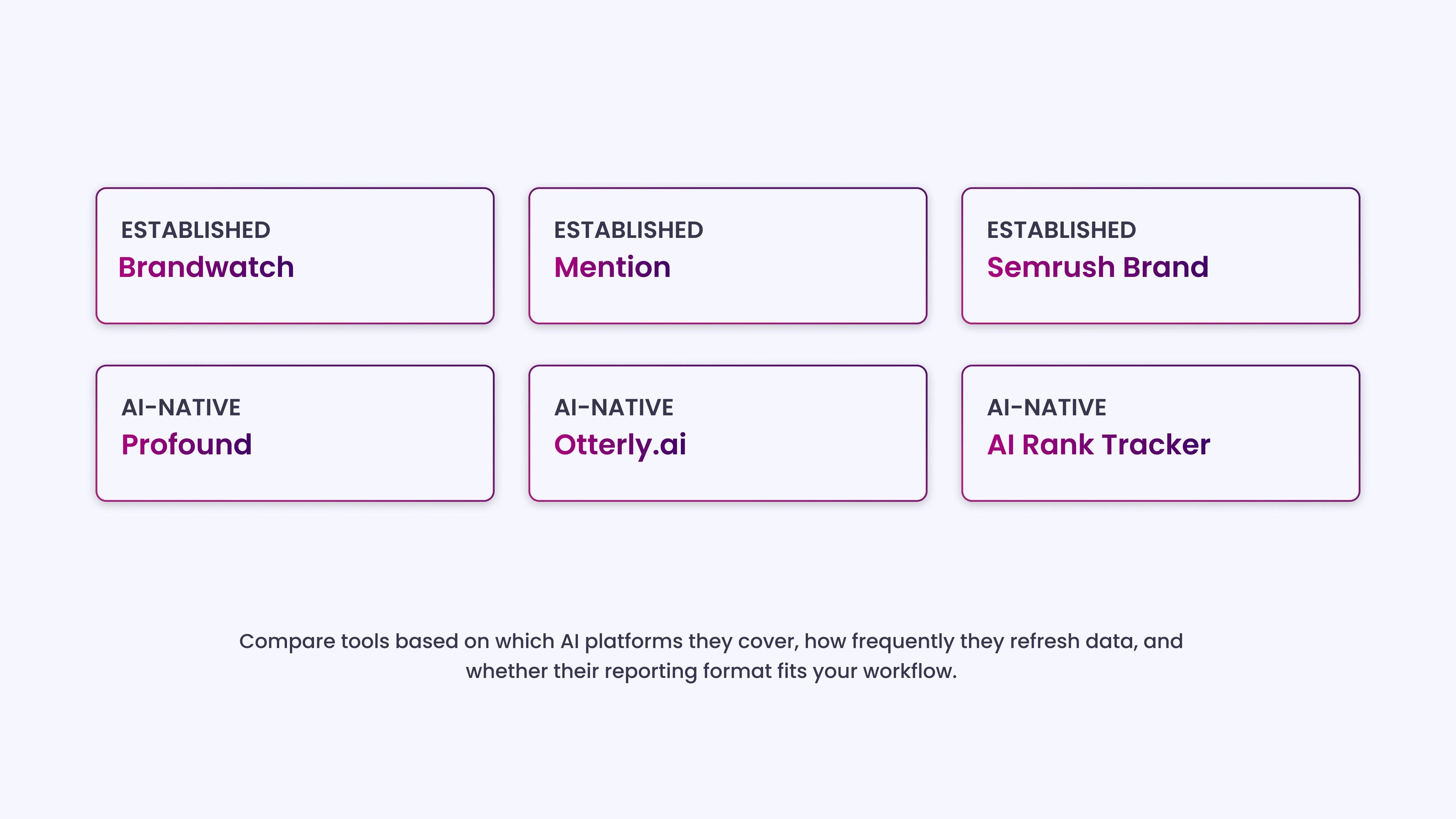
A new category of tools is emerging specifically to address AI search monitoring. Platforms like Brandwatch, Mention, and Semrush’s Brand Monitoring tool have started extending their capabilities beyond social and web tracking to capture AI search visibility signals.
More recently, tools like Profound, Otterly.ai, and AI Rank Tracker have been built specifically to track how brands appear in AI-generated responses across platforms. These tools let you input your brand name, run regular prompt simulations, and track changes over time with more structure than manual checking alone can provide.
If your brand is at a stage where AI search visibility is a serious priority, investing in one of these tools gives you consistent, repeatable data instead of ad hoc snapshots. Compare a few based on which AI platforms they cover, how frequently they refresh data, and whether their reporting format fits your workflow.
6. Audit Your Backlinks to See What AI Can Access
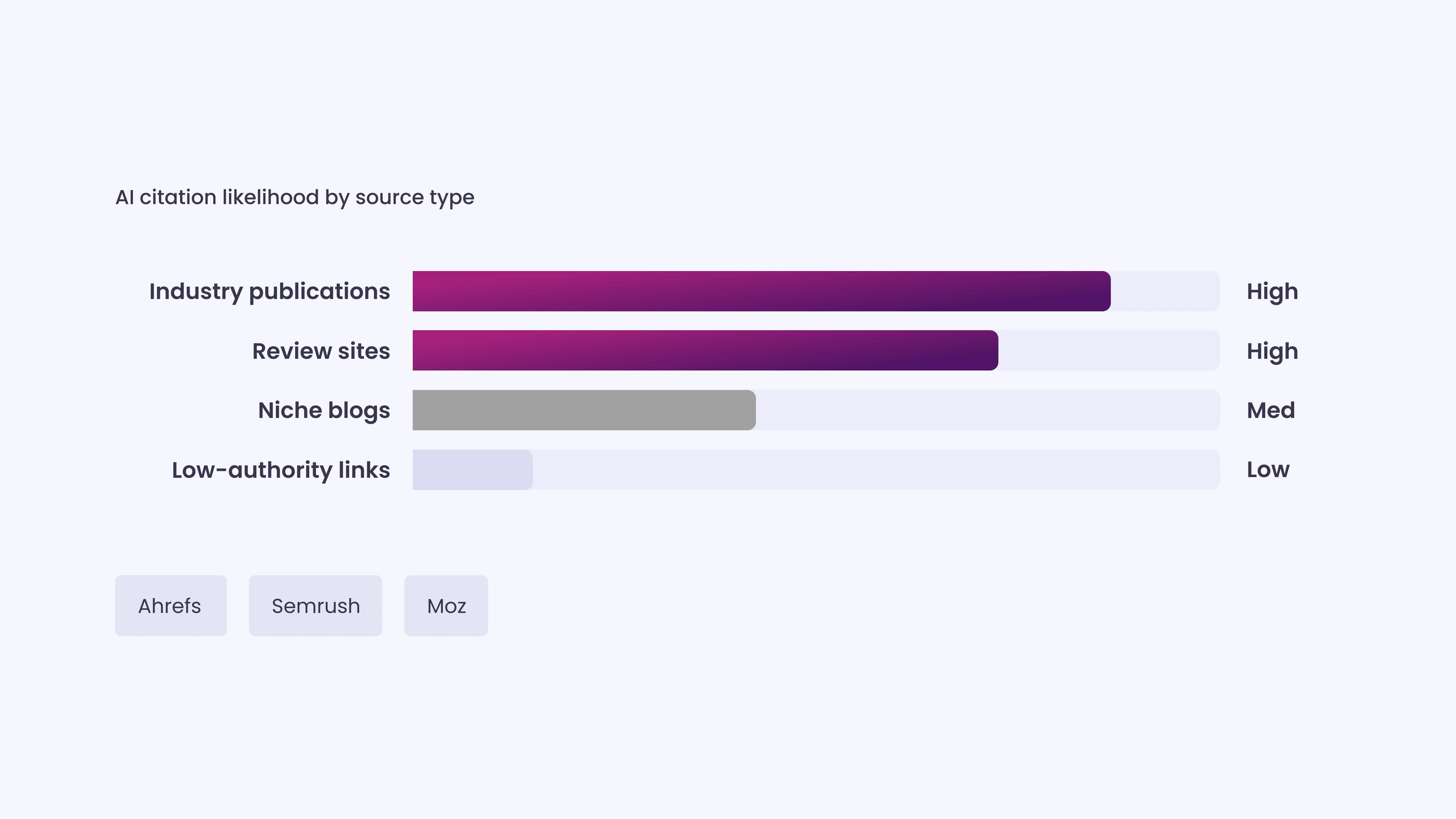
AI language models are trained on web content, and retrieval-augmented systems like Perplexity actively pull from indexed pages. The quality and breadth of your backlink profile directly affect how often credible sources reference your brand, which in turn affects how AI engines represent you.
Use tools like Ahrefs, Semrush, or Moz to audit your backlink profile. Look at which domains are linking to you and the authority those domains carry. Are you being cited by respected industry publications, independent review sites, or niche blogs with real audiences? Or are most of your links coming from low-authority sources that AI engines are unlikely to trust?
A weak backlink profile means fewer high-quality sources mentioning your brand across the web, reducing the likelihood that AI engines will surface your brand in relevant answers. Strengthening this is a medium to long-term play, but it compounds over time.
7. Check Your Brand in Google’s AI Overviews (SGE)
Google’s AI Overviews (previously called SGE, Search Generative Experience) now appear at the top of many search results pages. If you are tracking brand visibility, you cannot ignore this because it is appearing on the world’s most-visited search engine, not just on standalone AI platforms.
Run searches relevant to your brand and category directly in Google. Look at whether AI Overviews appear for those queries and, if so, whether your brand is cited or mentioned in them. Click through to see which sources Google’s AI is pulling from to construct those answers.
Google Search Console does not yet have a dedicated section for AI Overview appearances, so this must be checked manually. Create a list of your 20 to 30 most important search queries and run them regularly in incognito mode to avoid personalization skewing your results.
8. Map Competitor Mentions Where You’re Missing
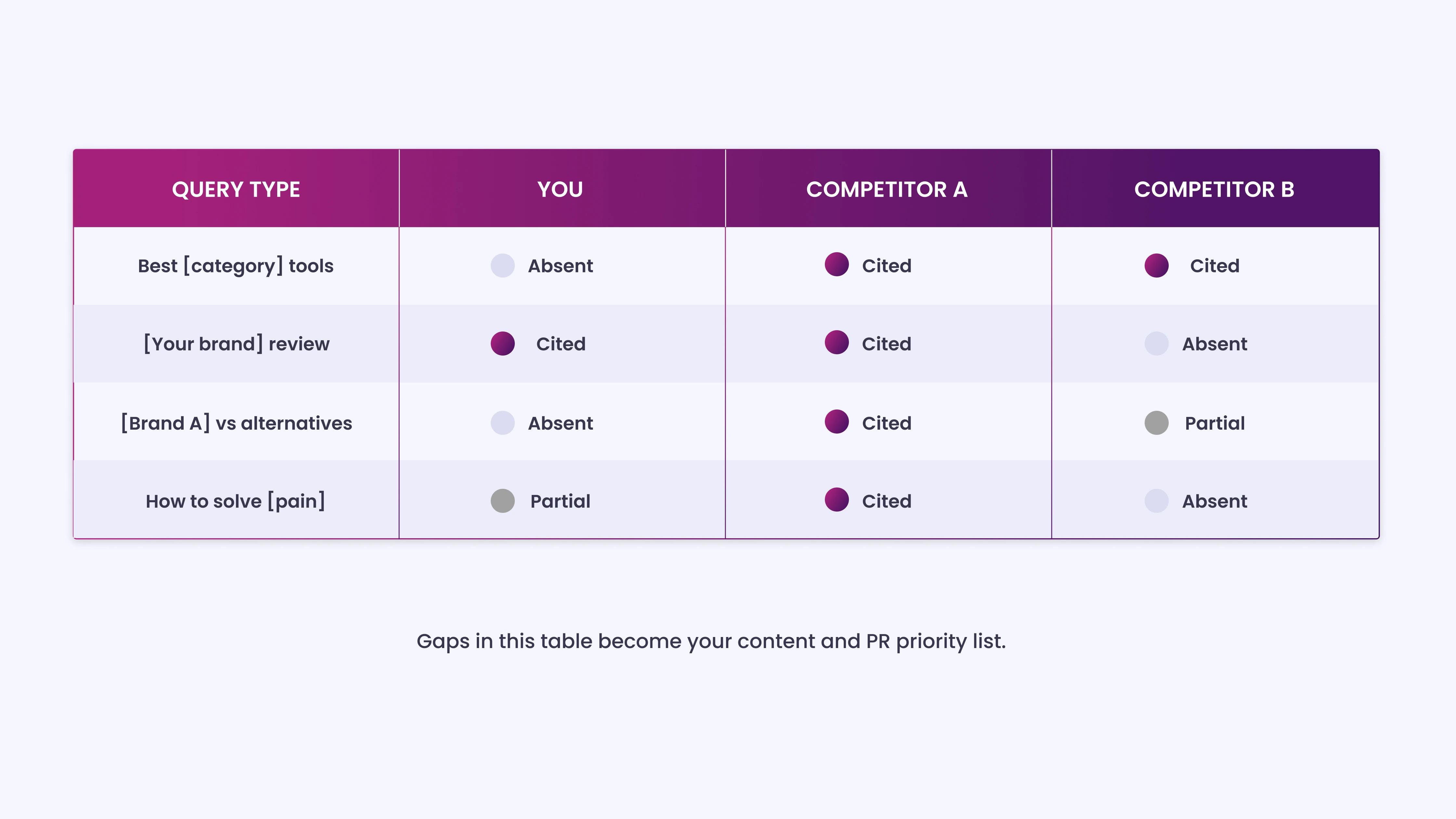
Brand monitoring in AI search is not just about your own mentions. It is about understanding the gap between where you appear and where your competitors consistently show up.
Run the same set of prompts across AI platforms for your competitors that you run for yourself. Document every instance where a competitor is named in an answer, and you are not.
Over time, this reveals patterns: Are there specific query types where you are underrepresented? Are certain competitors consistently positioned as the go-to recommendation in AI answers for your category?
This competitive map tells you exactly where to focus your content and PR efforts. If a competitor is cited in AI answers because they have a strong presence on a particular review platform or industry publication, that is a clear signal of where you need to build your presence, too.
9. Monitor Third-Party Review Platforms That Feed AI Answers
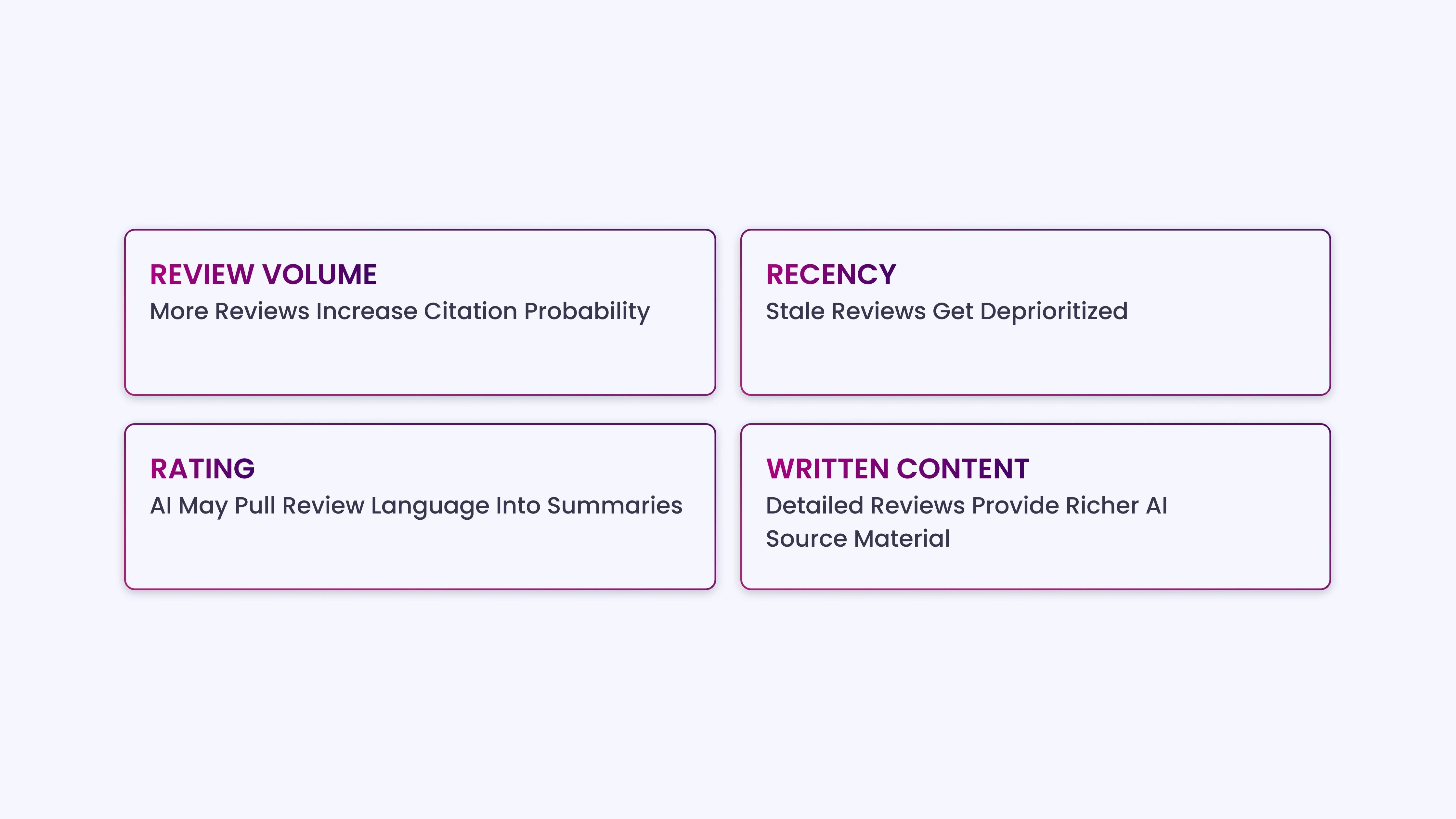
G2, Capterra, Trustpilot, Clutch, and similar review platforms are heavily cited by AI engines when users ask for software recommendations, service comparisons, or vendor evaluations. If your brand has sparse, outdated, or low-rated reviews on these platforms, AI engines are either skipping you or representing you unfavorably.
Audit your presence on every major review platform relevant to your category. Check your review volume, recency, rating, and the content of written reviews, since AI engines sometimes pull language directly from reviews into their summaries.
A proactive review-generation strategy, making it easy and timely for satisfied customers to leave reviews, feeds directly into improving how AI engines represent your brand in recommendation-type queries.
10. Use Social Listening Tools to Monitor AI-Related Brand Mentions
People are increasingly sharing screenshots, reactions, and discussions about what AI engines said about brands. Twitter/X, LinkedIn, and Reddit are full of these conversations, and they surface real-world data about how your brand is (or isn’t) appearing in AI answers.
Tools like Sprout Social, Hootsuite, or even native platform search can help you monitor mentions of your brand alongside terms like “ChatGPT said,” “Perplexity says,” “AI recommended,” or “according to AI.”
These posts are directionally useful because they show how real users experience your brand through AI, which is ultimately what matters.
Set up keyword combinations in your social listening tools that pair your brand name with AI-related terms. Review these regularly to catch any notable mentions, positive or negative, that surface organically.
11. Measure Referral Traffic From AI Sources
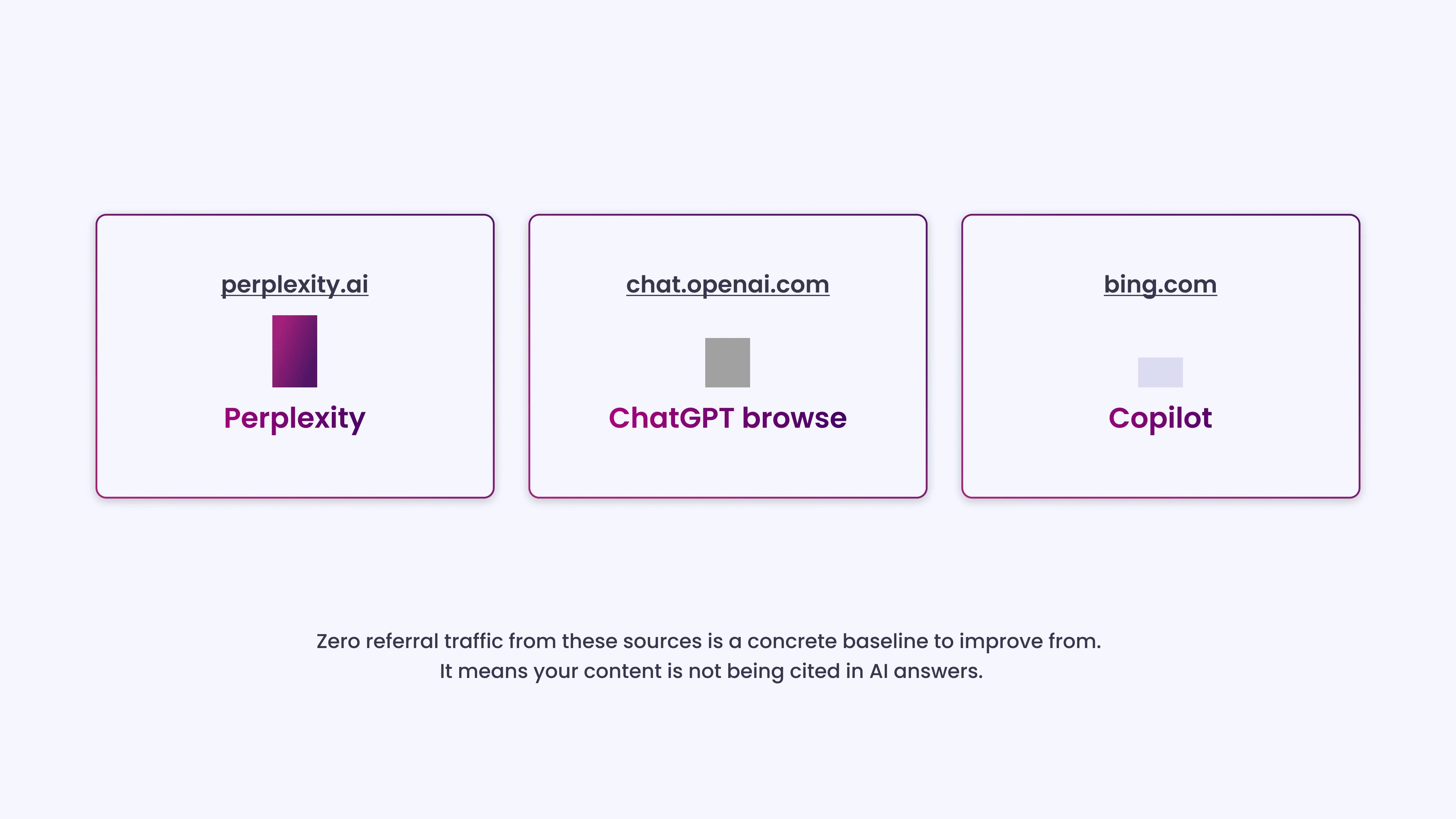
Perplexity, ChatGPT (via its browse feature), and other AI platforms do send referral traffic when they cite sources. This is measurable. In Google Analytics 4, check your acquisition reports for referral traffic and filter by domains like perplexity.ai, chat.openai.com, or bing.com (which powers Copilot).
If you are seeing referral visits from these sources, it means AI engines are citing your content, and users are clicking through. Tracking this over time shows you whether your AI search visibility is growing, plateauing, or declining.
If referral traffic from AI platforms is currently zero or negligible, that is a strong signal that your content is not being cited in AI answers, and it gives you a concrete, measurable baseline to improve from.
12. Audit Content AI Engines Are Likely to Cite
Everything above is tracking and monitoring. This final point makes your monitoring actionable. AI engines favor content that is clear, authoritative, well-structured, factually accurate, and regularly updated. They tend to cite content from trusted publications, independent experts, and brands that have built a consistent footprint of useful information across the web.
Audit your own content library. Look at whether you have comprehensive, well-sourced content covering the core questions your audience asks. Check whether your content is properly structured with clear headings, factual claims backed by data, and authorship that signals expertise. Look at whether your content has aged without updates; stale content gets deprioritized.
Then look at the gap between what you have and what the AI engines you have been monitoring are actually citing. That gap is your content roadmap for improving AI search visibility over the next six to twelve months.
Know Where Your Brand Stands in AI Answers
AI search is no longer a future consideration. It is where a meaningful, growing portion of your audience is forming opinions about your brand, your competitors, and your category.
The difference between brands that show up consistently in AI answers and those that don’t comes down to one thing: the strength and credibility of their content footprint across the web.
Tracking brand mentions in AI search is not a single tool or a one-time audit. It requires a combination of manual prompt testing, competitive benchmarking, source analysis, and ongoing investment in content. The 12 methods above give you a full picture, from quick manual checks you can do today to longer-term structural improvements that compound over time.
Start with what you can act on immediately: run prompts on the major AI platforms, check what sources they are citing, and compare your brand’s presence to your closest competitors. That alone will tell you more about your AI search visibility than most brands currently know.
Gain Control Over How AI Represents Your Brand With INSIDEA
Most brands are still passive with AI search, letting competitors get cited in answers while they remain invisible. Every month you wait, potential leads see your competitors instead of you.
INSIDEA helps brands actively shape how AI engines reference them. We combine targeted content strategy, digital PR placement, and SEO focused on the specific sources and signals AI engines trust, so your brand appears in AI summaries, recommendation lists, and top AI-generated answers for your category.
Here is how we help:
- AI Search Visibility Audits: We check how your brand currently appears across ChatGPT, Perplexity, Gemini, and Google AI Overviews, pinpointing the exact gaps that limit your visibility.
- Content Strategy for AI Citations: We design content plans based on what AI engines are actually citing in your category, ensuring your brand earns a spot in the answers your audience is already seeing.
- Digital PR & Competitive Benchmarking: We place your brand in trusted publications, review platforms, and third-party sources AI engines rely on, while also mapping competitor mentions so you know where to focus.
- Ongoing Monitoring and Reporting: We set up structured tracking to monitor your AI search performance, providing clear metrics and updates so you can measure progress and stay ahead of competitors.

 How INSIDEA works