You operate in a fiercely competitive market, and here’s a reality check:
Just 56% of U.S. consumers trust their health insurer to act in their best interest—a three-year low, according to a February 2025 Forrester report.
When it comes to auto insurance, trust issues are even more pronounced: only 15% of policyholders report high levels of trust, per the 2024 J.D. Power U.S. Auto Insurance Study.
So why does trust matter?
Because branding isn’t just about having a fancy logo. It’s about building confidence, credibility, and lasting relationships. Strong branding can sway prospects, reduce churn, and shield you from rocky waters when claim disputes arise. It turns first-time buyers into lifelong clients, boosting your bottom line while slashing acquisition costs.
In this blog, you’ll discover 10+ powerful branding tips for insurance companies—strategies that help you stand out, inspire trust, and signal your unwavering commitment to clients.
Understanding the Importance of Branding

Branding in the insurance industry is more than a marketing function. It represents your company’s identity in a skeptical market. You’re not just selling a policy but offering peace of mind. Your brand sets you apart in a space where offerings often look the same on paper.
Think of branding as a mix of perception, experience, and trust. Every interaction reinforces your brand promise, from the tone of your emails to the music on your customer service line.
A Harvard Business Review article highlights that emotionally connected customers can significantly impact profitability, often leading to a 3–5% increase in annual sales when key segments deepen their emotional bond with the brand. Building this kind of connection through a consistent and trustworthy brand voice is essential to reduce churn and protect margins.
That’s why smart branding tips for insurance companies are essential. These strategies help you move beyond just products and pricing to create lasting relationships.
Today’s insurance buyers are digital-first, research-driven, and quick to switch. They want authenticity, speed, and personalized service. If your brand doesn’t reflect these expectations, they won’t stay.
In the next section, you’ll find actionable branding tips for insurance companies to help you build trust and stand out from the competition.
Build a Brand That Sticks: Actionable Branding Tips for Insurance Companies
Branding in insurance is about building trust, standing out, and staying top of mind. These branding tips for insurance companies will help you connect with the right audience, communicate your value clearly, and grow with confidence.
1. Define Your Brand Mission and Vision with Precision
Your brand mission and vision are the foundation of everything you do. A clearly communicated mission improves internal culture and external brand trust. Research from Deloitte found that purpose-driven companies outperform the market by 42%.
When defined clearly, they create alignment across your organization and give clients a reason to believe in your services.
Start by asking: What does your company stand for beyond selling insurance? What impact do you want to have on your clients’ lives?
A compelling mission communicates purpose. It helps clients connect with you on an emotional level, while a strong vision paints a picture of the future you’re working toward. This clarity sets expectations and builds trust—two non-negotiables in insurance.
Avoid generic phrases like “we offer reliable coverage.” Instead, speak directly to your values. For example, a vision like “Protecting small businesses with affordable, tailored solutions” tells people exactly who you serve and why it matters.
2. Understand Exactly Who You’re Talking To
According to a 2024 Accenture report, 74% of consumers are more likely to purchase from brands that provide personalized experiences. Knowing your audience allows you to build marketing and branding that resonates, rather than blending in.
Too many insurance brands cast a wide net with vague messaging. The result? Irrelevance. You need to know your audience deeply—what keeps them up at night, what they value, and how they make decisions. Then speak directly to those concerns.
Start by segmenting your client base: small business owners, first-time policyholders, young professionals, and retirees. Look at the patterns—demographics, digital behavior, and coverage preferences. Use surveys, CRM data, social listening, and reviews to go deeper.
Once you have those insights, craft tailored content and messaging that speaks their language. A millennial buying renters’ insurance may want a sleek mobile experience and chat support, while a local contractor might prioritize risk mitigation and claims reliability.
3. Build a Cohesive and Memorable Visual Identity
In a crowded insurance market, visual identity is more than aesthetics—it is a trust signal. Every visual element, from your logo and colors to your website and documents, sends a message about your professionalism, consistency, and reliability.
According to Lucidpress, brands with consistent visuals across platforms see an average revenue increase of 23%. When your brand looks polished and intentional, it reinforces your credibility, especially in an industry where trust is everything.
If your brand visuals look outdated or inconsistent, prospects may question whether your services are just as neglected. That’s why it’s worth investing in a modern, cohesive look that aligns with your values and audience preferences.
Start with a brand audit. Look at your logo, typography, imagery, and digital presence. Ask yourself: Is it unified across all platforms? Does it feel modern and trustworthy? Do your colors and layout reflect the type of client experience you offer?
Then, develop a brand style guide that sets rules for everything—colors, fonts, spacing, imagery tone, logo usage, and charts or forms. This guide should be mandatory for everyone touching your brand, from designers to agents.
4. Leverage Personalized Experiences to Build Deeper Connections

Today’s clients expect brands to understand their needs, and personalization is no longer optional. Generic messaging and one-size-fits-all policies won’t cut it. You must tailor your communications, offerings, and digital experiences based on real client behavior.
Start by analyzing your CRM data to identify patterns—who’s buying what, when, and why. Segment your audience into clear groups, such as young families, tech-savvy professionals, or small business owners. Then, deliver personalized content and product recommendations that match each segment’s priorities.
Consider dynamic website content, personalized email sequences, and even AI-driven customer portals. To make clients feel seen and valued, you can also offer behavior-based discounts, like safe driving rewards or health-conscious incentives.
Accenture reports that 75% of consumers are more likely to buy from brands that personalize experiences, and 69% of insurance customers would share personal data if it leads to lower premiums. Personalization builds loyalty and makes your brand feel like a trusted advisor, not just a policy provider.
5. Ensure Brand Consistency Across Every Touchpoint
Every time clients interact with your brand—whether on your website, in an email, or at your office—they form an impression. Inconsistencies, even small ones, can confuse or raise doubts. That’s why maintaining a consistent brand across all channels is critical.
Audit every touchpoint: brochures, landing pages, forms, voicemail greetings, and social media profiles. Are you using the same colors, logos, voice, and tone throughout? If not, it’s time to streamline.
Create a comprehensive brand style guide, covering everything from logo sizing and color codes to email voice and photography guidelines. Every department and agency partner should follow this guide religiously.
Consistent branding can increase revenue by up to 23%. When your brand looks and sounds the same everywhere, it signals reliability, which is a crucial factor in the trust-heavy insurance industry.
6. Use Educational Content to Build Authority and Trust
88% of insurance customers want more personalized, helpful content. Educational resources create ongoing engagement and differentiate you from providers who focus solely on transactions. Insurance is complex, and most clients don’t fully understand the products they’re buying. That’s where educational content becomes your most powerful branding tool. When you simplify confusing topics and offer real value, you position your brand as the helpful expert.
Start by identifying your audience’s top concerns: how premiums are calculated, what coverage is essential, how claims work, etc. Turn these into blog posts, explainer videos, or downloadable guides. Use plain language, real examples, and a warm, conversational tone.
Distribute your content strategically on your website, via email, and across your social channels. Over time, these resources will drive traffic, generate leads, and reinforce your brand authority.
7. Activate Referral Programs to Fuel Trusted Growth
Referral programs tap into your happiest clients and turn them into brand champions. Many agencies overlook this strategy, but it can be a game-changer for growth. Referrals generate warm, pre-qualified leads who already trust you based on someone else’s experience—and that trust matters. 92% of consumers trust referrals from people they know more than traditional ads, making this one of the most credible forms of marketing.
Start small. Ask satisfied clients for referrals immediately after a successful claim resolution or policy renewal. Make it easy and rewarding, offer double-sided incentives like discounts, gift cards, or added policy perks for the referrer and the new client. Automate these asks using email triggers and follow-ups to keep the momentum going. It pays off: referral marketing delivers 3 to 5 times higher conversion rates than other channels, and referred customers show 37% higher retention, turning trust into long-term value. That’s low-cost, high-impact growth from the bonds you’ve already built.
8. Monitor Your Online Reputation with Proactive Listening
Your online presence impacts how prospects and partners perceive your credibility. What you post, and what others say about you, can influence decisions at every stage.
Start by performing a reputation audit. Review your listings, social media profiles, and third-party reviews for inaccuracies or negative sentiment. Set up Google Alerts or use tools like Mention or Brand24 to track real-time mentions. Respond professionally to every comment—thank advocates and resolve concerns quickly and clearly.
Negative signals—like inconsistent listings or unanswered complaints—can impact trust, claim handling, and even premiums (source). On the flip side, consistent, positive engagement reassures clients and reinforces your brand integrity.
9. Choose the Right Social Platforms and Use Them Strategically
Insurance decisions aren’t made impulsively, so your social media strategy should focus on building relationships, not quick wins. Authenticity, relevance, and education should guide your approach.
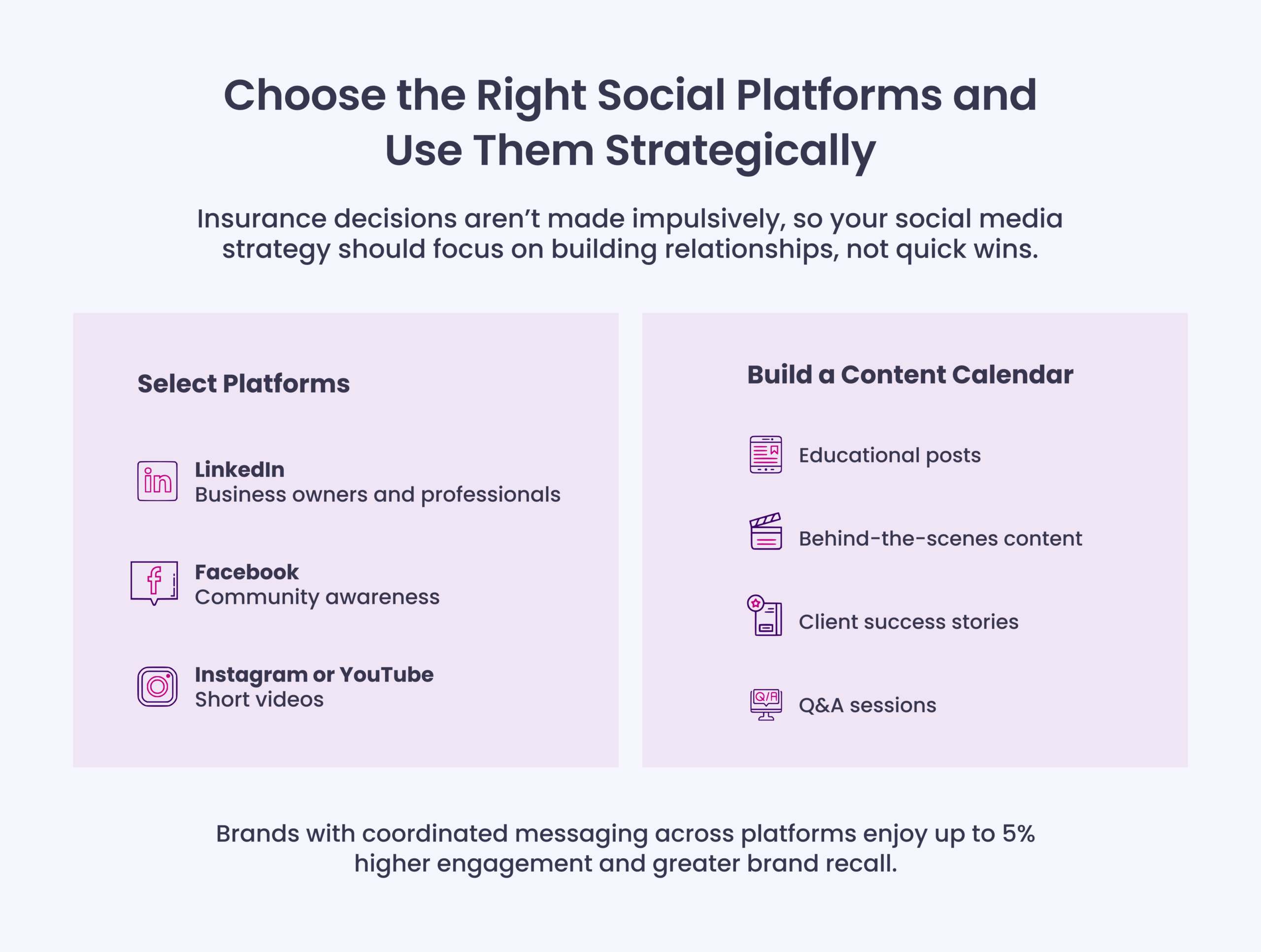
Select platforms based on where your audience spends time. LinkedIn is great for targeting business owners and professionals. Facebook helps build community awareness. Instagram or YouTube works well for short videos explaining policies or showcasing testimonials.
Build a content calendar that includes educational posts, behind-the-scenes content, client success stories, and Q&A sessions. Use platform analytics to track engagement and refine your strategy.
Brands with coordinated messaging across platforms enjoy up to 5% higher engagement and greater brand recall. When done right, social proves your brand is active, responsive, and people-focused.
10. Streamline Your Digital Sales Journey for Seamless Onboarding
Today’s most insurance clients begin searching online, even if they complete the purchase offline. Your digital experience must feel intuitive and smooth from quote to purchase.
Audit your quote journey. Is it mobile-friendly? Are forms short, clear, and helpful? Eliminate confusing language, reduce form fields, and offer instant chat or callback options.
Track user behavior with tools like Hotjar or Google Analytics to identify friction points and test improvements like simplified steps or guided walkthroughs.
McKinsey found that insurers with top-tier digital experiences grow 2–4x faster and are 30% more profitable than peers (source). An easy online process makes clients feel confident and far more likely to complete the sale.
11. Create an Exceptional Digital Quote-to-Purchase Journey
Only 25% of consumers currently complete insurance purchases entirely online, but 78% begin the process with an online search. Optimizing your digital journey positions your brand to convert these prospects more efficiently and build credibility from the first click.
Clients expect fast, seamless online experiences—even when buying something as complex as insurance. A clunky or outdated digital sales process can cause frustration and drive potential customers away.
Start by walking through your website. Can someone easily find, customize, and complete a quote in just a few steps? Simplify your forms, clarify technical terms, and use progress bars to reduce drop-off. Add helpful features like chat support or “save and resume” options for longer quote flows.
12. Launch a Structured Referral Program for Growth
Referral programs aren’t just a growth tactic but a trust engine. Happy clients are already your biggest advocates. Referral leads convert 30% better than leads from other marketing sources. You can turn their goodwill into tangible results with a clear, easy-to-join referral program.
Create a structured system for rewarding referrals. Offer dual benefits: maybe the client gets a discount, and the new referral receives a gift card. Promote it regularly via email, social media, and post-claim interactions. Most importantly, make it simple for clients to share your name and track rewards.
13. Monitor Your Brand Reputation and Respond Fast
89% of consumers read online reviews before making a purchase decision. Brands that actively monitor and manage their reputation show greater transparency and build long-term trust with clients. Your online reputation speaks before you do. Whether it’s a 5-star review or a negative comment, every piece of feedback shapes how prospects and partners perceive your brand.
Start by setting up Google Alerts or using tools like Trustpilot, Yext, or Birdeye to track reviews across the web. Assign someone on your team to respond to all positive and negative reviews within 24–48 hours. Take conversations offline when needed and always close the loop with a thank-you or resolution update.
How to Measure Branding Success?
You’ve applied effective branding tips for insurance companies, but measuring the results is just as important. The right metrics give you visibility into what’s resonating and needs refining. Here’s how to track brand impact with clarity and purpose.
1. Customer Retention Rate
A strong retention rate means your clients trust your brand enough to stay. It reflects loyalty, satisfaction, and consistent value.
Formula
Customer Retention Rate = [(E − N) / S] × 100
- E = Clients at end of period
- N = New clients acquired during the period
- S = Clients at start of period
Tip: Monitor changes after marketing campaigns or rebranding to see how loyalty evolves.
2. Net Promoter Score (NPS)
NPS shows how likely clients are to recommend you. It’s a fast, reliable way to gauge brand advocacy.
Formula:
NPS = % Promoters − % Detractors
- Promoters: Rated 9–10
- Detractors: Rated 0–6
Quick Tip: A rising NPS means your branding and service are exceeding expectations.
3. Brand Recall
If prospects remember your brand without prompts, you leave a strong impression.
How to Measure
- Run surveys asking: “Which insurance companies come to mind first?”
- Track unaided vs. aided responses.
Quick Tip: Improved recall indicates that your visuals, messaging, and outreach are working.
4. Website Engagement Metrics
Your site reflects your brand 24/7. These metrics show how well your branding drives attention, interest, and action.
Time on Page
Formula
Tracked via analytics (no manual formula).
If users spend more time, your content is engaging and aligned with their needs.
Bounce Rate
Formula
Bounce Rate = (Single-page visits / Total visits) × 100
A high rate may indicate confusion, poor content, or branding mismatches.
Click-Through Rate (CTR)
Formula
CTR = (Clicks / Impressions) × 100
Measures how compelling your content and CTAs are—key for branded messaging.
Conversion Rate
Formula
Conversion Rate = (Conversions / Visitors) × 100
Reflects how well your site turns interest into action, like quote requests or form submissions.
These metrics guide improvement. When you apply strong branding tips for insurance companies, these indicators tell you exactly where your message lands, where it resonates, and where to optimize further.
Don’t DIY. Trust Expert Digital Marketing Partners
Branding is more than a new logo or catchy slogan—it’s a long-term strategy that shapes perception, builds trust, and drives growth. While some insurance firms try to manage branding in-house, the truth is, going the DIY route can limit your potential.
Instead, partnering with experienced digital marketing professionals gives you a major edge.
Why It Pays to Work with Experts

1. Strategic Expertise
Digital branding partners understand how to build trust in a competitive, compliance-heavy industry. They’ll tailor branding tips for insurance companies to match your audience’s needs and market behavior.
2. Cohesive Branding
From logo design to landing pages, pros ensure every touchpoint is consistent—so your brand feels polished, reliable, and instantly recognizable.
3. SEO and Content That Converts
Great branding doesn’t stop at visuals. Experts align your message with search intent, optimizing your site and content to attract the right leads and convert them.
4. Tools and Tech
Agencies use advanced analytics, automation, and A/B testing tools to refine your branding in real-time—something hard to replicate internally without deep expertise.
5. Time and Focus
With experts handling the heavy lifting, your team can focus on what matters most: serving clients and growing the business.
Grow Faster and Smarter with INSIDEA’s Digital Marketing Subscription

At INSIDEA, we deliver powerful digital marketing strategies that elevate your brand’s presence, attract the right audience, and drive measurable growth. Our expert team is dedicated to creating top-tier marketing solutions to meet your unique business needs. With in-depth industry knowledge, we craft customized strategies that align perfectly with your goals, all within our all-in-one digital marketing subscription.
Our comprehensive subscription includes everything you need to succeed in the digital space.
From Search Engine Optimization (SEO) that boosts your search rankings and drives organic traffic to WordPress Management, ensuring your website is visually appealing, highly functional, and optimized for conversions.
Our content marketing services establish your authority with engaging, insightful content. Social media marketing builds your presence across platforms with interactive and authentic strategies. Our email marketing solutions connect directly with your audience, driving engagement and conversions.
With INSIDEA’s all-in-one subscription, you can access these services seamlessly, supported by our dedicated digital marketing experts committed to delivering measurable results for your business.
Book a meeting with our experts to explore how we can support your business goals.