




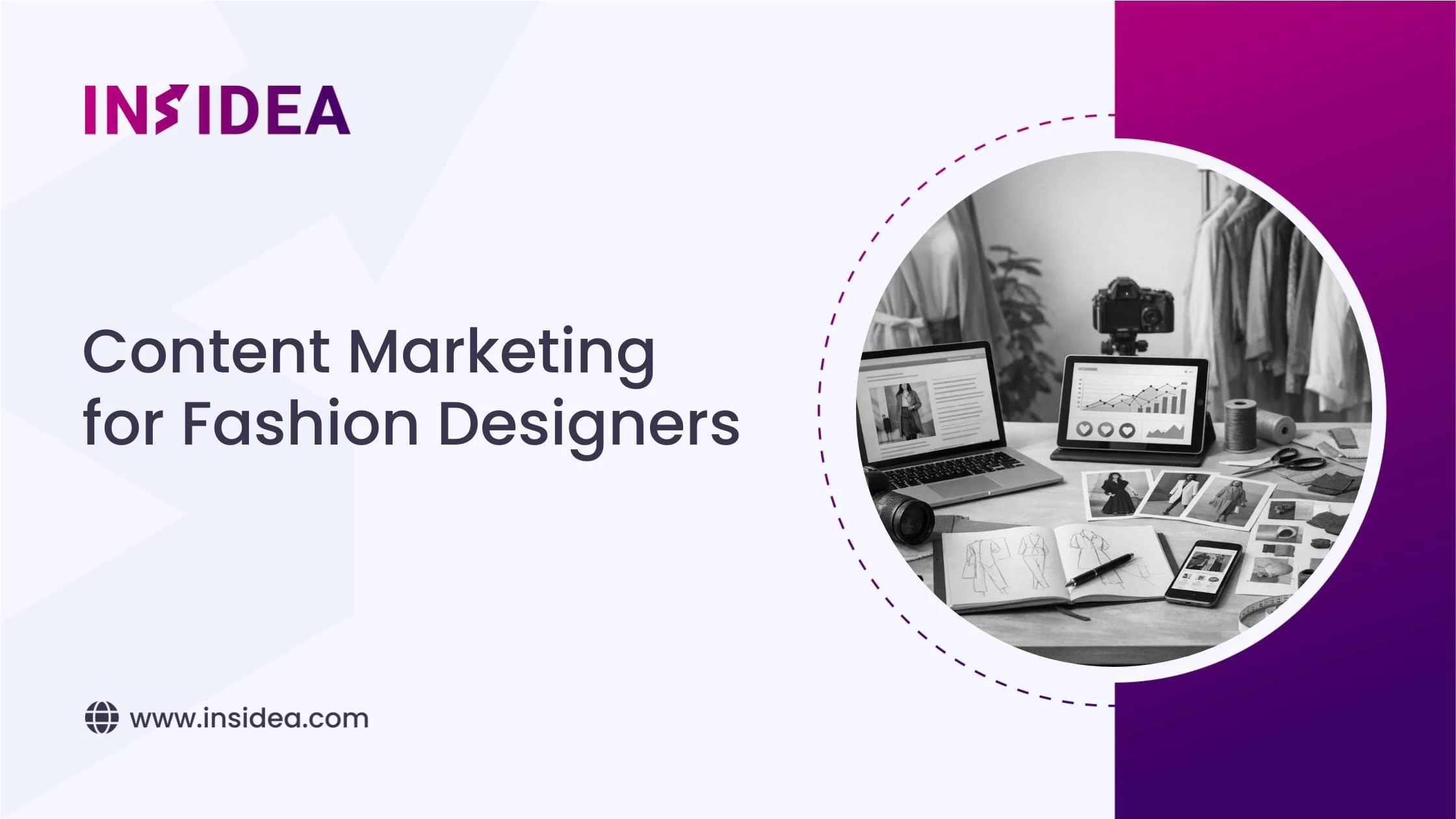
Here’s the hard truth few want to admit: beautiful design alone doesn’t get you discovered.
You already know how much heart, vision, and craft go into your collections. Every look tells a story. But if buyers, editors, or even your dream customers never see it—what’s the point? Without intentional visibility, your work risks getting lost in the scroll.
If you’re like many fashion designers, you lean on bursts of Instagram activity and hope your latest lookbook picks up traction. But unpredictability isn’t a strategy. And even the most compelling visuals won’t move the needle if there’s no structure behind them.
That’s where content marketing earns its place—not as a buzzword, but as a necessary creative system. One that helps you attract the proper attention, build loyal followings, and stay relevant long after your last runway show.
Let’s walk through how to shape that system, your way—starting with why it matters.
Why Fashion Designers Need a Content Marketing Strategy
Think of your content like the fabric that ties your collections together. Without it, your messaging unravels, your brand voice gets lost, and your audience doesn’t know where to look (or why they should).
You’re not just competing with other fashion designers—you’re competing with every reel, ad, and influencer your customer scrolls past.
Content marketing gives you control of your brand narrative.
When you lack strategy:
- Social media feels like a guessing game
- Your traffic spikes only during drops
- You wait on word-of-mouth instead of generating it
- Each launch feels like starting from zero
With a clear strategy:
- You post with purpose and consistency
- Your site brings in targeted, reliable traffic
- Your audience knows who you are—and why they should care
- You build anticipation weeks before release day
The right content strategy doesn’t dilute your artistry. It channels it—so your creativity works harder, not louder.
What Content Marketing Looks Like in Fashion
Let’s reset your expectations. Content marketing isn’t just newsletters and how-to blogs.
In fashion, content is visual, emotional, and multi-dimensional. It’s an extension of your aesthetic universe.
Think in layers:
- Owned Content: The evergreen foundation—blog posts, behind-the-scenes stories, digital lookbooks
- Social Content: Daily pulse—Reels, TikToks, Insta stories with life behind your collections
- Community Content: Real people in your designs—UGC, duets, or customer takeovers
- Searchable Content: SEO-friendly pieces like trend explainers or designer guides
- Email Content: Personal, curated moments—welcome series, collection recaps, private previews
Instead of hopping from trend to trend, you’ll be forming a content ecosystem—one that echoes your voice and evolves with your brand.
Start with Your Fashion Brand’s North Star
Before you plan your next post, ask yourself: what’s your brand really about?
Clarity here creates consistency everywhere—from your Instagram captions to your pitch decks.
Ask yourself:
- Who’s your ideal customer? Not in demographics, but in desire—what are they craving style-wise and identity-wise?
- What emotional resonance does your work offer—confidence, rebellion, authenticity?
- Why will your perspective always matter—even as trends shift?
Defining this is non-negotiable. Your answers translate directly into your visual language, your site copy, and even your blog titles.
Picture this: you’re a gender-fluid streetwear designer based in Brooklyn. Your North Star might read, “Celebrating unapologetic self-expression through bold, boundary-breaking design.”
Now, your content themes practically write themselves:
- How streetwear tells cultural stories
- Non-binary layering guides
- Design blog entries on identity and influence
- Spotlights on self-styled customers
This is how your content moves from filler to magnet—drawing in people who immediately feel seen.
The Power of Educational (& Searchable) Content
If you want to bring in organic traffic—and earn trust along the way—start teaching, not just telling.
Educational content positions you as an authority. More importantly, it helps your audience solve a real problem. That creates lasting value, and Google rewards value with visibility.
Think of these content ideas as low-risk, high-reward:
- “How to Style a Midi Skirt in Winter—Designer Edition”
- “What’s Organic Cotton? A Fashion Designer’s Ethical Guide”
- “5 Wardrobe Staples That Never Date—According to Designers”
You don’t need to reinvent headlines. You need to meet search intent.
Use tools like AnswerThePublic, Ubersuggest, or Google Search Console to find the questions your audience is asking. Then design your answers like you’d curate a collection: with thought, voice, and clarity.
Giving Your Content a Calendar — and Purpose
Just like prepping for runway season, content works best when styled and sequenced.
A content calendar is your behind-the-scenes plan. It aligns launches, themes, and formats—so you stop posting on impulse and start communicating with intent.
Here’s how to lay the groundwork:
- Pick 3–4 themes per quarter: Think moods or key topics—travelwear, fit obsession, sustainability, process.
- Anchor everything to collection moments: Tease launches, document development, share previews, and reaction shots.
- Balance your formats: Make room for video, blog, photo, and email. It keeps things fresh without draining you creatively.
- Repurpose with precision: One long-form blog = a week of Instagram captions + a Reel prompt + email content.
Use tools like Trello, Notion, or CoSchedule to track it all. Once habits form, your content rhythm will feel as natural as sketching your next design.
Real-World Example: From Boutique to Buzz
Need proof this works?
Meet Isadora, a California-based swimwear designer. Her bold minimalist suits thrived in summer—then sales dropped off a cliff in fall.
She retooled her approach:
- Created SEO content about off-season swim care and eco fabrics
- Partnered with travel influencers to showcase year-round use
- Added designer explanation videos to each product page
- Started a swimwear education blog, timed with vacation planning seasons
Result? Google rankings climbed. Monthly organic visitors multiplied by four. The email list surged. And she didn’t pivot her style—she clarified her message.
Now, her brand converts consistently—no matter the season.
Which Platforms Actually Work for Designers?
Let’s get honest: you can’t be everywhere—and you shouldn’t try.
Instead, focus on where your audience actually spends time and where your content performs best.
Here’s the breakdown:
- Instagram: Essential. It’s your storefront, moodboard, and BTS diary all in one
- TikTok: Ideal for storytelling—collection reveals, styling hacks, personal vlogs
- Pinterest: Serious SEO power. Pins drive blog traffic long after posting
- LinkedIn: If wholesaling or partnerships matter to you, this platform is gold
- Email: Your most valuable channel—and the only one you truly own
Start by going deep in one visual short-form platform (like Instagram or TikTok) and one long-form space (like your blog or an email series). Build momentum, then branch out.
Tools to Streamline the Content Process
Great content doesn’t need an in-house team—it needs innovative systems. Here are tools that mesh well with creative workflows:
- Later or Planoly: Plan and automate your Instagram without losing aesthetic control
- Flodesk or Klaviyo: Build beautiful emails that also convert
- Canva Pro: Design graphics, guides, and promo assets without outsourcing
- Google Trends + Keywords Everywhere: Stay ahead of what your audience is curious about
- Notion: Keep your calendar, ideas, and campaigns organized in one designer-friendly space
Avoid app overload. Choose two or three tools that make consistent output easier—and commit to using them.
Advanced Strategy: Building a Digital Fashion Journal
Once your core channels are shaped, you’re ready to take storytelling further.
Enter the digital journal.
This isn’t just a blog—it’s your branded media hub. A space for depth, opinion, context. The kind of content readers come back to—and share.
What to include:
- Designer Notes: Honest thoughts behind each line or pivot
- Cultural Threads: Where fashion meets music, politics, or place
- Styled By: Guest edits from stylists, muses, or your most engaged buyers
- Material Matters: Deep dives into sourcing choices, ethics, or process
Start with one post per month or quarter. Promote it like you would a launch. The more value you give, the more your journal becomes an artifact—part of your brand, not just a tool.
Content That Converts: What Drives Sales (Subtly)
People don’t buy just because your work is beautiful—they buy when it resonates.
That’s why strong content isn’t promotional—it’s emotional.
High-converting content types include:
- Collection pages with storytelling: What inspired this piece? What mood does it tap into?
- Videos of you speaking about your work: Seeing the designer builds trust
- Style how-tos: Help your customer imagine themselves in the look
- Customer spotlights: Real people, real style moments
- “A day in the studio” content: Feels intimate, aspirational, human
It’s not about shouting your talent—it’s about showing your point of view. Subtly. Consistently. Authentically.
Let Your Content Carry the Brand Between Seasons
Your designs already speak volumes. A smart content strategy turns that voice into amplification—online, in search results, and in hearts.
Even when you’re between collections, your brand doesn’t have to go silent. It can grow—if you give it shape, rhythm, and direction.
If you’re ready to transform your content into a growth engine that’s as intentional as your artistry, let’s make it happen.
Visit INSIDEA to explore how our content experts help fashion designers like you become both seen and remembered—without compromising your creative edge.









