You’ve just completed a mixed-use redevelopment that’s getting attention in the local press. Last quarter, you helped 30 homeowners realize their dream spaces. But now, momentum has slowed. Leads are trickling in, referrals have quieted, and you’re checking your inbox more than your blueprints.
Strong design doesn’t automatically create a steady pipeline. Ideal clients may not know where to find you or how to assess your work. Generating leads requires more than a portfolio or luck. It’s a clear system that attracts the right clients, builds trust, and prompts them to reach out.
The following 13 strategies are proven to work for architecture firms today, reflecting how clients actually choose and hire architects.
Let’s get started.
1. Niche SEO Landing Pages That Attract Local Search
When someone googles “LEED-certified restaurant architect Chicago,” you want to be the result they click.
Most architecture websites miss this opportunity altogether. By building hyper-targeted SEO landing pages around specific services and cities, you instantly raise your visibility for high-intent searches.
Think narrow and focused:
- “Luxury Kitchen Renovation Architect in Boulder”
- “Adaptive Reuse Design in Atlanta’s Historic District”
Each page should be optimized with real work, testimonials tied to that niche, FAQs, and a clear next step. What terms are clients searching? Utilize tools like Surfer SEO or Semrush to create pages that align with actual demand.
Pro tip: Don’t just duplicate. Customize each page for clarity and relevance. You’re writing for both search engines and humans.
2. Host Mini Virtual Walkthroughs of Completed Projects
A beautiful photo is great, but a five-minute walkthrough with your real-time narration? That’s memorable.
Use your phone or a webcam to walk prospects through recent designs, explaining key decisions, challenges, and how you solved them. Raw and authentic always beats overproduced and sterile.
Bonus: The more these videos reflect your perspective, the better they prequalify leads. People will know if your approach fits their vision before the first call.
Post on LinkedIn, YouTube, your website, and presentation decks. Close each walkthrough with a simple CTA like: “Want to walk through ideas for your space? Book a 15-minute design call here.”
3. Use LinkedIn Ads to Target Real Estate Developers and Builders
If commercial or multifamily work is your specialty, LinkedIn offers a direct line to the individuals who fund and approve these projects.
With LinkedIn Campaign Manager, you can run ads aimed squarely at real estate developers, GCs, asset managers, or capital planning teams, filtered by location, title, and industry. The key? Don’t advertise your firm. Solve their problems.
Push content about:
- Reducing construction RFIs with better pre-docs
- Navigating zoning hurdles in fast-changing submarkets
- Budget-smart planning that doesn’t sacrifice quality
Use ad copy that reads like advice from a fellow expert, not a firm trying to generate leads.
4. Client Education Webinars with Real Use Cases
Webinars aren’t just for software startups. They’re ideal for architecture firms that need to make sense of complex timelines, permitting paths, or design decisions.
Host free sessions that demystify the process for your ideal client segment. For instance:
- “Design-Build vs. Design-Bid-Build: What Homeowners Should Know”
- “How Zoning Changes Are Impacting Commercial Development in San Jose”
Feature anonymized or permissioned client stories, including visuals, crucial stats, and behind-the-scenes insights. Webinars position you as an educator, not just a vendor, and that shifts how prospects approach working with you.
Repurpose these sessions into blogs, PDFs, or nurturing content as well.
5. Create a “Start Here” Client Planning Toolkit
Most prospective clients land on your website, unsure what happens next. A smartly designed “Planning Toolkit” helps them get oriented, and gives you a chance to capture their email before they bounce.
Build a branded pack (bonus if interactive) that includes:
- A readiness checklist (“Are you project-ready?”)
- Estimated timeline ranges for typical projects
- Design vs. build cost breakdowns
- Visuals of your process and approach
Gate it behind a short form to grow your list with interested leads. Use tools like Typeform or Paperform to turn it into a quick and engaging experience.
6. Strategic Partnerships with Builders, Realtors, and Interior Designers
You don’t have to generate every lead solo. Some of your most valuable prospects are already in someone else’s pipeline.
Proactively build relationships with professionals whose services complement, or precede, yours:
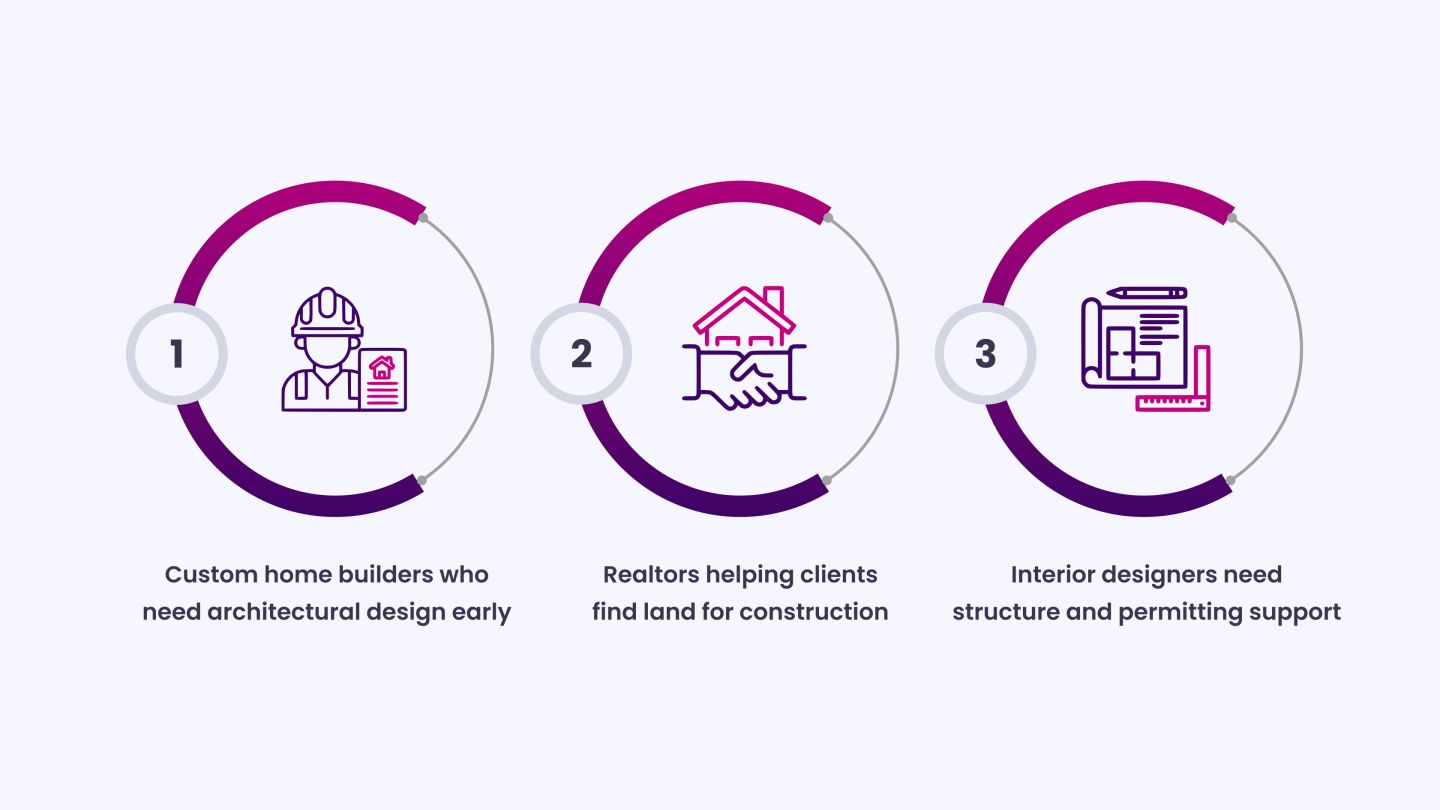
- Custom home builders who need architectural design early
- Realtors helping clients find land for construction
- Interior designers need structure and permitting support
Set up light-touch referral programs. Offer to cross-promote content, co-host webinars, or collaborate on client planning sessions.
Here’s the kicker: reach out before you need leads, not after. That’s how you build trusted ecosystem partnerships.
7. Answer High-Intent Questions on Google: Pillar Blogs & FAQ Pages
When people are asking Google big, urgent questions about hiring an architect, your firm should be answering them , clearly, credibly, and generously.
Instead of a blog full of generic trends, focus on 6-10 cornerstone topics. These are the types of searches that signal urgent need:
- “How do I get architectural drawings approved in Portland?”
- “Should I hire an architect or a draftsman for a kitchen remodel?”
- “What’s included in an architect’s fee?”
Each of these should be turned into guides that are 1,500 words or longer, speaking directly to a layperson , with visuals, step-by-step breakdowns, and real-life examples from your past work.
Use a tool like AlsoAsked to discover how users phrase their questions.
8. Sponsor or Speak at Local Urban Planning or Real Estate Events
Want to meet serious decision-makers? Show up where projects get discussed , not just designed.
Pitch a focused, insight-driven talk at:
- City planning commission sessions
- Regional housing or real estate summits
- Urban redevelopment roundtables
The goal isn’t self-promotion , it’s offering planning-savvy advice developers and civic bodies actually need. Focus your talk on how design impacts aspects such as permit speed, cost control, or neighborhood integration.
These talks foster high-trust brand awareness and typically lead to face-to-face follow-ups with key stakeholders.
9. Run Geo-Targeted Google Ads for High-Intent Keywords
Done right, local search ads deliver low-volume but high-quality leads , especially in higher-ticket architecture verticals.
Target phrases like:
- “Passive house architect in Minneapolis”
- “Office building design firm San Diego”
- “Coastal residential architect [County]”
Direct these queries to tightly matched landing pages that guide users through your process, highlight key points, and provide direct conversion options (contact, call, or consult).
Ensure you’re accurately tracking calls, form fills, and consult bookings. Use ad copy that references local landmarks, expertise in the permitting process, and a proven service area longevity.
10. Create a Robust Google Business Profile and Proactive Review Strategy
If your Google Business Profile is skimpy, or worse, outdated, you’re leaving trust (and local SEO) on the table.
Fully build out your profile with:
- A dozen or more real project photos
- Keyword-rich client reviews (encourage specifics)
- Active Q&A replies and monthly updates
- Individual services listed in your categories
- Defined service areas
Ask clients for reviews at project milestones, not just at handoff. It feels more natural and nets more feedback.
A great Google profile doesn’t just help you show up; it enables you to win when people are comparing their options.
11. Use Lead-Nurturing Email Sequences After Inquiry
Getting a lead is step one. Engaging them before someone else wins the job? That’s where nurturing comes in.
Set up a strategic yet direct 3-5-email sequence triggered when someone contacts you. Build trust, not pressure.
Ideas to include:
- A personalized welcome and next steps
- Your “Planning Toolkit” or timeline cheat sheet
- Sample project with relevant design insights
- Invite to a Q&A consult or webinar replay
- Answers to the top five new client questions
Utilize tools like ConvertKit or Mailchimp to create a system that is both automated and human-like. Every email should help the client get clearer and move closer to working with you.
12. Redesign Your Contact Form to Spark Action (Not Abandonment)
An oversized red “Contact Us” button doesn’t inspire much action. But a smart, inviting form that reinforces the prospect’s readiness? That drives engagement.
Adjust your intake form to include guided prompts like:
- “Project location ZIP code?”
- “Stage of your planning process?”
- A slider for priorities: sustainability, budget, speed
You’re sending a subtle message: “We think carefully about your project, starting now.” That increases your perceived professionalism and helps you pre-qualify leads immediately.
Use forms like Gravity Forms or Paperform to get a modern interaction without the clunky back-end.
13. Retarget Visitors with Tailored Offers Based on Page Behavior
Roughly 9 out of 10 people will visit your website and leave without contacting you.
But what happens next is up to you.
Use retargeting ads to bring them back with content that aligns to what they browsed. For example:
- Someone who viewed residential case studies? Show a warm, visual ad offering your free home design checklist.
- A visitor read your “How to hire an architect” blog? Invite them to a no-pressure 15-minute consult.
Match your message to their intent, not your generic brand pitch. That’s what gets clicks and re-engagement.
Utilize Google Tag Manager and Meta Pixel to create intelligent retargeting lists and deliver the most relevant follow-up at scale.
Here’s the Real Trick
You don’t need more likes. You need more demand, guided, qualified, and serious demand from people who already want what you offer.
That doesn’t happen by luck or by good design alone. It happens when you build a system that educates, engages, and converts.
We help architecture firms like yours build that system, making your work easier to find and easier to choose.
Whether you start with two of these ideas or build out all thirteen over time, the goal is the same: help the right people discover your value before your competitors do.
Do you need hands-on support in turning these strategies into action?
Visit INSIDEA and let’s build something that brings opportunities to your door.
INSIDEA
Ready to put this into practice?
INSIDEA is an Elite HubSpot Partner rated 4.99 across 500+ verified reviews. Let's map it to your goals.



 How INSIDEA works