Running an e-commerce business is exciting, but managing Google Ads can quickly become a frustrating task. Spending money on ads without seeing real sales can feel like shouting into the void, disheartening and draining. You know your products deserve to be seen, but cutting through the noise feels impossible sometimes.
That’s where a smart Google Ads strategy for an e-commerce business can make all the difference. It’s not just about throwing dollars at campaigns; it’s about creating meaningful connections with shoppers at the exact moment they’re ready to buy. When done right, your ads don’t just attract clicks but also build trust, bring repeat customers, and grow your brand steadily.
In this blog, we will walk you through the steps to stop wasting budget and start investing in ads that work for your e-commerce business. Let’s turn those challenges into opportunities together.
Why Google Ads Strategy for E-commerce Business Makes a Real Difference
Standing out in the crowded online marketplace can be a challenging task. Having excellent products alone no longer guarantees attention or sales. Google Ads allows your store to appear in front of shoppers actively searching for items like yours.
A thoughtful Google Ads strategy for e-commerce business connects you with the right audience at the moment they’re ready to buy. It offers clear insights on what works, helping you adjust efforts to maximize your marketing budget.
With the right approach, Google Ads can help your business:
- Reach potential customers precisely when they’re searching for products you offer
- Showcase promotions, new arrivals, or seasonal deals with targeted ads
- Measure campaign success in real-time to optimize spending
- Increase website traffic with high-intent visitors who are more likely to convert
Using Google’s tools and network, you can grow your customer base, increase sales, and build a stronger brand presence in a digital world that’s constantly shifting.
Top 10 Google Ads Strategies for E-Commerce
Now that you understand how a well-crafted Google Ads strategy for e-commerce business can elevate your brand and drive sales, let’s explore specific tactics that deliver real results. These strategies will help you attract more shoppers, increase conversions, and maximize the effectiveness of every ad dollar.
Understanding the Google Ads Ecosystem for E-commerce
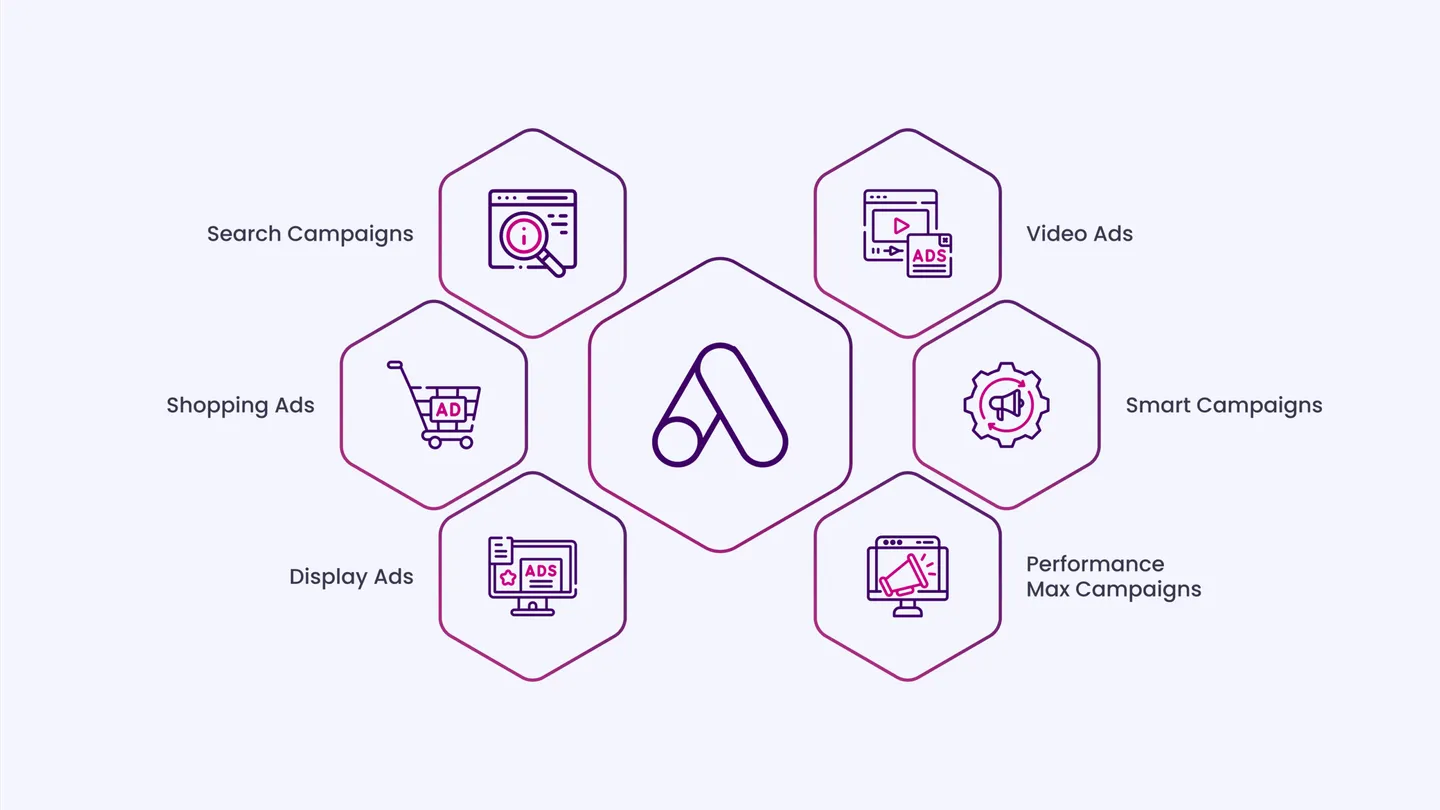
Google Ads offers a comprehensive suite of tools and campaign types specifically aimed to meet the unique needs of e-commerce businesses. Knowing how each component aligns with your marketing goals ensures that you invest your budget where it counts.
The ecosystem includes:
- Search Campaigns: Capture intent-driven shoppers actively searching for products like yours.
- Shopping Ads: Showcase your product images, prices, and reviews directly on search results to attract qualified buyers.
- Display Ads: Reach potential customers across millions of websites with visually engaging banners.
- Video Ads: Tell your brand story and demo products on YouTube to increase awareness and trust.
- Smart Campaigns: Use Google’s automation to optimize bidding and targeting based on your objectives.
- Performance Max Campaigns: Combine multiple Google channels in one campaign to maximize conversions.
Each of these elements works together to cover the entire buyer journey, from discovery to purchase, when managed strategically. A clear understanding of these options will allow you to design campaigns that attract visitors, nurture interest, and close sales efficiently.
Mastering the Google Ads ecosystem is the first step toward building a strong foundation for your e-commerce advertising efforts.
Setting Up a Solid Foundation
A high-performing Google Ads strategy for e-commerce business doesn’t begin with ads; it starts with structure. Before launching any campaign, it’s essential to build a foundation that aligns your website, tracking, and goals. Many e-commerce businesses waste budget not because of bad ads, but because their back-end setup isn’t ready to support them.
Your foundation includes three critical components:
- Conversion Tracking: Set up Google Ads conversion tracking and link it with Google Analytics. You need clear visibility on what’s working, down to which products and keywords drive actual sales.
- Google Merchant Center: If you plan to run Shopping Ads, ensure your product feed is accurate, approved, and regularly updated. Missing or incorrect data can block your ads from appearing.
- Campaign Goals & KPIs: Define what success looks like. Are you focused on revenue, return on ad spend (ROAS), or growing customer acquisition? Having clear KPIs helps you make better decisions later.
Without this groundwork, even the most creative campaigns will struggle to achieve their full potential. Getting it right from the beginning yields cleaner data, more effective targeting, and stronger results.
Crafting Effective Campaign Structures
Campaign structure is where strategy becomes scalable. A well-organized account is crucial for effective budget control, accurate targeting, and long-term performance. When e-commerce brands run all their products under one generic campaign, they often end up wasting spend on low-margin or irrelevant clicks. That’s not sustainable.
Start by organizing campaigns around product categories, bestsellers, or profit margins. Segmenting by intent can also be powerful, such as creating separate campaigns for brand terms, generic searches, and competitor queries, which allows you to manage bids and messaging with greater precision.
Ad groups should mirror this logic. For example, if you’re selling skincare, avoid lumping moisturizers and cleansers together. Each product type should have its ad group, tailored ad copy, and focused keywords.
This approach allows you to:
- Pinpoint what’s profitable and what’s not
- Allocate the budget more intentionally
- Write ads that speak directly to each buyer’s interest
- Analyse performance without guesswork
The more clarity you build into your structure, the easier it becomes to scale and optimize. Think of it like shelving a store: when everything has its place, you’re not just organized, you’re selling smarter.
Optimizing Product Listings
Product listings are the heartbeat of every successful e-commerce ad campaign. If they’re messy, unclear, or lacking detail, even the best bidding strategy won’t bring results. But when your listings are thoughtfully crafted and aligned with what your ideal customer is searching for, everything else becomes easier, clicks go up, bounce rates go down, and conversions follow.
Optimization starts with the product title. Keep it descriptive yet relevant, including the brand name, main attributes (such as size or material), and the product type. Descriptions should be helpful, not fluffy.
Consider what your customer needs to know before making a purchase. Highlight benefits clearly, use natural language, and avoid jargon that sounds robotic.
Here’s what strong listings should include:
- High-quality images from multiple angles
- Clear pricing and availability
- Concise, benefit-driven product descriptions
- Structured data (like GTIN, brand, and condition)
Strong listings help Google better understand what you’re selling and match your products to more relevant search queries. But more importantly, they help shoppers feel confident in their buying decisions. That trust is what turns a browser into a buyer.
Advanced Targeting Techniques
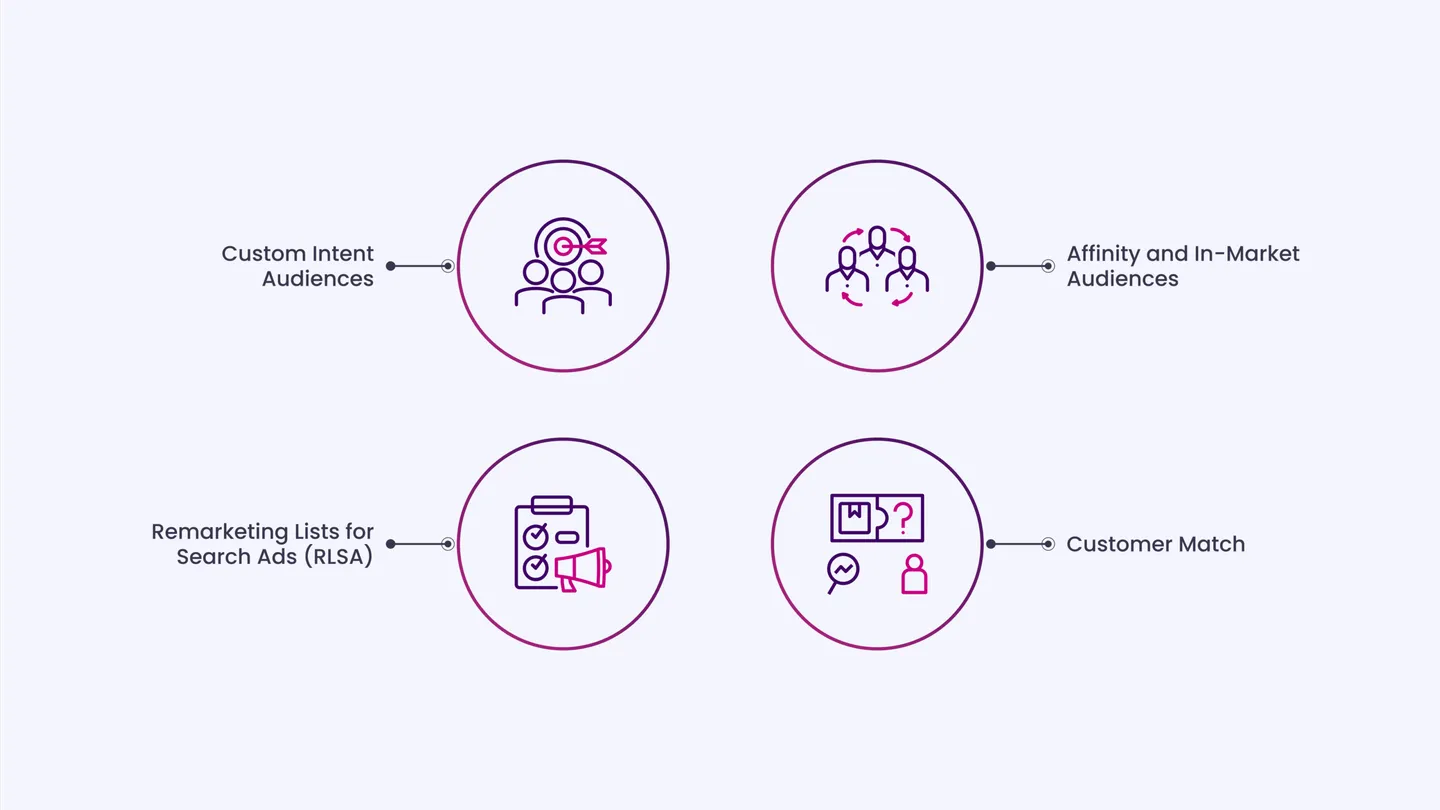
Running Google Ads without smart targeting is like fishing without bait; you’re unlikely to catch much. To truly reach the right audience, e-commerce brands must move beyond basic demographics and focus on intent, behavior, and context.
Advanced targeting enables you to meet shoppers at various stages of the buying journey. Someone browsing casually needs a different message than someone who’s added a product to their cart three times but hasn’t checked out. When your targeting reflects that nuance, your ads don’t just show up; they connect.
Here are some advanced techniques to consider:
- Custom Intent Audiences: Target users based on the exact keywords they’ve been searching for across Google.
- Affinity and In-Market Audiences: Reach shoppers based on their interests or recent purchase behaviours.
- Remarketing Lists for Search Ads (RLSA): Adjust bids or change messaging for users who’ve already visited your site.
- Customer Match: Upload email lists to re-engage past buyers or nudge high-value leads.
These strategies enable you to allocate your budget where it matters most, on individuals most likely to convert. The more relevant your targeting, the less you waste on cold traffic, and the more your ads feel like helpful suggestions rather than noise.
Bidding Strategies for Maximum ROI
Running ads without a thoughtful bidding strategy is like setting a budget without knowing your expenses; it drains fast and delivers little. In e-commerce, where margins can be tight and competition fierce, bidding smartly isn’t optional. It’s what keeps your campaigns profitable and scalable.
Google Ads offers several bidding models, but not all of them are ideal for growing online stores. The right choice depends on your goals: Are you focusing on volume, value, or efficiency?
Here’s how to shape a bidding approach that supports your bottom line:
- Start with Maximize Conversions if you’re testing a new product or campaign. It helps gather valuable data quickly.
- Switch to Target ROAS (Return on Ad Spend) once you’ve got enough conversion history. This method enables Google to adjust bids to meet your revenue goals.
- Use Manual CPC only if you have very granular control and historical insights to inform your decisions. It can work, but it requires constant monitoring.
- Apply Enhanced CPC (ECPC) to strike a balance between automation and control, particularly in competitive markets.
Remember that bidding strategies aren’t set-it-and-forget-it. They need a consistent review. If you’re seeing too many clicks and not enough purchases, it might be time to shift toward a more revenue-driven model.
On the other hand, if your conversions are strong but your volume is low, opening up bids could help scale your results.
Utilize AI and Automation
AI and automation in Google Ads aren’t just about reducing manual effort. They’re about making better decisions, faster. For e-commerce businesses managing hundreds or thousands of SKUs, automation helps keep campaigns agile and responsive to real-time demand.
Programs like Performance Max, Smart Shopping (now integrated into Performance Max), and automated rules can help you allocate your budget efficiently, test creatives dynamically, and optimize for conversions without constantly monitoring every ad set. Machine learning models can identify which audiences are likely to convert and adjust your bids, placements, and creatives accordingly.
That said, automation doesn’t mean stepping away entirely. It remains crucial to guide these systems with robust inputs, such as clear goals, high-quality product data, well-crafted ad assets, and accurate tracking.
When used wisely, automation enables your campaigns to change with your customers’ behavior, delivering better results with less micromanagement.
Monitoring and Continuous Optimization
Every click, impression, and conversion leaves a trail of data behind. The most successful e-commerce advertisers act on it. Monitoring and refining your Google Ads campaigns should be a regular, thoughtful process, not a one-time task.
Consumer behavior shifts. Competitors launch new promotions. Google’s algorithm updates. What worked last month may not deliver the same results today. That’s why routine campaign check-ins, weekly or biweekly at minimum, are essential to staying ahead. Instead of waiting for performance to dip, proactive advertisers look for early signs: rising cost-per-clicks, declining ROAS, or high bounce rates.
This step is where experimentation matters. Adjust bids for top-performing products, refresh ad creatives to avoid banner fatigue, fine-tune your negative keyword list, or split-test your best campaigns to find a stronger version. The goal is simple: spend smarter and sell more without guesswork.
With continuous optimization, you’re building a more intelligent system that learns and improves every week.
Scaling Your Campaigns
Once your Google Ads campaigns are profitable, the next logical step is scaling. But scaling isn’t just about spending more; it’s about doing more of what works, and doing it wisely.
Start by identifying the campaigns, ad groups, and products with the highest return on ad spend (ROAS). Double down on them by incrementally increasing the budget and expanding their reach. Add new keywords based on top search terms. Explore new geographic areas or audience segments that mirror your best-performing customers.
At this stage, it’s essential to maintain profitability. Scaling too quickly without monitoring can lead to wasted spend. Keep a close eye on primary performance indicators, such as cost per acquisition (CPA) and conversion rate. Use automated rules or scripts to help manage budget thresholds and maintain control.
With the right setup, scaling your Google Ads strategy for e-commerce means letting the data show you where to grow with confidence.
Staying Ahead of Trends
Digital advertising changes quickly. Algorithms update. Consumer habits shift. Platforms introduce new features almost every quarter. Staying ahead of trends ensures your e-commerce brand doesn’t fall behind the competition.
Here’s how to stay sharp and proactive:
Follow Google Ads product updates regularly: Keep tabs on new campaign types, targeting options, and policy changes straight from Google’s official announcements.
Pay attention to consumer behavior reports: Shoppers’ expectations evolve. Monitor trend reports around search terms, buying cycles, and mobile shopping to adapt faster.
Test emerging formats early: Experiment with new ad types like Performance Max or YouTube Shorts before they become mainstream and more competitive.
Invest in continuous learning: Set aside time each month to upskill or review insights through courses, webinars, or PPC communities.
Keeping your strategy future-ready means being both reactive and forward-thinking, responding to what’s working now while preparing for what’s next.
Start Turning Clicks Into Customers Today
You now have a clear blueprint for building a high-performing Google Ads strategy for e-commerce business. Every tactic outlined here works, but only when applied with intention, consistency, and a willingness to refine.
The real question is: Do you want to keep spending on clicks that don’t convert, or turn your ad budget into a sales engine?
The most successful e-commerce brands aren’t stuck troubleshooting broken campaigns. They invest in systems that deliver steady results while they focus on scaling, improving product lines, and serving customers better.
Your products deserve to be seen. A smarter Google Ads strategy e-commerce business brings them in front of the right people at the right time, with the right message.
It’s time to stop hoping for results and start running campaigns that actually deliver. That’s why partnering with a digital marketing agency like INSIDE is essential. It brings expert execution and ongoing optimization you can count on.
INSIDEA
Ready to scale your store?
Lifecycle, retention, and revenue growth built for e-commerce brands.



 How INSIDEA works