SEO

Mapping SaaS Buyer Questions for AEO
Pratik Thakker

Mapping SaaS Buyer Questions for AEO

Picture this: You’ve got a searing headache, so you walk into a doctor’s office. You’re not interested in a textbook about neuroscience—you want a fast, clear answer. What’s causing the pain? Is it serious? What should you do? That’s exactly how your SaaS buyers behave when they search. They’re not browsing—they’re hunting for answers that help them decide, act, or solve a pressing problem. Answer Engine Optimization (AEO) is how you show up when those critical questions are typed—or spoken—into search platforms. It’s not just an SEO trend. It’s a deeper way to serve your buyers by delivering the most relevant, immediately useful answers—clearly and confidently. In this article, you’ll learn how AEO and SaaS buyer intent work hand in hand, and how to translate high-intent questions into high-converting content. Whether you’re leading content strategy, driving demand gen, or scaling your SaaS brand with automation, this guide gives you a practical way forward. Let’s start by looking at why old-school keyword tactics are holding you back.   Why SaaS Brands Can’t Ignore AEO Any Longer You’ve already done the basics: optimized your headers, fine-tuned page titles, and kept the blog machine running. But the results feel underwhelming. Leads aren’t as qualified.
Monitoring AI Search Visibility and Performance for AEO
Pratik Thakker

Monitoring AI Search Visibility and Performance for AEO: What You Need to Know

Imagine this: You’re leading a product launch that’s finally landing. SEO rankings are strong, traffic’s climbing, and your pipeline looks solid. Then you ask ChatGPT, “What’s the best tool for X?”—and it recommends your competitor. Your rankings didn’t drop. Your site didn’t disappear. But your brand? Nowhere to be found in that AI-generated response. Welcome to the shift from click-based search to answer-based search, where what matters now isn’t just ranking on Google—it’s being named in the response itself. Your new metric: AI search visibility. If you’re not showing up in conversational AI outputs—like those from ChatGPT, Bing Copilot, or Perplexity—you’re missing out on organic discovery happening long before a search engine results page even loads. This is where Answer Engine Optimization (AEO) comes in. And if you haven’t started tracking how AI perceives your brand, now’s the time. Let’s walk through what AI visibility means, why it’s pivotal for your brand, and how you can take control of it.   Why AI Search Visibility Is Your Next Big KPI Here’s the reality: the SEO playbook you’ve mastered doesn’t fully apply to AI-first search. Platforms like ChatGPT, Google’s SGE, or Perplexity are no longer serving up a list of clickable links.

Conversational Optimization and Dialogue Content
Pratik Thakker

Conversational Optimization: Transforming Search with Dialogue-Centric Content

Picture this: a friend asks, “Where’s the best place to eat around here?” You wouldn’t respond with a robotic “Top 10 gourmet restaurants all cities” or “Best restaurants in world 2025.” You’d tell them, “There’s a great taco spot a couple blocks away.” That’s how humans talk—naturally, with context and intent. And it’s exactly what search engines are evolving to understand and replicate. This shift is what makes conversational queries optimization and answer engine optimization (AEO) so powerful. Users aren’t typing stiff keyword strings anymore. They’re asking full, meaningful questions—and expecting clear, immediate answers in return. If your content can’t hold that conversation, you’re not just losing rankings. You’re losing trust, relevance, and revenue to competitors who can. Let’s fix that.   What Is Conversational Queries Optimization? Here’s where it starts. Conversational query optimization is a strategy that helps your content mirror how people actually speak—especially when they interact with Siri, Alexa, or Google Assistant. It’s not about cramming in more keywords. It’s about decoding what someone’s really asking and delivering an answer that feels like a personal reply, not a search result. Think about the difference: Old SEO: “Best electrician Dallas” Conversational search: “Who’s a reliable electrician near me that

Multimodal Content for Answer Engines
Pratik Thakker

Multimodal AEO: How to Stay Visible in an Era of Answer Engines

Picture this: a homeowner in Houston picks up their phone and asks, “What’s the best local roofing company for storm damage?” Instead of serving up a list of blue links, their voice assistant gives a direct reply—an answer spoken aloud with absolute confidence. And that roofing company? It didn’t land in that prime spot by luck. It arrived by embracing a strategy that most businesses haven’t yet tapped into—Multimodal AEO. If your content strategy still revolves around people reading your website on a desktop, you’re missing where decision-making really happens now. Consumers are asking smart assistants for recommendations, scanning with visual search tools, engaging on mobile dashboards—and expecting instant, accurate answers. Which means you’re now competing in a game where ranking isn’t enough. You need to be the answer. In this guide, you’ll learn how to make your brand discoverable across formats, devices, and use cases—using multimodal AEO to stay one step ahead of both AI and your competitors.   What Is Multimodal AEO, and Why Should You Care? AEO stands for Answer Engine Optimization. Unlike traditional SEO, which focuses on ranking in search result pages, AEO is about positioning your content to be the direct answer across a range of

AEO for Healthcare, Legal, and Finance
Pratik Thakker

AEO for Healthcare, Legal, and Finance: What Google’s AI Really Needs from You

Imagine a client walks into your office. They know your name. They’ve researched your background. But oddly, they’re speaking to a robot on your behalf. That robot mispronounces your name, forgets half your résumé, and sends them to the wrong office location. Now consider this: that robot is Google’s AI—and it’s shaping how your prospective clients find and trust you. Welcome to the age of AI-powered search. In your work—whether you’re diagnosing patients, interpreting case law, or managing wealth—accuracy and trust aren’t optional. Yet in search, you often lose visibility not because your expertise is lacking, but because the systems representing you don’t actually understand what you do. That’s where Answer Engine Optimization (AEO) comes in. In this guide, you’ll see how AEO helps healthcare providers, legal teams, and financial experts educate Google’s AI to better represent your brand. When properly trained, AI can become a powerful advocate for your business—surfacing your answers before anyone even clicks your links.   What Is AEO—and Why Should You Care? AEO, or Answer Engine Optimization, is about preparing your content to be understood by algorithms—specifically Google’s AI models like BERT and MUM. With traditional SEO, you optimized for human readers and search rankings. With

Personalization and AEO_ Delivering Tailored Answers
Pratik Thakker

Personalization and AEO: Delivering Tailored Answers That Drive Results

Picture this: you’re meeting with a potential client who’s clearly done their homework. They searched for something specific—maybe “best time to refinance in Arizona this year”—and arrived expecting answers. However, your website, despite its polished design and valuable content, didn’t appear when they needed it most. What happened? Well, the game has changed. Relevance isn’t enough anymore. You need precision. You need to show up with the best possible answer—before your client even finishes asking. That’s the intersection of Answer Engine Optimization (AEO) and personalization. If your SEO strategy isn’t leading to more qualified leads or improved conversions, there’s a good chance you’re stuck playing by yesterday’s rules—while your audience and search engines have both evolved. Here’s how AEO, powered by personalization, rewrites the SEO playbook—and how you can start using it to get real results.   What Is AEO—and Why Should You Care? Answer Engine Optimization (AEO) is about more than keywords or ranking positions. It’s about how platforms like Google Search, Alexa, and ChatGPT are reinterpreting user queries and delivering deeply relevant, immediate responses. These engines aren’t interested in throwing a dozen blue links at your audience. They’re trying to surface a single, definitive solution in real-time. That means

How to Use Video Content for Answer Engine Optimization
Pratik Thakker

How to Use Video Content for Answer Engine Optimization

Picture this: You’re wrapping up back-to-back meetings, your inbox is a war zone, and your team needs final edits on next week’s product launch. You Google a quick question—and right there, above all the blue links, your competitor’s answer video appears. It’s short, clear, and, worst of all, helpful. That moment? That’s AEO in action. And if your content isn’t structured to answer, you’re getting left behind—even if you’re technically ranking. Answer Engine Optimization (AEO) isn’t here to replace SEO—it’s here to evolve it. Traditional SEO helps you compete for clicks. AEO enables you to compete for answers. Precise, valuable, trusted answers, placed where search engines surface them first. The fastest way to get there? You guessed it: video. Not just any video—AEO-tuned, intent-specific video. Let’s unpack why this matters more than ever, and how your videos, when properly executed, can land your business in top answer placements—on your customer’s screen before they’ve even scrolled.   What is Answer Engine Optimization Really About? Before you dive into cameras and scripts, let’s get crystal-clear on what AEO actually means. While SEO aims to rank content within long lists of results, AEO zeroes in on delivering a direct, accurate answer to your audience’s

Pratik Thakker

Why Does Google Prefer Links Over JavaScript for AI

Picture this: your fast-growing online marketplace just launched a sleek redesign. The new JavaScript-powered UI looks modern, loads instantly, and feels frictionless. Everything seems perfect—until you check your analytics. Organic traffic has plummeted. Your developers insist it’s all crawlable. You double-check the routing. Still, Google’s rankings won’t budge. What’s really going on? This story plays out more often than you’d think. You optimize for speed and UX, but forget one critical player in that equation: Googlebot. And while your users may love fluid transitions, Google prefers something far simpler—clarity. That’s where traditional anchor elements (<a href=””>) make all the difference. So let’s walk through why Google still favors old-school anchor links over JavaScript-driven navigation, especially as search evolves with AI and Google’s Search Generative Experience (SGE). If your goal is visibility, your site’s link structure may be the silent killer you didn’t see coming. What Are Anchor Elements—and Why Should You Care? Think of anchor elements as the connective tissue of the web. When you use a standard <a href=””> tag, you’re signaling to both users and search engines: “Here’s a path to more content.” But suppose your developers are building with frameworks like React, Vue, or Angular. In that case,

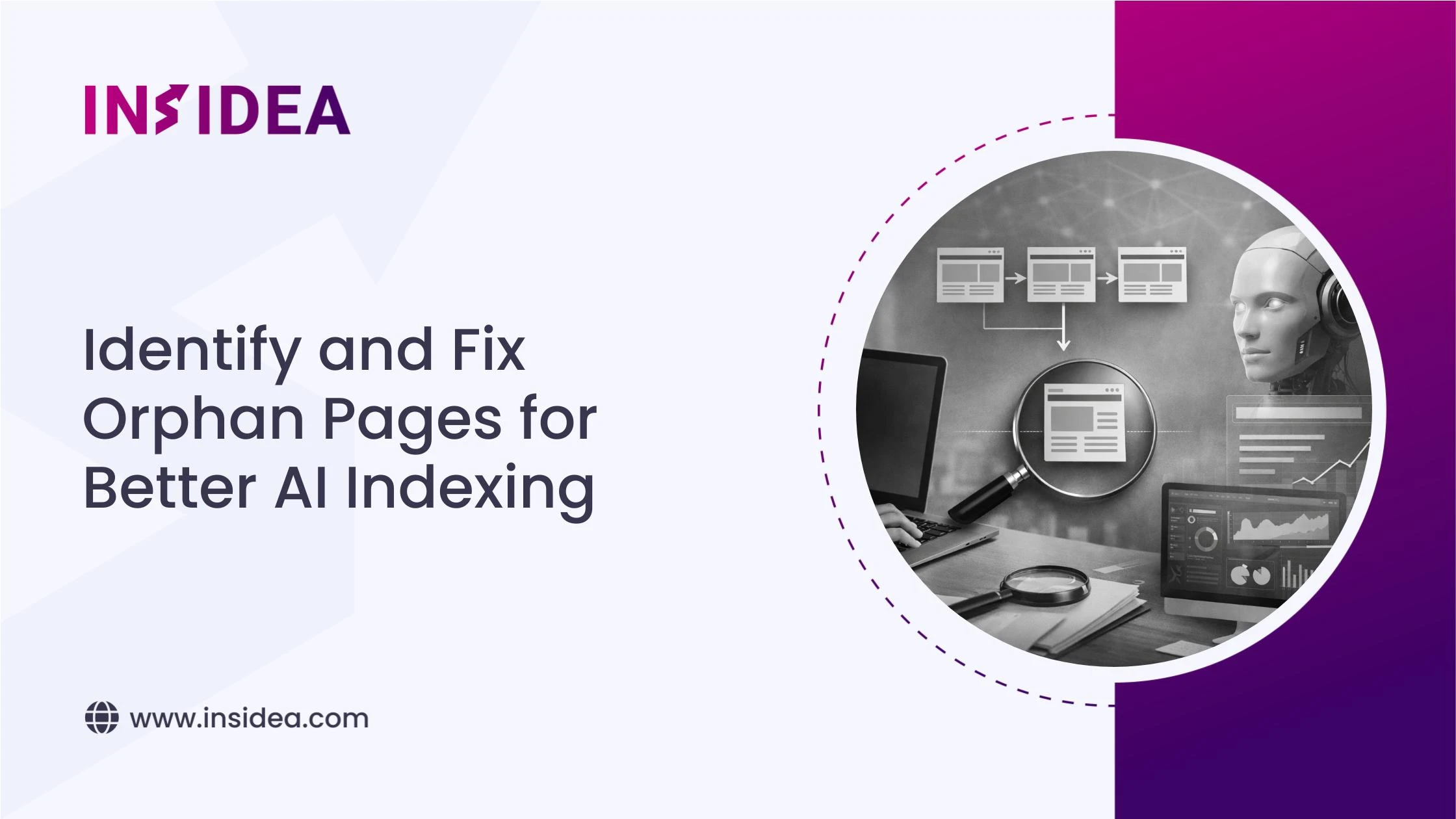
Identify and Fix Orphan Pages for Better AI Indexing
Pratik Thakker

Identify and Fix Orphan Pages for Better AI Indexing

Picture this: you’ve spent weeks perfecting a new room in your home—new paint, polished floors, stylish furniture—only to realize there’s no door leading into it. No one can see it, enjoy it, or even know it exists. That’s precisely what happens when your site has orphan pages. You might assume your website’s fully optimized. But if certain pages have no internal links—no path connecting them to the rest of your content—AI-driven search engines treat them as invisible. Which means you’re quietly leaking valuable search presence, trust signals, and topic authority. With AI playing a larger role in how content is indexed and served, orphan pages aren’t just a technical issue—they’re a strategic blind spot. Especially in environments like Google’s SGE, Bing Chat, and voice search, every piece of content must be discoverable, connected, and clearly contextualized. Here’s how to spot those silent underperformers, understand the damage they cause, and fix the gaps before they cost you more traffic. What Are Orphan Pages (and Why They Hurt You More Than You Think)? An orphan page is a live page with zero internal links pointing to it. It’s technically published, but it often exists in isolation—often unlinked from navigation menus, other pages, or

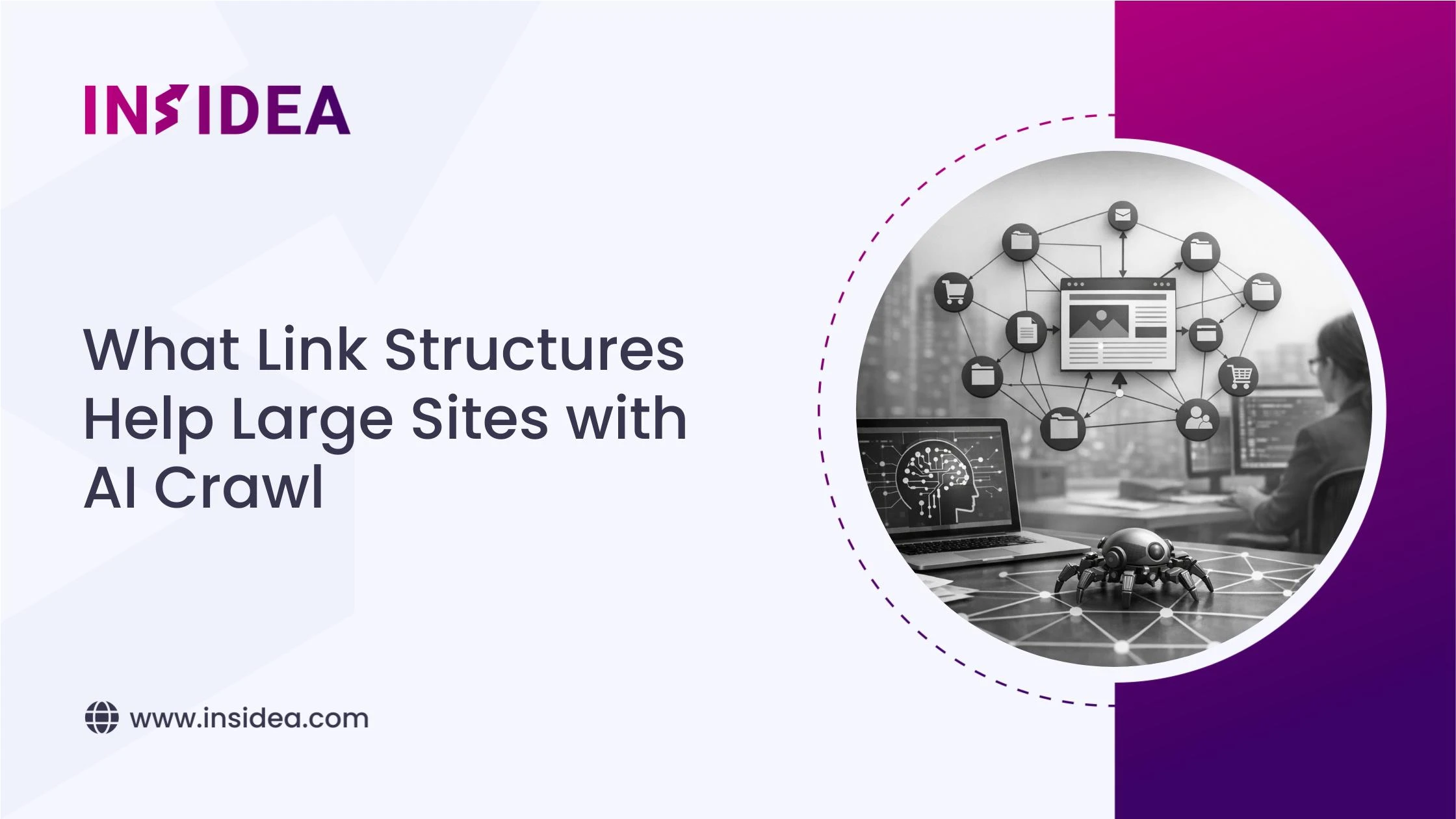
What Link Structures Help Large Sites with AI Crawl
Pratik Thakker

What Link Structures Help Large Sites with AI Crawl

Imagine trying to navigate one of the world’s busiest airports—and every gate, terminal, and signage has been rearranged at random. Now picture Google’s AI crawlers attempting to explore a sprawling website with thousands of pages. If the internal links aren’t carefully designed to guide the way, essential content gets lost in the shuffle. Crawlability suffers. Rankings stall. And your site ends up spending technical resources just to maintain its current position. If you manage a large-scale site—whether you’re in eCommerce, SaaS, digital publishing, or enterprise services—your internal link structure is the highway AI crawlers rely on to find, understand, and index your content. This guide will walk you through how to build that highway more efficiently, helping Google’s AI discover your most essential pages faster and more often. Why Link Structure Matters More in the AI Era Search engines have become far more sophisticated, but they haven’t stopped relying on structured linking to make sense of complex websites. While early crawl bots were limited to strict link-following instructions in static sitemaps, today’s AI-powered crawlers are designed to interpret context, calculate content importance, and map entire site hierarchies. That’s a lot of cognitive load—if your site isn’t built to support it. The

Balance Trust Signals When Linking to External Content
Pratik Thakker

Balance Trust Signals When Linking to External Content

You’ve spent weeks shaping a high-stakes piece of content. The tone is on-brand, the visuals are sharp—and every word has a purpose. But a straightforward link to an off-base source? That could quietly erode reader trust and search performance. Think of each external link like a personal introduction. You’re vouching for that resource. Get it right, and you strengthen authority. Get it wrong, and you weaken your credibility with both audiences and algorithms. If you’re a business owner seeking more substantial rankings or a content lead building thought leadership at scale, understanding how external links influence trust signals is essential. It’s foundational to sustainable SEO and brand trust. Here’s how to make linking choices that support your authority—without compromising quality or context. What Are Trust Signals, and Why Do External Links Matter? Before you can refine your linking decisions, you need to understand what trust signals actually are. In the SEO world, trust signals are behaviors or elements that search engines use to evaluate a site’s credibility. Think secure HTTPS, clear authorship, consistent branding, real testimonials—and, increasingly, your linking behavior. External links are compelling. They’re interpreted as editorial nods that the linked content is credible and relevant. When you include one,

What Is the Role of Nofollow, UGC, Sponsored in AI
Pratik Thakker

What Is the Role of Nofollow, UGC, Sponsored in AI

You’ve probably been there. Your site is getting solid traffic, maybe even decent Google visibility—but conversions remain flat, or worse, you suddenly get flagged for SEO issues tied to questionable links. That’s when you start digging. And buried deep in your website’s back-end are a few simple HTML attributes—rel=”nofollow”, rel=”sponsored”, and rel=”ugc”—that you barely paid attention to. Maybe they felt too technical or easy to overlook. Here’s the thing: as AI plays a bigger role in evaluating site quality, those small code markers now have big consequences. When used correctly, they can protect your rankings, preserve your site’s credibility, and prevent machine-learning models from misinterpreting your link practices as spammy or manipulative. If you’re a business owner, marketing decision-maker, or brand strategist, now’s the time to understand what these attributes actually do—and how aligning them with your AI SEO strategy can save you from invisible penalties and missed opportunities. Let’s clear up the confusion and set you up with a smarter, cleaner approach. Understanding rel Attributes in SEO: The Basics You Can’t Skip At their core, rel attributes are instructions that tell search engines how to interpret a hyperlink. They’re written into your site’s HTML and help Google distinguish between editorial

The Award-Winning Team Is Ready.

Are You?

“At INSIDEA, it’s all about putting people first. Our top priority? You. Whether you’re part of our incredible team, a valued customer, or a trusted partner, your satisfaction always comes before anything else. We’re not just focused on meeting expectations; we’re here to exceed them and that’s what we take pride in!”

Pratik Thakker

Founder & CEO

Company-of-the-year

Featured In

Want to See Your Digital Ideas
Come to Life?

Book a demo and discovery call to get a look at:


By clicking next, you agree to receive communications from INSIDEA in accordance with our Privacy Policy.