AIEO

What Are the Key Differences in Googlebot vs AI Crawler Behaviors_
Pratik Thakker

Googlebot vs AI Crawlers: What’s Really Crawling Your Site?

Your website wasn’t a weekend project. You spent real time crafting clear copy, organizing pages strategically, optimizing for search — and finally, you’re seeing a lift in traffic. Then you check your server logs and spot something strange. User agents labeled “ClaudeBot,” “ChatGPT-User,” and others you don’t recognize are requesting your pages. So who — or what — is actually reading your content? Is it Google? Is it an AI? And most importantly: are they helping or hijacking your discoverability? If you’re only optimizing for traditional SEO, you’re not seeing the full picture. Today, it’s not just about how Google indexes your site. It’s about how generative AI interprets you — and whether you show up as a credible voice in AI-generated answers. That’s where Answer Engine Optimization (AEO) comes in. Here’s how you can understand the differences between Googlebot and AI crawlers, and why both demand a place in your strategy. Why It Matters: Understanding the Two Frontiers of Visibility You’ve probably focused most of your digital strategy on satisfying Google — ranking well, earning backlinks, improving click-through rates. That’s foundational. But there’s a second layer of visibility now: answer engines. Think ChatGPT, Bing Chat, Google’s Search Generative Experience. These

Pratik Thakker

How Can Developers Ensure Fully Crawlable Content

You’ve built the perfect landing page. It tells your story, it sells your service—and it looks great doing it. But weeks later, your analytics show flatline impressions. Not a blip from search traffic. You search your core keywords… nothing. It’s like your masterpiece doesn’t exist. Here’s what’s likely happening: search engines can’t see your content. And if they can’t find it, they won’t index it. Without crawlability, even your best work won’t see daylight. Search bots, from Googlebot to next-gen AI crawlers, now drive how visibility works. With the sharp rise of answer engine optimization (AEO) and AI search tools, your site’s accessibility to these bots is as important as user-facing design. So, let’s break down what crawlability really means, how AI is reshaping it, and what you can do—today—to fix it. Crawlability Demystified: What It Means and Why It Matters Think of crawlability as the technical road map for bots. If Googlebot is your content’s visitor, crawlability tells it which doors are open—and which ones are dead ends. In practical terms, crawlability is how easily search engines navigate your site’s pages via internal links and clean code. Poor crawlability means key pages get skipped or overlooked completely. Just don’t confuse

Best Practices for Redirects in AI SEO
Pratik Thakker

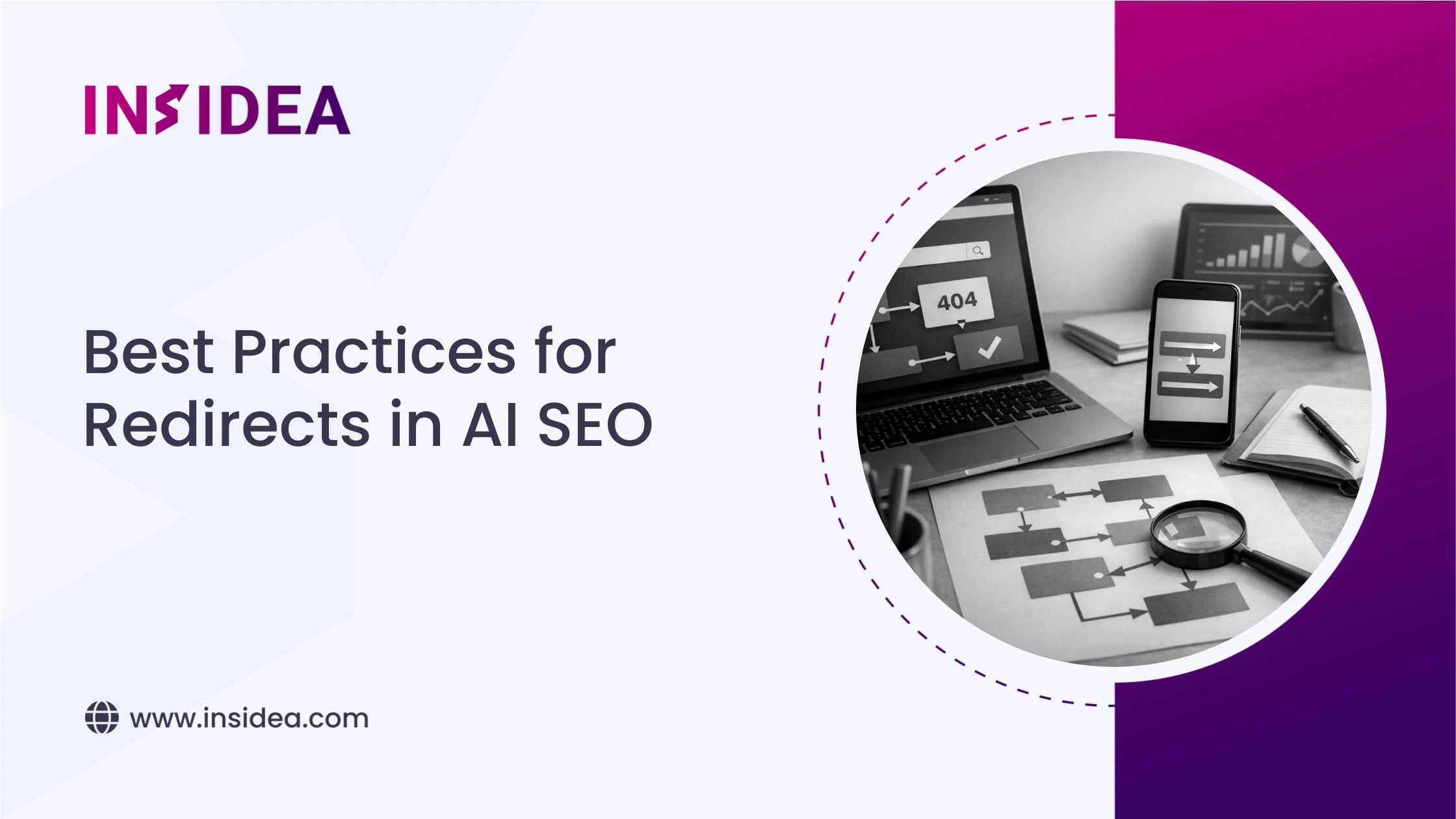
Best Practices for Redirects in AI SEO

You’ve just wrapped a major site redesign. The URL structure is cleaner. Content is tighter. You’re feeling confident—until traffic plummets, rankings stall, and conversions nosedive. You did everything by the book, including setting up 301 redirects. So why is Google still punishing your performance? The answer lies in how today’s search algorithms—now heavily AI-driven—process context, user intent, and topical continuity. A simple logic-based redirect may no longer be enough. If the semantic signals between your old and new pages don’t line up, you’re quietly telling search engines that your site’s authority is scattered or inconsistent. The algorithm listens—and it pulls back. Redirect SEO is no longer just technical cleanup. If your business depends on organic visibility, understanding how redirects influence AI interpretation is essential for long-term SEO stability. Let’s break down how to get it right. Why Redirects Matter More in the Age of AI SEO If you’re thinking of redirects purely in terms of status codes like 301 or 302, you’re missing the real issue: meaning. Today’s search engines use layered AI models—like Google’s RankBrain, MUM, and SGE—to understand relationships between queries, content, and behavior. These systems don’t just verify if a page exists. They ask, “Is this the page

How Can You Optimize Image SEO for Better AI Engine Recognition_
Pratik Thakker

How Can You Optimize Image SEO for Better AI Engine Recognition?

Imagine you run a boutique skincare brand. You’ve just redesigned your product packaging—sleek jars, clean typography, stunning flat lays. Every image you upload to your site is curated with meticulous care. But weeks go by and hardly anyone seems to notice. No surge in website traffic. No sudden bump in conversions. Your online visibility barely shifts. The problem? Search engines—especially AI-powered ones—aren’t registering those beautiful visuals like you expect them to. Instead of boosting your visibility, your images are flying under the radar. This isn’t about poor photography. It’s about image SEO—and the rules have evolved. Modern AI engines don’t “see” images the way you do. They analyze them through vectors, semantics, and context. So if your SEO doesn’t meet their criteria, your content won’t surface in visual results—no matter how polished it looks. Let’s walk through how you can fix that, starting today. Why Image SEO Now Includes AI Engine Recognition If your image SEO strategy still centers only on filenames and alt text, you’re missing the bigger picture. Search tech has moved forward—fast. Google, for example, now outputs multimodal search results that combine text, images, and video. Tools like Google Lens are rapidly gaining traction. And across platforms like

Pratik Thakker

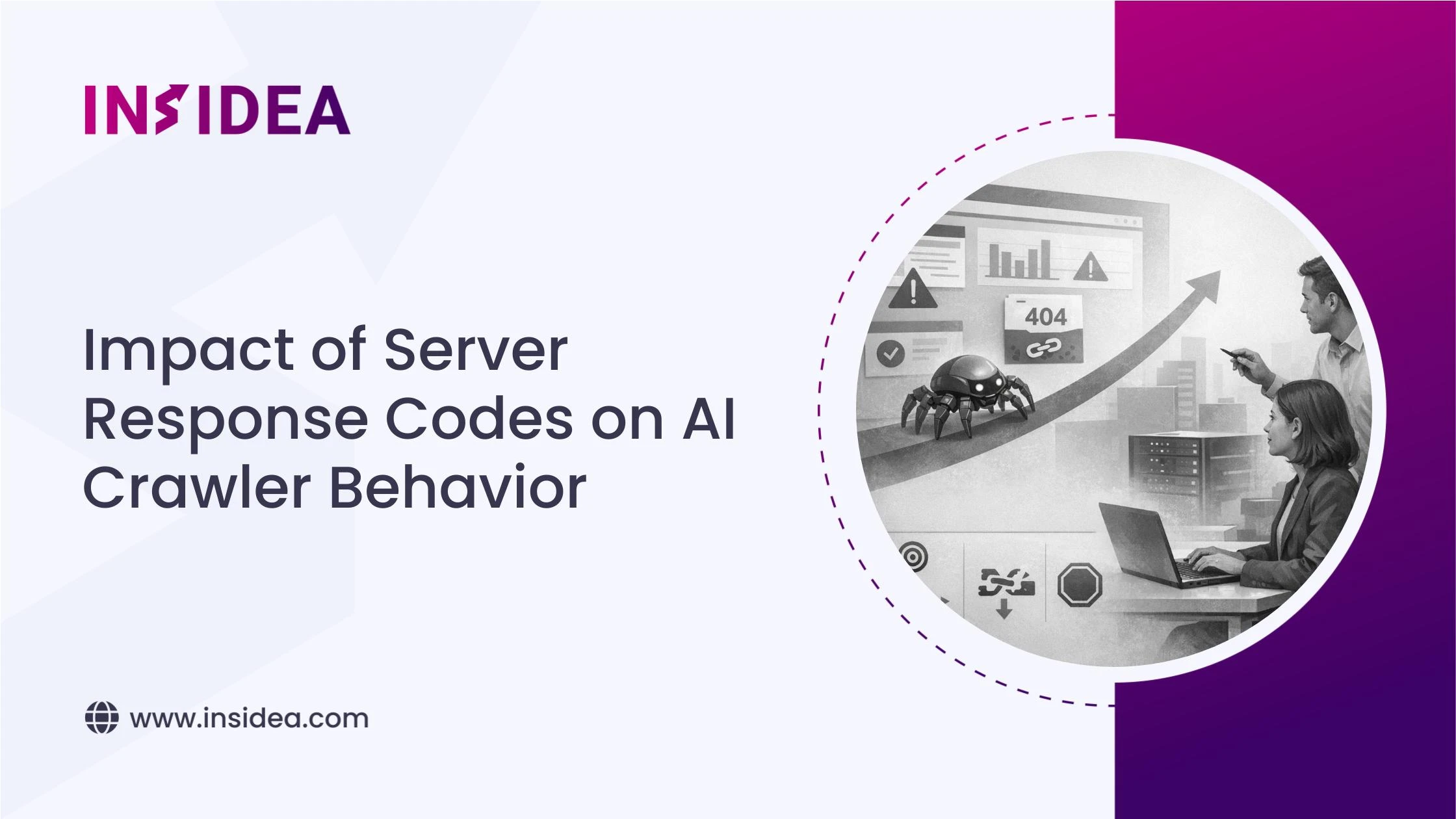
Impact of Server Response Codes on AI Crawler Behavior

You’ve done just about everything by the book—built a sleek, fast site, crafted strong content, optimized your funnel—but traffic isn’t moving the needle. Leads trickle in. Search rankings remain stuck. And the worst part? You can’t pinpoint the problem. Here’s a hidden culprit many leaders and marketing teams overlook: your server response codes might be quietly blocking your visibility. As AI crawlers take a more human-like approach to evaluating websites, they don’t just “look” at your pages—they listen to your site’s every technical signal, especially response codes. Think of these codes as the language your server uses to communicate with search engines. If that language is garbled or misleading, even your best content can get misread—or flat-out ignored. The truth is, in an AI-first search landscape, your SEO success hinges as much on technical precision as it does on creativity. If your response codes send confusing signals, AI crawlers may decide your content isn’t worth crawling or ranking. Let’s break down how these codes shape crawler behavior—and how you can start sending the right signals. Why Server Response Codes Now Matter More Than Ever Search engines aren’t dumb data collectors anymore. With large language models like Google’s MUM and Bing’s OpenAI-backed

How Can Developers Improve AIEO With Server-Side Rendering (SSR)_
Pratik Thakker

How Can Developers Improve AIEO With Server-Side Rendering (SSR)?

Picture this: your website is polished, your top-selling products are in full view, and your message is clear. But when search engines or voice assistants try to “see” it, they’re blocked—like the lights are on, but the blinds are drawn. That’s what happens when your site leans solely on client-side rendering. It might look great to users once JavaScript finishes loading, but search engines and answer engines—those that power tools like Google Assistant or Siri—often leave before the page fully loads. They’re scanning your site in split seconds, and if they don’t find usable content right away, you lose your shot at visibility. If search rankings or voice-based discovery matter to your business, this is where Server-Side Rendering (SSR) becomes more than a performance tweak. It’s a strategic SEO and AEO advantage. Wait, what’s AEO? Answer Engine Optimization. It’s how content becomes discoverable by AI assistants and smart search tools that deliver direct answers—not just blue links. SSR isn’t just helpful here—it’s essential. Let’s break down exactly why, and how you can apply SSR benefits even if you’re not the one writing the code. What Is Server-Side Rendering in Simple Terms? Think of it like this: with Client-Side Rendering (CSR), you’re

Pratik Thakker

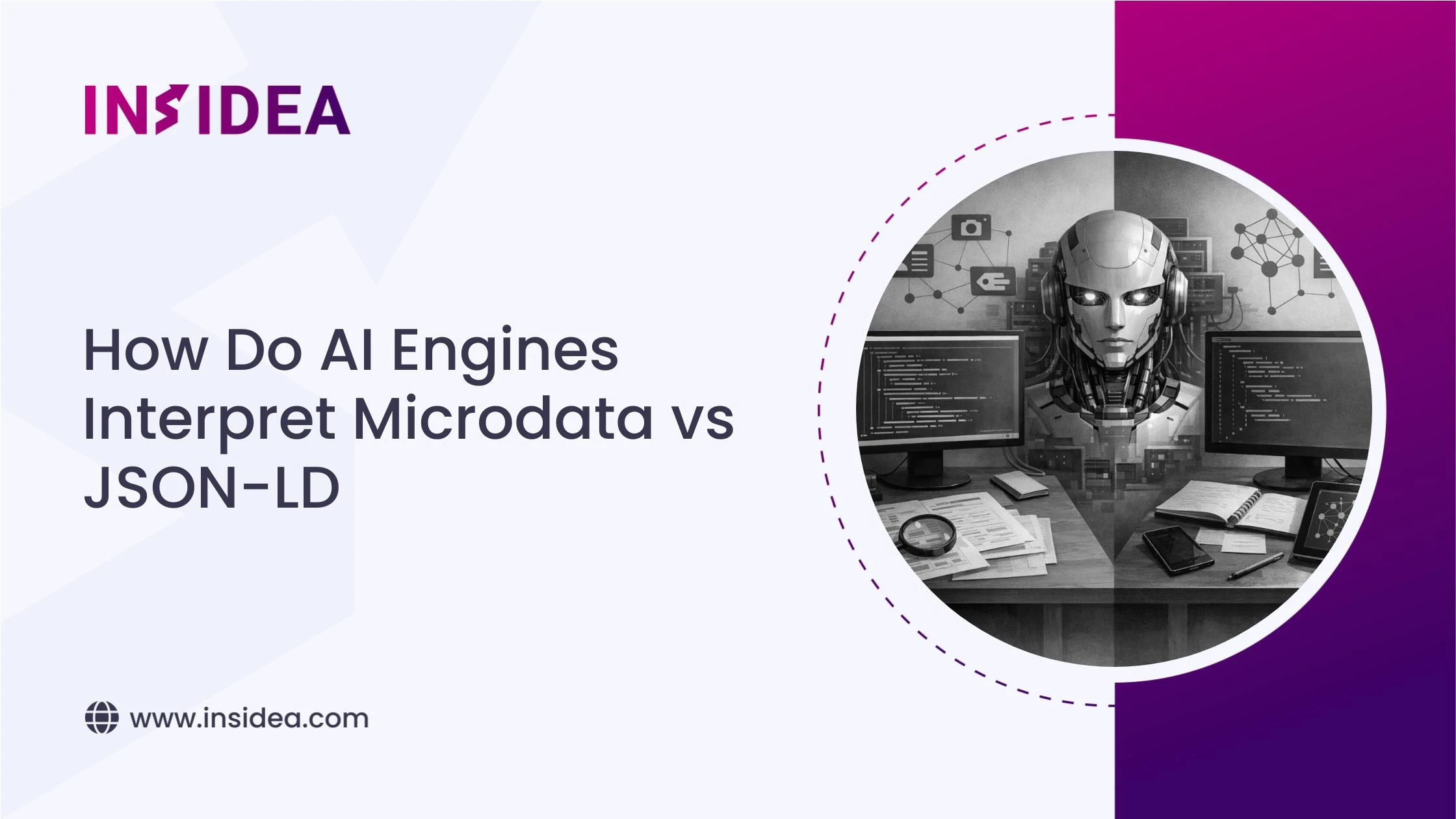
How Do AI Engines Interpret Microdata vs JSON-LD

Picture this: you’ve overhauled your website. The design is sharp, the pages load fast, and your content is genuinely helpful. Yet somehow, your competitor still outranks you on Google. What gives? Chances are, they’re not outwriting you—they’re out-communicating you. Not with people, but with machines. The edge? They’re using structured data and schema markup in a way that search engines and AI models can easily interpret—and reward. When used right, schema formats like JSON-LD, Microdata, and RDFa don’t just boost SEO. They unlock new surface areas in AI-powered tools like Google’s AI Overviews and ChatGPT’s browsing. The format you choose—how you “speak” to these systems—directly affects whether your business earns visibility or fades into the background. Let’s break down how AI engines understand each schema format—and what that means for your AEO (Answer Engine Optimization) strategy. What Are Schema Formats and Why Do AI Engines Care? To understand why format matters, think of structured data as your site’s resume—but for machines. Schema formats are ways to organize that data, making it explicit and machine-readable. Whether you’re referencing a “Jaguar” (the car or the animal), schema lets you clarify exactly what you mean. Why does that matter now? Because tools like Google’s

Why Is URL Parameter Handling Important for AI Search Engines_
Pratik Thakker

Why Is URL Parameter Handling Important for AI Search Engines?

Picture this: You’ve launched your website after months of strategy, design, and content planning. The funnel is built, the user experience is slick, and your campaigns are performing. But despite all that effort, organic traffic just isn’t landing where it should—and you can’t figure out why. Now imagine trying to enter a perfectly good restaurant, only to wind up at a back alley because the location on the map is mislabelled. That’s what’s happening when search engines misinterpret your URLs. URL parameters might seem like technical noise, but they play a far bigger role than you’d expect. Sloppy URL handling dilutes your rankings, confuses search bots, and costs crawl budget. This is especially true as AI-powered search engines rely on clarity, not just content. The takeaway? If you aren’t managing URL parameters intentionally, you’re making your SEO job harder—quietly but critically. Understanding URL Parameters: More Than Just UTM Tags Let’s clear something up: not all parameters are created equal. A URL parameter follows the “?” in a web address and influences what content appears on the page—or how it’s tracked. For example: https://yourwebsite.com/products?category=shoes&color=black  Those labels—category and color—tell the site to refine what’s shown. In campaign tracking, you’ll see: ?utm_source=facebook&utm_medium=cpc  These values

Improve Crawl Efficiency for Large Content-Rich Websites
Pratik Thakker

Improve Crawl Efficiency for Large Content-Rich Websites

Picture this: you’re managing a massive hotel complex—multiple buildings, hundreds of rooms, all constantly changing. Your housekeeping team (Google’s crawl bots) is trying to keep everything in order. But if floor plans are outdated, rooms are locked or duplicated, and hallways lead nowhere, they waste time and miss what matters. That’s exactly what happens when your website’s crawl efficiency isn’t dialed in. Google doesn’t crawl your entire site by default. It works within limitations: time, resources, and crawl budget. And if you’re responsible for a sprawling digital presence—an e-commerce platform with tens of thousands of SKUs, a SaaS platform packed with documentation, or a publisher with years of archives—you’re especially vulnerable to crawl waste. When bots can’t efficiently reach your most valuable content, it doesn’t get indexed, doesn’t appear in search results, and doesn’t generate traffic. Simply put: without crawl efficiency, your SEO investments stall at the gate. Let’s fix that. Why Crawl Efficiency SEO Matters More As You Scale As your business grows, your website naturally gets bigger—and more complex. That’s a good thing, but it creates a crawlability puzzle. As the CMO of a SaaS platform or the digital lead for a brick-and-mortar brand going national, you’re balancing rich

Challenges in Making SPAs AI-Friendly
Pratik Thakker

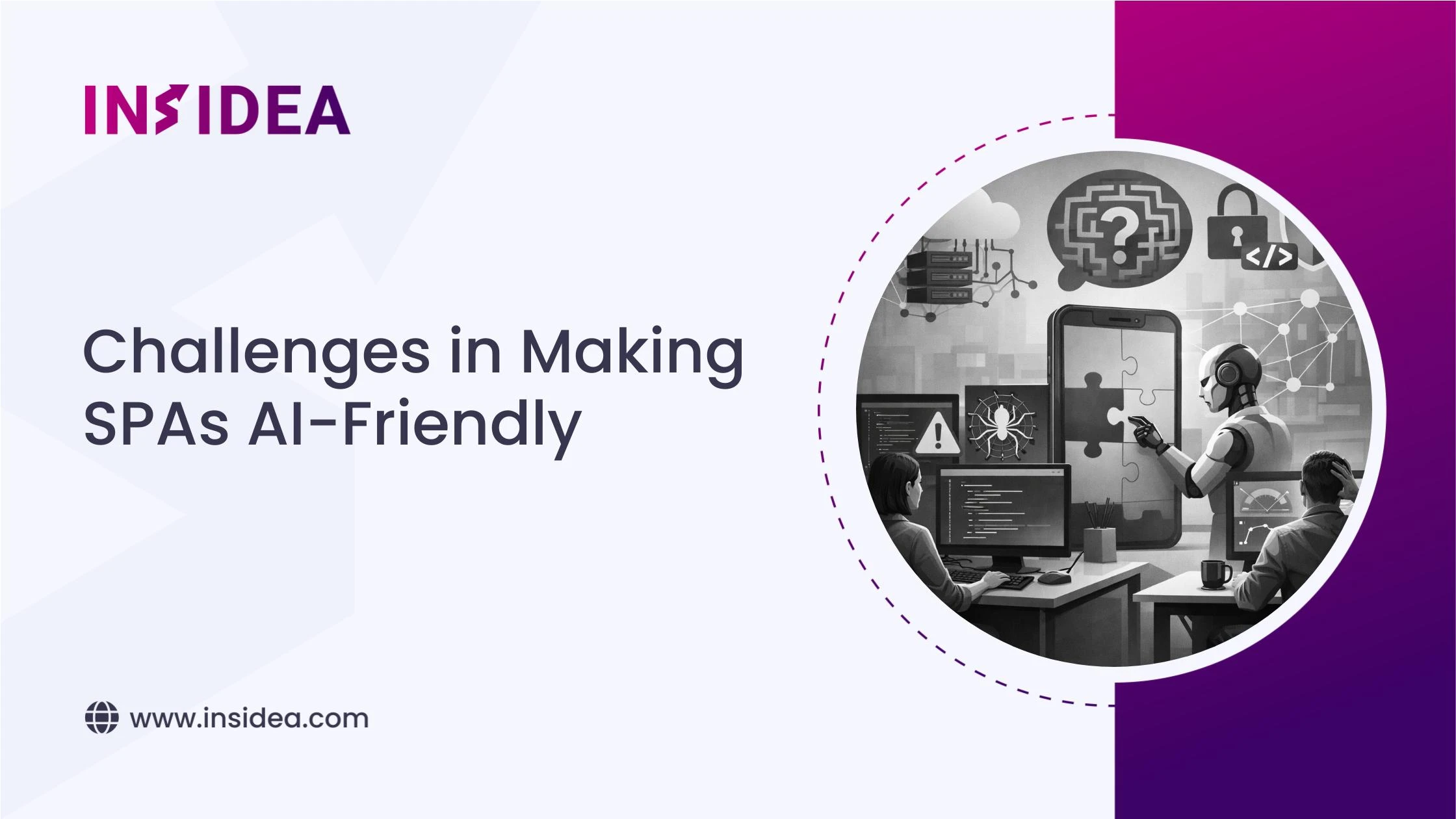
Challenges in Making SPAs AI-Friendly

You’ve built a lightning-fast website. It’s sleek, responsive, designed to wow users—and maybe it even delivers personalized content. But then the numbers come in: your organic traffic is stalling, your impressions are tepid, and AI-powered tools like ChatGPT or Bing Chat barely acknowledge your existence. If your site is built on a single-page application (SPA), you’re grappling with a very real visibility problem. SPAs deliver top-tier user experiences—but at a price. Traditional search engines and AI discovery mechanisms struggle to interpret them. For SaaS companies, startups, and performance-driven brands, this is where form collides with function. You want speed and polish, but if no one finds you, what’s the point? The good news? You don’t have to choose between performance and discoverability. With the right technical strategy, your SPA can rank, get indexed, and surface in AI-generated answers. Let’s unpack why SPAs get overlooked—and how you can fix it. Why SPAs and AI-Powered Discovery Don’t Always Mix Think of your SPA like a luxury hotel with only one front door. Everything someone needs is inside—the pages, the content, the value. But when a crawler like Googlebot or an AI assistant knocks on that door, no one answers. Why? Because the JavaScript

Why Should Developers Monitor AI Bot Server Logs
Pratik Thakker

Why Should Developers Monitor AI Bot Server Logs

Picture this: you run a top-tier restaurant. You’ve spent months tweaking the menu, designing the perfect space, and fine-tuning every detail for your guests. But despite your effort, tables sit empty night after night. You’re spinning your wheels and missing something crucial. Then you learn that a top food critic has been dining there regularly—but never left a review or made a reservation. No feedback, no fanfare. Just silent visits with far-reaching consequences. You’d only know they were ever there by combing through surveillance footage. That mystery visitor? Online, that’s your equivalent of Google’s AI-powered bots and other search engine crawlers. And your digital “surveillance footage”? That’s your server logs. Most server logs stay buried in technical folders, used only to chase down 404 errors or server timeouts. But they hold something far more strategic: your only detailed record of how AI bots are engaging—or not engaging—with your content. And in an era increasingly shaped by Answer Engine Optimization (AEO), that visibility is pure gold. Let’s unpack how monitoring server log data can unlock hidden insights—and give you a lasting edge in both SEO and AI-powered discovery. The Shift from SEO to AEO Isn’t Theoretical—It’s Already Happening If you’re still optimizing

What Role Does Content Hierarchy Play in AIEO
Pratik Thakker

What Role Does Content Hierarchy Play in AIEO?

Picture this: you walk into a bookstore, excited to find what you need — but all the books are scattered across the floor, no signs, no sections, no order. Genres are jumbled. Authors mixed. Sound frustrating? That’s precisely what your users (and search engines) experience when your website lacks a clear structure. If you’re aiming to rank well, especially in high-visibility formats like Featured Snippets or AI-powered search results, structure isn’t a bonus — it’s the backbone. A content hierarchy lets your website speak clearly to both people and search engines, or algorithms. It defines what matters most on a page, helps users find what they need quickly, and guides search engines to understand and elevate your content accordingly. In AIEO SEO (Artificial Intelligence Engine Optimization), your content hierarchy doesn’t just organize words; it powers performance. Let’s break down how and why it’s your most overlooked SEO advantage. First, What Exactly Is AIEO? Artificial Intelligence Engine Optimization (AIEO) is a next-gen SEO approach built for the age of AI. Instead of relying solely on keywords, backlinks, and manual updates, AIEO uses AI algorithms, machine learning, and big data to optimize content and user experiences across digital platforms. It’s not just about

The Award-Winning Team Is Ready.

Are You?

“At INSIDEA, it’s all about putting people first. Our top priority? You. Whether you’re part of our incredible team, a valued customer, or a trusted partner, your satisfaction always comes before anything else. We’re not just focused on meeting expectations; we’re here to exceed them and that’s what we take pride in!”

Pratik Thakker

Founder & CEO

Company-of-the-year

Featured In

Want to See Your Digital Ideas
Come to Life?

Book a demo and discovery call to get a look at:


By clicking next, you agree to receive communications from INSIDEA in accordance with our Privacy Policy.